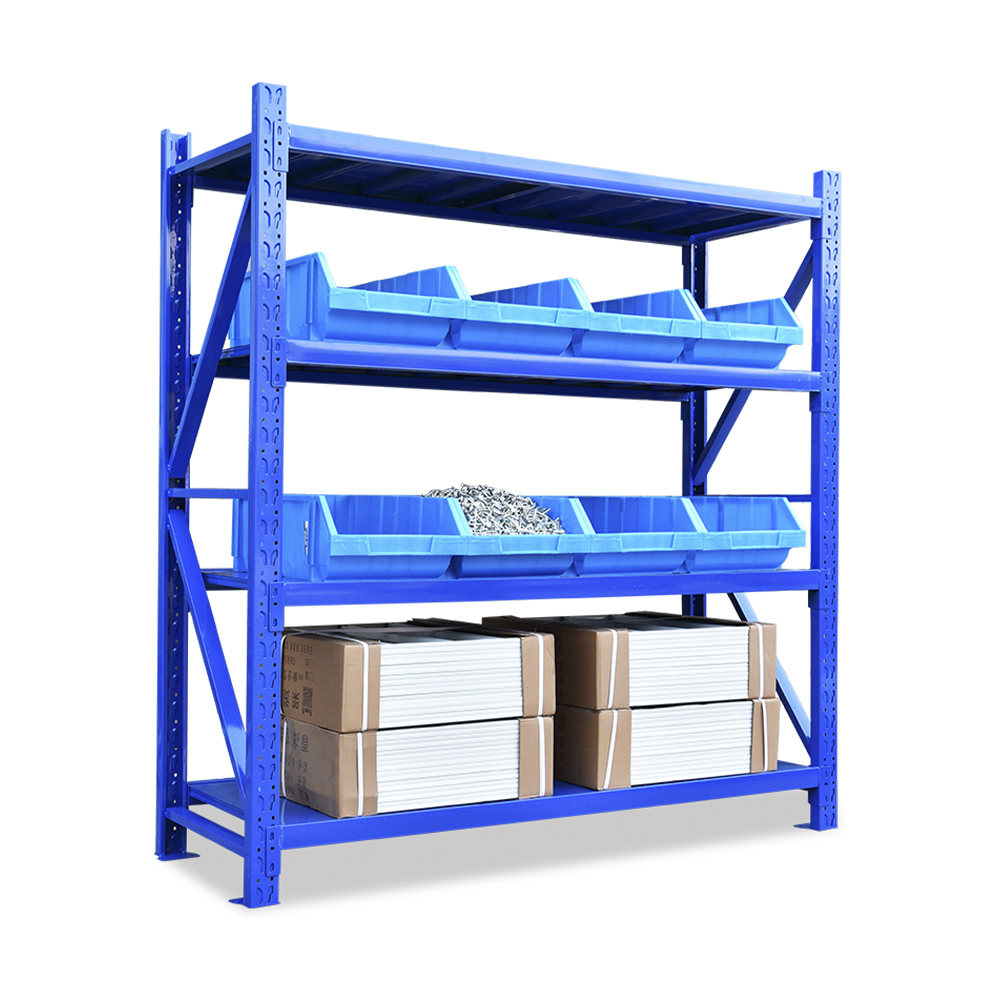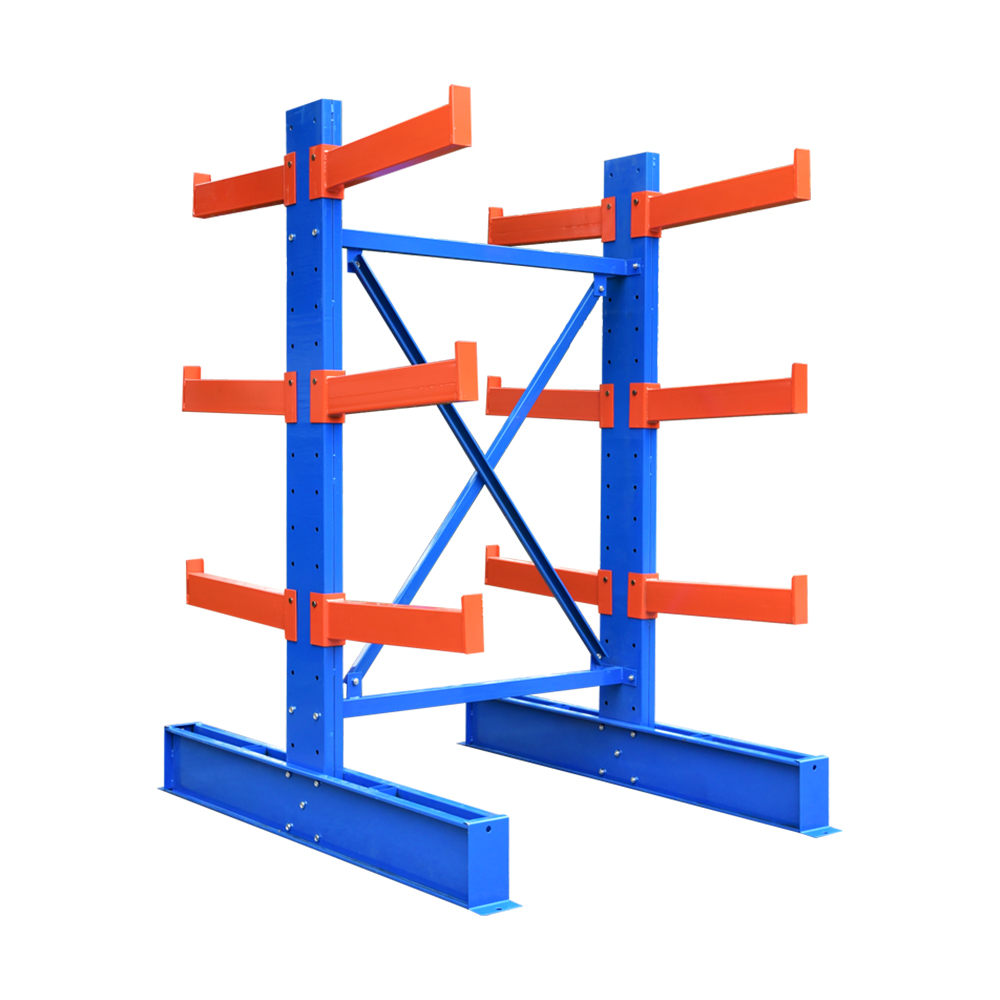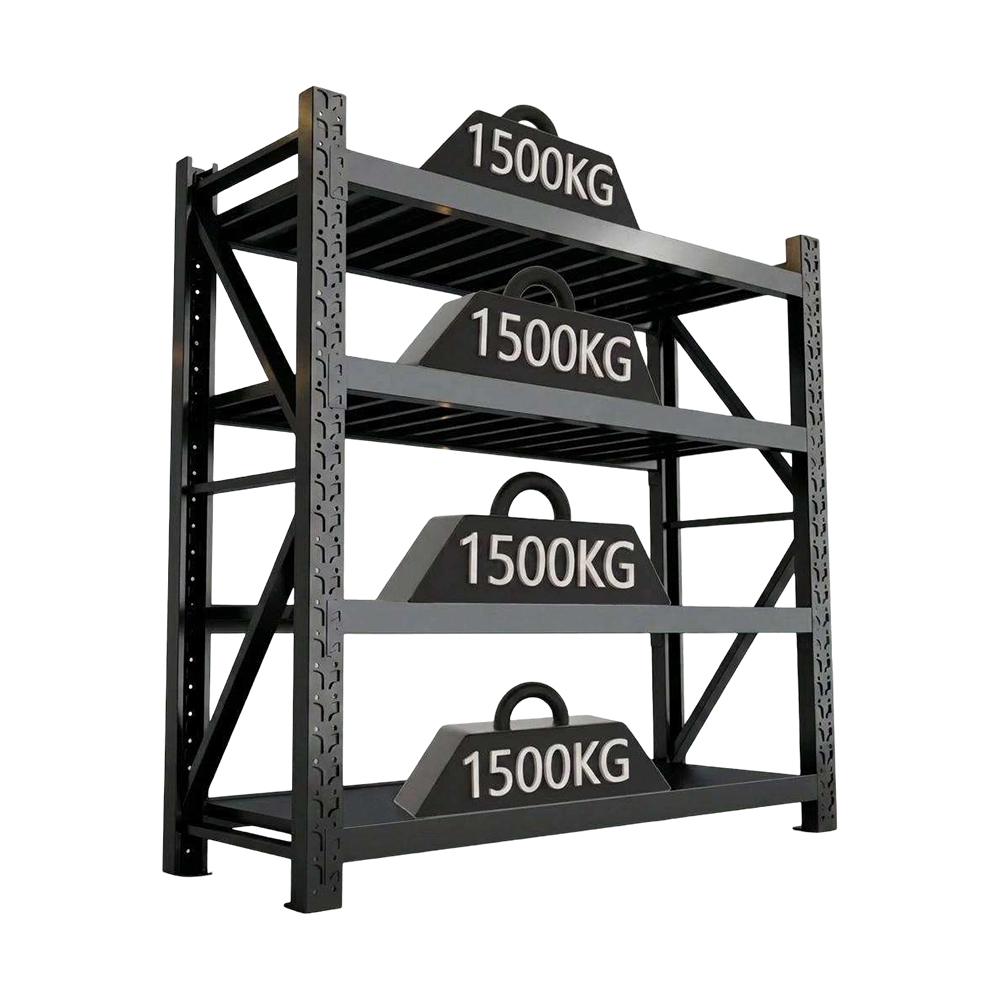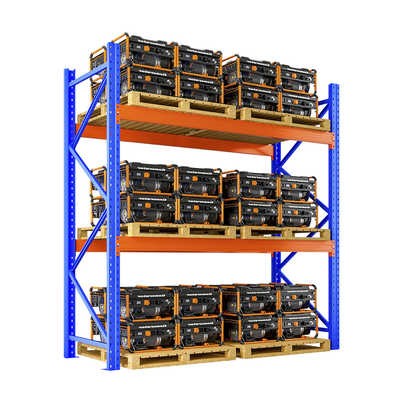
Warehouse space is one of the most valuable assets in any distribution, manufacturing, retail, or commercial operation. As inventory volumes increase, businesses need a storage system that uses vertical space efficiently, supports demanding loads, adapts to changing requirements, and remains dependable through years of daily use. Heavy-duty industrial steel shelving provides a practical answer to these challenges by combining structural strength, modular design, fast installation, and long-term value.
The heavy-duty rack described in this article is designed for warehouses, workshops, stockrooms, industrial facilities, distribution centers, and other environments where reliable storage performance is essential. With a load capacity of more than 500 kilograms per layer, reinforced steel construction, boltless assembly, and specially formed structural components, it offers a strong alternative to basic light-duty shelves and complicated traditional rack systems.
Beyond its product characteristics, the solution is supported by an experienced manufacturer with integrated product development, production, quality control, and market service capabilities. This combination of engineering knowledge and manufacturing resources allows customers to obtain standard shelving products as well as customized OEM and ODM storage solutions for different markets and operating conditions.
Why Heavy-Duty Storage Shelving Matters in Modern Warehouses
Warehouses are no longer simple rooms where goods are placed until they are needed. Modern storage facilities support purchasing, production, order fulfillment, inventory control, returns processing, and distribution. Every square meter must be used intelligently, while every stored item must remain accessible and protected.
Floor-only storage often creates several operational problems. Products may be stacked in unstable piles, aisles may become obstructed, and employees may spend unnecessary time searching for materials. Low-level shelving may also leave large amounts of unused overhead space. When inventory grows, the business may be forced to rent additional premises or undertake expensive reconstruction.
Industrial shelving addresses these issues by organizing goods vertically. Multiple storage levels allow the same floor area to hold substantially more inventory. Well-planned shelf positioning can separate products by category, size, turnover rate, or order priority. This supports faster picking, clearer stock visibility, and a safer working environment.
However, not every shelving system is suitable for industrial use. Light-duty products can deform when loaded with dense materials, while poorly designed systems may be difficult to assemble, adjust, or relocate. Heavy-duty industrial shelving must therefore balance load-bearing performance with practical installation and flexible configuration.
Core Product Advantages
High Load Capacity for Demanding Storage Applications
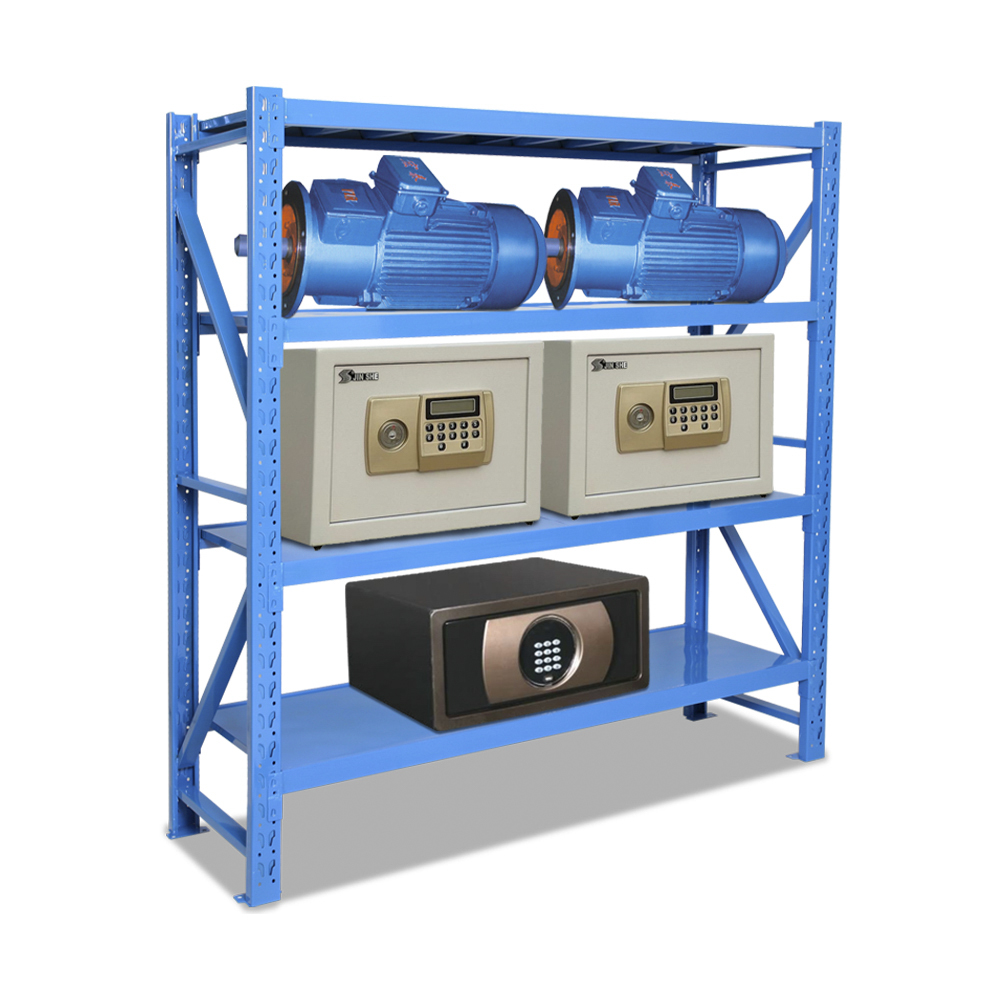
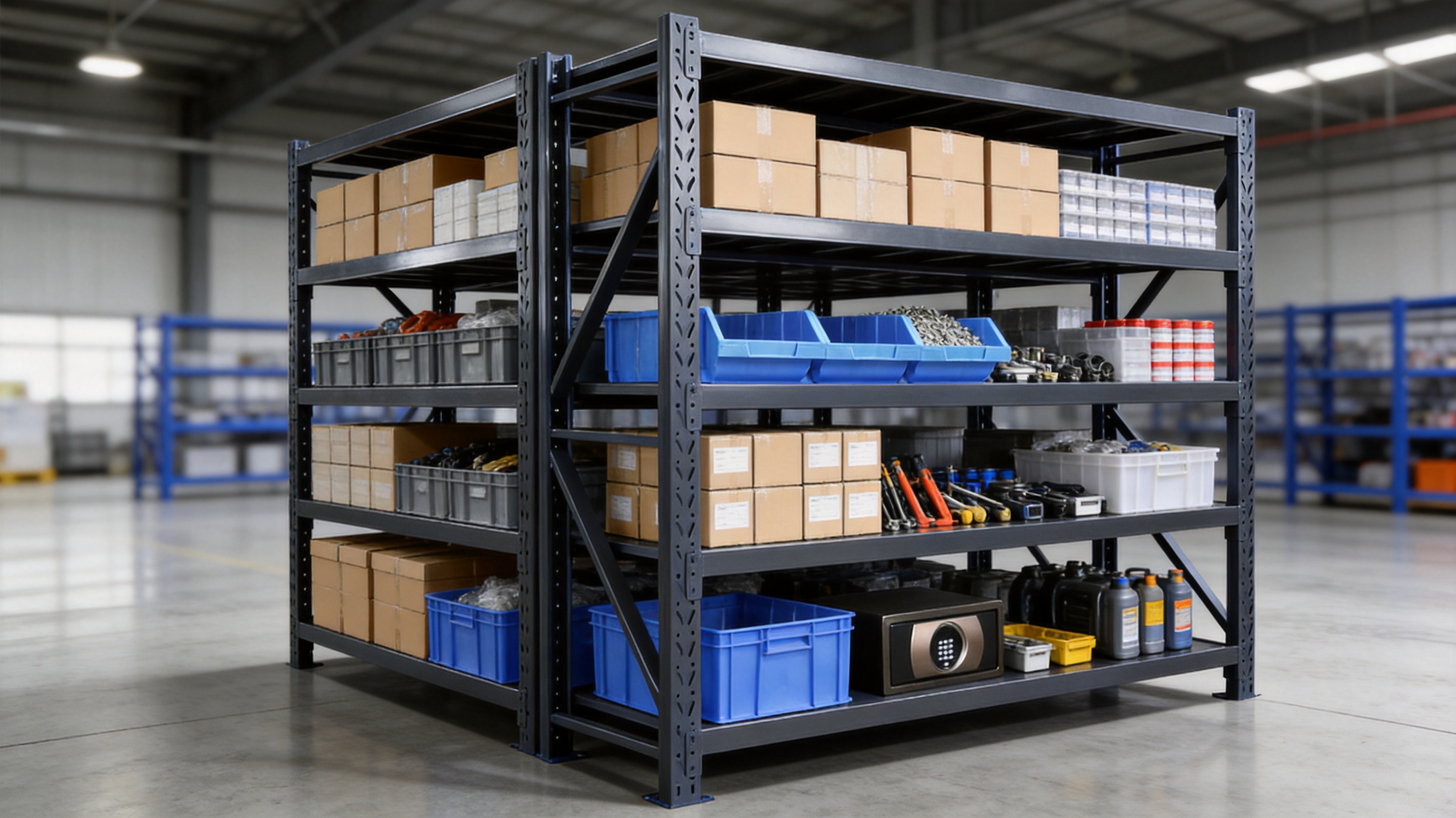
The rack is designed to support more than 500 kilograms per layer, making it suitable for a broad range of commercial and industrial storage applications. It can be used for bulk inventory, cartons, tools, equipment, spare parts, raw materials, packaged goods, and other items that exceed the capacity of ordinary household or office shelving.
A high load rating gives warehouse operators more freedom when planning storage. Instead of dividing heavy goods across numerous small units, businesses can consolidate materials on fewer, stronger bays. This can improve space utilization and simplify inventory management. It also reduces the risk of overloading shelves that were not designed for industrial demands.
Actual performance depends on the rack configuration, shelf dimensions, beam arrangement, load distribution, installation conditions, and operating environment. Loads should always be placed evenly and within the specified capacity. Nevertheless, the 500-kilogram-plus-per-layer capability provides a strong foundation for serious storage operations.
Reinforced Steel Construction
Industrial shelving must withstand more than static weight. In daily use, shelves may experience repeated loading and unloading, contact with cartons or containers, vibration from nearby equipment, and occasional impact from handling activities. A reinforced steel structure helps the rack remain stable under these conditions.
Steel offers a favorable combination of strength, durability, formability, and service life. Properly engineered steel components can carry substantial loads without requiring excessively thick or cumbersome parts. They can also be shaped into profiles that improve rigidity while keeping the system practical to transport and install.
The reinforced construction of this shelving system contributes to a stable storage platform for inventory and equipment. When paired with correct anchoring, level installation, suitable load distribution, and appropriate operating procedures, it supports a safer and more orderly warehouse environment.
Boltless Assembly for Faster Installation
Traditional bolted shelving can be reliable, but installation often requires many fasteners, tools, and time-consuming alignment steps. If a warehouse needs to expand quickly or relocate equipment, these requirements can create operational delays. The boltless design of this rack simplifies the assembly process by using engineered connections that fit together without conventional bolts at every joint.
Two people can assemble the rack in a fraction of the time commonly required for traditional bolted systems, provided that they follow the installation instructions and use suitable safety procedures. Faster assembly means reduced labor disruption and earlier access to usable storage capacity.
Boltless construction also offers practical benefits during reconfiguration. Shelves can be adjusted or the entire unit can be moved with fewer disassembly steps than many fixed systems. This is especially useful for businesses that regularly change product lines, warehouse layouts, picking methods, or stock volumes.
Diamond and Inverted-8 Hole Uprights
The uprights are available with diamond or inverted-eight hole patterns designed to support quick installation and flexible positioning. These repeated connection points allow horizontal beams and shelf levels to be placed at different heights, helping operators create a configuration that matches the dimensions of the goods being stored.
Adjustable levels are important because warehouse inventory is rarely uniform. One section may hold small cartons, another may store larger containers, and a third may be used for long tools or equipment. Fixed shelves can leave wasted gaps or make it difficult to accommodate changes. Hole-pattern uprights provide a more adaptable foundation for different storage requirements.
The upright pattern also supports modular expansion. Additional bays or components can be planned around the existing system, subject to structural compatibility and the manufacturer’s recommendations. This allows businesses to develop their storage gradually instead of making one large investment at the beginning.
Multi-Folded Beams for Improved Structural Performance
The beams use a multi-folded profile that increases load-bearing performance by approximately 20 percent compared with a basic beam design, according to the supplied product information. Multiple folds can create additional stiffness by improving the shape’s resistance to bending and deformation.
This engineering approach allows the beam to support demanding loads while maintaining a practical component size. It can also contribute to a more stable connection between the beams and uprights. The result is a rack structure designed to combine strength, efficient material use, and straightforward assembly.
Beam design is one of the most important factors in the performance of a shelving system. A rack may have strong uprights, but insufficiently rigid beams can still limit its overall capacity. The use of multi-folded beams demonstrates attention to the complete load path, from the shelf surface through the beams and uprights to the floor.
Heavy-Duty Industrial Steel Shelving for Warehouse Organization
Designed for Efficient Warehouse Organization
Making Better Use of Vertical Space
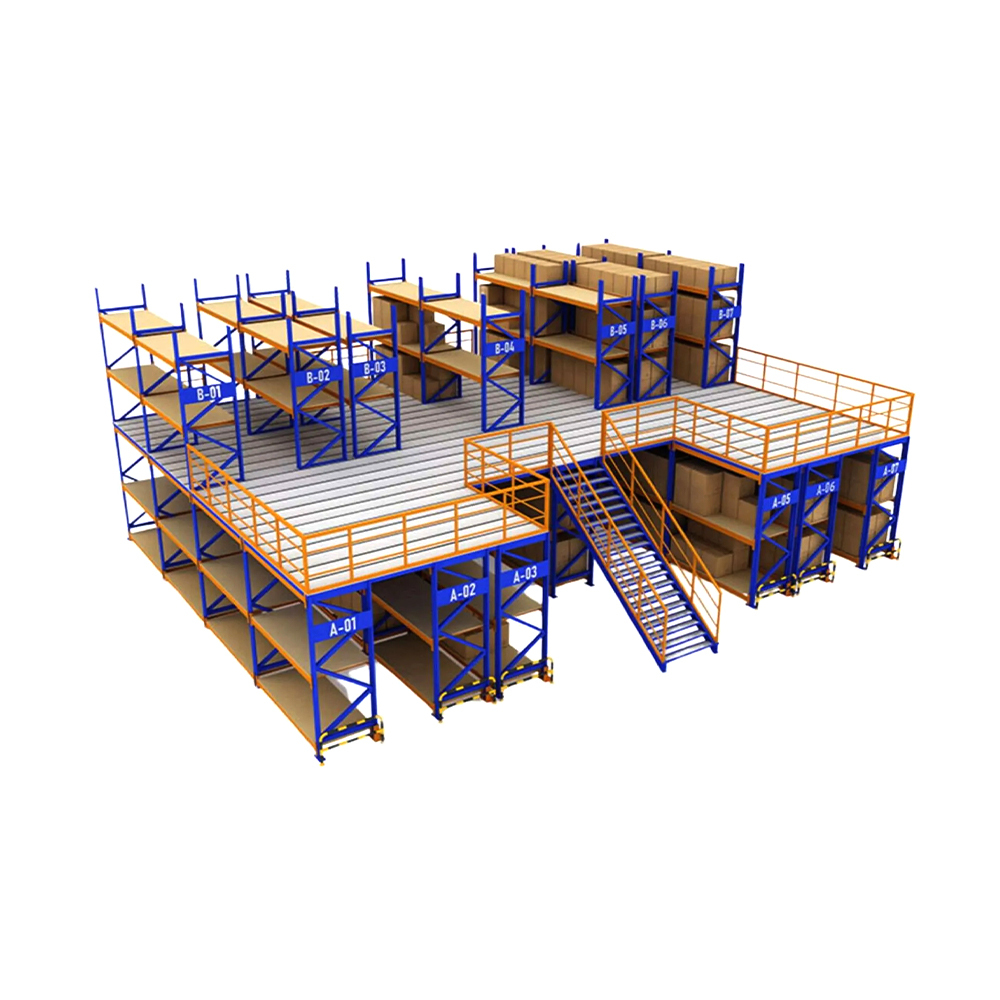
Many warehouses have significant unused space above the working height of floor-stacked goods. Heavy-duty shelving converts this unused vertical area into functional storage levels. By increasing the number of accessible layers, the system can raise storage density without requiring a larger building footprint.
Vertical organization also improves visual control. Products can be grouped by stock-keeping unit, customer order, material type, or frequency of use. Labels and location codes can be applied to each level, making it easier for employees to identify the correct storage position and return materials after use.
Higher storage density should always be balanced with safe access. The layout should provide adequate aisle width, clear travel paths, appropriate handling equipment, and sufficient lighting. The rack should be installed on a suitable floor and kept within its rated configuration. Effective organization is not simply a matter of adding more levels; it is the result of integrating shelving with safe warehouse operations.
Reducing Floor Congestion
Unorganized floor storage can interfere with forklifts, carts, workers, emergency access, and production activities. By lifting goods onto clearly defined shelves, the rack helps preserve open floor space for movement and other operations.
Clear floor areas can improve housekeeping and reduce the likelihood of trip hazards. They also make it easier to identify damaged packaging, inspect inventory, and clean around storage locations. In facilities that handle multiple product categories, dedicated shelf locations reduce the chance that goods will be mixed together or misplaced.
Supporting Faster Picking and Restocking
Warehouse efficiency depends heavily on the time required to find, retrieve, and return products. A modular shelving system can support a logical picking layout in which frequently used items are positioned in convenient locations and slower-moving stock is placed in less accessible areas.
Adjustable levels allow operators to position items at practical working heights. Small products may be stored in bins on intermediate levels, while heavier cartons can be placed lower to reduce handling risk. Properly designed shelf locations can shorten walking distances and support more consistent inventory routines.
The benefits become even greater when the shelving is combined with labels, barcode systems, inventory software, and standardized storage procedures. The rack provides the physical foundation, while warehouse processes turn that foundation into measurable operational improvement.
Adaptability for Changing Business Requirements
Warehouse requirements change for many reasons. A company may introduce new products, increase order volumes, change packaging dimensions, add seasonal inventory, or move to a different facility. A fixed storage system can become inefficient when the business changes, but a modular rack can be adjusted to meet new conditions.
Reconfigurable Shelf Levels
The hole-pattern upright system allows shelf levels to be repositioned according to the height of the stored goods. This can reduce unused vertical gaps and create a more efficient arrangement. When the product mix changes, the shelves can be adjusted rather than replaced.
Expandable Storage Layouts
Modular construction makes it possible to add bays as storage needs grow, provided that the additional components are compatible and the complete installation is evaluated for structural performance. Expansion can be planned in stages, helping businesses manage capital expenditure and avoid purchasing more capacity than they currently need.
Relocation and Reuse
Businesses frequently reorganize facilities or move operations. A boltless rack can be easier to dismantle and reassemble than heavily fixed alternatives. Components may be reused in a new layout, reducing waste and protecting the value of the original investment.
Reusable storage equipment is particularly valuable for growing companies. Rather than treating each warehouse move as a complete replacement project, the business can adapt the existing system to the new facility, subject to site conditions and professional assessment.
Comparison with Common Alternative Storage Solutions
Different storage systems are suited to different applications. The following comparison describes general characteristics and should be considered alongside the specific requirements of each warehouse.
| Storage Solution | Typical Strength | Common Limitation | Advantage of Heavy-Duty Modular Shelving |
|---|
| Light-duty household or office shelving | Low cost and simple use | Limited capacity and durability for industrial loads | Offers a substantially stronger structure for demanding inventory |
| Traditional bolted shelving | Established connection method | More installation labor and slower reconfiguration | Boltless assembly supports faster setup and adjustment |
| Fixed custom storage systems | Can be tailored to one specific layout | Expensive and less flexible when requirements change | Modular components can be adjusted, expanded, or relocated |
| Floor stacking | Minimal initial equipment | Wastes vertical space and can obstruct aisles | Creates organized vertical storage with defined locations |
| Heavy pallet racking | Suitable for palletized goods and forklift access | May be excessive for cartons, tools, and manually handled inventory | Provides practical shelf-level storage for mixed industrial goods |
The most important advantage is not that one system replaces every other system. Instead, heavy-duty shelving fills an important position between light storage and full pallet-racking infrastructure. It is suitable for warehouses that need higher capacity than ordinary shelves but require more flexibility and accessibility than pallet-only systems.
Compared with low-cost shelving, the reinforced steel structure and high layer capacity provide greater confidence for industrial use. Compared with heavily bolted systems, the boltless format can reduce installation time. Compared with fixed custom installations, modular components make it easier to adapt the system as the business develops.
Applications Across Multiple Industries
Warehouses and Distribution Centers
Distribution facilities can use the rack for cartons, returned goods, packaging materials, spare stock, and order-picking inventory. Adjustable levels support a variety of package sizes, while the high capacity helps organize dense products without relying entirely on floor stacking.
Manufacturing Plants
Manufacturers need organized access to raw materials, work-in-progress components, tools, maintenance supplies, and finished products. Industrial shelving can position these items near production areas while keeping them separated and identifiable.
Workshops and Maintenance Departments
Workshops often contain heavy tools, replacement parts, fittings, and equipment that cannot be safely stored on light-duty shelves. The rack provides a structured solution for arranging these materials and keeping frequently used items accessible.
Retail Backrooms
Retail operations can use heavy-duty shelving for reserve inventory, seasonal merchandise, promotional materials, and bulk packaging. The system helps separate backroom stock from sales-floor replenishment items, making restocking more efficient.
Automotive and Equipment Service Facilities
Service centers often manage lubricants, components, tools, filters, replacement parts, and boxed equipment. Properly configured shelving can improve visibility and reduce the time technicians spend searching for materials.
Commercial and Institutional Storage
Schools, offices, hospitals, public facilities, and service organizations may need strong storage for archives, supplies, equipment, or maintenance products. The modular design allows the rack to be configured for different room sizes and storage categories.
Manufacturing Strengths Behind the Product
A strong shelving product depends on more than its visible appearance. Consistent dimensions, accurate forming, reliable connections, appropriate materials, and controlled production processes all influence the finished rack’s performance. The manufacturer behind this product operates an integrated system covering product development, manufacturing, quality control, and market service.
Integrated Product Development
Product development begins with understanding how shelving will be used. Engineers and technical personnel must consider load requirements, shelf dimensions, beam profiles, upright geometry, connection methods, installation procedures, packaging, and transportation. A product intended for international markets must also be adaptable to different warehouse layouts and customer expectations.
Integrated development enables design decisions to be evaluated against manufacturing capabilities. This can help reduce unnecessary complexity and support more consistent production. It also creates a practical path for OEM and ODM projects in which customers require customized dimensions, finishes, configurations, or branding arrangements.
Modern Production Facilities
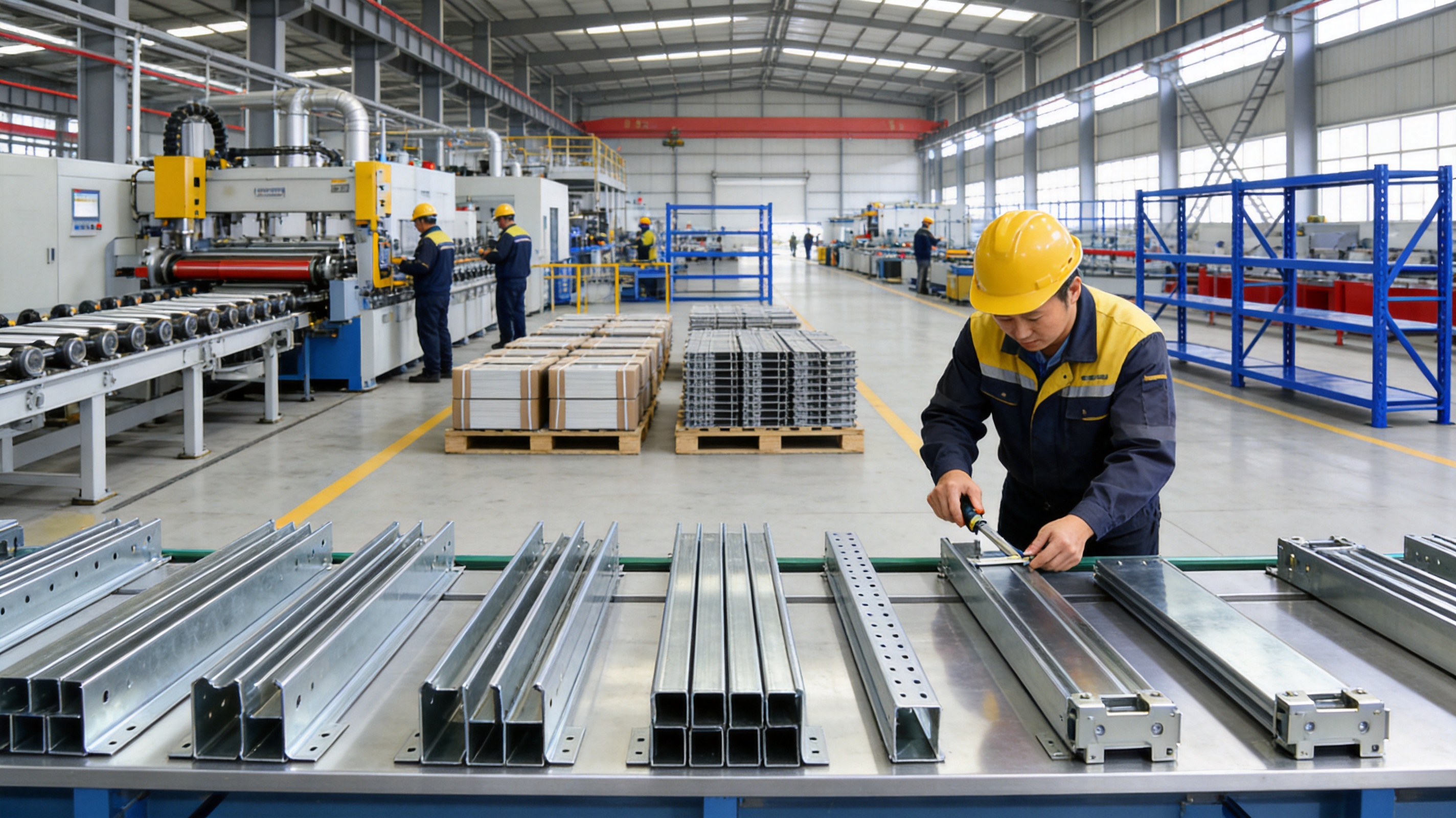
The company operates a 60,000-square-meter production base supported by a workforce of more than 300 employees. A production base of this scale can support multiple stages of manufacturing, material handling, assembly preparation, quality inspection, packaging, and shipment coordination.
Large-scale facilities can also help organize production flows more effectively. Raw materials, semi-finished parts, finished goods, and packaging materials can be managed within a structured operation. This is important for customers who require regular supply, repeat orders, mixed product shipments, or project-based delivery.
Metal Forming and Component Consistency
Steel shelving relies on accurately formed components. Uprights must maintain consistent hole spacing, beams must retain their intended folded profile, and connectors must fit correctly during assembly. Controlled forming processes help create repeatable parts across production batches.
Consistency is especially important in modular systems. If dimensions vary significantly, components may be difficult to connect or may create uneven loading. Accurate manufacturing supports smoother installation and makes it easier to combine standard components in larger layouts.
Quality Control Throughout Production
Quality control should not be limited to the final visual inspection. Effective control can include incoming material checks, dimensional verification, forming-process monitoring, connection inspection, load-related evaluation, surface-finish review, packaging checks, and final order verification.
Each stage addresses a different risk. Material checks help confirm that incoming steel meets the intended specification. Dimensional checks verify that components match the design. Connection inspections help ensure that the boltless structure assembles correctly. Packaging inspections reduce the chance of damage during handling and transportation.
A process-based quality system is particularly valuable for international customers. Products may travel long distances, pass through several logistics stages, and be installed by different teams. Consistent manufacturing and careful packaging help reduce avoidable issues after delivery.
OEM and ODM Capability
Standard racks are suitable for many applications, but some customers require specialized dimensions, colors, shelf materials, beam configurations, or branding. OEM and ODM capabilities allow the manufacturer to support projects that go beyond a standard catalog configuration.
Customization may involve the overall rack size, shelf depth, upright height, layer spacing, surface treatment, connection details, packaging method, or product labeling. The feasibility of each request depends on engineering review, required load capacity, production tooling, order volume, and applicable market requirements.
A capable OEM and ODM supplier should be able to communicate clearly from concept through production. This includes reviewing drawings, confirming specifications, identifying installation considerations, preparing samples when necessary, and coordinating quality expectations before mass production.
Surface Protection and Long-Term Use
Steel storage products must be protected against the conditions in which they operate. Warehouses may contain dust, humidity, temperature changes, cleaning chemicals, and repeated handling activity. A suitable surface treatment helps maintain the appearance and serviceability of the components.
The appropriate finish depends on the intended environment and customer requirements. Factors such as indoor or semi-outdoor use, humidity level, exposure to chemicals, cleaning procedures, and expected service life should be considered before selecting a finish.
Surface protection is only one part of durability. Long-term performance also depends on correct installation, floor conditions, load management, inspection, and maintenance. Even a well-manufactured rack can be damaged by forklift impact, severe overloading, unauthorized modification, or incorrect assembly.
Installation and Configuration Guidance
Review the Layout Before Assembly
Before installation, the warehouse team should confirm the available floor area, ceiling height, aisle arrangement, emergency exits, doors, columns, lighting, fire-protection equipment, and traffic routes. The rack should not obstruct required access or interfere with building services.
Storage levels should be planned according to the dimensions and weight of the intended goods. Frequently handled products may be placed at convenient working heights, while heavier materials are generally better positioned at lower levels. The final layout should support both efficiency and safe manual handling.
Prepare a Suitable Floor
The rack should be installed on a stable, level surface capable of supporting the combined weight of the rack and its stored contents. Uneven floors can affect alignment and stability. Where necessary, the installation area should be assessed and prepared before the shelving is assembled.
Follow the Assembly Instructions
Although the boltless structure is designed for quick installation, assembly should still be completed by trained personnel using the correct sequence. Workers should inspect components before use, verify that connectors are properly engaged, and confirm that each shelf level is seated correctly.
Two-person assembly is recommended for practical handling of larger components. Appropriate protective equipment should be used, and the work area should be kept clear while the rack is being erected.
Distribute Loads Evenly
Loads should be placed evenly across each shelf and should remain within the specified capacity. Concentrated point loads can create stresses that differ from the conditions used to establish the rated performance. Items should also be positioned so that they do not fall, project dangerously into aisles, or interfere with adjacent levels.
Inspect the Completed Rack
After assembly, the team should check the alignment of uprights, engagement of beam connectors, condition of shelf surfaces, stability of the complete unit, and clearance from nearby equipment. Any damaged or incorrectly fitted component should be corrected before the rack is placed into service.
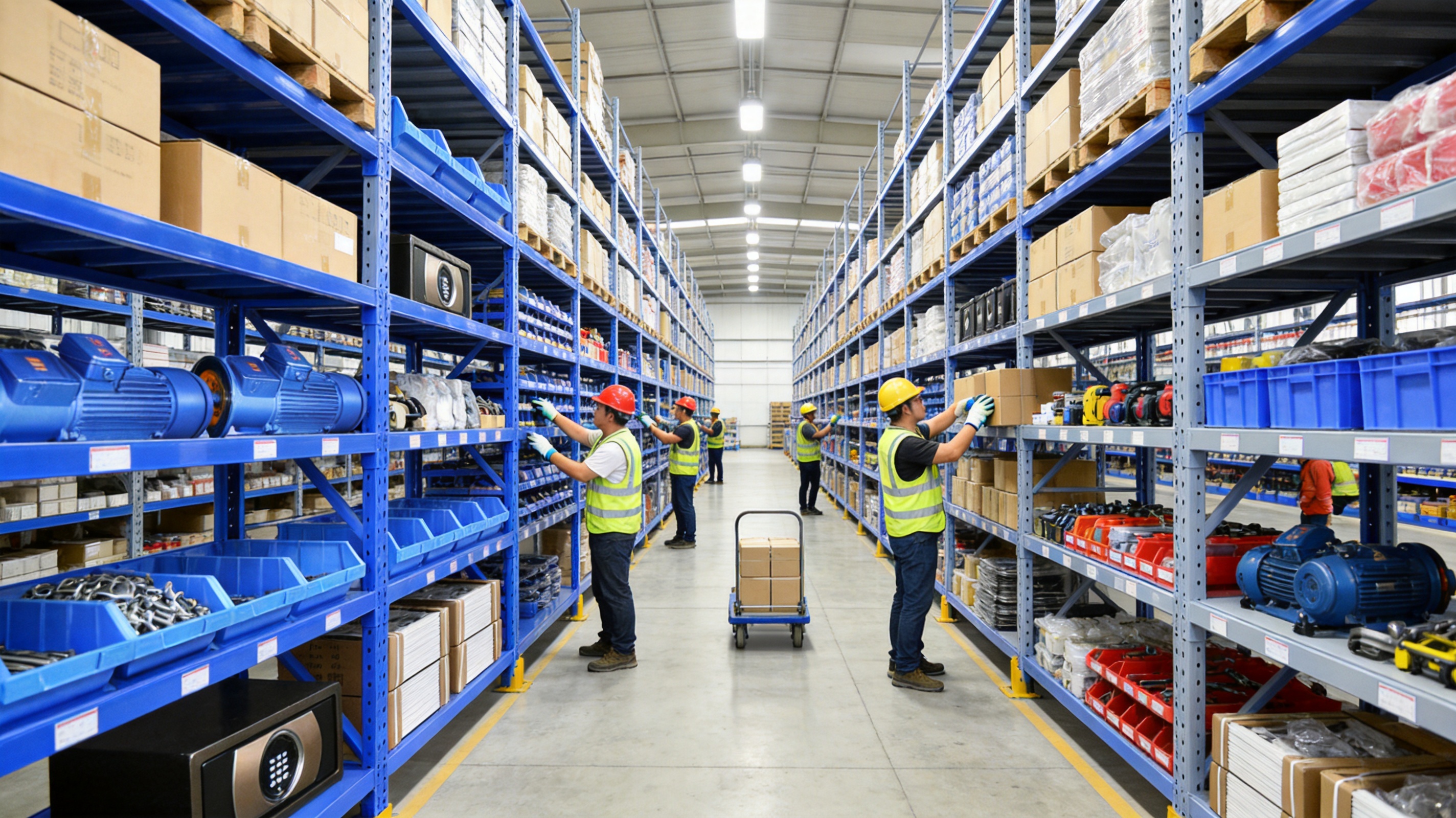
Safety, Maintenance, and Operational Best Practices
Safe storage is a shared responsibility between the manufacturer, installer, warehouse manager, and daily users. The rack should be operated according to its rated capacity and intended use. Employees should receive basic instruction on loading, unloading, inspection, and reporting damage.
Routine Inspection
Regular visual inspections can identify bent beams, damaged uprights, displaced shelves, loose or incorrectly engaged connections, corrosion, impact marks, and overloaded levels. Inspection frequency should reflect the intensity of use and the risk profile of the facility.
Impact Prevention
Forklifts, pallet trucks, carts, and other equipment should be operated carefully around the rack. Repeated impact can reduce structural performance even when damage appears minor. Traffic routes should be planned to keep moving equipment away from shelving wherever possible.
Load Identification
Capacity information should be communicated clearly to warehouse employees. Labels or signs can identify the maximum permitted load per layer and any configuration-specific limitations. If the rack is modified, the capacity should be reviewed rather than assumed to remain unchanged.
Damage Reporting
Workers should report damage immediately and prevent further use of an affected section until it has been evaluated. Bent structural components should not be straightened or welded without professional guidance. Unauthorized repairs or modifications may change the load-bearing behavior of the system.
Cost and Investment Value
The initial price of storage equipment is only one element of its total value. Businesses should also consider installation labor, usable capacity, reconfiguration costs, maintenance, service life, inventory accessibility, and the effect of improved organization on daily operations.
The boltless assembly system can reduce the time and labor associated with installation. The modular structure can reduce future replacement costs by allowing the system to be rearranged or expanded. The high layer capacity can also help businesses increase storage density without immediately leasing additional floor space.
Durability contributes to long-term value as well. A rack that remains serviceable through repeated use can deliver a better return than a low-cost product that requires frequent replacement. Reinforced steel construction, controlled manufacturing, and appropriate maintenance all support the goal of achieving a longer useful life.
For growing companies, flexibility may be one of the most important financial advantages. Storage needs rarely remain fixed for many years. A system that can adapt to new products, new layouts, and new facilities protects the original investment more effectively than equipment designed for only one narrow application.
Global Supply and Customer Support
The manufacturer serves customers across North America, Southeast Asia, Japan, South Korea, the Middle East, Europe, and other regions. International experience requires attention to product consistency, communication, packaging, documentation, shipping coordination, and the different expectations of regional markets.
A global supplier should be able to support customers before, during, and after production. Pre-order support may include product selection, layout discussion, load requirements, and customization review. During production, customers may require progress communication and quality confirmation. After shipment, installation guidance and replacement-part communication can become important.
International supply is also strengthened by a broad product range. In addition to heavy-duty shelving, the company’s product categories include warehouse racks, pallet racking, mezzanine racking, cantilever racks, supermarket shelving, and office and home shelves. This range allows customers to source complementary storage products from one experienced manufacturer.
How to Select the Right Configuration
Before ordering, customers should define the intended use of the shelving as clearly as possible. Important information includes the available length, width, and height; the number of bays; the number of levels; the approximate weight per layer; the dimensions of the goods; the preferred access method; the warehouse floor condition; and the desired surface finish.
It is also useful to identify whether the goods will be handled manually or with equipment. Manual picking may require convenient shelf heights and clear access, while equipment-assisted operations may require additional clearance. Seasonal products may benefit from a layout that can be adjusted during different periods of the year.
Customers should request confirmation of the intended configuration rather than relying only on a general product capacity. Load ratings can vary according to beam length, shelf type, level spacing, bay arrangement, and installation conditions. A professional supplier can help match the product to the specific application.
For larger projects, a layout drawing or three-dimensional planning model may be valuable. It can show aisle widths, rack positions, access points, and possible future expansion areas. This planning stage can prevent costly changes after delivery.
Frequently Asked Questions
What is the capacity of each shelf level?
The supplied product information specifies a load capacity of more than 500 kilograms per layer. The exact permissible load for a particular configuration should be confirmed with the manufacturer because dimensions, beam length, shelf construction, level spacing, and loading method can affect performance.
Is the rack suitable for warehouses?
Yes. The rack is designed for warehouse and industrial storage applications, including bulk inventory, tools, equipment, cartons, spare parts, and other materials. It is also suitable for workshops, manufacturing facilities, retail backrooms, and commercial storage areas.
Does the shelving require bolts?
The rack uses a boltless design intended to support faster installation. Its uprights are available with diamond or inverted-eight hole patterns, allowing the beams and shelf levels to connect through purpose-designed fittings. Assembly instructions should be followed carefully.
How many people are needed for installation?
Two people can assemble the rack efficiently in many situations, particularly when handling larger components. The required personnel and time will depend on the rack dimensions, number of bays, site conditions, and installation experience.
Can the shelf levels be adjusted?
Yes. The hole-pattern uprights support adjustable shelf positioning. This allows the rack to accommodate different product heights and changing inventory requirements. Adjustments should be made evenly and according to the approved configuration.
Can the system be expanded later?
The modular design can be reconfigured, expanded, or relocated when compatible components are available and the resulting arrangement is structurally suitable. Future expansion should be planned with the manufacturer or a qualified storage-system professional.
What makes the multi-folded beams different?
Multi-folded beams use a formed profile with several folds that increase stiffness and load-bearing performance. The supplied information indicates an approximately 20 percent increase in load capacity compared with a basic beam design. Actual results depend on the complete rack configuration.
What types of goods can be stored?
The shelving can be used for cartons, tools, equipment, industrial materials, spare parts, packaging supplies, retail inventory, and other goods that fit within the shelf dimensions and capacity. Heavy, dense items should be distributed evenly and stored at suitable levels.
Is the rack appropriate for outdoor use?
The product is primarily intended for warehouse and indoor industrial applications. Outdoor or high-humidity use should be discussed with the manufacturer so that the appropriate material, surface treatment, protection, and maintenance requirements can be evaluated.
Can the manufacturer provide customized products?
The company provides OEM and ODM solutions in addition to standard products. Customization may include dimensions, configurations, finishes, packaging, and other project requirements, subject to engineering review, production feasibility, order volume, and applicable specifications.
How should the rack be maintained?
Operators should keep the rack clean, avoid overloading, inspect it regularly, prevent impacts from handling equipment, and report structural damage promptly. Damaged components should be assessed by qualified personnel before the affected section is used again.
How can customers choose between shelving and pallet racking?
Heavy-duty shelving is generally suitable for shelf-level storage, manual picking, cartons, tools, and mixed industrial goods. Pallet racking is typically selected for palletized loads and forklift access. The best choice depends on product dimensions, handling equipment, turnover rate, storage density, and the warehouse operating process.
Conclusion
Heavy-duty industrial steel shelving offers a balanced solution for businesses that need greater capacity, better organization, and more flexibility than ordinary storage products can provide. Its 500-kilogram-plus-per-layer capacity, reinforced steel structure, boltless assembly, adjustable hole-pattern uprights, and multi-folded beams are designed to support demanding warehouse environments.
The system helps businesses use vertical space, reduce floor congestion, improve inventory visibility, and respond to changing storage needs. Compared with light-duty shelves, it provides stronger industrial performance. Compared with traditional bolted systems, it can reduce installation complexity. Compared with fixed custom installations, it offers a more adaptable and reusable structure.
Its value is further supported by the manufacturer’s integrated capabilities in product development, manufacturing, quality control, customization, and international service. With a 60,000-square-meter production base, more than 300 employees, and experience serving multiple global regions, the company is positioned to support both standard rack requirements and larger OEM or ODM projects.
For the best result, customers should evaluate the intended load, dimensions, layout, floor conditions, access methods, and future expansion requirements before ordering. When properly selected, installed, loaded, and maintained, this type of modular steel shelving can become a dependable foundation for safer, more efficient, and more scalable warehouse organization.
References
1. Product specification information for heavy-duty industrial steel shelving, including capacity, upright hole patterns, beam construction, and boltless assembly.
2. General principles of warehouse layout planning, vertical storage utilization, inventory accessibility, and material-handling safety.
3. General engineering considerations for formed steel beams, rack uprights, distributed loading, and modular storage structures.
4. Manufacturer-provided company information concerning product development, production, quality control, OEM and ODM services, export markets, and manufacturing facilities.
5. General warehouse maintenance practices covering rack inspection, load management, impact prevention, housekeeping, and damage reporting.


 English
 Español
 русский
 Français
 한국어
 عربى
 ไทย
 Deutsch
 Bahasa Melayu
 Português
 Polskie