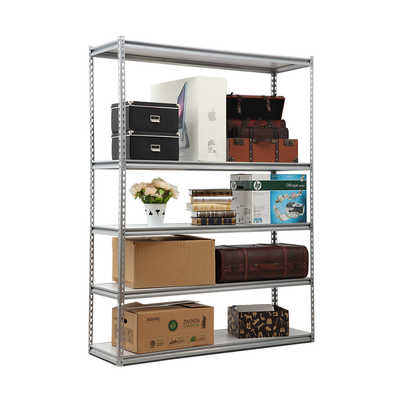
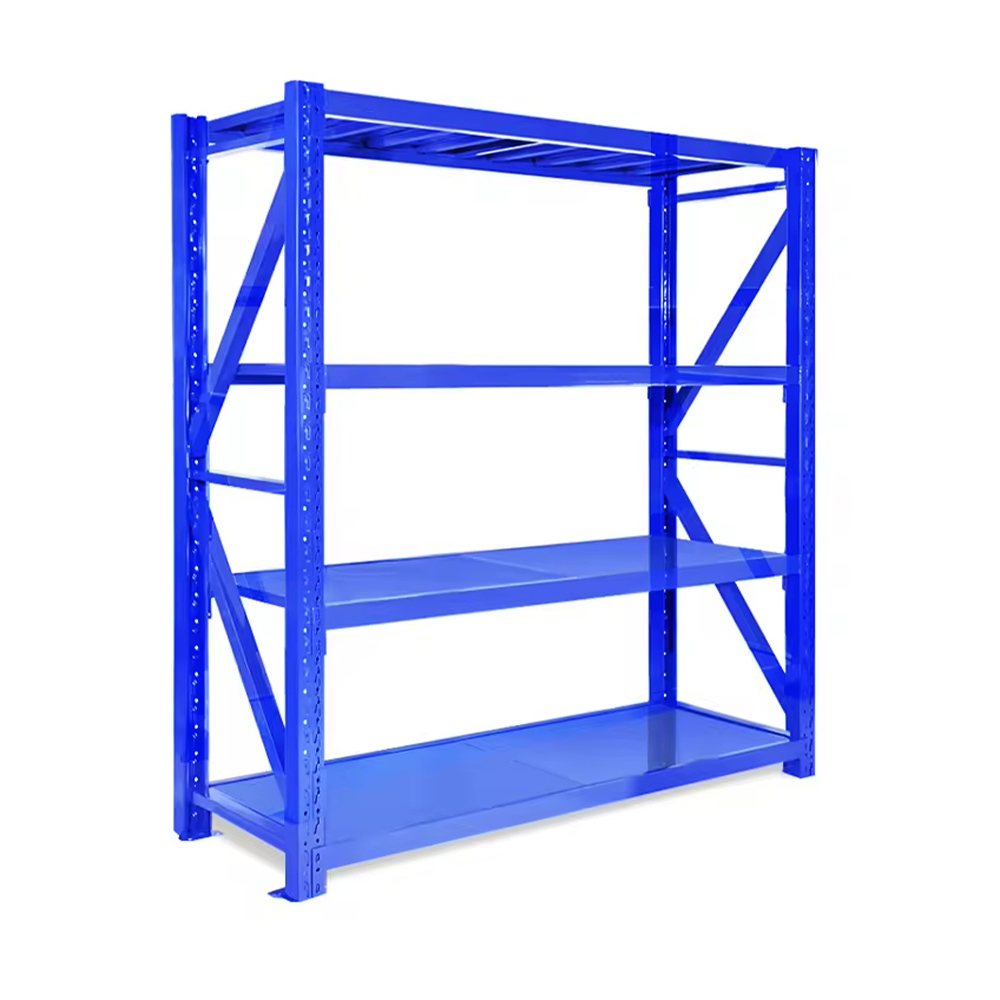
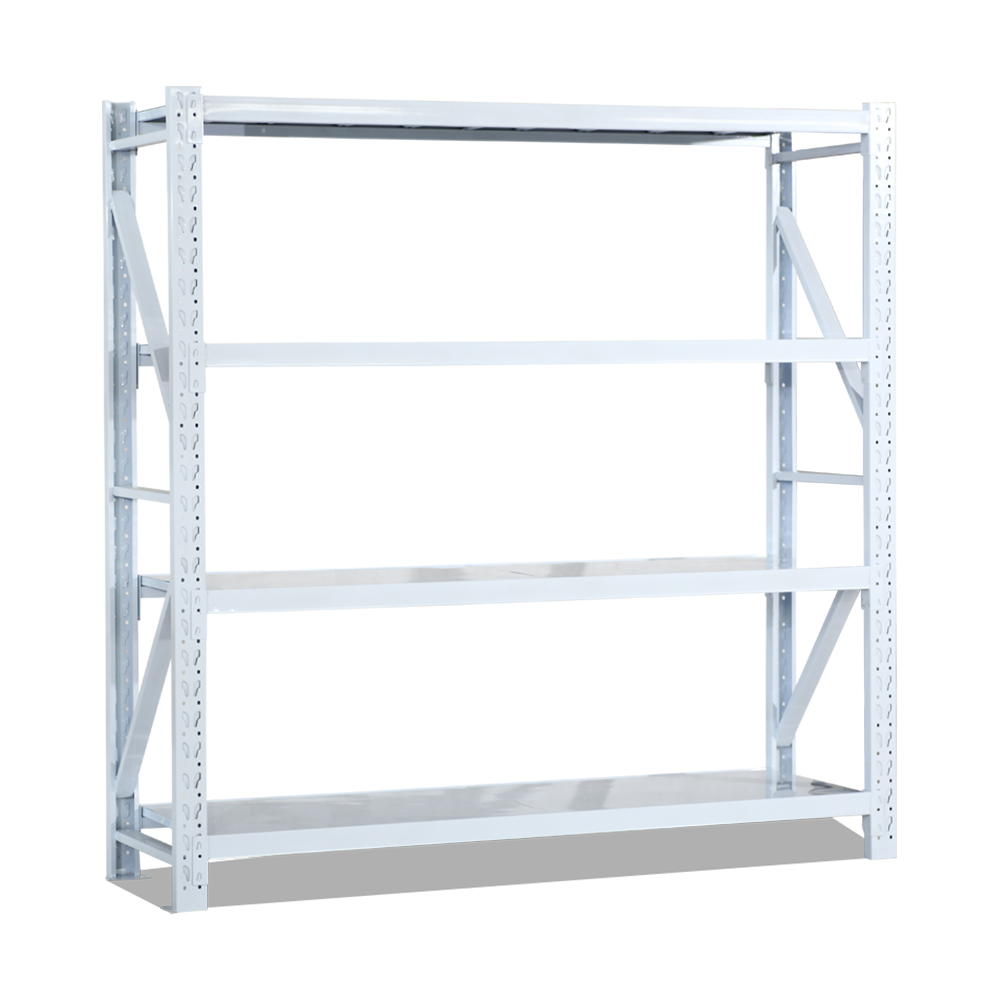
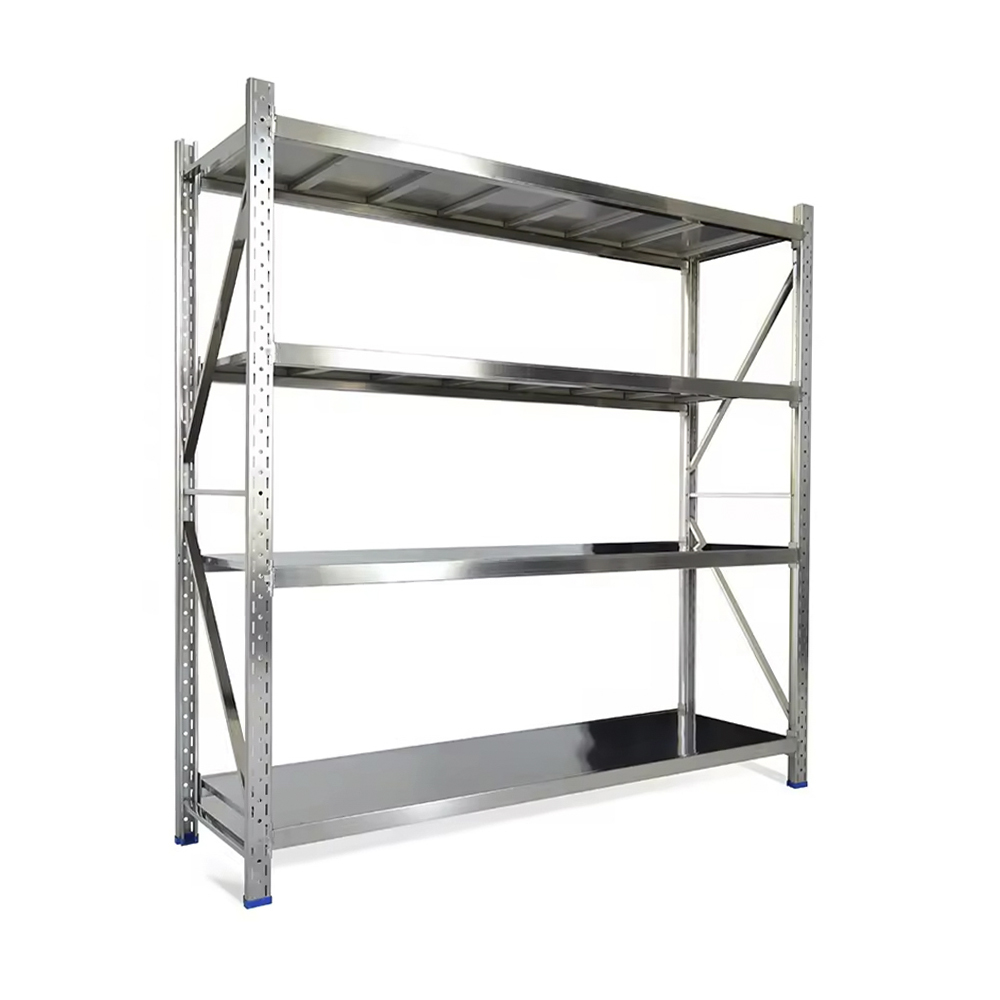
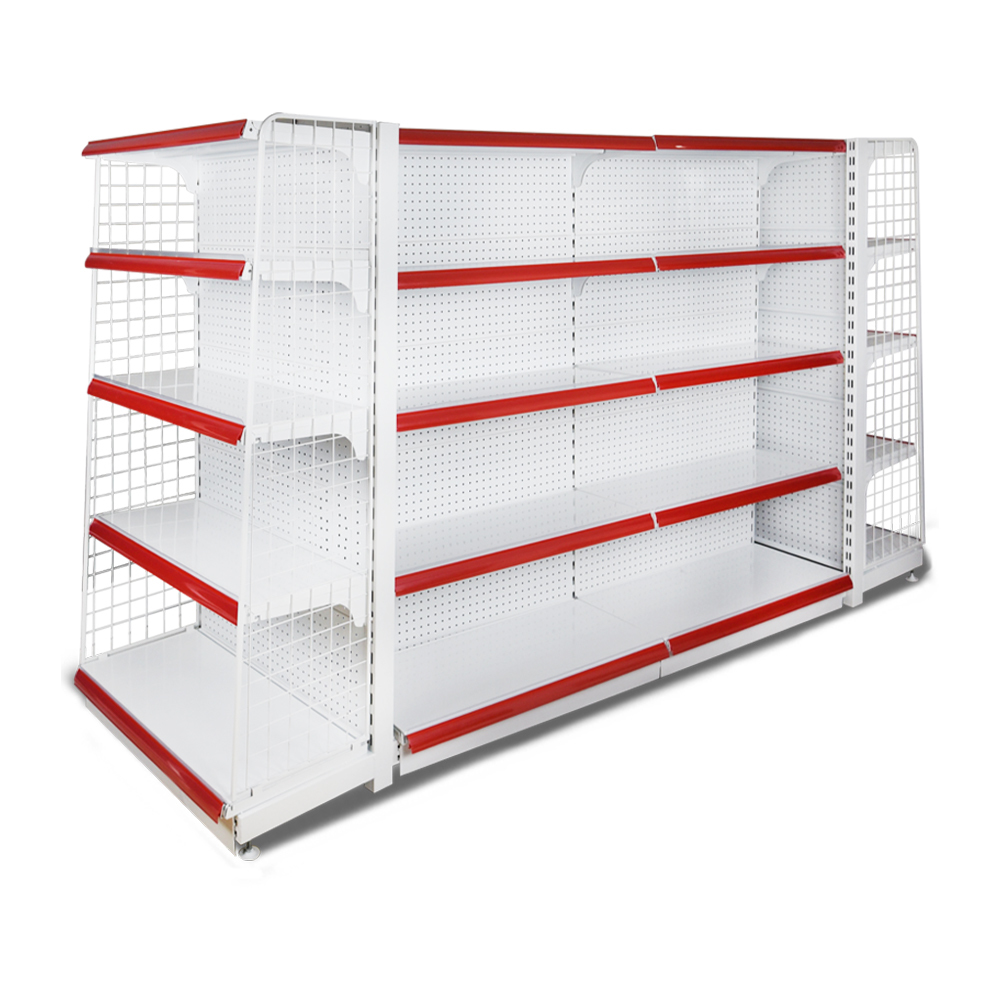
Efficient storage is no longer limited to large warehouses or commercial facilities. Homes, apartments, offices, workshops, retail spaces, and distribution centers all need shelving that makes better use of available space while remaining reliable, accessible, and easy to maintain. Adjustable metal shelving provides a practical answer to these requirements by combining vertical storage capacity, flexible shelf positioning, durable construction, and straightforward assembly.
The adjustable metal shelving system discussed in this article is designed for a wide range of applications, from organizing household supplies and office files to storing tools, inventory, cartons, equipment, and daily-use materials in warehouse environments. Its open multi-tier structure allows users to see stored items clearly, retrieve them quickly, and change the shelf arrangement as their needs develop.
Unlike fixed storage furniture that may become unsuitable when item sizes change, adjustable shelving can be reconfigured without replacing the entire unit. This flexibility is one of its most important advantages. A shelf can be positioned to accommodate small containers, tall appliances, storage boxes, cleaning supplies, archived documents, toys, sports equipment, or packaged products.
Shanghai King Global Shelf Co., Ltd. manufactures shelving and storage products for homes, offices, supermarkets, warehouses, and other commercial environments. With experience in product development, manufacturing, quality control, and international market service, the company provides both standard products and OEM/ODM storage solutions for customers with different specifications and market requirements.
Why Adjustable Metal Shelving Is a Practical Storage Investment
Storage furniture must perform more than one function. It should hold products securely, use floor space efficiently, remain stable during daily operation, and be simple enough for users to assemble or modify. Adjustable metal shelving is especially effective because it addresses these needs through a relatively simple structure.
The system uses vertical uprights and multiple horizontal shelves to create several levels of storage within a compact footprint. Instead of spreading boxes and supplies across the floor, users can arrange them upward. This helps preserve valuable walking space and makes small rooms more functional.
In an apartment, the shelving unit can hold kitchen supplies, books, folded clothing, small appliances, and household accessories. In an office, it can organize files, stationery, packages, promotional materials, and equipment. In a warehouse, it can support stock organization, spare parts storage, picking operations, and overflow inventory.
The open design is another significant benefit. Users do not need to open cabinet doors or move multiple containers before locating an item. Each shelf remains visible, which can reduce search time and improve awareness of available stock. For businesses, this visibility can support more efficient inventory handling. For households, it can make daily organization easier.
Metal construction also offers a practical balance between strength and maintenance. Compared with many low-cost plastic storage units, steel shelving is better suited to long-term use and repeated loading. Compared with bulky wooden furniture, an open metal rack can be lighter in visual appearance, easier to clean, and more adaptable to utility spaces.
Key Product Features
Durable Steel Construction
The shelving system is manufactured with a steel structure intended to provide reliable support for storage applications. Steel is widely used in shelving because it offers good rigidity, durability, and resistance to deformation when properly designed and loaded within its intended capacity.
A stable steel frame is particularly valuable in areas where shelves are accessed frequently. Household users may repeatedly place and remove containers, while warehouse operators may handle cartons and packaged goods throughout the day. A durable structure helps the rack maintain its usefulness through regular operation.
The product is suitable for light-duty home organization and can also support broader office, workshop, retail, and warehouse storage applications. Actual load limits should always be confirmed according to the selected model, shelf size, loading method, and installation conditions. Users should distribute weight evenly and observe the supplier’s technical specifications.
Rust-Resistant Surface Finish
The shelving includes a rust-resistant finish that helps protect the metal surface during everyday use. This feature is important in storage rooms, garages, utility areas, and other environments where dust, humidity, or occasional moisture may be present.
A smooth finish also simplifies cleaning. In many situations, users can remove dust and surface dirt with a dry or damp cloth. Regular cleaning helps preserve the appearance of the shelving and prevents accumulated dirt from interfering with storage operations.
The finish is designed to support long-term usability, but it should not be treated as permission to expose the unit continuously to standing water, corrosive chemicals, or outdoor weather unless the specific product has been approved for those conditions. Good maintenance practices remain important for maximizing product life.
Five Adjustable Tiers
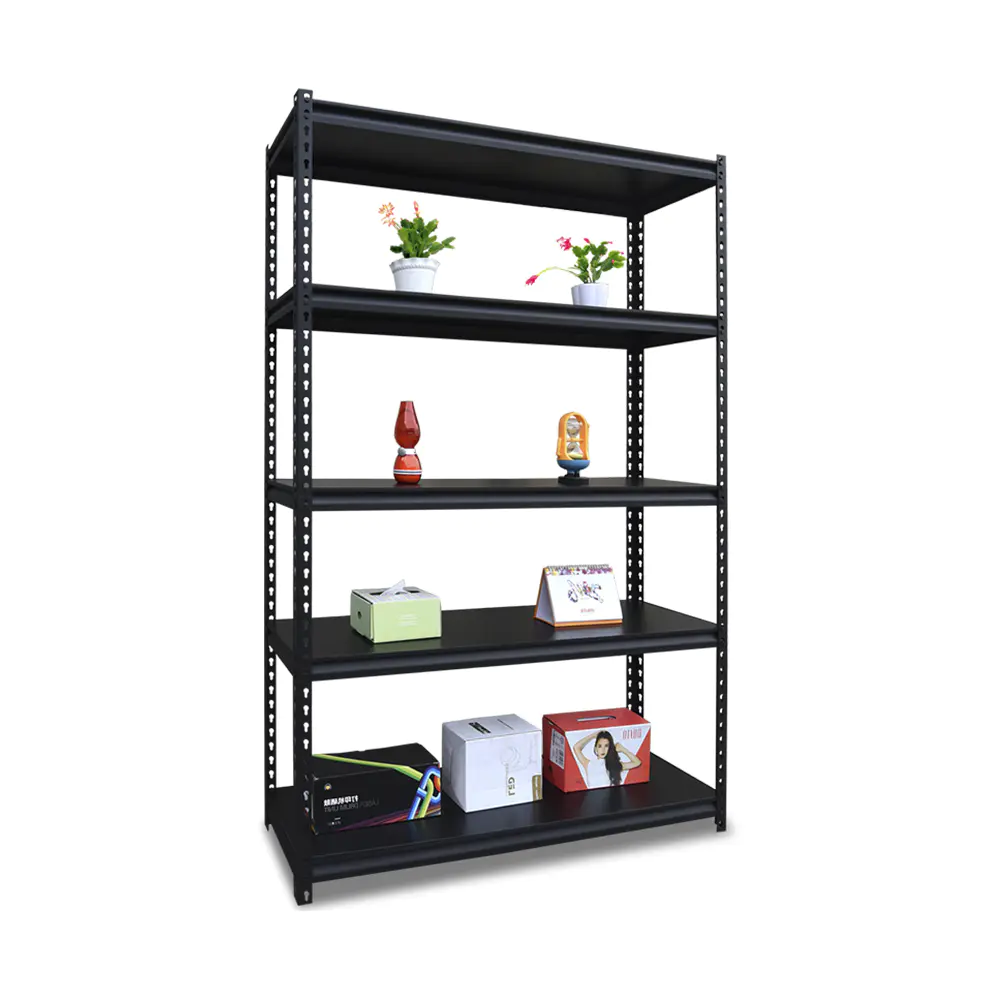
The five-tier configuration provides multiple levels for organizing items vertically. Adjustable shelf positions allow each tier to be placed according to the height of the stored products. Shorter items can be grouped together on closely spaced shelves, while taller items can be accommodated by creating additional vertical clearance.
This arrangement is more efficient than a fixed shelf layout because storage needs rarely remain unchanged. A household may need to store seasonal decorations one month and small appliances the next. An office may reorganize supplies after a change in staffing or workflow. A warehouse may receive products in different carton sizes. Adjustable tiers provide the flexibility to respond to these changes.
Boltless Assembly
Boltless assembly is designed to make setup faster and more convenient. Instead of requiring users to install numerous bolts and nuts, the components connect through an interlocking structure. This reduces the number of tools needed and can simplify installation in homes, offices, stores, and warehouses.
Tool-free or low-tool assembly can be especially beneficial for businesses installing multiple shelving units. Faster assembly may reduce preparation time and lessen disruption to daily operations. It also makes the product more approachable for homeowners and small businesses that may not have specialized installation equipment.
Although assembly is designed to be straightforward, users should follow the supplied instructions carefully. The rack should be placed on a reasonably level surface, all components should be fully engaged, and the finished unit should be checked for stability before loading.
Open Access and Visibility
The open shelf design allows users to view stored items from the front and, depending on placement, from the sides. This can improve organization because items are easier to identify without opening doors or searching inside deep cabinets.
Open shelving is also useful where airflow and quick access matter. Garages, stockrooms, utility rooms, back offices, and workshops often benefit from storage that allows users to see tools, parts, consumables, and supplies immediately.
For retail or display environments, open shelves can help present packaged goods and merchandise. For warehouses, the same visibility can make picking and replenishment more efficient. In the home, it can support a clean and accessible arrangement of commonly used items.
Advantages Compared with Conventional Storage Alternatives
Compared with Fixed Shelving
Fixed shelving is limited by its original layout. If the spaces between shelves are too narrow, tall items may not fit. If the spaces are too wide, valuable vertical capacity may be wasted. Adjustable metal shelving solves this problem by allowing users to alter the internal arrangement.
This flexibility can extend the useful life of the product. Rather than replacing a fixed unit whenever storage requirements change, users can adjust the existing rack. That can reduce replacement costs and support more sustainable purchasing decisions.
Compared with Closed Cabinets
Closed cabinets provide concealment, but they can make access slower and reduce visibility. Users may need to open doors, move objects, or search through dark interior spaces. Adjustable open shelving places items in direct view and supports quicker retrieval.
Open storage is also often easier to clean and inspect. A user can immediately see whether dust has accumulated, whether products are misplaced, or whether a shelf needs reorganizing. This is helpful in both household and commercial settings.
Closed cabinets may still be preferable for confidential documents, dust-sensitive products, or spaces where visual concealment is important. However, for general-purpose organization, open metal shelving offers a more accessible alternative.
Compared with Plastic Shelving
Plastic shelves can be convenient for very light items, but some low-cost plastic units may be vulnerable to bending, cracking, or deterioration under repeated use. Metal shelving generally provides a more robust foundation for long-term storage and a wider range of applications.
The steel structure is also more suitable for environments where users expect a rack to hold heavier household supplies, office materials, tools, cartons, or stock. Load performance still depends on product specifications, but metal construction provides a strong basis for dependable storage.
Compared with Wooden Furniture
Wooden shelving can provide a traditional appearance, but it may be less suitable for utility areas, workshops, stockrooms, and locations where moisture or frequent cleaning is a concern. Metal shelving has a practical industrial character, a smooth protective finish, and an open structure that can be cleaned efficiently.
Metal shelving can also be easier to reconfigure. A modular steel system is designed around functional storage rather than a fixed decorative layout, making it useful when the same unit must serve different purposes over time.
Compared with Non-Adjustable Commercial Racks
Some commercial racks are designed around a single product type or fixed storage pattern. They can work well when the inventory is highly standardized, but they may be inefficient when carton dimensions, product categories, or operating requirements change.
Adjustable shelving offers a more versatile option for businesses that handle mixed inventory. It can be used for boxed products, spare parts, tools, supplies, records, and packaged goods without requiring an entirely new storage system for every category.
Applications in Different Environments
Home Storage
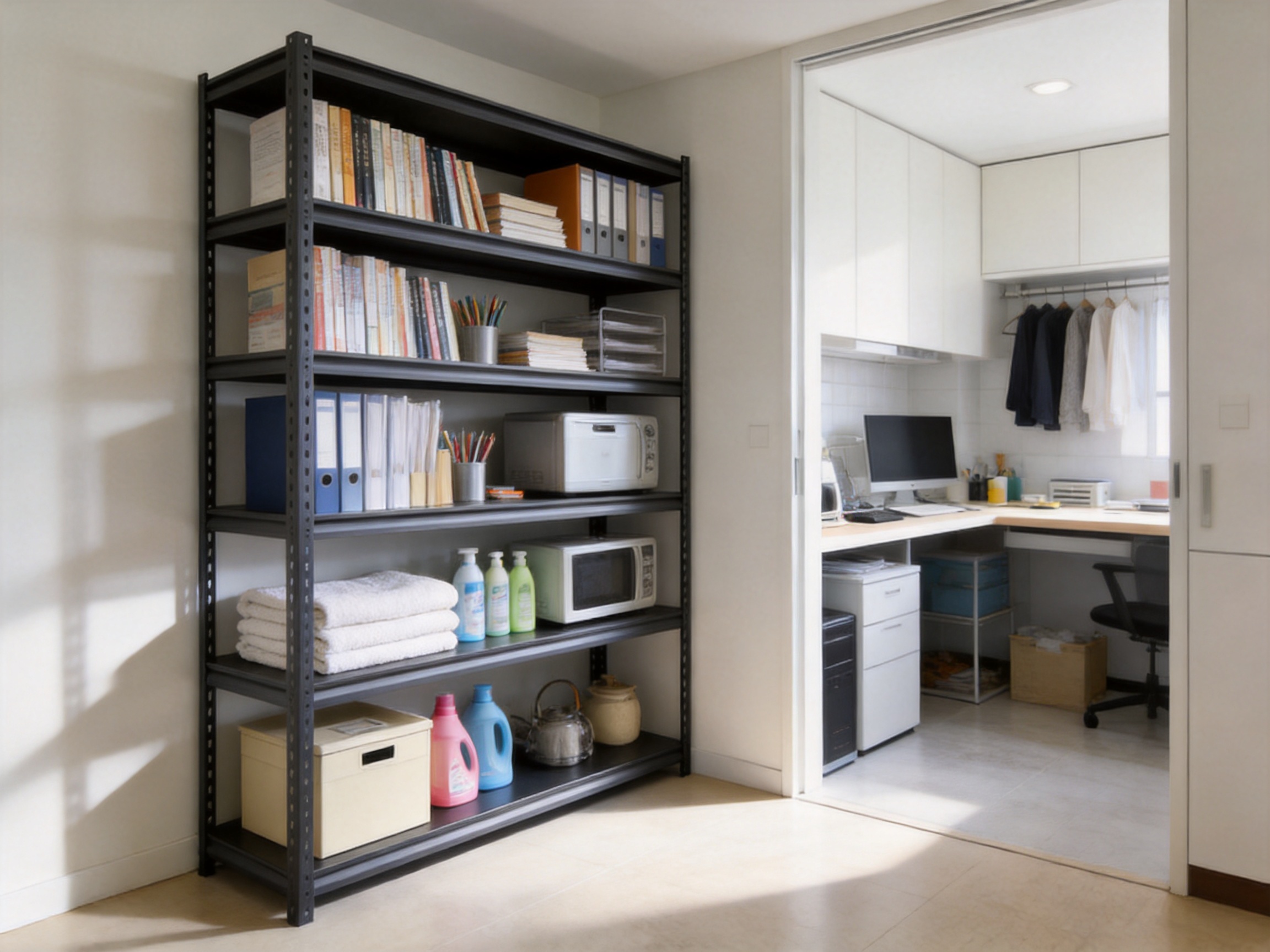
In residential settings, the shelving unit can help organize rooms that frequently become cluttered. It can be placed in a kitchen, pantry, laundry room, bedroom, garage, basement, hallway, utility room, or home office, provided the location offers adequate floor stability and clearance.
In the kitchen, shelves can hold cookware, food containers, small appliances, and supplies. In a laundry room, they can organize detergents, towels, baskets, and cleaning accessories. In a garage, the rack can store tools, hardware, vehicle care products, gardening supplies, and seasonal equipment.
For families, adjustable storage can accommodate changing needs as children grow. Toys, books, school materials, sports equipment, and hobby supplies may all require different shelf heights. A rack that can be reconfigured is more practical than furniture designed for only one stage of household use.
Small Apartments and Condominiums
Small living spaces require careful use of every available square meter. A vertical storage rack provides additional capacity without occupying the floor area of a large cabinet or multiple storage boxes.
Its compact footprint can make it suitable for studios, apartments, condominiums, and other homes where built-in storage is limited. By grouping items vertically, users can preserve more open floor space and create a cleaner visual arrangement.
In small spaces, placement and stability are especially important. The rack should not obstruct doors, exits, walkways, ventilation openings, or electrical equipment. Heavier items should generally be stored on lower shelves to support stability and ease of access.
Office Organization
Offices often need flexible storage for paper files, stationery, printer supplies, parcels, sample products, promotional materials, and equipment. An adjustable metal shelving unit can be placed in a copy room, archive area, supply room, reception back area, or shared workspace.
Open visibility allows employees to locate frequently used supplies without opening drawers or cabinets. Adjustable tiers can also separate different categories of office materials. For example, paper products may be placed on one level, writing supplies on another, and shipping materials on a third.
Because office needs can change with staffing, technology, and workflow, flexible shelving may be more useful than furniture with fixed compartments. The same unit can be reorganized when the office layout or storage process changes.
Warehouses and Stockrooms
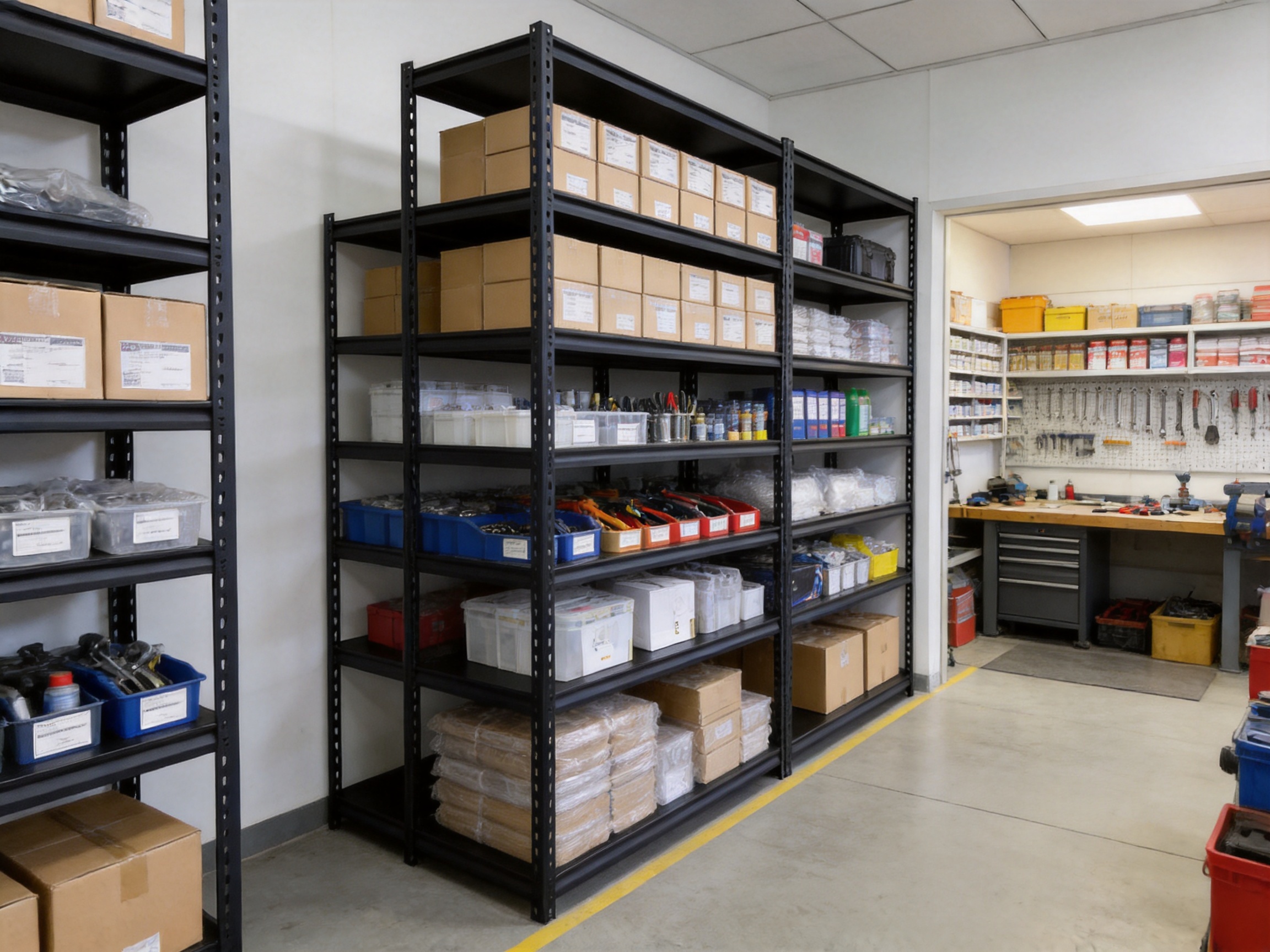
In warehouses, shelving supports organized inventory placement, product picking, replenishment, and stock visibility. The five-tier design can provide several levels for cartons, containers, spare parts, tools, or packaged products.
Open shelves can help employees identify products faster and monitor stock levels more easily. When products are arranged by category, size, SKU, or picking frequency, the shelving system can contribute to a more orderly workflow.
For warehouse use, operators should evaluate the rack according to load capacity, shelf dimensions, aisle width, floor conditions, handling equipment, and local safety requirements. If very heavy pallets or extremely high loads are involved, a dedicated pallet racking system may be more appropriate than general-purpose adjustable shelving.
Retail and Supermarket Back Rooms
Retail operations frequently require storage beyond the sales floor. Back rooms may hold replenishment inventory, packaging materials, cleaning supplies, seasonal displays, and reserve stock. Adjustable shelving enables staff to organize these materials without committing to a rigid layout.
In smaller retail spaces, the same design may be used for practical product display, provided the configuration meets the retailer’s presentation and safety requirements. Open visibility can improve product accessibility, while adjustable levels allow the rack to accommodate different package heights.
Workshops and Utility Areas
Workshops benefit from storage that can separate tools, components, consumables, and equipment. Adjustable metal shelving provides a central location for items that might otherwise remain on workbenches or floors.
Organized shelving can improve productivity by reducing time spent searching for tools and materials. It may also help keep work surfaces clear and reduce trip hazards. In environments involving oil, dust, or other residues, the smooth surface can make routine cleaning more manageable.
Product Benefits at a Glance
| Feature |
Practical Benefit |
Typical Application |
| Steel construction |
Supports durable, long-term storage use |
Homes, offices, workshops, stockrooms, and warehouses |
| Rust-resistant finish |
Helps protect the surface and simplifies cleaning |
Utility rooms, garages, storage areas, and commercial environments |
| Five adjustable tiers |
Accommodates items with different heights |
Boxes, tools, supplies, appliances, files, and inventory |
| Boltless assembly |
Reduces installation complexity and tool requirements |
Residential setup, office installation, and multi-unit projects |
| Open design |
Improves visibility, access, and stock recognition |
Picking areas, supply rooms, retail back rooms, and homes |
| Reconfigurable layout |
Adapts to changing storage requirements |
Seasonal storage, growing families, changing offices, and mixed inventory |
Manufacturing Strengths and Production Capabilities
The performance of a storage rack depends not only on its visible design but also on how consistently it is manufactured. Material selection, component forming, surface treatment, assembly accuracy, inspection, and packaging all influence the final product.
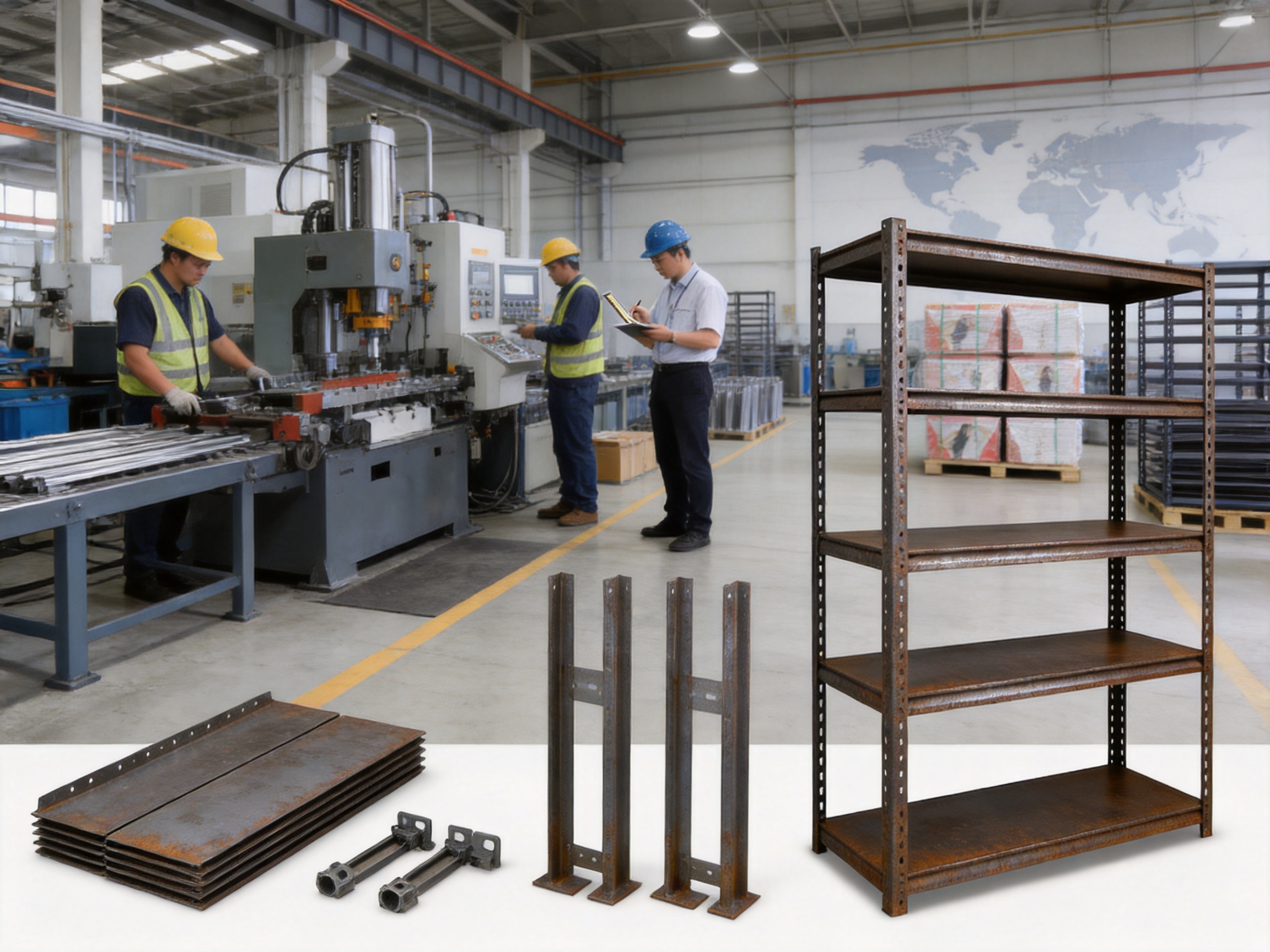
Shanghai King Global Shelf Co., Ltd. operates as a professional shelving manufacturer with an integrated system covering product development, manufacturing, quality control, and market service. This integrated structure allows the company to coordinate product requirements across the production process rather than treating design, manufacturing, and after-sales service as disconnected activities.
The company was founded in 2010 and operates a production base covering approximately 60,000 square meters. With more than 300 employees, it has established production resources intended to support both standard products and customized projects.
Product Development and Engineering
Product development is essential for creating shelving that is functional, manufacturable, and suitable for different markets. A strong development process considers shelf structure, connection methods, stability, loading behavior, packaging, installation, and user convenience.
For adjustable shelving, engineering attention is particularly important because the rack must accommodate repeated shelf repositioning while maintaining a secure connection. The upright structure, shelf supports, and interlocking points should work together to create a stable assembly when installed correctly.
OEM and ODM capability also requires the manufacturer to interpret customer requirements accurately. Customers may need changes in dimensions, shelf configuration, finish, packaging, labeling, or application. An experienced development team can help transform those requirements into a practical product specification.
Material and Component Control
Consistent material quality supports consistent rack performance. Steel components must be selected and processed according to the intended application. A professional manufacturing operation typically establishes material controls, production specifications, and inspection procedures to reduce variation between batches.
Component control is also important for boltless shelving. Uprights, shelves, connectors, braces, and support elements must be formed to compatible tolerances so that the final assembly fits correctly. Poorly matched components can create installation difficulties, instability, or uneven shelf seating.
Forming and Fabrication
Metal shelving production generally involves processes such as cutting, bending, punching, forming, welding where required, and component assembly. Each stage influences the accuracy and strength of the finished part.
Precise forming helps create consistent shelf edges, upright profiles, and connection points. Accurate punching or other connection preparation supports reliable boltless assembly. Controlled fabrication also contributes to clean alignment and a more professional appearance.
The exact equipment and process sequence may vary according to product design and customer requirements. However, the goal remains the same: to produce components that are dimensionally consistent, structurally reliable, and suitable for efficient assembly.
Surface Treatment
The rust-resistant finish is an important part of the product’s durability and appearance. Surface preparation and coating control help create a more uniform protective layer and improve resistance to ordinary handling and environmental exposure.
A controlled finishing process can also support consistent color, texture, and coverage across production batches. This matters for customers purchasing multiple units or developing a coordinated storage system for a commercial facility.
Surface treatment should be evaluated together with the intended application. Indoor storage, humid utility areas, retail environments, and industrial locations may have different requirements. The manufacturer can help customers select suitable specifications for their operating conditions.
Quality Control
Quality control should extend across the entire production process rather than focusing only on final appearance. Incoming material checks, in-process inspections, dimensional verification, surface inspection, assembly checks, and final packaging review can all contribute to product consistency.
For shelving, important inspection points may include component dimensions, shelf fit, connection engagement, surface quality, frame alignment, and packaging completeness. A well-organized quality system helps identify problems before products leave the factory.
Quality control is particularly important for international customers because products may be transported over long distances and installed by different users. Clear specifications and consistent production reduce uncertainty for distributors, retailers, contractors, and end users.
Packaging and International Supply
Storage products must be packaged efficiently because their components can be long, flat, or relatively heavy. Proper packaging protects parts from scratches, bending, moisture, and loss during handling and shipment.
Efficient packaging can also reduce shipping volume and simplify warehouse handling. A manufacturer serving international markets must consider labeling, documentation, loading methods, and destination requirements as part of the overall supply process.
Shanghai King Global Shelf Co., Ltd. exports products to North America, Southeast Asia, Japan, South Korea, the Middle East, Europe, and other regions. International experience can help the company understand different customer expectations and support communication across varied markets.
OEM and ODM Advantages
Standard shelving products are useful for many customers, but some projects require customized solutions. A distributor may need a particular color or package design. A retailer may require a modified shelf arrangement. A warehouse operator may need different dimensions or a special configuration to match an existing layout.
OEM services allow customers to purchase products manufactured according to their specifications and branding requirements. ODM services can provide a more complete development pathway in which the manufacturer contributes design, engineering, and production expertise.
The company’s experience in shelving and storage products supports customization in areas such as product configuration, finish, packaging, labeling, and application-specific requirements. The exact range of customization should be confirmed during technical discussions because feasibility depends on order volume, design complexity, tooling, and production conditions.
For customers comparing suppliers, integrated OEM/ODM capability can be an advantage over companies that only trade standard products. It can reduce communication gaps between design and production, support more efficient product development, and make it easier to build a consistent product portfolio.
How the Product Supports Better Space Utilization
Space utilization is not simply a matter of placing more items in a room. Effective storage must balance capacity, access, safety, visibility, and future flexibility. A rack that holds many items but makes them difficult to retrieve may create operational problems rather than solve them.
Adjustable shelving supports better space utilization by allowing the vertical area above the floor to be used efficiently. Shelf spacing can be aligned with the actual dimensions of stored items, reducing unused gaps. Items can also be grouped according to frequency of use, category, weight, or workflow.
Frequently accessed products can be placed between waist and shoulder height. Heavier items can be positioned lower, while lighter or less frequently used materials can be stored higher. This arrangement can improve ergonomics and reduce unnecessary reaching or lifting.
In offices and warehouses, labeling each shelf or category can further improve efficiency. A clear organization system allows users to return items to the correct location and identify missing stock more quickly.
Installation and Organization Recommendations
Choose the Right Location
Install the shelving on a firm, level surface that can support the rack and its intended load. Avoid areas where the unit may be exposed to continuous water, strong impact, or corrosive substances unless the product specification permits such use.
Leave sufficient clearance around the rack for walking, cleaning, loading, and inspection. In a warehouse or stockroom, maintain appropriate aisle space and ensure that the rack does not interfere with doors, fire equipment, emergency routes, or material-handling operations.
Assemble Carefully
Even boltless shelving requires correct assembly. Confirm that each connector is fully seated and that shelves are properly supported. Do not force parts together in a way that could bend connection points or damage the finish.
After assembly, inspect the rack from several angles. Check whether the uprights are vertical, the shelves are level, and the structure remains stable when lightly tested. If the floor is uneven, corrective measures may be necessary according to the manufacturer’s instructions.
Load Evenly
Distribute weight across each shelf instead of concentrating heavy items in one small area. Place heavier products on lower levels whenever possible. Keep loads within the stated capacity and avoid using the rack as a climbing surface or platform.
Do not allow stored items to extend dangerously beyond the shelf edges. Oversized or unstable goods should be placed in a configuration that prevents them from falling or obstructing nearby pathways.
Plan Shelf Heights
Before finalizing the layout, group items by height and frequency of use. Closely spaced shelves can store small containers and boxes, while larger gaps can accommodate appliances, equipment, or tall cartons.
Leave enough clearance to remove items without scraping them against the shelf above. A small amount of additional space can make daily handling easier and reduce the likelihood of accidental damage.
Maintain the Surface
Regularly remove dust and dirt with a soft cloth. For ordinary household or office use, a slightly damp cloth may be sufficient. Dry the surface afterward if moisture remains.
Inspect the rack periodically for signs of damage, loose components, unusual movement, or changes in alignment. If a component is damaged, remove the load from that area and seek appropriate replacement or technical guidance.
Safety and Responsible Use
Safe storage begins with selecting a rack suitable for the intended application. A general-purpose adjustable shelving unit should not be used as a substitute for specialized pallet racking when storing palletized loads or operating with forklifts.
Users should observe the stated load capacity and any installation instructions provided with the product. The rack should be placed on a stable surface and loaded in a manner that preserves balance. If local regulations require anchoring or additional stabilization, those requirements should be followed.
Children should not climb on shelving, and household users should avoid placing unstable objects at the top. In commercial environments, employees should be trained to load, unload, and reorganize shelves safely.
Good organization also contributes to safety. Keeping walkways clear, labeling storage locations, and placing frequently handled products within comfortable reach can reduce avoidable risks.
Why Manufacturer Experience Matters
A storage rack may appear simple, but reliable performance depends on details that are not always visible in product photographs. Connection fit, steel thickness, forming accuracy, surface preparation, coating consistency, packaging, and inspection standards all influence the user experience.
A manufacturer with an established production system can provide more than a single item. It can offer product consistency, technical communication, customization support, order coordination, and after-sales service. This is particularly important for distributors and commercial buyers who need repeat orders with consistent specifications.
Shanghai King Global Shelf Co., Ltd. has developed experience across supermarket shelving, warehouse racks, pallet racking, office shelving, home storage, mezzanine racking, and cantilever racks. This broad product background gives the company a wider understanding of different storage environments and customer requirements.
The company’s production base, technical personnel, quality control structure, and international customer experience support its role as a storage solution supplier rather than only a manufacturer of isolated rack components.
Selection Guide for Buyers
Before purchasing adjustable metal shelving, buyers should identify the types of items to be stored, the available floor area, the required shelf heights, the expected load, and the environment in which the rack will be installed.
Home users may prioritize compact size, easy assembly, appearance, and convenient access. Office buyers may focus on document organization, surface maintenance, and compatibility with existing furniture. Warehouse users may require greater attention to load distribution, operating clearances, replenishment processes, and long-term durability.
Buyers should also ask about available dimensions, shelf capacity, finish options, packaging, installation instructions, replacement parts, lead times, and customization possibilities. For large orders, sample approval and technical drawings can help confirm that the product meets project expectations.
When comparing suppliers, price should not be the only consideration. A lower initial price may not provide the best overall value if the rack is difficult to assemble, inconsistent between batches, poorly packaged, or unsuitable for future changes. Product quality, manufacturing support, communication, and service should be evaluated together.
Frequently Asked Questions
What is adjustable metal shelving used for?
Adjustable metal shelving is used to organize household items, office supplies, tools, files, cartons, inventory, equipment, spare parts, and other stored materials. It is suitable for homes, apartments, offices, workshops, stockrooms, retail back rooms, and many warehouse applications.
How many shelf levels does this product have?
The described configuration includes five adjustable tiers. The shelf positions can be changed to accommodate items with different heights. The exact adjustment method and available spacing should be confirmed with the product specification or installation instructions.
Does the rack require bolts or special tools?
The product is designed for boltless assembly, which reduces the need for conventional bolts and specialized tools. Users should still follow the supplied assembly instructions and ensure that every connection is fully engaged before loading the rack.
Is the shelving suitable for heavy loads?
The steel construction is designed for durable storage use and can support substantial loads when used within the specified capacity. However, the exact load limit depends on the model, dimensions, shelf configuration, installation surface, and loading method. Buyers should request the applicable technical capacity before using the rack for heavy commercial storage.
Can the shelving be used in a warehouse?
Yes. It can be used in warehouses and stockrooms for cartons, supplies, spare parts, tools, and other inventory. For palletized goods, forklift operations, or very high loads, a dedicated pallet racking system may be more appropriate.
Is the surface easy to clean?
The smooth rust-resistant finish is designed to simplify routine maintenance. Dust and ordinary dirt can generally be removed with a soft cloth, while a damp cloth may be used when appropriate. The surface should be dried after cleaning, and harsh chemicals should be avoided unless approved for the finish.
Can the shelves be rearranged after installation?
Yes. One of the main benefits of the product is its adjustable layout. Shelves can be repositioned to create more clearance for tall items or closer spacing for smaller products. The rack should be unloaded or partially unloaded before making adjustments.
Is this shelving appropriate for a small apartment?
Yes. Its vertical design helps maximize storage capacity while using relatively little floor space. It can be used for kitchen supplies, household goods, books, clothing accessories, cleaning products, or other items. The rack should be positioned where it does not obstruct pathways or exits.
Can the manufacturer provide customized products?
Shanghai King Global Shelf Co., Ltd. provides OEM and ODM solutions in addition to standard storage products. Depending on the project, customization may involve dimensions, configuration, color, packaging, labeling, or other specifications. Customers should discuss technical requirements, quantities, and feasibility with the manufacturer.
What should be placed on the lower shelves?
Heavier, larger, or frequently moved items are generally best placed on lower shelves. This can support overall stability and make lifting more comfortable. Lighter and less frequently accessed items may be stored on higher levels.
How can businesses maintain organized shelves?
Businesses can group products by category, SKU, size, or usage frequency. Shelf labels, inventory records, clear aisles, and regular inspections can improve efficiency. Items should be returned to designated locations after picking or use.
What makes this product different from ordinary fixed shelving?
The main distinction is its adjustable, reconfigurable layout. Users can change shelf positions as storage requirements evolve. The combination of steel construction, rust-resistant finish, boltless assembly, open access, and five adjustable tiers provides a flexible alternative to rigid storage furniture.
Conclusion
Adjustable metal shelving is a versatile solution for organizing homes, offices, workshops, retail spaces, stockrooms, and warehouses. Its five-tier configuration increases vertical storage capacity, while adjustable shelf positions help users accommodate items with different heights. The open design improves visibility and access, and the boltless structure supports convenient assembly.
The steel construction and rust-resistant finish are intended to provide dependable long-term use with straightforward maintenance. Compared with fixed shelves, closed cabinets, plastic units, and inflexible commercial racks, adjustable metal shelving offers a practical balance of durability, accessibility, adaptability, and cost efficiency.
Manufacturing capability is equally important. Shanghai King Global Shelf Co., Ltd. combines product development, fabrication, quality control, packaging, international supply, and market service within an integrated operating system. Its production base, professional workforce, and experience with standard, OEM, and ODM storage products support customers seeking reliable shelving solutions for different markets.
For home users, the rack can reduce clutter and make limited space more functional. For offices, it can organize supplies and improve accessibility. For warehouses and commercial facilities, it can support orderly inventory placement and more efficient daily operations. When selected according to the correct load, environment, and application, adjustable metal shelving can become a durable and adaptable foundation for better storage management.
References
1. Shanghai King Global Shelf Co., Ltd. Product information for adjustable metal shelving and storage rack applications.
2. Shanghai King Global Shelf Co., Ltd. Corporate information concerning product development, manufacturing, quality control, OEM, ODM, and international supply.
3. General principles of steel storage rack design, safe loading, inspection, and workplace organization.
4. General guidance on household, office, retail, and warehouse storage planning.
5. General maintenance practices for painted and coated metal storage equipment.
Adjustable Metal Shelving for Home, Office & Warehouse


 English
 Español
 русский
 Français
 한국어
 عربى
 ไทย
 Deutsch
 Bahasa Melayu
 Português
 Polskie