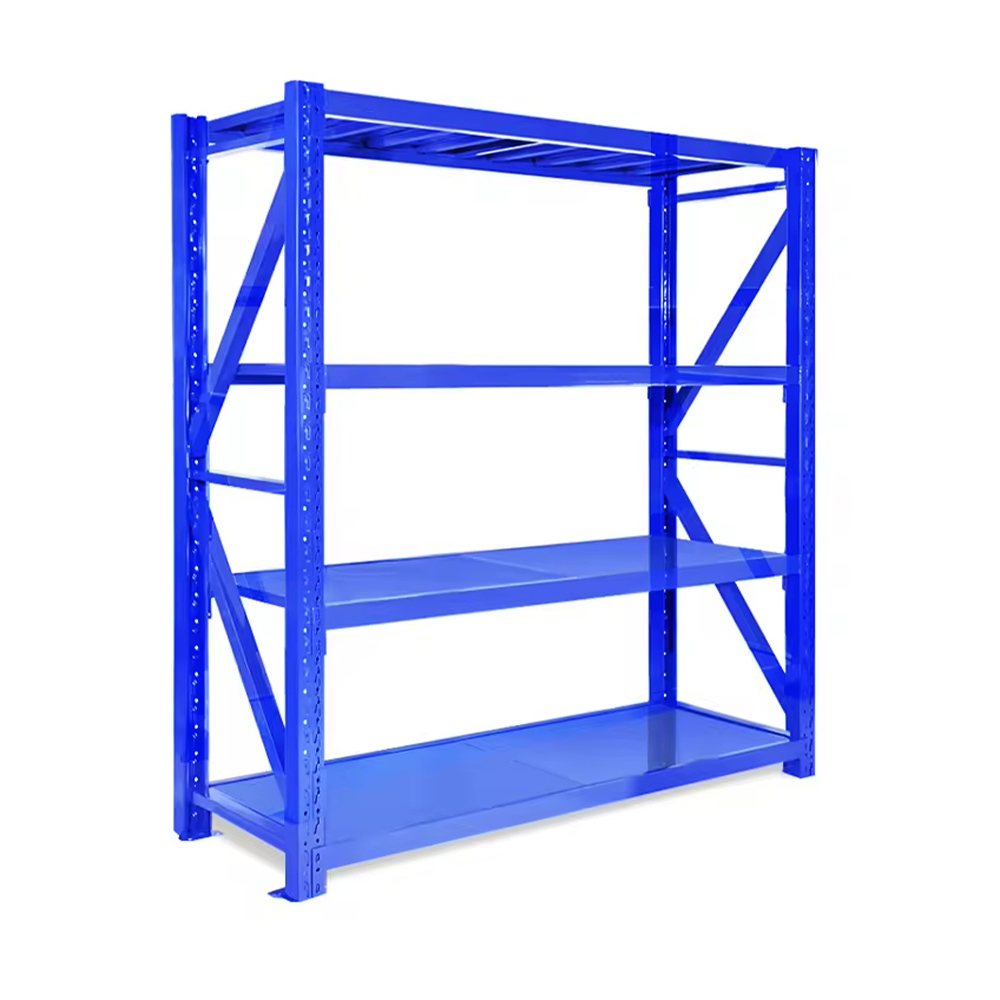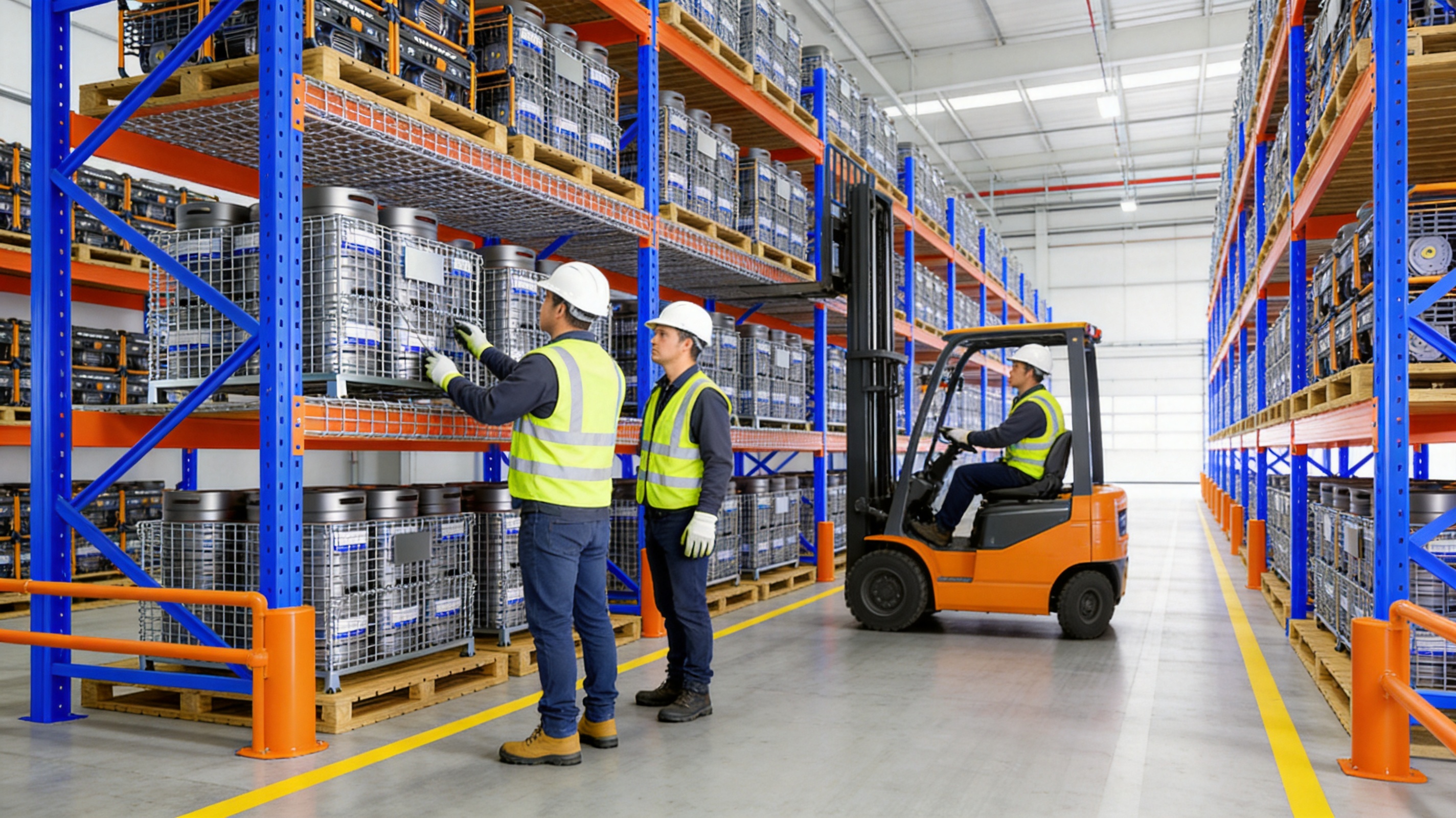
Modern warehouses face constant pressure to store more products, process orders faster, and control operating costs without compromising safety. As inventory volumes increase and warehouse footprints become more expensive, businesses need storage equipment that uses available space intelligently while supporting dependable daily operations. A heavy-duty pallet racking system provides a practical and scalable answer to these challenges by transforming unused vertical space into organized, accessible storage capacity.
Designed for bulk palletized inventory, this type of industrial storage rack combines strong uprights, durable beams, adjustable levels, and a modular configuration. It can be installed as a single row for a small distribution area, expanded into multiple rows for a growing warehouse, or engineered as part of a complete storage system for large logistics facilities. Its flexible structure allows businesses to adapt rack dimensions and beam positions to different pallet sizes, product weights, handling equipment, and warehouse layouts.
Shanghai King Global Shelf Co., Ltd. is an experienced manufacturer and supplier of warehouse racking, pallet racking, mezzanine racking, cantilever racks, supermarket shelves, office shelves, and home storage products. Through product development, engineering, production, quality control, and customer service, the company provides standard and customized storage solutions for different industries and markets. Its heavy-duty pallet racking system is developed for customers seeking a balance of load performance, space utilization, operational convenience, long service life, and commercial value.
Why Pallet Racking Is Essential for Modern Warehouses
Pallet racking is more than a collection of steel frames and horizontal beams. It is an organized infrastructure that influences how inventory is received, stored, picked, counted, replenished, and dispatched. A poorly planned storage arrangement can create blocked aisles, inefficient forklift movement, inaccurate stock records, unnecessary handling, and avoidable safety risks. In contrast, a properly engineered rack system creates clear storage positions and supports a logical flow of goods throughout the warehouse.
The primary advantage of pallet racking is its ability to use vertical clearance. Conventional floor stacking uses only a limited portion of the available warehouse volume. Pallet racks allow products to be stored at several levels, making it possible to increase storage capacity without immediately expanding the building. In facilities with sufficient structural height, rack layouts can be designed for high-level storage, potentially serving warehouses up to approximately 30 meters high when the building, equipment, fire protection, and engineering conditions are suitable.
Vertical storage also improves visibility. When pallet positions are clearly separated, operators can identify where products are located and determine whether a position is occupied, partially used, or available. This supports more accurate inventory management and reduces the likelihood of misplaced goods. It also helps warehouse supervisors evaluate space usage and plan replenishment activities more efficiently.
Another important benefit is adaptability. Inventory rarely remains constant throughout the year. Product dimensions, packaging formats, order volumes, and stock levels can change as a business expands or responds to seasonal demand. Adjustable pallet racking allows beam levels to be repositioned to accommodate different load heights. This flexibility is especially valuable for distributors, manufacturers, third-party logistics providers, wholesalers, retailers, and e-commerce fulfillment operations.
Product Overview
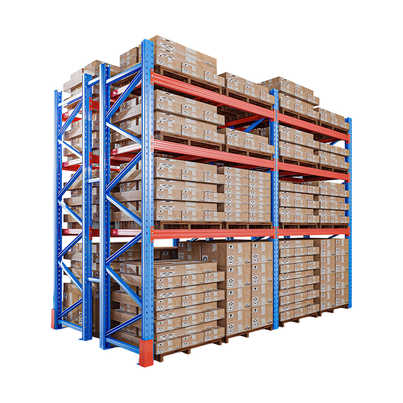
The heavy-duty pallet racking system is a modular industrial storage solution designed for palletized goods. It generally consists of vertical uprights, horizontal beams, bracing components, connectors, base plates, anchors, and optional accessories. Depending on the warehouse application, customers may also select wire decking, steel panels, pallet supports, column protectors, row spacers, safety barriers, guide rails, back guards, signage, and other protective components.
Each rack bay creates defined pallet storage positions. Beams can be installed at different heights so that the rack matches the dimensions of the stored goods. The frame depth and beam length can also be selected according to pallet dimensions, load requirements, aisle widths, and material-handling equipment. This makes the system suitable for many common pallet formats and for custom warehouse layouts.
The rack is intended for use with forklifts and other warehouse handling equipment. Operators can place pallets into designated beam levels and retrieve them when needed. The exact operating method depends on the selected configuration, aisle design, rack height, forklift type, pallet condition, and warehouse management procedures.
Because warehouse conditions vary widely, the final design should be confirmed through professional engineering review. Load capacity, beam span, upright height, base conditions, seismic requirements, fire regulations, forklift clearances, and anchoring requirements must be evaluated for each project. A responsible supplier does not treat a rack system as a one-size-fits-all product. Instead, it uses project information to determine an appropriate configuration.
| System Feature | Practical Benefit | Typical Consideration |
|---|
| Adjustable beam levels | Accommodate different pallet heights and improve vertical utilization | Beam position should match load height and safe handling clearance |
| Strong uprights and beams | Support heavy palletized inventory and repeated loading activity | Capacity must be calculated according to span, height, and load distribution |
| Modular construction | Allow single-row, multi-row, and expanded warehouse layouts | Future expansion should be considered during initial planning |
| Expansion-bolt fixing | Increase stability by securing frames to the warehouse floor | Anchoring must suit the floor condition and project requirements |
| Vertical storage design | Use overhead space and increase storage density | Building height, fire protection, and handling equipment must be reviewed |
| Optional safety accessories | Help protect rack frames, pallets, and personnel | Accessory selection depends on traffic flow and operating conditions |
Major Advantages Over Basic or Competing Storage Options
Higher Use of Available Warehouse Volume
Many conventional storage methods depend heavily on floor area. Floor stacking may be suitable for stable products with predictable rotation, but it becomes less effective when a warehouse stores many stock-keeping units or requires quick access to individual pallets. Pallet racking creates multiple levels of storage, allowing the same floor area to hold significantly more inventory in an organized manner.
Compared with low-cost shelving intended for light cartons or small components, heavy-duty pallet racking is engineered for larger and heavier unit loads. It is designed around pallet dimensions, forklift access, beam spans, and load distribution rather than small-item hand picking alone. This distinction makes it more appropriate for industrial storage and distribution environments.
Compared with fixed concrete or permanent storage structures, modular racking can provide greater flexibility. Rack rows can be extended, reconfigured, or adapted as operational requirements change. A company may begin with a relatively simple installation and add bays, levels, or complementary systems later. This staged approach can reduce the need for a complete warehouse redesign when the business grows.
Improved Accessibility and Inventory Control
A pallet stored directly on the floor may be blocked by other pallets, requiring several loads to be moved before the required product can be reached. Pallet racking creates individual storage positions that improve access to different products. When combined with location codes, barcode systems, warehouse management software, and proper stock rotation policies, the rack layout can support much faster retrieval and replenishment.
Clear access also contributes to more reliable stocktaking. Warehouse personnel can identify pallet positions and compare physical inventory with system records. Organized storage reduces hidden stock, unmarked temporary locations, and accidental mixing of different products. The result is better order accuracy and more efficient use of employee time.
Scalability for Business Growth
Warehouse demand can change rapidly. A business may add new product lines, open an additional sales channel, enter a new market, or experience seasonal growth. A modular rack system can be planned with future requirements in mind. Additional bays can be installed where floor space and safety clearances permit, while beam levels can be adjusted to suit revised product profiles.
This scalability offers an advantage over storage solutions that are designed for only one fixed purpose. Instead of replacing the entire system, a company may be able to modify selected components. The ability to reuse compatible components can help reduce long-term capital expenditure, although all modifications should be reviewed for capacity, stability, and compliance.
Better Operational Flow
Warehouse efficiency is influenced by travel distance, aisle arrangement, product accessibility, and the sequence of handling activities. A carefully planned pallet rack layout can place high-demand items closer to dispatch areas, group similar products together, and separate different operating zones. This can shorten forklift travel routes and reduce congestion.
The rack system can also support different storage strategies. Fast-moving goods may be positioned at convenient levels, while slower-moving or reserve inventory can be stored higher. Products requiring special handling can be assigned to specific areas. Such organization can improve receiving, put-away, picking, replenishment, and shipping performance.
Long-Term Value
The initial purchase price is only one part of a warehouse storage investment. Businesses should also consider durability, maintenance, adaptability, installation quality, space utilization, and the cost of future expansion. A durable heavy-duty rack system can provide value over many years when correctly designed, installed, inspected, and operated.
Compared with repeatedly purchasing temporary floor storage equipment, a well-planned pallet rack installation can create a more stable foundation for warehouse growth. Its value comes from supporting higher capacity, smoother workflows, better inventory visibility, and more consistent use of the facility.
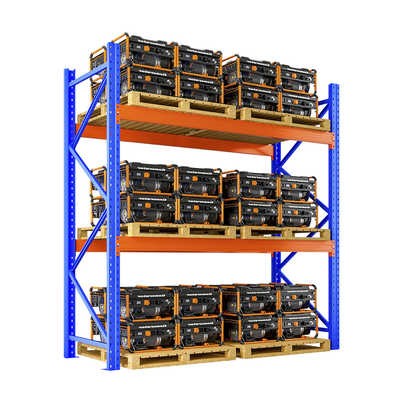
Heavy-Duty Pallet Racking System for Warehouse Stacking
Structural Components and Engineering Functions
Upright Frames
Upright frames form the vertical structure of the rack. They transfer the weight of stored pallets and horizontal beams toward the floor. Frame height, depth, profile, bracing arrangement, steel thickness, and connection design all influence the rack’s performance.
For taller systems, frame design becomes especially important because the rack must resist vertical loading as well as horizontal forces created by forklift activity, accidental contact, building movement, and uneven loading. The appropriate frame specification should be determined by the required height, bay configuration, pallet loads, and local engineering conditions.
Horizontal Beams
Horizontal beams support pallet loads between upright frames. Their length determines the number and arrangement of pallets that can be placed in a bay, while their section profile and material specification influence load performance. Adjustable beam connections allow the levels to be changed as storage requirements evolve.
Beam levels should not be adjusted casually while pallets are stored on the rack. Changes should be made by trained personnel and followed by a review of clearances and capacity. The beam arrangement must provide enough room for pallets to be positioned correctly without contact with adjacent loads, uprights, ceilings, lights, sprinklers, or other building services.
Base Plates and Anchoring
Base plates distribute forces from the upright frames to the warehouse floor. Expansion bolts or other approved anchoring methods help secure the rack and enhance stability. Anchoring is especially important in areas exposed to forklift traffic, vibration, seismic activity, or tall rack configurations.
Floor condition is a major consideration. The concrete slab should be evaluated for thickness, strength, levelness, cracking, and suitability for the proposed anchors. The supplier and installation team should verify that the selected fixing method matches the floor and project requirements.
Decking and Pallet Supports
Some applications use pallets that can rest directly on beams, while others require wire decking, steel panels, pallet support bars, or specialized supports. These accessories help distribute load and reduce the risk of pallet deflection or failure. The correct choice depends on pallet construction, pallet orientation, load distribution, product dimensions, and operating procedures.
Decking can also help prevent small items from falling through rack levels. However, it should not be viewed as a substitute for proper pallet quality or safe loading practices. Damaged pallets should be removed from service, and loads should be stable before they are placed into elevated positions.
Safety Accessories
Rack protectors, end-of-aisle barriers, column guards, row spacers, back guards, guide rails, and safety signs can be added according to the warehouse environment. These components help reduce damage caused by forklift movement and make storage rules more visible to employees.
Safety accessories should be selected based on actual traffic patterns rather than added without planning. For example, an end-of-aisle guard may be useful where forklifts turn near the rack, while a back guard may be appropriate where products could fall toward a pedestrian route. The goal is to create a coordinated protection system that supports both equipment and people.
Customizable Design for Different Warehouse Layouts
One of the strongest features of a modular pallet racking system is the ability to adapt it to a specific warehouse. Every facility has a different combination of columns, doors, loading docks, fire exits, lighting fixtures, ventilation equipment, floor levels, ceiling height, and handling routes. A standard rack size may not use the available space effectively unless it is planned around these conditions.
The design process begins with accurate site information. This may include warehouse dimensions, clear height, floor plan, pallet dimensions, pallet weight, number of pallets, product turnover, forklift specifications, aisle requirements, and planned expansion. Information about local building codes, seismic conditions, fire protection, and customer safety procedures may also be needed.
Rack depth should correspond to pallet depth and loading direction. Beam length should reflect the number of pallets per bay and the required clearance between loads. Upright height should match the building’s usable clear height while maintaining required space around sprinklers, lights, roof structures, and other services. Aisle width should be selected according to the turning radius and operating requirements of the material-handling equipment.
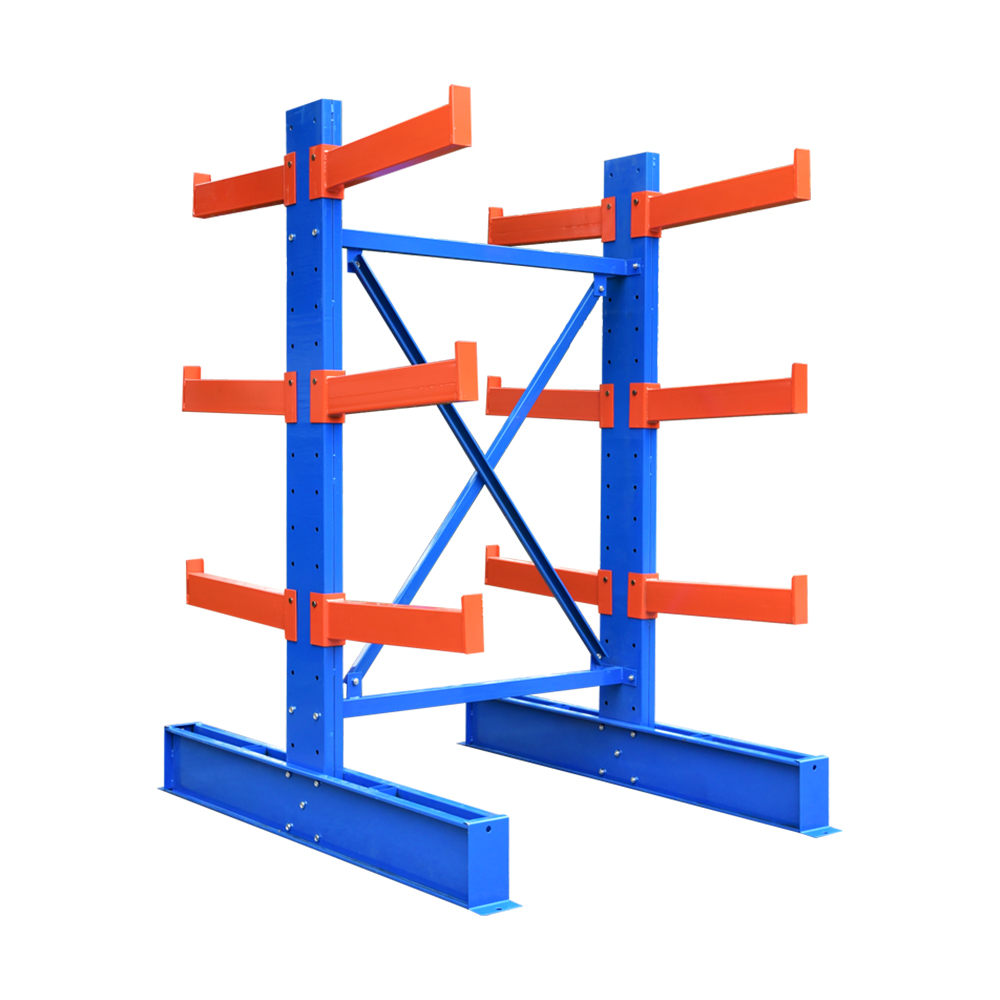
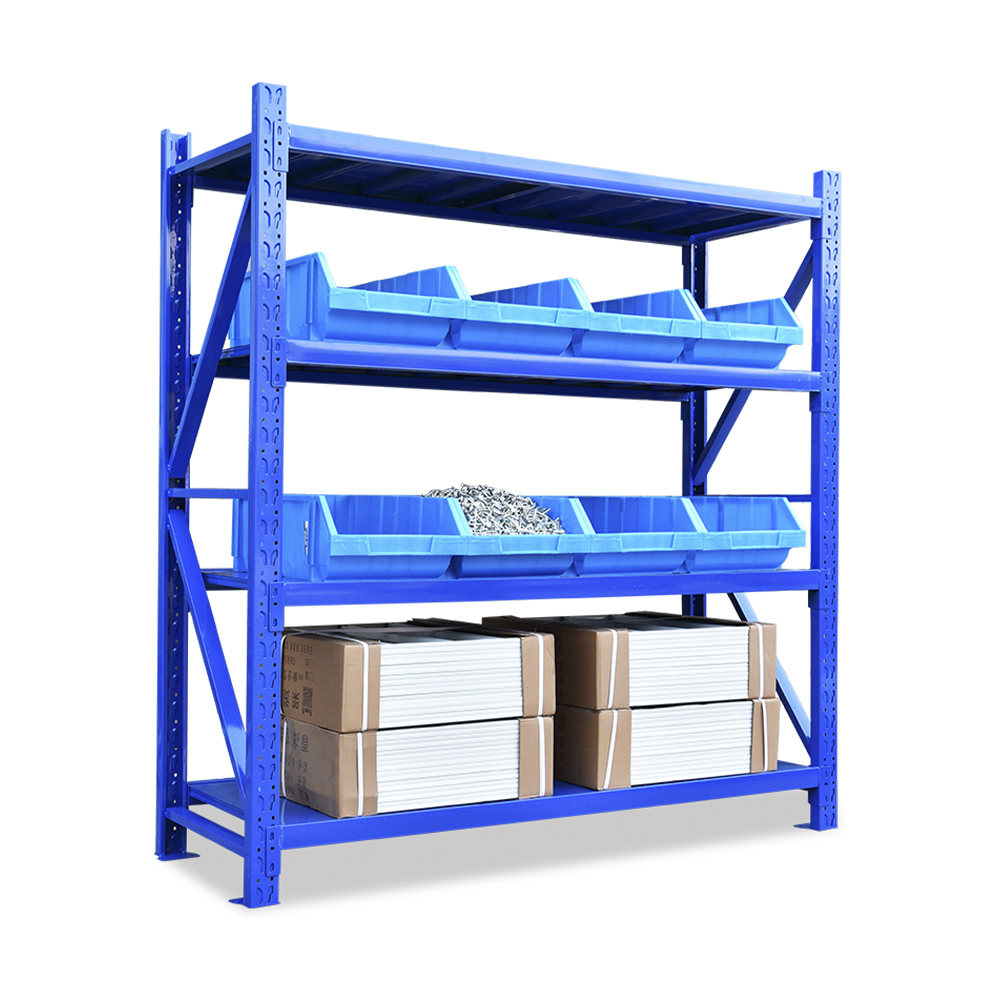
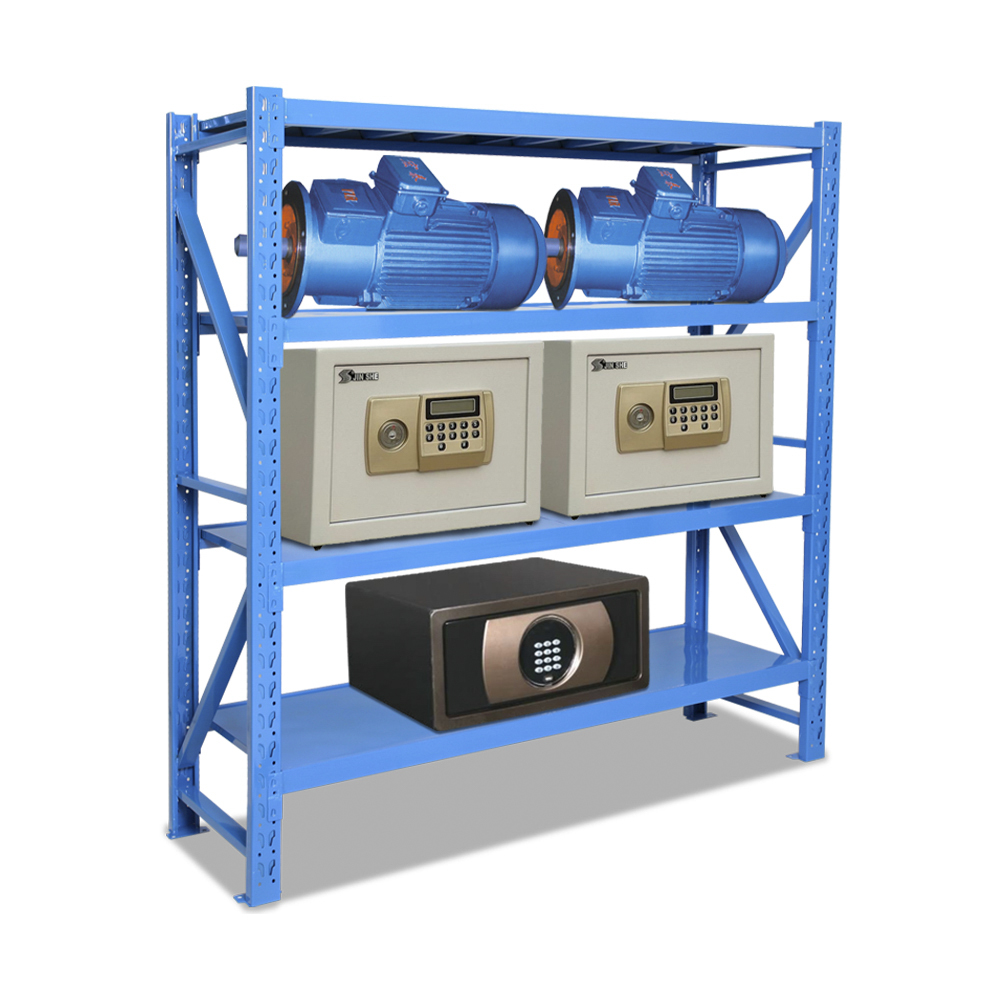
The rack layout can be configured as a single row, back-to-back rows, wall-side rows, multi-row installations, or a complete warehouse storage system. Different zones may use different arrangements. For example, a distribution center may combine standard selective pallet racking with shelving for small parts, cantilever racks for long products, and mezzanine racking for additional floor-level work areas.
Customization does not necessarily mean creating a completely unique product for every project. Efficient customization often involves selecting suitable dimensions, components, accessories, finishes, and layouts from a proven modular platform. This approach provides a balance between project-specific performance and manufacturing efficiency.
Manufacturing Strengths and Production Capabilities
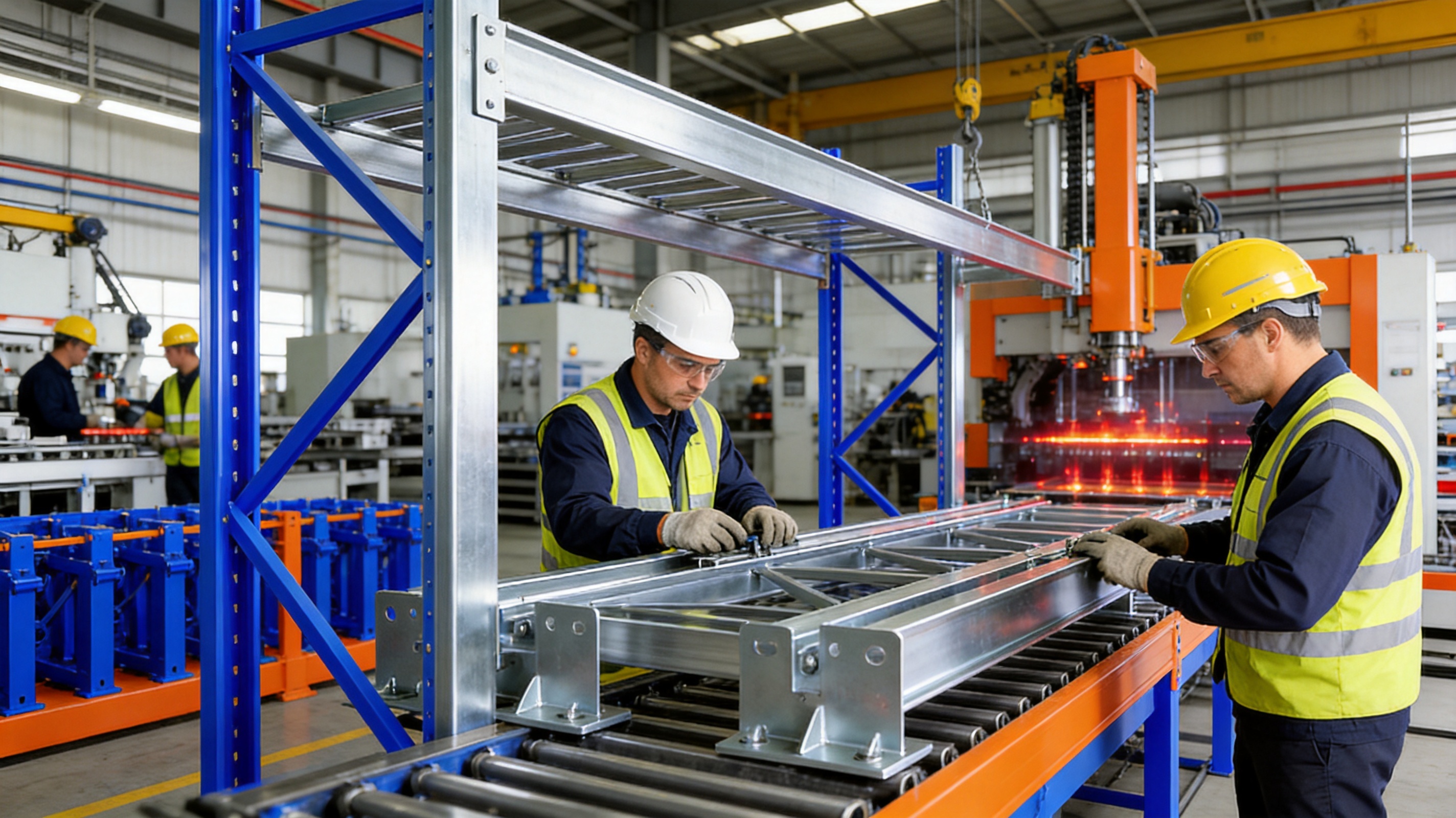
A pallet racking system is only as dependable as the manufacturing process behind it. Material selection, forming accuracy, welding quality, surface treatment, dimensional control, coating consistency, and final inspection all affect the product’s service performance. Shanghai King Global Shelf Co., Ltd. has developed an integrated manufacturing system covering product development, production, quality control, and market service.
The company operates a production base of approximately 60,000 square meters and has more than 300 employees. This scale supports coordinated manufacturing, engineering, inspection, order management, and customer service. It also enables the company to handle both standard products and customized OEM and ODM projects for different markets.
Product Development and Engineering
Product development begins with understanding the intended application. A warehouse rack for light cartons has different requirements from a heavy pallet rack used with forklifts. Engineering teams must consider load type, rack dimensions, connection methods, installation conditions, operating procedures, and customer expectations.
For customized projects, technical information can be translated into drawings, component schedules, layout proposals, and production specifications. This helps align the customer, supplier, installer, and project team before manufacturing begins. Early coordination can reduce errors related to dimensions, accessories, quantities, and site conditions.
Material Processing and Forming
Industrial rack components require consistent dimensions so that frames, beams, connectors, and accessories fit together correctly. Steel components may be cut, punched, rolled, formed, welded, and assembled according to the product design. Accurate processing helps maintain connection quality and reduces installation difficulties.
Consistent hole positioning is particularly important for adjustable systems. Beam connectors and upright perforations must align properly so that storage levels can be installed at the required positions. Dimensional control also supports repeatability when customers expand an existing warehouse using compatible components.
Welding and Assembly Control
Where welded components are used, welding quality affects structural consistency and appearance. Welded joints should be produced according to defined procedures and inspected for visible defects. Assembly checks help verify that frames, bracing, plates, and connectors correspond to the intended specification.
Manufacturing control should continue beyond individual components. Finished frames and beams must be checked as complete assemblies, because a rack system functions as an integrated structure. Component identity, quantity, dimensions, surface condition, and packaging should be verified before shipment.
Surface Treatment and Finish
Warehouse equipment is exposed to regular handling, dust, humidity, and occasional impact. An appropriate surface treatment helps protect steel components and contributes to a clean, professional appearance. Powder coating or other specified finishes may be selected according to customer requirements and operating conditions.
Surface preparation is important because coating performance depends on the condition of the steel before finishing. A properly prepared surface supports adhesion and helps create a more uniform appearance. Color can also assist with warehouse organization by distinguishing rack systems, safety barriers, operating zones, or customer-specific installations.
Quality Control
Quality control should be applied at multiple stages rather than only at the end of production. Incoming materials, processing dimensions, welds, formed profiles, coating condition, component quantities, and packaging can all be reviewed. Documentation and traceability procedures help production teams identify the specifications associated with each order.
Final inspection should confirm that the supplied products match the approved order. This may include checking dimensions, finish, beam and frame quantities, accessories, labels, packaging, and project-specific requirements. Reliable quality control reduces the risk of installation delays and helps customers receive a consistent system.
OEM and ODM Support for Global Projects
Many warehouse operators, distributors, contractors, and storage-equipment brands require products adapted to their own specifications. OEM services may include customized dimensions, colors, labels, packaging, product configurations, and documentation. ODM cooperation may involve product development, design adjustment, component selection, and manufacturing based on a customer’s market requirements.
For international projects, communication is essential. Product specifications should clarify dimensions, load conditions, steel requirements, finish, accessories, packaging, inspection expectations, and installation responsibilities. Clear documentation helps reduce misunderstanding between different technical teams and supports consistent project execution.
A supplier with experience in multiple markets is better positioned to understand the practical differences between regions. Warehouse layouts, pallet standards, handling equipment, safety expectations, shipping requirements, and customer preferences may vary. Shanghai King Global Shelf Co., Ltd. serves customers in North America, Southeast Asia, Japan, South Korea, the Middle East, Europe, and other regions, giving the company experience with a broad range of project conditions.
Global supply capability also requires dependable packing and logistics coordination. Rack components must be protected from damage during loading, transportation, unloading, and temporary storage. Proper labeling helps installation teams identify components efficiently, especially when a project includes many frame sizes, beam lengths, accessories, and custom parts.
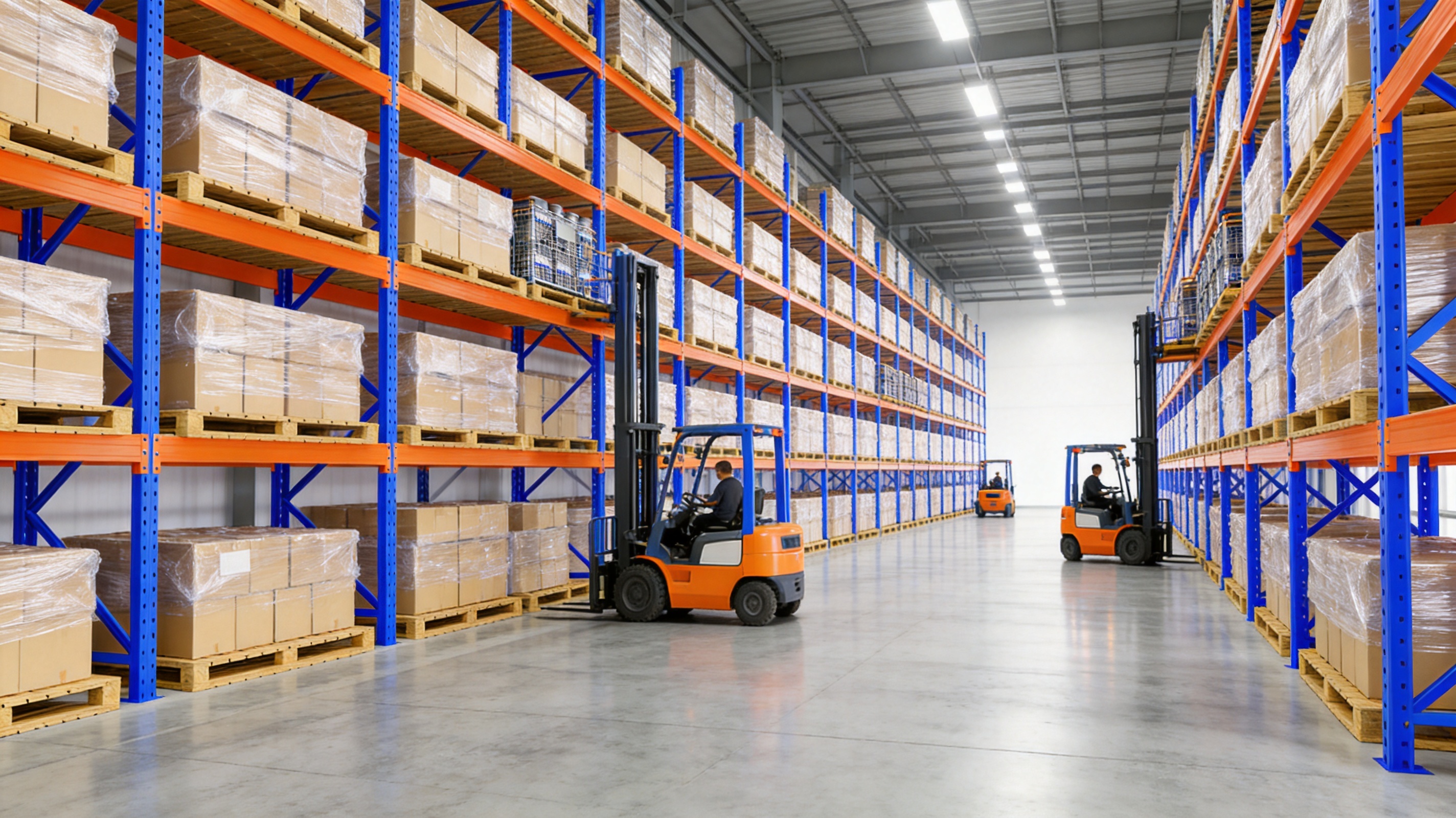
Safety, Compliance, and Responsible Use
Safety is a central consideration in every pallet racking project. A rack system should be designed for its stated load, installed according to approved instructions, and used by trained personnel. Customers should not exceed the specified capacity, remove structural components, modify beams without approval, or use damaged parts.
Safety requirements differ by country, region, building type, and operating environment. The statement that a rack is designed for industrial safety should be supported by project-specific engineering review and compliance checks. Local regulations may address structural design, seismic performance, fire protection, emergency access, inspection frequency, forklift operation, and pedestrian separation.
Anchoring with expansion bolts can improve stability, but the appropriate anchor type, diameter, embedment, spacing, and installation method must be confirmed for the floor and rack design. Anchors should be installed by trained personnel using suitable tools and procedures. A loose, damaged, or improperly installed anchor should be repaired or replaced promptly.
Warehouse managers should establish regular inspection routines. Inspections may identify bent uprights, damaged beams, missing pins, displaced pallets, overloaded levels, loose anchors, impact marks, corrosion, damaged decking, or unsafe operating practices. Any serious damage should be isolated until evaluated by a competent person.
Forklift traffic is one of the most common sources of rack damage. Operators should receive appropriate training and maintain controlled speeds near rack aisles, corners, loading areas, and pedestrian routes. Floor markings, signs, barriers, mirrors, and designated traffic paths can help reduce collisions.
Load placement also affects safety. Pallets should be centered, stable, and suitable for the intended rack position. Loads should not project into aisles or rest unevenly on beams. Heavy or fragile products may require special positioning and additional supports. Employees should understand both the rated capacity and the practical loading rules for the rack.
Installation and Commissioning Considerations
Successful installation begins before the components arrive. The site should be cleared, the floor inspected, and the layout confirmed. Delivery access, unloading equipment, temporary storage space, and installation sequencing should be planned. Any conflict with doors, columns, pipes, sprinklers, electrical systems, or emergency routes should be resolved before assembly.
Installation teams should compare delivered components with the packing list and approved drawings. Frames and beams should be identified correctly, and damaged components should be reported before installation. Upright frames must be positioned accurately, connected according to the design, plumbed, and anchored to the floor.
Beam connectors, safety pins, bracing, decking, guards, and other accessories should be installed as specified. The completed system should be checked for alignment, level, stability, clearances, and correct accessory placement. Installation quality is essential because even a well-manufactured rack may perform poorly if assembled incorrectly.
Before the rack is placed into service, warehouse personnel should receive instructions on safe loading, pallet positioning, beam adjustment, inspection, damage reporting, and capacity limits. Clear signs should display relevant load information where required. The customer should retain drawings, installation records, inspection documents, and maintenance information for future reference.
Using the System to Improve Inventory Management
A well-organized rack layout can support a structured inventory strategy. Each rack bay and level can be assigned a location code. Products can then be stored and retrieved according to a warehouse management system or documented operating procedure. This approach helps reduce search time and provides better visibility into stock levels.
Product classification is another useful practice. Fast-moving products may be stored in lower or more accessible positions, while slower-moving reserve stock can be placed higher. Heavy products should be positioned according to the rack’s load design and handling capabilities. Similar items should be grouped without creating confusion between different product codes, batch numbers, or expiration dates.
Clear labeling can improve daily operations. Rack labels should remain visible from normal forklift or pedestrian approaches. Where appropriate, barcodes, location tags, color zones, and aisle signs can be added. These tools are especially helpful in large facilities with thousands of storage positions.
Inventory accuracy also depends on disciplined procedures. Employees should record temporary movements, damaged goods, returns, partial pallets, and replenishment activities. The rack provides the physical structure, but reliable information depends on consistent warehouse management practices.
Applications Across Different Industries
Manufacturing facilities can use pallet racking for raw materials, components, work-in-progress goods, finished products, packaging, and maintenance supplies. The adjustable levels allow the same facility to store different product sizes while maintaining organized access.
Third-party logistics providers benefit from flexible storage because they often manage inventory for multiple customers. Modular bays can be assigned to different clients, product categories, or service programs. Clear labeling and location control help prevent mixing and support accurate handling.
Wholesale and distribution companies can use selective pallet racks to store high volumes of products with direct access to individual pallets. Retail supply chains may combine pallet racking with carton flow systems, shelving, staging areas, and store replenishment zones.
Food and beverage warehouses may require careful consideration of hygiene, temperature, product rotation, packaging, and regulatory conditions. Pharmaceutical, chemical, automotive, and industrial supply operations may have additional requirements for load control, segregation, fire protection, or environmental management. In every case, the rack should be selected as part of the complete facility solution rather than viewed as an isolated product.
E-commerce and omnichannel operations often need both reserve pallet storage and smaller-item picking areas. Pallet racking can provide the reserve inventory structure, while shelving or mezzanine systems support order picking and packing. This combination allows the warehouse to handle both full-pallet and piece-pick operations.
Cost Efficiency and Return on Investment
The value of a pallet racking system can be measured through several factors. Increased storage capacity may delay the need for building expansion. Better accessibility can reduce labor time. Improved stock accuracy can lower picking errors and product losses. A modular design can also make future changes less expensive than replacing a fixed storage arrangement.
Purchase price should be evaluated together with product life, installation requirements, maintenance, accessories, delivery, and expansion potential. A very low initial price may not represent good value if the system lacks suitable load capacity, has poor dimensional consistency, requires frequent repair, or cannot accommodate future requirements.
A cost-effective system is not necessarily the system with the fewest components. It is the system that provides appropriate performance without unnecessary features. Professional planning helps identify the right balance between storage density, direct access, aisle space, safety protection, and future flexibility.
Manufacturing scale can also contribute to commercial value. A supplier with an established production base, experienced personnel, and integrated quality procedures may be able to manage material purchasing, production scheduling, customization, inspection, and delivery more efficiently. This can help reduce project delays and improve consistency across larger orders.
Why Choose an Experienced Manufacturer
Choosing a rack manufacturer involves more than reviewing product photographs. Customers should evaluate technical capability, manufacturing capacity, quality control, customization experience, communication, delivery coordination, and after-sales support.
An experienced manufacturer can help translate warehouse requirements into a practical storage configuration. It can identify missing project information, recommend suitable accessories, clarify load conditions, and coordinate customized dimensions. This technical involvement is particularly valuable for large warehouses, unusual pallet sizes, high-level storage, mixed product categories, and international projects.
Shanghai King Global Shelf Co., Ltd. has been active in the shelving and storage industry since 2010. Its product range covers warehouse racks, pallet racking, mezzanine racking, cantilever racks, supermarket shelves, office shelves, and home storage products. This broader product capability allows the company to propose complementary systems when a warehouse needs more than one storage method.
The company’s integrated approach combines development, manufacturing, quality management, and market service. Its production base and professional workforce support both standardized manufacturing and project-specific OEM or ODM requirements. International export experience further supports customers seeking storage products for different regions.
The company’s objective is to provide strong, efficient, and customized storage solutions that improve space utilization, operating efficiency, and storage safety. For customers evaluating a pallet racking supplier, these capabilities can provide a stronger foundation for long-term cooperation than a purely transactional purchase.
Frequently Asked Questions
What types of products can be stored in this pallet racking system?
The system is designed primarily for palletized inventory, including finished goods, raw materials, cartons, components, packaged products, and distribution stock. The final suitability depends on pallet dimensions, load weight, product stability, environmental conditions, and the selected rack configuration.
Can the rack be customized for my warehouse?
Yes. Rack height, width, depth, beam levels, accessories, colors, and layout can be adjusted according to the warehouse and inventory requirements. Customers should provide accurate information about building dimensions, pallet sizes, load weights, forklift type, aisle requirements, and expected storage quantity.
How high can the pallet racking system be installed?
The available height depends on building clearance, rack engineering, handling equipment, floor conditions, fire protection, local regulations, and operational requirements. The system can support high-level storage in suitable warehouses, including facilities with clear heights of up to approximately 30 meters when the entire project is properly designed and approved.
Are the beam levels adjustable?
Yes. Adjustable beam levels allow the rack to accommodate different pallet heights and improve the use of vertical space. Beam adjustments should be completed by trained personnel, and the system should be checked afterward to confirm correct connection, clearance, and capacity.
Does the rack require floor anchoring?
Anchoring is commonly used to improve stability, especially for tall racks, forklift-accessed systems, and installations exposed to impact or movement. Expansion bolts or other fixing methods should be selected and installed according to the rack design, floor condition, and local engineering requirements.
Can the system be expanded later?
The modular structure generally allows additional bays, levels, and accessories to be added when space and safety conditions permit. Future expansion should be considered during the initial layout so that aisle routes, fire protection, structural clearances, and traffic flow remain suitable.
What safety accessories are available?
Depending on the project, customers may select column guards, end-of-aisle barriers, back guards, row spacers, guide rails, wire decking, pallet supports, signage, and other protective components. Accessories should be chosen according to traffic patterns, pallet conditions, product type, and site risks.
How should rack capacity be determined?
Capacity depends on upright height and profile, beam length, beam section, number of levels, pallet weight, load distribution, frame spacing, floor conditions, and the complete system design. Customers should use the supplier’s approved capacity information and should not estimate safe loading based only on appearance or component size.
Is this system suitable for all forklift types?
The rack can be designed for use with different forklift and material-handling equipment, but aisle width and clearance must match the selected equipment. Reach trucks, counterbalance forklifts, turret trucks, stackers, and other machines have different turning and operating requirements.
How can warehouse managers maintain the rack system?
Managers should conduct routine inspections, keep aisles clear, replace damaged components, verify that safety pins and anchors remain secure, control forklift traffic, maintain load labels, and remove unstable or damaged pallets. Serious damage should be isolated and assessed by a competent professional before the rack returns to service.
Does the manufacturer provide OEM and ODM services?
Yes. The company provides standard products as well as OEM and ODM solutions. Customization may involve dimensions, colors, accessories, labels, packaging, layouts, and other project requirements, subject to technical review and production feasibility.
What information should be provided when requesting a quotation?
Useful information includes warehouse length, width, clear height, pallet dimensions, pallet weight, number of pallets, product turnover, forklift type, desired rack levels, floor conditions, installation location, required accessories, finish preferences, delivery destination, and any applicable local standards.
Conclusion
A heavy-duty pallet racking system is a practical investment for warehouses that need more capacity, better organization, and reliable access to palletized inventory. Its adjustable beam levels, strong structural components, modular layout, vertical storage capability, and optional safety accessories make it suitable for a wide range of industrial and commercial applications.
Compared with basic floor stacking, light-duty shelving, or inflexible permanent storage structures, pallet racking offers a stronger combination of capacity, accessibility, adaptability, and long-term value. It can support more efficient inventory control, reduce unnecessary handling, improve warehouse traffic flow, and provide a foundation for future expansion.
The best results depend on more than the rack itself. Accurate site information, professional layout planning, suitable load calculations, reliable manufacturing, correct installation, operator training, and regular inspections are all essential. When these factors are managed together, the system can help businesses make better use of existing facilities while maintaining a safer and more productive working environment.
With experience in shelving and storage manufacturing since 2010, a 60,000-square-meter production base, more than 300 employees, international market experience, and capabilities covering development, production, quality control, OEM, and ODM service, Shanghai King Global Shelf Co., Ltd. is positioned to support customers seeking dependable warehouse storage solutions. Its pallet racking system can be configured for individual warehouses, expanding distribution networks, and complete industrial storage projects.
References
1. General principles of industrial storage rack planning, warehouse layout, and material-handling operations.
2. International guidance on the design, installation, inspection, and maintenance of steel storage systems.
3. Recommended practices for forklift traffic management and warehouse pedestrian safety.
4. Technical guidance on pallet dimensions, load distribution, rack beam levels, and storage accessibility.
5. Principles of warehouse inventory control, location coding, stock rotation, and order fulfillment.
6. Manufacturing quality practices for formed steel components, welded assemblies, protective coatings, and industrial storage equipment.


 English
 Español
 русский
 Français
 한국어
 عربى
 ไทย
 Deutsch
 Bahasa Melayu
 Português
 Polskie