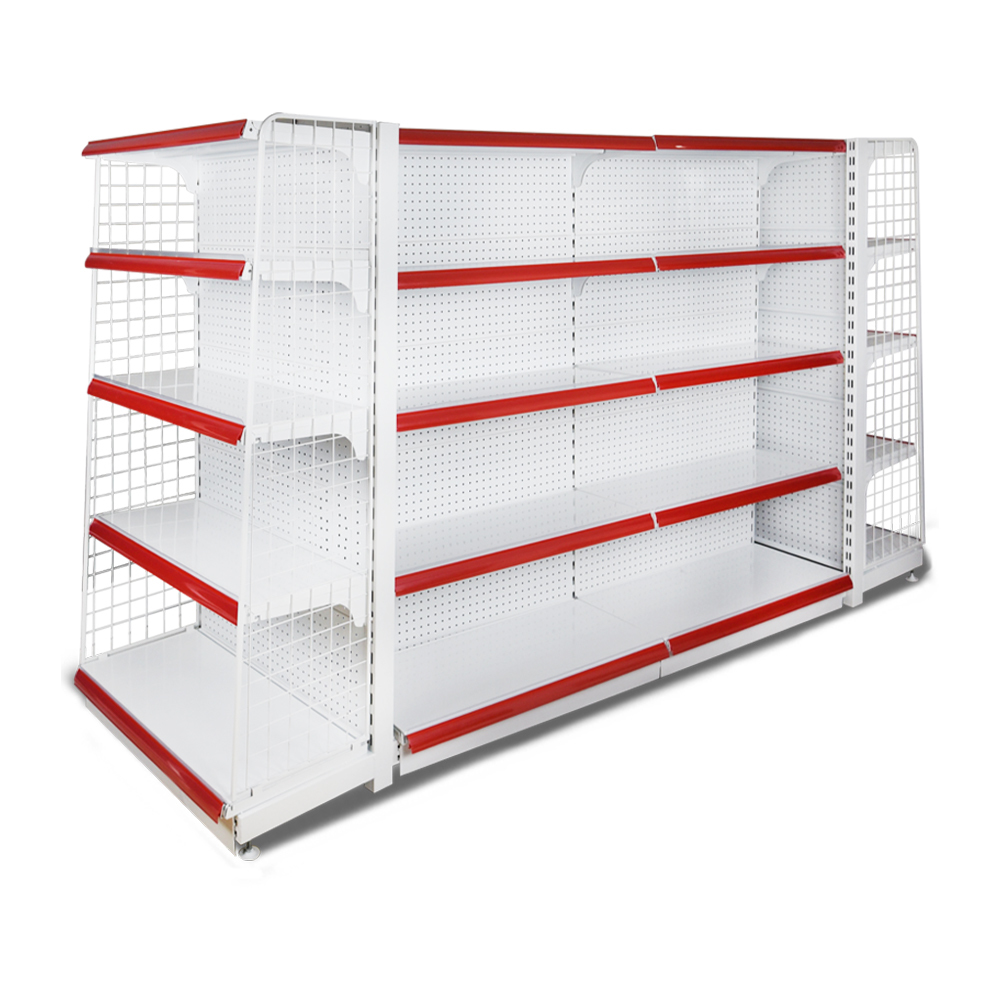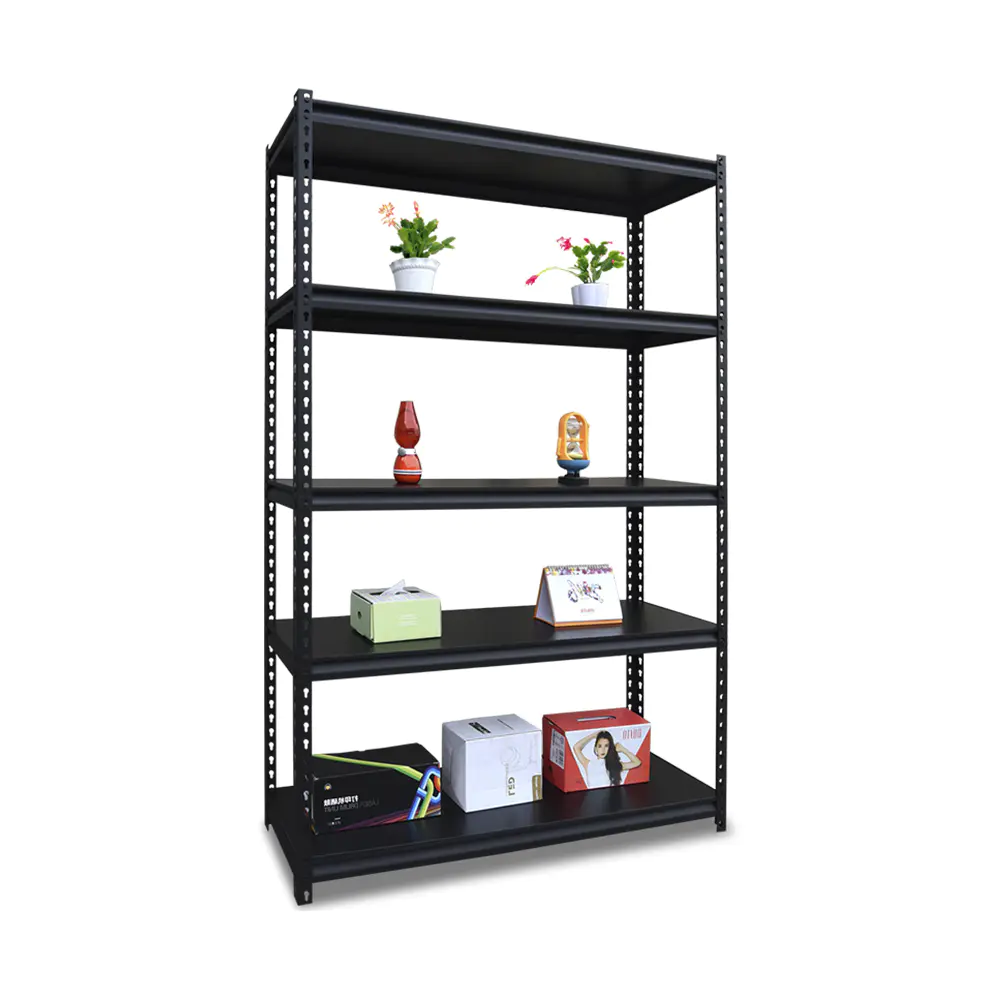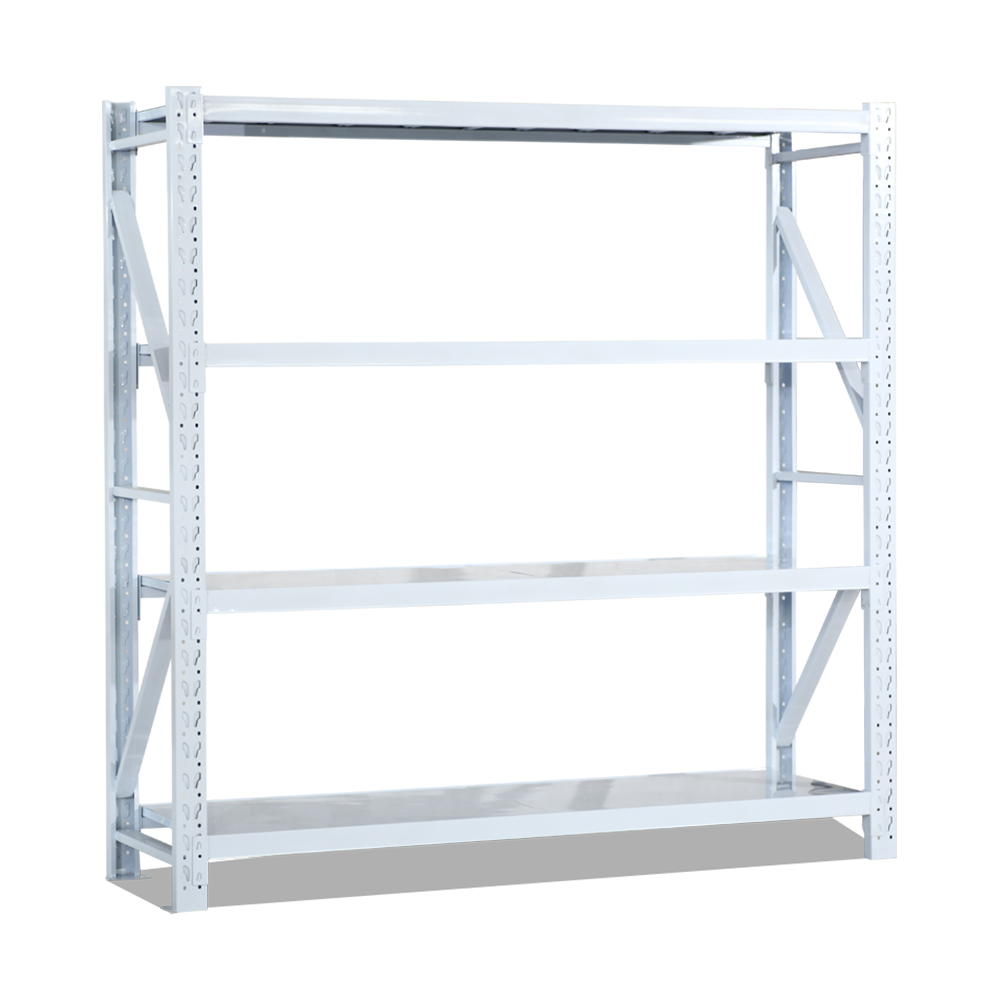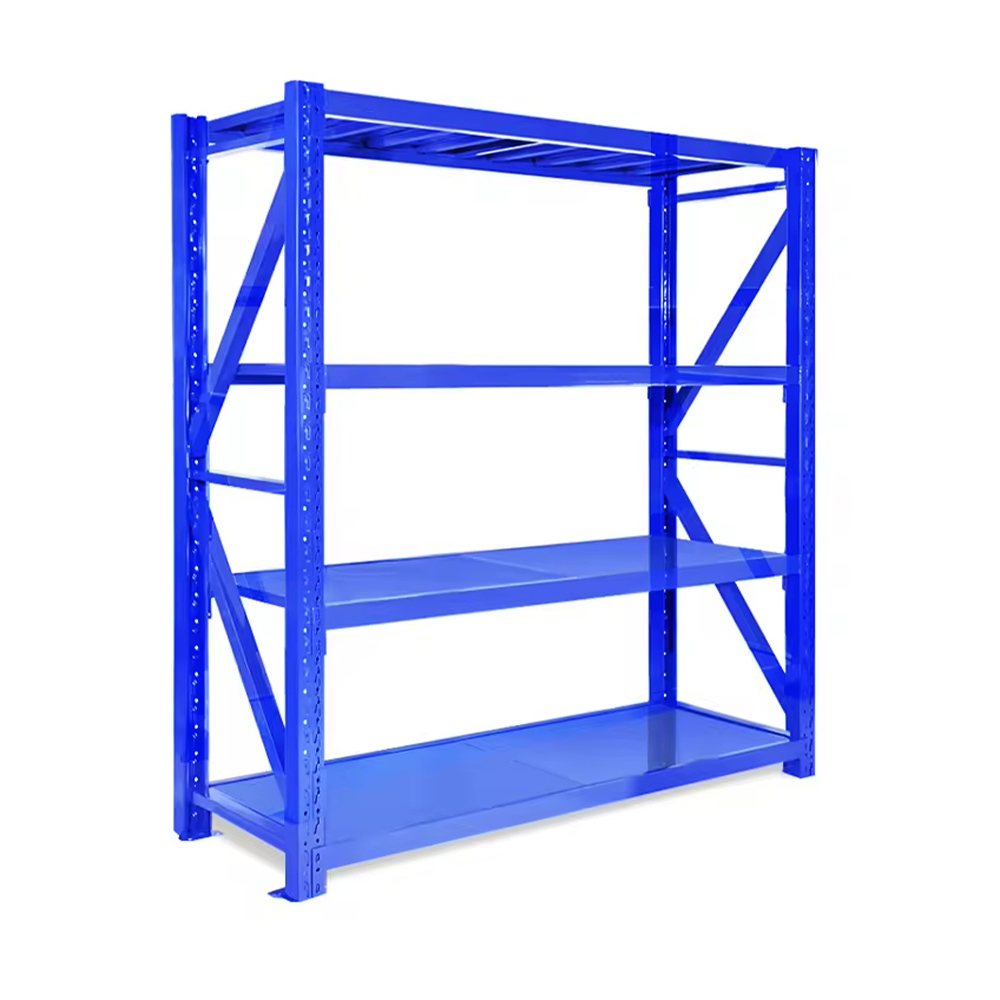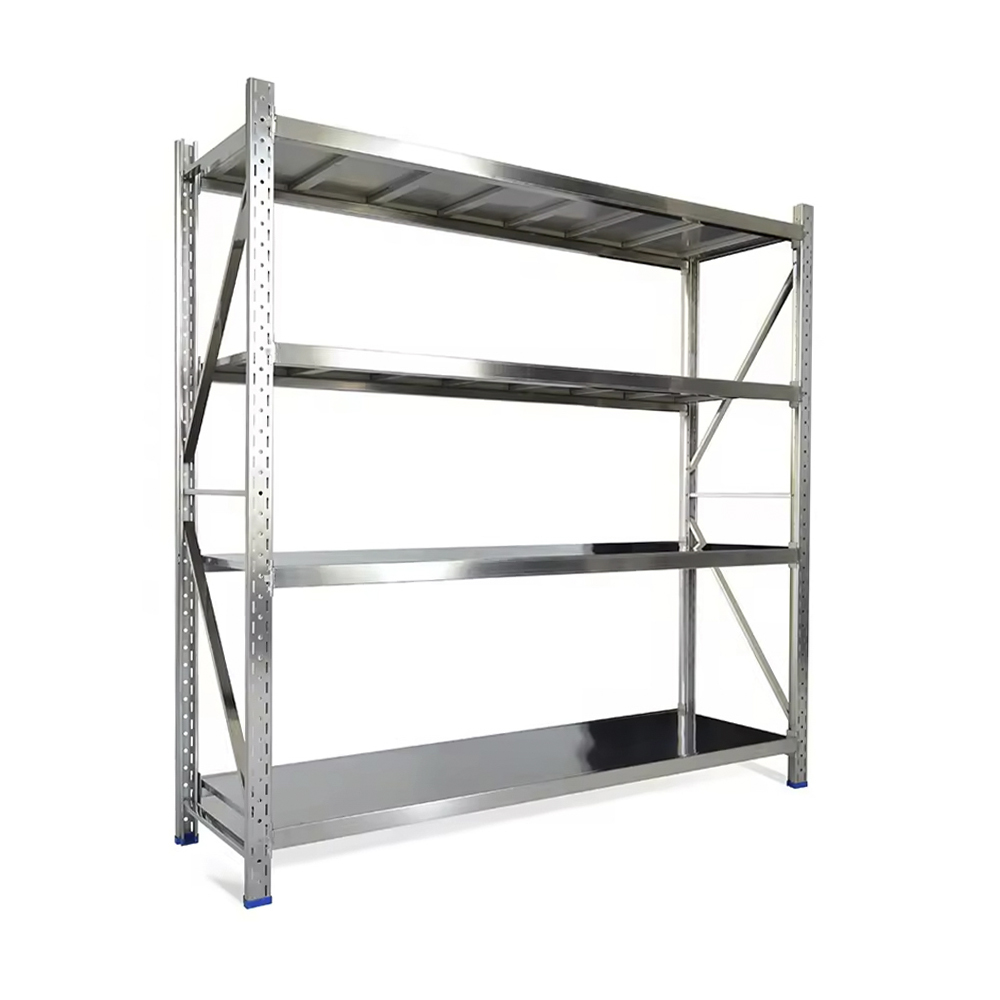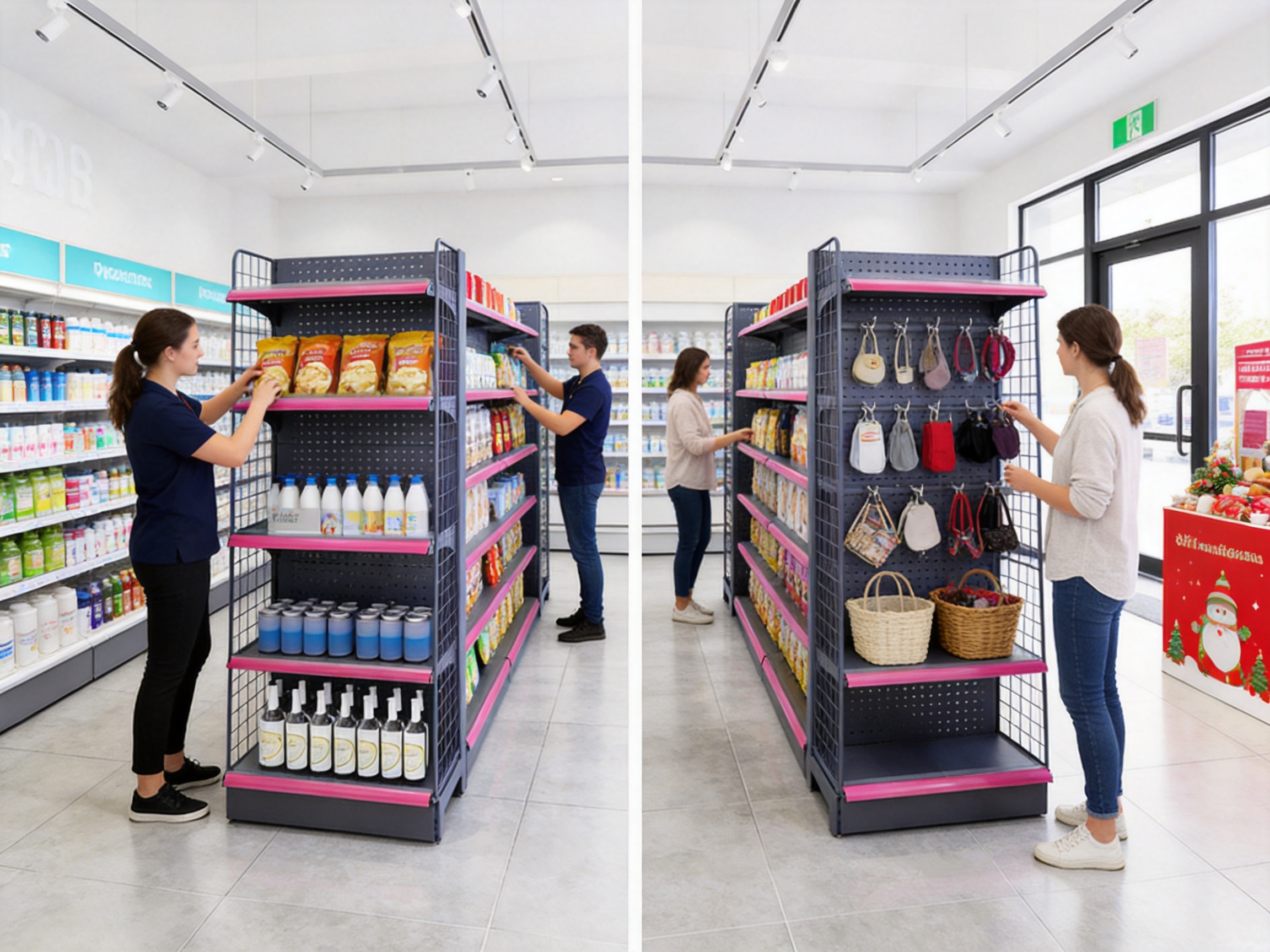
Retail stores compete for attention in environments where every square meter must contribute to customer experience, product visibility, and sales performance. A well-designed shelving system is therefore more than a place to store merchandise. It is a merchandising tool, a space-management solution, and an important part of a store’s visual identity. Adjustable modular shelving for retail and convenience stores is designed to support all three functions at the same time.
This double-sided display rack provides merchandise access from both sides, allowing retailers to make better use of aisles, entrances, promotional zones, and other high-traffic areas. Its adjustable shelves accommodate products in different shapes and sizes, while its modular structure allows the fixture to be reconfigured as inventory, store layouts, and promotional plans change. Manufactured from steel and protected with an anti-rust finish, the system is intended for the demanding conditions of daily commercial use.
The shelving solution is suitable for supermarkets, convenience stores, pharmacies, gift shops, specialty retailers, trade-show displays, and other commercial environments. It can be used for groceries, packaged food, household supplies, personal-care products, cosmetics, small electronics, apparel, seasonal merchandise, and promotional items. With optional grid or pegboard back panels, retailers can also add hooks, baskets, signage, and other merchandising accessories.
1. The Role of Shelving in Modern Retail
Retail shelving directly influences how customers navigate a store and how easily they discover products. When merchandise is crowded, difficult to reach, or displayed at inconsistent heights, customers may overlook items or leave without making a purchase. In contrast, an organized shelving system creates clear product groupings, supports intuitive movement through the store, and presents merchandise in a way that encourages browsing.
Convenience stores face particularly demanding space constraints. They must display a wide product range within a compact footprint, often combining food, beverages, household products, personal-care goods, accessories, and seasonal items. A double-sided modular rack can divide the store into logical shopping zones without creating unnecessary barriers. It can also create additional selling surfaces in locations that would otherwise remain unused.
Supermarkets and larger retail stores require a different type of flexibility. Their product ranges may change frequently according to season, promotional campaigns, consumer demand, and supplier programs. A fixed shelving unit may be suitable for one product assortment but inefficient for another. Adjustable modular shelving allows the retailer to change shelf spacing, remove unnecessary levels, add accessories, or relocate the entire unit to support new merchandising objectives.
Retail fixtures also contribute to the appearance and perceived quality of a store. Straight, stable, clean, and coordinated shelving helps create a professional environment. Rounded edges improve the customer experience by reducing sharp contact points, while an anti-rust coating helps maintain a neat appearance during long-term use. Multiple color options can further support store branding and interior design requirements.
2. Product Overview
The adjustable modular shelving system is a double-sided retail display rack designed for efficient product presentation and flexible store planning. It is built around a sturdy steel frame and a series of adjustable shelves that can be positioned according to the dimensions and weight distribution of the displayed merchandise.
Unlike a single-sided wall-mounted fixture, the double-sided design allows customers to shop from both directions. This increases the available display surface within a given floor area. When positioned in an aisle, the rack can present one product category to customers moving in each direction. When placed near an entrance or checkout zone, it can display promotional items and impulse-purchase merchandise from multiple approaches.
The rack is modular, meaning that its components are designed to work as part of a reconfigurable system. Shelf levels may be adjusted, additional shelves may be installed, and some components can be removed when more vertical space is needed. The rack can also be moved to another area of the store when the retailer changes the floor plan or introduces a new campaign.
Grid or pegboard back panels expand the merchandising possibilities. They can accommodate hooks, baskets, brackets, signs, and other display accessories. This is especially useful for small packaged goods, hanging products, tools, accessories, cosmetics, and impulse items that may not be best presented on a flat shelf.
Core Product Features
| Feature | Retail Benefit | Typical Application |
|---|
| Double-sided display | Provides product access and visibility from both sides | Aisles, entrances, checkout areas, and promotional zones |
| Adjustable shelves | Accommodates products with different heights and packaging formats | Groceries, household goods, cosmetics, and general merchandise |
| Steel construction | Supports reliable performance during daily commercial use | Supermarkets, convenience stores, pharmacies, and specialty shops |
| Anti-rust coating | Helps protect the surface and maintain a clean appearance | Long-term retail installations and frequently rearranged displays |
| Grid or pegboard panels | Supports hooks, baskets, signage, and accessory merchandising | Small items, hanging goods, accessories, and promotional products |
| Modular configuration | Allows the display to adapt to changing inventory and layouts | Seasonal promotions, store renovations, and product expansion |
| Rounded edges | Improves customer safety and reduces sharp contact points | Public-facing retail environments with regular foot traffic |
| Multiple color options | Helps coordinate fixtures with store branding and interior design | Branded retail chains, independent shops, and franchise locations |
3. Maximizing Sales Potential Through Better Product Visibility
The primary advantage of a retail shelving system is its ability to make products easier to see, compare, and reach. A product that is clearly presented has a better opportunity to attract attention than a product hidden behind crowded packaging or placed in an inconvenient location. The double-sided rack increases the number of surfaces available for presentation without requiring a separate fixture for each direction of customer movement.
Retailers can use the front and rear sides for related product categories or for different levels of the same product range. For example, one side may display breakfast foods while the other side presents coffee, tea, or kitchen accessories. A convenience store may use one side for snacks and the other for travel necessities. A pharmacy may dedicate each side to separate health and personal-care categories.
The system can also be used to create visual focal points. New products, best sellers, seasonal merchandise, and promotional bundles can be positioned in high-visibility locations. Because customers can approach the display from either direction, promotional messages and products may receive more exposure than they would on a conventional wall unit.
Shelf spacing is also important to sales performance. Products that are too tightly packed may be difficult to remove, while excessive spacing wastes valuable display capacity. Adjustable shelves allow retailers to find a more efficient balance. Tall products can be presented without unnecessary unused space above them, while smaller packages can be grouped at practical browsing heights.
Clear organization can encourage customers to spend more time in the store. When products are arranged by category, use, brand, size, or price range, customers can compare options more easily. This helps reduce confusion and supports cross-selling. A modular rack can be arranged to place complementary products in proximity, such as pasta and sauces, cleaning products and household accessories, or cosmetics and personal-care items.
4. Efficient Use of Retail Floor Space
Floor space is one of the most valuable assets in a retail business. Every fixture must provide an appropriate balance between capacity, customer circulation, visibility, and accessibility. The double-sided format uses the central area of a store more effectively than a single-sided fixture because both faces contribute to product presentation.
In high-traffic locations, the rack can act as a compact merchandising island. It can separate departments while continuing to present products to customers on both sides. This may help retailers create a more structured shopping journey without building permanent walls or installing large fixed partitions.
The rack is also suitable for temporary or semi-permanent displays. A retailer may position it near the entrance during a seasonal campaign and later move it to an aisle or promotional area. This mobility allows the same fixture to support different commercial objectives over its service life.
Convenience stores can use the rack to increase display density while maintaining a compact footprint. Pharmacies can organize non-prescription products, personal-care goods, and wellness items. Gift shops can display small packaged products and accessories on hooks or shelves. At trade shows, the modular system can provide a clean, organized presentation that is easier to adapt to different booth layouts.
Effective space utilization does not mean simply adding as many products as possible. The rack should be planned with sufficient aisle clearance, product accessibility, and safe loading practices. Retailers should follow the recommended configuration and applicable local safety requirements when determining the final installation layout.
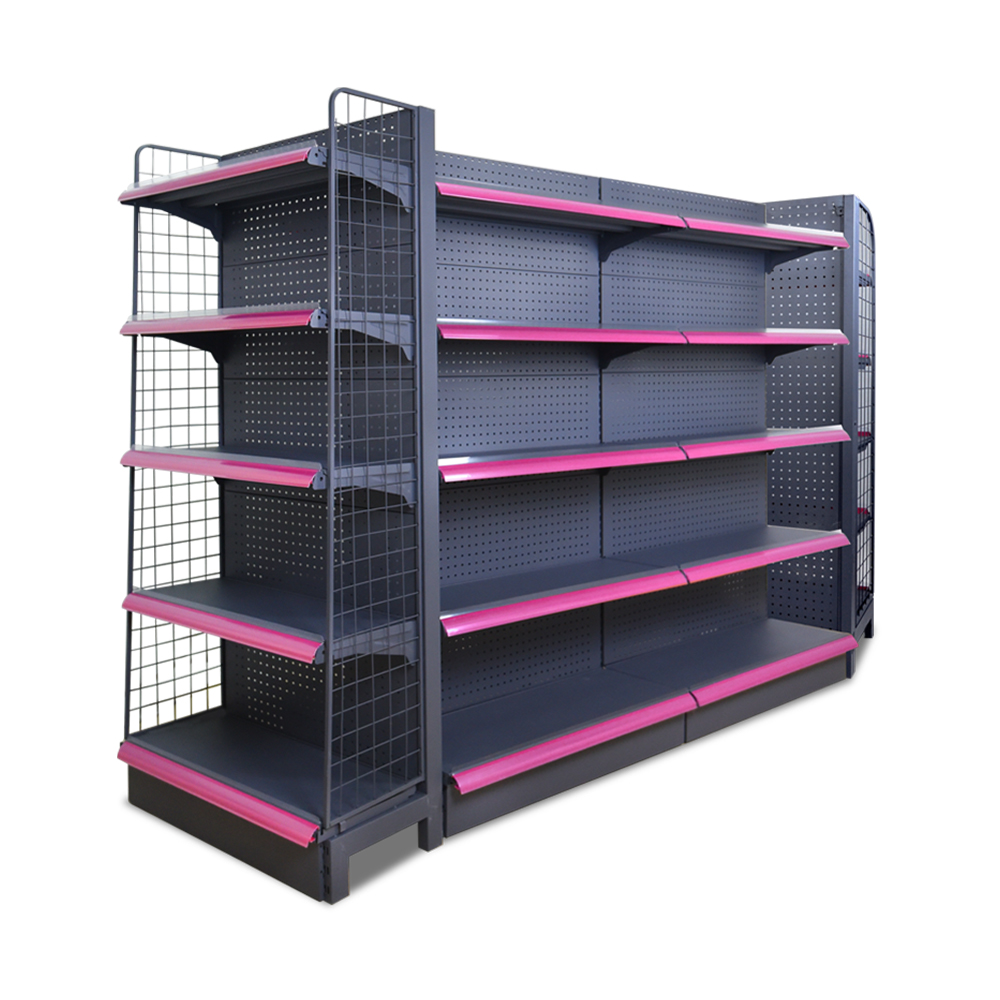
Adjustable Modular Shelving for Retail & Convenience Stores
5. Flexible Shelf Adjustment for Changing Product Needs
Retail inventories are rarely static. Product packaging changes, new suppliers are introduced, seasonal merchandise arrives, and customer preferences shift. A rigid display system may require costly replacement or extensive modification whenever the product mix changes. Adjustable shelving reduces this limitation by enabling retailers to alter the display without replacing the entire fixture.
Shelves can be arranged to suit low-profile packages, medium-sized cartons, bottles, containers, or taller merchandise. If a product line is discontinued, shelf positions can be changed to improve the presentation of the replacement items. If a seasonal range requires additional vertical space, selected shelves can be removed or repositioned.
This flexibility also supports promotional planning. A retailer may use more shelf levels for everyday small products and then create taller openings for gift packs, holiday displays, or bundled products. After the promotion ends, the shelves can be returned to a standard arrangement.
Modularity can reduce the pressure to purchase separate fixtures for every product category. Instead, one adaptable system may serve multiple departments over time. This can improve the long-term value of the investment, particularly for independent retailers and growing store networks that need to respond quickly to changing commercial conditions.
Examples of Reconfiguration
For packaged groceries, several closely spaced shelves may be used to maximize the number of facings. For household supplies, the retailer may increase the distance between levels to accommodate larger bottles and cartons. For cosmetics or accessories, a combination of flat shelves, hooks, and baskets can create a more varied display. For seasonal promotions, the rack may be rearranged to include signs, special baskets, and larger promotional packs.
The ability to reconfigure the display also helps during store renovations. Retailers can move the rack, change the shelf layout, and coordinate its color with a new interior scheme without discarding the underlying structure. This reduces disruption and supports a more sustainable approach to store development.
6. Durable Steel Construction for Daily Commercial Use
Retail fixtures are exposed to frequent loading, unloading, cleaning, customer contact, stock replenishment, and occasional movement. A shelving system intended for commercial use must therefore provide more than a decorative appearance. It needs a structural design and material selection appropriate for repeated daily operation.
The rack is manufactured from steel, a material widely used in storage and display systems because of its strength, dimensional stability, and suitability for industrial production. Steel components can provide a dependable framework for shelves and panels when correctly designed, manufactured, assembled, and loaded within their intended specifications.
Steel construction is especially valuable in busy stores where employees regularly restock products and customers interact with the display. A sturdy frame can help the rack maintain its alignment and professional appearance during normal use. The exact load capacity depends on the rack configuration, shelf dimensions, material thickness, support structure, and installation conditions. Retailers should confirm technical load data for their chosen specification before placing heavy merchandise on the shelves.
The anti-rust finish provides an additional layer of protection for the metal surface. This is important in environments where fixtures may be exposed to humidity, cleaning routines, spills, or changes in temperature. Surface protection also helps the rack maintain a clean and consistent appearance over an extended period.
Durability has an economic benefit. A fixture that remains serviceable for a longer time can reduce replacement frequency and minimize the costs associated with removing, transporting, and installing new equipment. A durable system can also support a consistent visual identity across multiple stores and future layout changes.
7. Safety and Customer-Friendly Design
Retail shelving is installed in public environments, so safety must be considered alongside capacity and appearance. Smooth, rounded edges help reduce the risk of sharp contact points for customers and employees. This feature is particularly useful in aisles and areas where shoppers may pass close to the rack.
A well-organized display can also improve safety by reducing product instability and preventing merchandise from extending into walkways. Shelves should be loaded evenly, heavier items should generally be placed on lower levels, and products should not be stacked beyond the intended shelf boundaries. Proper anchoring or stabilization should be used where required by the installation environment.
Store operators should inspect the rack regularly for loose connections, damaged components, uneven loading, or signs of surface deterioration. Any component that is bent, cracked, or otherwise compromised should be evaluated before continued use. Employees should also be trained to assemble, adjust, relocate, and load the system according to the supplier’s instructions.
The modular design can support safety improvements because it allows the retailer to adjust shelf height rather than forcing products into unsuitable spaces. Merchandise can be positioned at accessible levels, and high or unstable stacking can be avoided. Grid and pegboard accessories should be selected according to the type and weight of products they are intended to hold.
8. Grid and Pegboard Back Panels for Flexible Merchandising
Flat shelves are suitable for many products, but some merchandise is better displayed vertically or individually. Grid and pegboard back panels expand the number of possible presentation methods. Hooks can be used for lightweight packaged items, while baskets and brackets can support grouped displays or small accessories.
These panels also help retailers create visual variety. A display composed only of flat shelves may appear repetitive, especially when used for small products. By combining shelves with hanging accessories, a retailer can create different product levels and improve the visibility of individual items.
Back panels can support signs and category markers that help customers understand the organization of the display. They may also be useful for price communication, promotional messaging, and product education. This makes the system suitable for stores where products require explanation or where brand presentation is important.
Because accessory requirements vary by market and product category, the exact choice of hooks, baskets, brackets, and signage should be determined according to the retailer’s merchandise and operating practices. This adaptable approach is one of the advantages of a modular display system over a single-purpose fixture.
9. Competitive Advantages Over Conventional Retail Fixtures
Many retail fixtures are designed for a narrow purpose. A fixed wall shelf may offer good capacity but limited mobility. A simple single-sided rack may work well against a wall but waste opportunities in a central aisle. A temporary display stand may be attractive but lack the durability needed for long-term use. Adjustable modular shelving combines several useful qualities in one system.
| Comparison Factor | Adjustable Modular Double-Sided Rack | Fixed Single-Sided Fixture | Temporary Lightweight Stand |
|---|
| Display access | Accessible from both sides | Usually accessible from one side | May be accessible from one or two sides |
| Layout flexibility | Can be moved and reconfigured | Often tied to a fixed wall or location | Usually movable but less adaptable |
| Shelf adjustment | Designed for changing product sizes | May have limited adjustment | May have limited structural capacity |
| Merchandising accessories | Can support shelves, hooks, baskets, and panels | Often depends on the fixture design | May provide fewer accessory options |
| Commercial durability | Steel construction for regular retail use | Varies by material and design | Often intended for short-term use |
| Use of central floor space | Efficient because both sides display products | Less efficient away from walls | Depends on the design and stability |
| Long-term adaptability | Suitable for seasonal and assortment changes | May require replacement or modification | May not support extensive reconfiguration |
The greatest competitive advantage is adaptability. Retailers do not need to select a completely different fixture for every new product format. They can modify the same core system to support different assortments and campaigns. This is especially valuable for businesses operating several stores with different floor plans or regional product mixes.
Another advantage is the combination of display density and customer accessibility. The double-sided design can create a high-capacity merchandising zone without requiring two separate rows of shelving. When planned correctly, it can increase product exposure while preserving a clear and organized store layout.
The steel structure and protective finish also distinguish the system from low-cost displays that may be intended for very limited use. While initial price remains an important purchasing factor, retailers should also consider service life, reconfiguration potential, appearance retention, and the cost of future replacement.
10. Manufacturing Strengths and Integrated Production Capabilities
Shanghai King Global Shelf Co., Ltd. is a professional manufacturer specializing in the development, production, and sale of shelving and storage products. Founded in 2010, the company serves supermarkets, warehouses, offices, homes, and commercial customers in multiple international markets.
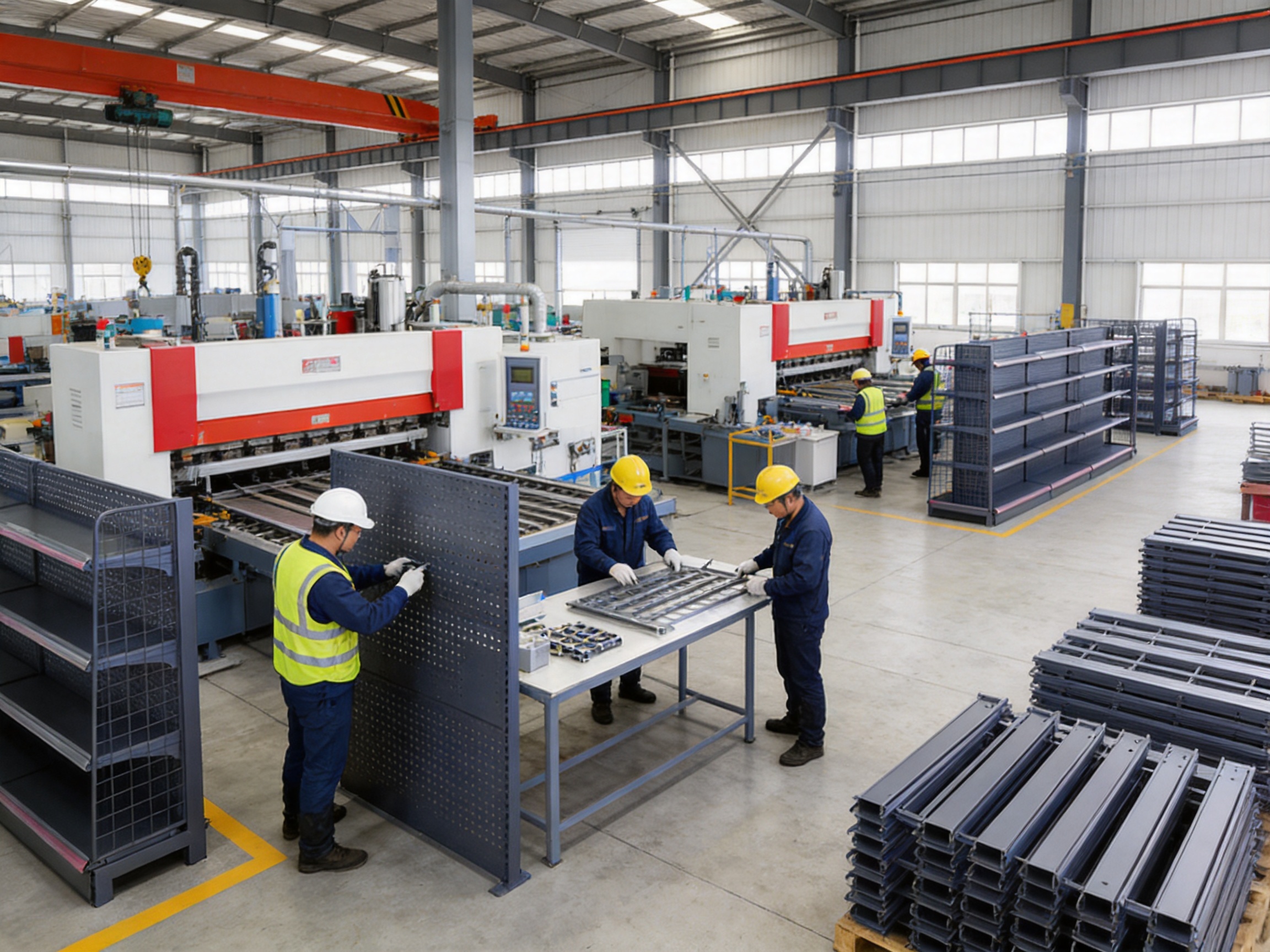
The company’s integrated operating model covers product development, manufacturing, quality control, and market service. This structure is important for shelving projects because successful results depend on coordination between design, material selection, production accuracy, surface treatment, packaging, and customer requirements.
Rather than treating each stage as an isolated activity, an integrated manufacturer can manage the product from initial concept through delivery. Design teams can consider production feasibility, manufacturing teams can follow standardized processes, and quality personnel can verify components before shipment. This can help reduce inconsistencies and support reliable repeat orders.
The company operates a production base of approximately 60,000 square meters and employs more than 300 people. These resources provide a foundation for producing standard shelving products as well as customized OEM and ODM solutions. A substantial production base can also support different product categories, batch sizes, finish options, and packaging requirements.
Manufacturing capacity alone does not guarantee product quality, but it can provide the infrastructure needed for process control and continuous improvement. Professional technical personnel, modern facilities, and established production procedures help support the repeatability required by retail chains, distributors, project contractors, and international buyers.
Product Development and Engineering Coordination
Product development begins with understanding how the rack will be used. Retailers may require specific shelf dimensions, colors, accessory systems, packaging methods, or installation approaches. The manufacturer’s technical team can coordinate these requirements with the structure of the shelving system and the capabilities of the production process.
For OEM and ODM projects, customization may involve dimensions, shelf counts, panel styles, finishes, branding elements, packaging, or combinations of modular components. The purpose of customization is not simply to change appearance. It is to create a practical display solution that fits the customer’s store layout, merchandise, and operating conditions.
Engineering coordination is also important when retailers operate multiple locations. A standardized modular system can help create consistency across stores while still allowing selected variations for local requirements. This supports brand recognition and simplifies future expansion or replacement.
Material Preparation and Component Production
Steel shelving production depends on accurate material preparation and consistent component dimensions. Frames, shelves, supports, panels, and accessory elements must be produced to work together during assembly. Consistent dimensions help improve alignment, reduce installation difficulties, and support a clean final appearance.
Production planning should take into account the intended use of each component. Shelves designed for different merchandise types may require different shapes, support arrangements, or reinforcement features. Grid and pegboard panels require suitable openings and attachment points for compatible accessories.
At each stage, production discipline contributes to the performance of the finished rack. Accurate forming, reliable joining, smooth edges, and proper surface preparation are all important considerations in a public-facing commercial fixture.
Surface Treatment and Anti-Rust Protection
The anti-rust finish is an important part of the product’s durability and appearance. Surface treatment helps protect the steel from environmental exposure and provides the consistent color and texture expected in a retail fixture.
Effective surface finishing generally depends on proper preparation, controlled coating application, and suitable curing or finishing conditions. The purpose is to create an even, durable layer that adheres properly to the metal. A controlled process helps reduce visible defects and supports consistency between production batches.
Color selection can be adapted to different retail concepts. Neutral colors may support a clean supermarket environment, while stronger colors can coordinate with a convenience-store identity or promotional theme. Multiple color options allow buyers to balance function with visual branding.
Quality Control and Inspection
Quality control should cover both appearance and function. Visual inspection may identify uneven coating, scratches, sharp edges, or inconsistent color. Dimensional checks help confirm that components fit together correctly. Assembly checks can help verify the stability and alignment of frames, shelves, and panels.
For customized projects, inspection should also confirm that the final product matches approved drawings, samples, specifications, and packaging requirements. This is particularly important when the shelving system is being supplied to multiple stores or shipped across international markets.
Quality control is most effective when it is integrated into the manufacturing process rather than performed only at the end. Monitoring materials, component production, finishing, assembly, and packaging can help identify potential issues earlier and reduce the risk of repeated defects.
11. OEM and ODM Support for Different Markets
Retail environments differ by country, store format, product range, and local operating practice. A shelving design that works for one market may require changes for another. OEM and ODM manufacturing allows customers to request products that reflect their specific requirements instead of relying only on standard off-the-shelf models.
Customization may include rack dimensions, shelf depth, shelf quantity, color, back-panel style, accessory compatibility, labeling, packaging, and assembly instructions. Customers may also request a coordinated product family that includes supermarket shelves, warehouse racks, pallet racking, office shelving, home storage, or specialized display fixtures.
An experienced manufacturer can help customers evaluate which requirements are essential and which may add unnecessary cost or complexity. This is valuable during the planning stage, when decisions about materials, production methods, packaging, and installation can have a significant effect on the final project.
OEM and ODM support is also useful for distributors and retail-equipment suppliers. A distributor may need a consistent product range under its own market identity, while a retail chain may require fixtures that match existing store standards. The manufacturer’s ability to provide standard and customized solutions can support both types of business.
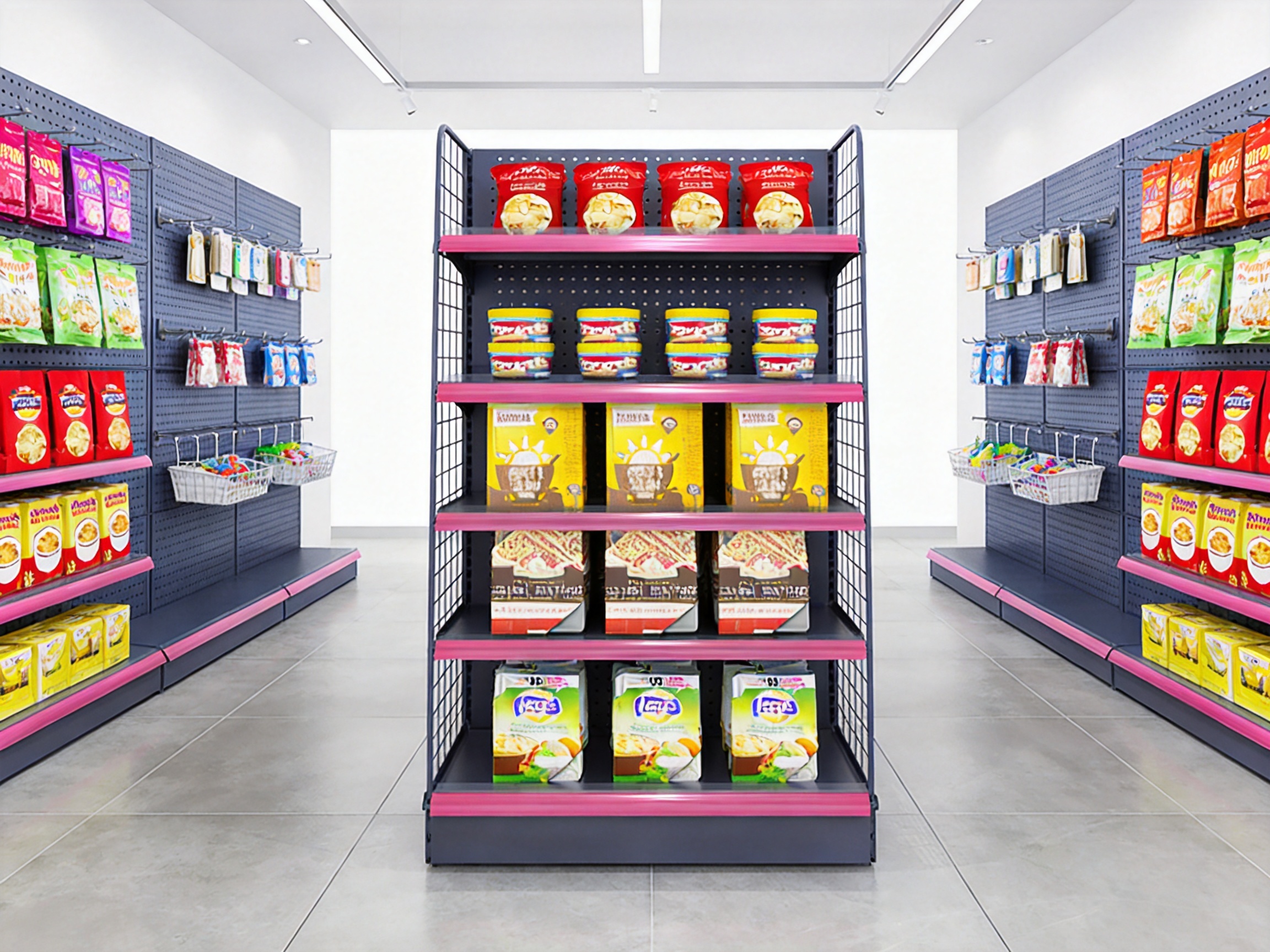
12. Applications Across Commercial Environments
Supermarkets
Supermarkets can use the double-sided rack for promotional islands, seasonal goods, household products, packaged foods, health items, and special product zones. Adjustable shelves allow the rack to accommodate different packaging formats, while grid or pegboard panels can support small items and promotional accessories.
Convenience Stores
Convenience stores benefit from compact fixtures that provide high visibility and easy access. The rack can be used for snacks, travel products, personal-care goods, small household items, and impulse purchases. Its ability to serve two directions of customer movement is especially helpful in narrow or high-traffic store layouts.
Pharmacies
Pharmacies can use the system to organize personal-care products, wellness goods, non-prescription items, cosmetics, and everyday health accessories. Shelves can be set at different heights to separate product categories and create a clear shopping experience.
Gift Shops and Specialty Retailers
Gift shops and specialty stores often carry products with different shapes, packaging styles, and presentation requirements. A combination of shelves, hooks, baskets, and signage can help create a more varied display. The rack may also be moved to feature new collections or event-related merchandise.
Trade Shows and Promotional Events
At trade shows, the shelving system can provide an organized platform for product demonstrations and sample presentation. Its modular design may allow exhibitors to adjust the display to fit different booth footprints. After the event, components can potentially be reused for another display arrangement.
Office and Commercial Storage Areas
Although designed primarily for retail display, modular shelving principles can also be useful in offices, stockrooms, and service areas. The adjustable structure can support organized storage for supplies, documents, packaging materials, or equipment, provided the selected configuration is appropriate for the intended load.
13. Installation, Layout Planning, and Maintenance
Successful use of the rack begins with proper planning. Before installation, the retailer should measure the available floor area, aisle width, ceiling height, access routes, and nearby fixtures. The display should be positioned so that products remain reachable and customer circulation remains clear.
Layout planning should also consider replenishment. Employees need enough room to bring stock to the rack, remove empty cartons, and perform cleaning without obstructing customers. If the rack is positioned near a checkout counter or entrance, the store should evaluate whether it affects queues, emergency routes, doors, or visibility.
Assembly should follow the manufacturer’s instructions and use the recommended components. Connections should be checked for proper engagement, and the rack should be placed on a suitable level surface. Where local regulations or site conditions require additional anchoring or stabilization, those measures should be implemented by qualified personnel.
Maintenance is generally straightforward. Surfaces can be cleaned using methods compatible with the finish. Spills should be removed promptly, especially when they contain moisture or substances that may affect the coating. Store employees should periodically inspect shelves, brackets, panels, and fasteners.
Reconfiguration should be carried out when the rack is unloaded or safely cleared. Employees should avoid forcing shelves into place or modifying structural components without approval. Any customization that involves drilling, cutting, welding, or changing load-bearing parts should be reviewed by the supplier or a qualified technical professional.
14. Sustainability and Long-Term Value
Long-term product value is closely related to adaptability. A shelving system that can be reused for different products and store layouts may remain useful longer than a fixture designed for a single campaign. Reconfiguration can reduce the need to discard and replace displays whenever product requirements change.
Steel is also a widely recyclable material, although recycling practices depend on local facilities and the condition of the components at the end of service. Durable construction may help reduce the frequency of replacement, while modular parts can support selective repair or renewal instead of complete disposal.
Efficient manufacturing contributes to responsible resource use by reducing material waste, improving production consistency, and limiting the number of defective components. Packaging design can also be considered during project planning, particularly for international shipping where efficient packing can help optimize transportation volume.
Retailers seeking more sustainable operations should evaluate the complete life cycle of their fixtures. Important factors include service life, repairability, modularity, material selection, coating durability, shipping efficiency, and end-of-life handling. Adjustable modular shelving can contribute to this evaluation because it is designed for repeated use and changing commercial requirements.
15. Selecting the Right Configuration
The best rack configuration depends on the merchandise, store format, available space, and intended customer journey. Buyers should consider the size and weight of products, the number of shelf levels required, the need for hanging accessories, and whether both sides will be used equally.
For small packaged goods, closely spaced shelves or a combination of shelves and hooks may be effective. For larger cartons and bottles, fewer levels with increased vertical spacing may be more practical. For promotional displays, the retailer may reserve one section for signage, baskets, or large featured products.
Color selection should reflect the store environment. A neutral finish may suit a wide variety of product categories, while a coordinated brand color can strengthen the visual identity of a retail chain. Buyers should also consider the appearance of adjacent fixtures, walls, flooring, and lighting.
Before placing a large order, it can be useful to confirm drawings, samples, finish options, accessories, packaging, assembly procedures, and technical load information. A clear specification helps align the expectations of the retailer, designer, installer, and manufacturer.
16. Why Manufacturing Experience Matters to Buyers
Retail shelving is a functional product, but it is also part of a larger commercial project. Delays, inconsistent dimensions, poor finishing, or inadequate packaging can create problems during store installation. Working with an experienced manufacturer can help buyers coordinate product design, production, inspection, and delivery more effectively.
Shanghai King Global Shelf Co., Ltd. has developed and supplied shelving and storage products since 2010. Its product scope includes supermarket shelves, warehouse racks, pallet racking, office shelving, home storage, and customized solutions. This broader experience can help the company understand the different demands placed on display and storage equipment across commercial environments.
The company exports products to North America, Southeast Asia, Japan, South Korea, the Middle East, Europe, and other regions. International supply experience requires attention to communication, specifications, packaging, documentation, production scheduling, and market-specific requirements.
Its stated commitment is to provide strong, efficient, and customized racking and storage solutions that improve space utilization, operational efficiency, and storage safety. For buyers, these priorities are relevant because the value of a shelving system is measured not only by its initial appearance but also by how effectively it supports daily operations over time.
17. Frequently Asked Questions
Q1: What is the main advantage of a double-sided retail rack?
The main advantage is that it presents products from both sides, making better use of central floor space and increasing product visibility in aisles, entrances, checkout areas, and promotional zones.
Q2: Can the shelf height be changed?
Yes. The modular design allows shelf positions to be adjusted to accommodate different product heights. The exact adjustment method and spacing depend on the selected product configuration.
Q3: What types of products can be displayed?
The rack can be used for groceries, household goods, cosmetics, personal-care products, electronics accessories, apparel, gifts, seasonal merchandise, and many other retail products. Product weight and package dimensions should be considered when selecting the appropriate configuration.
Q4: Can the rack be used with hooks and baskets?
Grid or pegboard back panels can support compatible hooks, baskets, brackets, and signs. The appropriate accessories should be selected according to the panel design and the weight of the products being displayed.
Q5: Is the shelving suitable for high-traffic stores?
Yes. The rack is designed for commercial retail environments and uses a steel structure with a protective anti-rust finish. Correct assembly, loading, placement, and regular inspection remain important for safe use in high-traffic areas.
Q6: Can the rack be moved to another location?
Yes, the modular design allows the rack to be relocated when the store layout or merchandising plan changes. It should be unloaded and moved according to proper handling procedures to protect the rack, products, employees, and customers.
Q7: Is it possible to order different colors?
Multiple color options are available to help retailers coordinate the display with store branding and interior design. Final color availability should be confirmed for the selected order specification.
Q8: Can the product be customized for a retail chain?
OEM and ODM services can support customization of dimensions, shelf arrangements, panel styles, colors, accessories, packaging, and other project requirements. Technical details should be reviewed and approved before production.
Q9: What should buyers confirm before ordering?
Buyers should confirm rack dimensions, shelf depth, number of levels, expected product loads, finish, color, back-panel type, accessories, packaging, assembly requirements, quantity, and delivery conditions.
Q10: How should the rack be maintained?
Regular cleaning, prompt removal of spills, inspection of fasteners and shelf supports, and proper loading can help maintain the rack. Damaged or deformed components should be evaluated before continued use.
Q11: Is the rack suitable for temporary promotions?
Yes. Its adjustable and movable structure makes it suitable for seasonal campaigns, new-product presentations, best-seller displays, and promotional merchandise. It can later be reconfigured for everyday retail use.
Q12: What makes the manufacturer suitable for international projects?
The company has an integrated system covering product development, manufacturing, quality control, and market service. It operates a large production base, employs a professional technical team, provides OEM and ODM solutions, and exports to multiple international regions.
18. Conclusion
Adjustable modular shelving for retail and convenience stores is a practical response to the changing demands of modern merchandising. Its double-sided structure improves product exposure and makes central floor space more productive. Adjustable shelves support different product sizes, while grid and pegboard panels expand the range of available display methods.
The steel construction and anti-rust finish are suited to regular commercial use, and rounded edges contribute to a more customer-friendly design. Because the system can be moved and reconfigured, it can continue to support the retailer as products, promotions, and store layouts evolve.
The product is strengthened by the manufacturing capabilities of Shanghai King Global Shelf Co., Ltd., a shelving and storage specialist founded in 2010. With an integrated approach covering development, production, quality control, and service, a 60,000-square-meter production base, more than 300 employees, international market experience, and OEM and ODM support, the company is positioned to serve both standard and customized shelving requirements.
For retailers, distributors, contractors, and commercial buyers, the value of this system lies in the combination of display capacity, flexibility, durability, safety-conscious design, and long-term adaptability. When properly specified, installed, loaded, and maintained, it can help create a more organized store, improve product visibility, and support efficient use of valuable retail space.
References
1. Shanghai King Global Shelf Co., Ltd. Product information for adjustable modular shelving for retail and convenience stores.
2. Shanghai King Global Shelf Co., Ltd. Company profile and manufacturing capability information.
3. General principles of retail space planning, visual merchandising, and product presentation.
4. General guidance for steel storage and display equipment design, assembly, loading, and maintenance.
5. General principles of corrosion protection and surface finishing for commercial metal fixtures.
6. General practices for workplace organization, customer circulation, and safety in retail environments.


 English
 Español
 русский
 Français
 한국어
 عربى
 ไทย
 Deutsch
 Bahasa Melayu
 Português
 Polskie