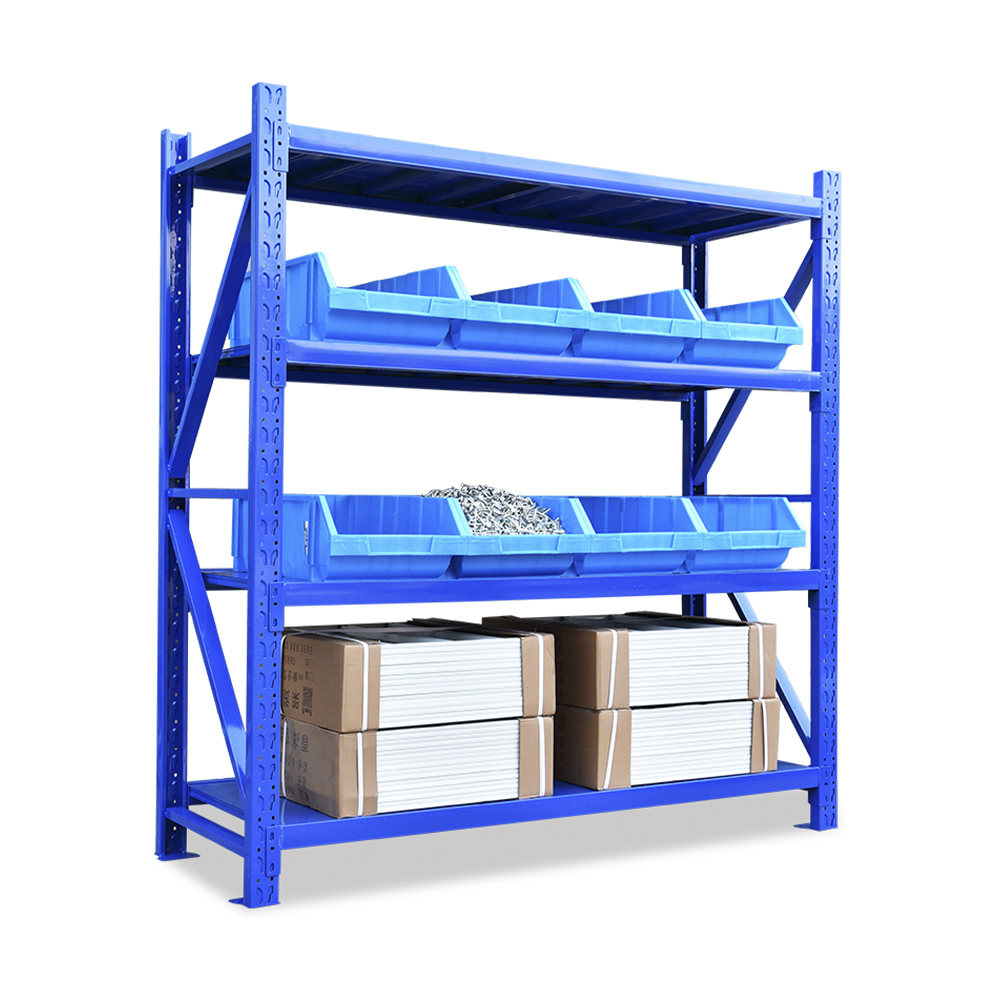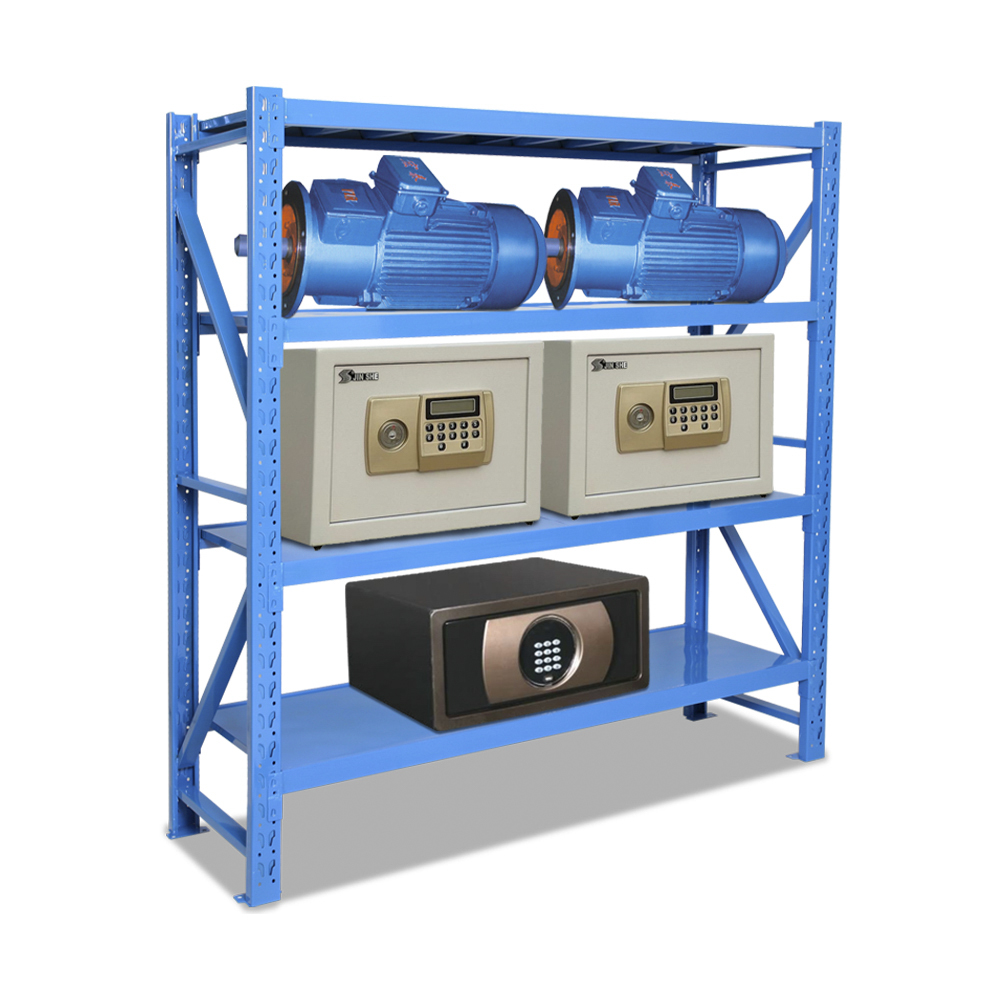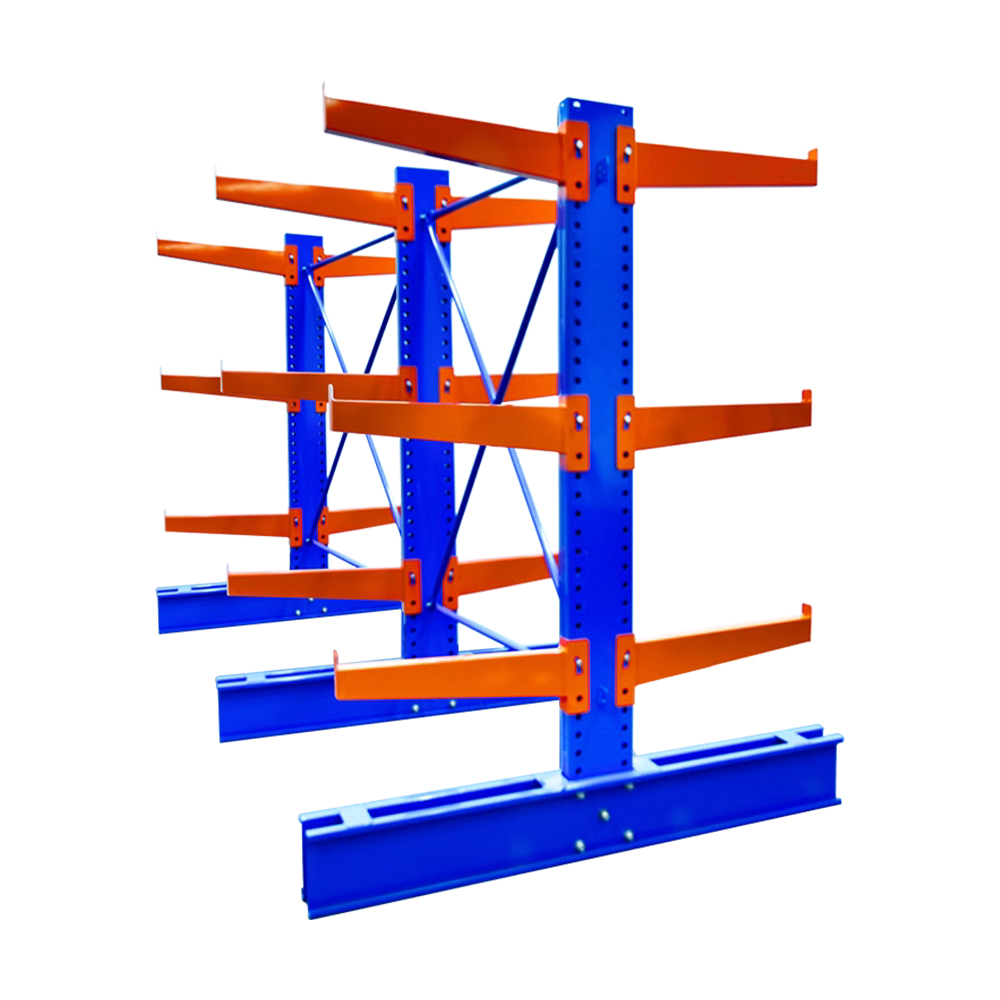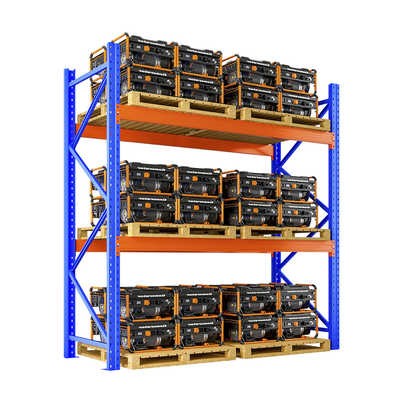
Industrial warehouses often handle materials that cannot be stored efficiently on conventional pallet racks. Pipes, timber, steel bars, metal profiles, rolls of fabric, carpets, construction products, and other long or irregularly shaped goods require a storage system with open access, strong structural support, and flexible configuration. Heavy-duty cantilever racking is designed specifically for this purpose. By removing front columns and providing unobstructed loading areas, cantilever racks allow long products to be stored safely while making better use of vertical warehouse space.
Shanghai King Global Shelf Co., Ltd. supplies cantilever racks and other storage systems for warehouses, factories, construction sites, lumber yards, plumbing suppliers, retail operations, offices, and homes. As an OEM and ODM storage rack manufacturer, the company combines product development, engineering, manufacturing, quality control, and customer service to provide both standard and customized storage solutions.
This article explains how heavy-duty cantilever racking works, why it is advantageous compared with conventional storage systems, how it can improve warehouse productivity, and what manufacturing strengths support its performance in demanding industrial environments.
Understanding Heavy-Duty Cantilever Racking
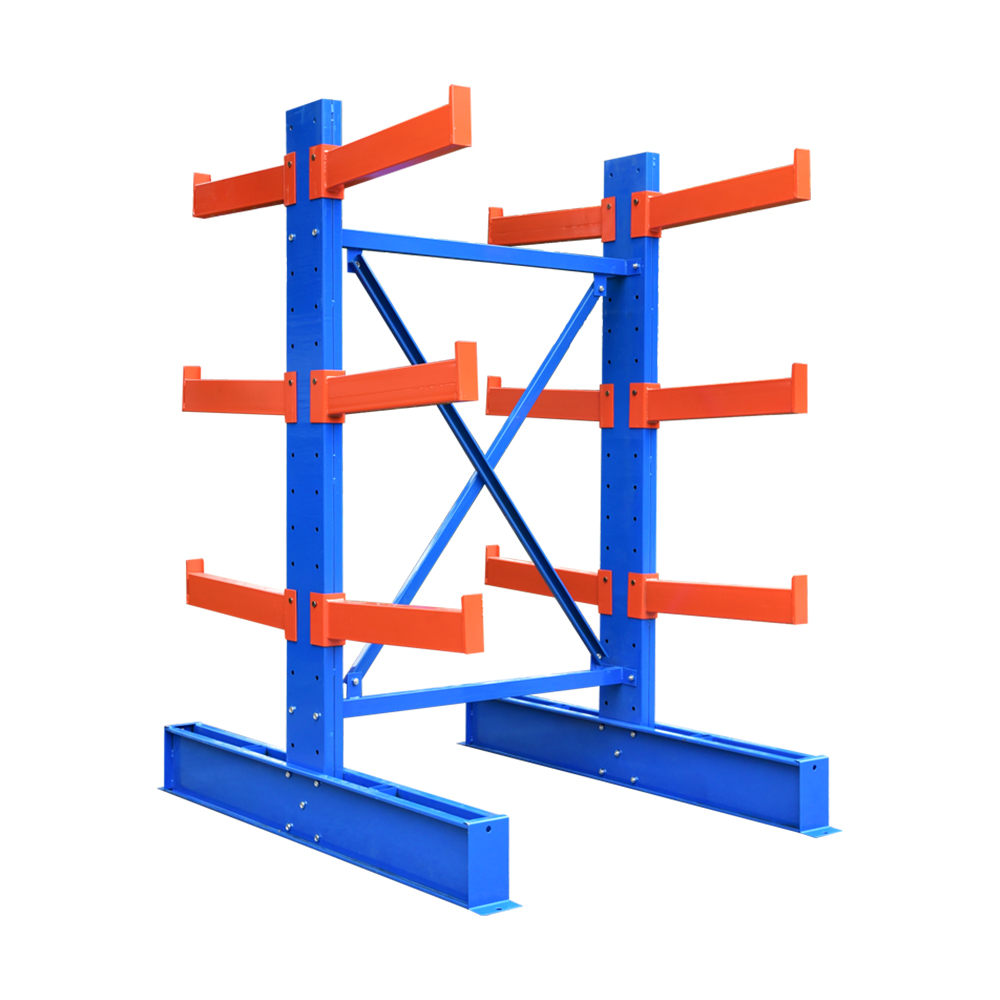
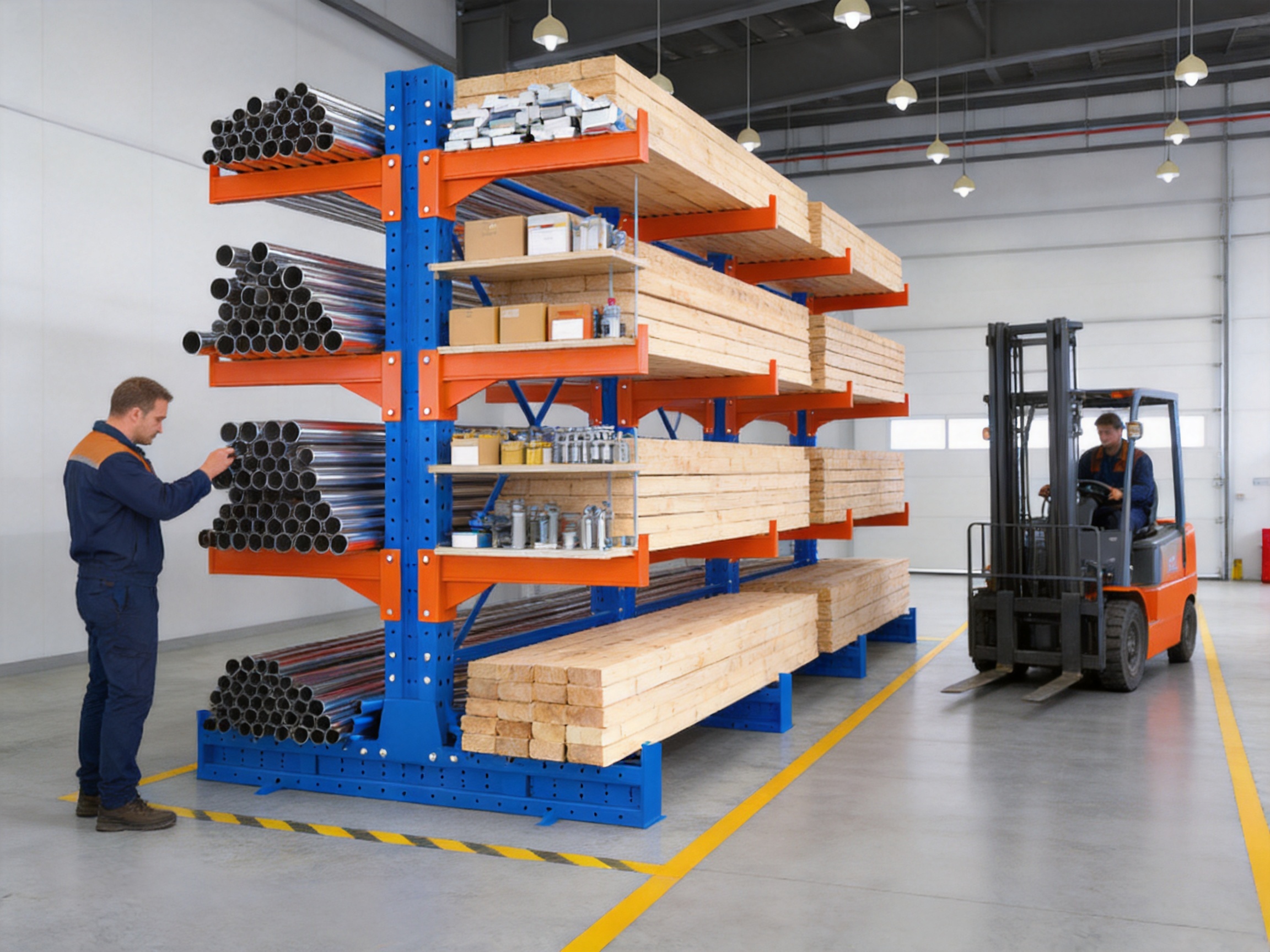
A cantilever rack is a storage structure built around vertical columns, horizontal arms, base supports, and bracing components. Unlike standard selective pallet racks, which use front and rear uprights to support pallets, cantilever racks use projecting arms that extend from a vertical column. The open front makes it possible to load long materials from the front or side without interference from upright frames.
Heavy-duty cantilever racking is engineered for demanding storage applications. Its steel column and arm construction can be configured for light, medium, or heavy loads depending on the dimensions, weight, and handling requirements of the stored products. A system may include one-sided or double-sided columns, several storage levels, adjustable arms, optional decking, and protective accessories.
The design is especially suitable for products that are difficult to palletize. Long materials may be placed directly on the arms, while optional shelves or decking can be used for smaller products, low-height goods, boxed components, and mixed inventory. This gives warehouse operators more flexibility than a storage system designed for only one product format.
Why Long and Irregular Goods Need a Specialized Rack
Many warehouse products cannot be stored efficiently in standard pallet positions. A bundle of steel pipes may extend beyond the edges of a pallet. Lumber may have varying lengths and surfaces. Carpet rolls can be cylindrical, flexible, and difficult to stabilize. Construction materials may have unusual dimensions or need to remain accessible for frequent picking.
When these products are placed on the floor, several problems can occur. Valuable floor space becomes occupied, products may be exposed to vehicle traffic, and inventory can become difficult to identify. Stacking goods directly on top of one another can also create safety concerns, including unstable piles, product deformation, and difficult manual handling.
Conventional pallet racks may not provide the required width or clear front access. Their vertical frames can obstruct long loads, while standard beams may not support products that extend beyond a pallet footprint. Cantilever racking addresses these limitations by creating open storage levels supported from the rear column. Products can be placed on the arms without being restricted by front uprights.
The result is a storage environment that is better organized, easier to inspect, and more compatible with long-load handling equipment. Materials can be separated by type, size, length, or project, helping employees locate the correct inventory more quickly.
Heavy-Duty Cantilever Racking for Industrial Warehouse Storage
Core Construction of the Cantilever Rack
Vertical Columns
The vertical column is the primary load-bearing component of a cantilever rack. It transfers the weight of stored goods through the arms and base into the warehouse floor. Column height, profile, thickness, spacing, and bracing are selected according to the required capacity and application.
For industrial use, a reinforced steel column helps provide stability under repeated loading and unloading. The column must also resist forces generated when forklifts, pallet jacks, or other handling equipment approach the rack. Proper engineering of the column is essential because the entire storage structure depends on its ability to carry vertical and horizontal loads.
Horizontal Cantilever Arms
The arms extend from the vertical columns and support the stored goods. Their length, spacing, number of levels, and rated capacity can be adapted to the products being stored. Adjustable arms are particularly useful for warehouses that manage different product dimensions or expect inventory changes over time.
The open-arm design allows long products to be placed and removed without maneuvering around a front frame. This is a major difference between cantilever racks and many conventional shelving or pallet racking systems. It also makes visual inspection easier because the stored goods remain exposed and accessible.
Base Supports
Base supports extend from the bottom of the vertical columns and help stabilize the rack. They may also provide an additional storage level for particularly long or heavy products. The base must be designed to distribute loads appropriately and maintain stability during normal warehouse operations.
Bracing and Connection Components
Bracing connects columns and helps maintain the geometry of the rack. Connection components, locking devices, and fasteners are important for securing the arms and maintaining consistent performance during use. These details may appear small, but they have a direct effect on safety, service life, and ease of assembly.
Optional Shelves and Decking
Although cantilever racks are commonly associated with long goods, optional shelves can extend their usefulness. Shelves may be added to store smaller cartons, fittings, tools, packaged components, or low-height products that do not require the full open-arm configuration.
This hybrid approach is useful in industrial warehouses where long goods and small accessories are managed in the same area. For example, a plumbing supply facility may store pipes on the cantilever arms and fittings or valves on optional shelves. A building-materials distributor may store timber on the arms and fasteners or packaged hardware on shelf panels.
Major Advantages Over Conventional Storage Systems
Unobstructed Front Access
The most important advantage of a cantilever rack is its open front. Standard pallet racks rely on vertical frames at the front and rear of each bay. These frames are suitable for palletized goods, but they can interfere with long products. Cantilever racks eliminate the front obstruction, allowing operators to load materials directly onto the arms.
This open access can reduce the time required to position long loads. Forklift operators have greater visibility, and warehouse employees can more easily observe the condition and position of stored products. The design is also suitable for manual loading of lighter items.
Efficient Storage of Long Products
Long products can be arranged horizontally across several arms, allowing their length to be supported at appropriate intervals. This reduces the need for floor stacking and helps prevent products from being placed in aisles or walkways.
Depending on the product and warehouse layout, materials may also be arranged vertically or grouped by length. The rack can be designed to accommodate different levels, making better use of the available height while keeping products separated and identifiable.
Better Use of Vertical Space
Floor area is one of the most expensive and limited resources in a warehouse. Storing all long goods at floor level results in wasted vertical space. Cantilever racking uses multiple storage levels, allowing a warehouse to increase capacity without expanding its footprint.
Vertical storage can also improve housekeeping. When products are lifted off the floor, cleaning and inspection become easier. A clear floor area can improve traffic flow and reduce the chance of materials becoming obstacles in working zones.
Flexible Configuration
Cantilever racks can be configured for light-duty, medium-duty, or heavy-duty applications. The number of storage levels, arm length, column height, rack width, and load capacity can be adjusted to suit the application.
This flexibility provides an advantage over fixed storage furniture that is designed around one product size. A customized rack can support current requirements while allowing future changes in product mix and warehouse operations.
Improved Product Protection
Unstable floor piles can cause products to bend, fall, become scratched, or suffer other damage. A properly configured cantilever rack keeps materials separated and supported. Products can be arranged according to their size and weight, reducing unnecessary pressure and disorder.
The reinforced steel construction also provides a stable storage platform for valuable goods. When combined with appropriate loading practices, rack protection, aisle clearance, and operator training, the system can help reduce damage during routine warehouse activity.
Compatibility with Material Handling Equipment
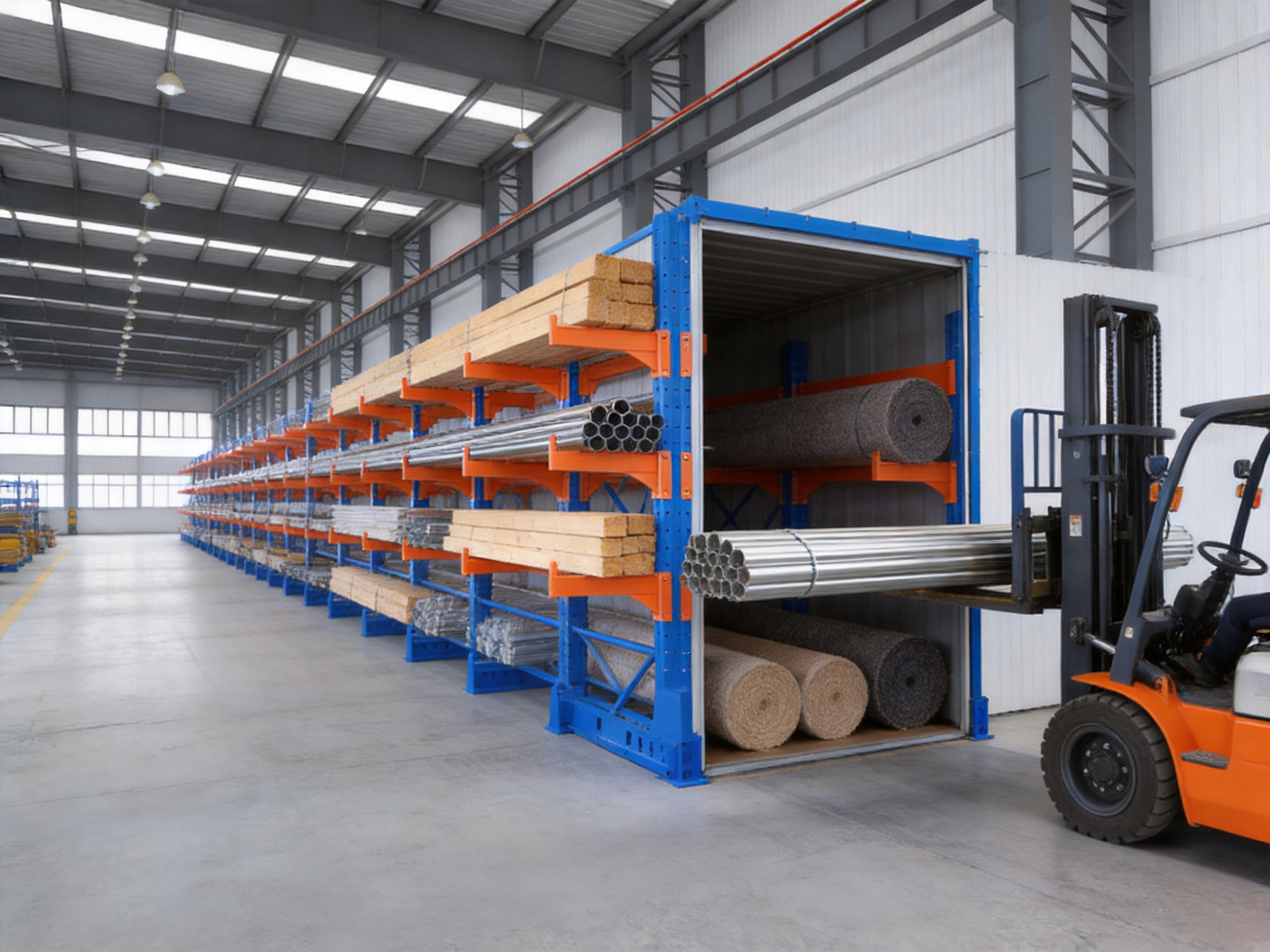
The wide-load-accessible design is suitable for warehouses using forklifts, pallet jacks, and other handling equipment. Forklifts can approach the open side of the rack and position long goods onto the arms. The exact equipment requirement depends on load size, rack height, aisle width, and the operating environment.
Because the front is open, operators do not need to guide long materials through a closed rack frame. This can simplify loading and unloading while supporting more efficient material handling. Warehouse managers should still establish operating procedures that account for load dimensions, visibility, vehicle turning radius, and safe travel speeds.
Applications Across Industrial Markets
Lumber and Wood Products
Lumber yards and building-material distributors often handle boards, beams, panels, molding, and other products with different lengths and weights. Cantilever racking allows wood products to be stored by size or material type while maintaining clear access for forklifts and customers.
The open structure can make it easier to identify stock and remove individual bundles. It also reduces the dependence on floor stacking, which may otherwise make certain products difficult to reach.
Steel and Metal Processing
Steel bars, tubes, profiles, sheets, and metal sections can be heavy, long, and difficult to handle manually. Heavy-duty cantilever racking can be designed with suitable capacity and arm spacing for these materials. The rack helps separate different grades, lengths, and profiles, supporting more systematic inventory management.
For metal-processing companies, organized storage can reduce time spent searching for raw material. It may also help keep materials away from vehicle routes and production equipment until they are needed.
Pipe and Plumbing Supply
Pipes and conduit are frequently stored in bundles or individual lengths. Their rounded surfaces can make floor stacking unstable. Cantilever arms provide separated support points and enable pipes to be organized by diameter, material, or length.
Optional shelving can be used for connectors, valves, fittings, and packaged plumbing accessories. This creates a combined storage zone for both long products and smaller related items.
Carpet, Fabric, and Roll Storage
Carpet rolls, textiles, plastic films, and other rolled materials require storage that prevents unnecessary compression and makes individual rolls accessible. Cantilever configurations can be adapted to support rolls horizontally, depending on their diameter, weight, and handling process.
Proper arm spacing and load distribution are important for avoiding deformation. Warehouse operators should select the rack structure according to roll dimensions and should follow the recommended load rating for every storage level.
Construction Materials
Construction sites and supply companies may handle scaffolding components, beams, boards, insulation products, drywall accessories, and other irregular items. Cantilever racks help organize these products and can be installed in warehouses, covered yards, or other suitable locations.
For construction-related inventory, flexibility is especially valuable because product sizes and project requirements can change frequently. Adjustable arms and optional shelves enable the storage layout to evolve with business needs.
Manufacturing Facilities
Manufacturers often require point-of-use storage for raw materials, semi-finished goods, tooling, and production components. A cantilever rack positioned near a production line can reduce the distance between storage and processing areas.
When materials are clearly labeled and arranged by production sequence, employees can retrieve them more efficiently. This may support smoother material flow and reduce unnecessary movement within the facility.
How the Rack Improves Warehouse Efficiency
Warehouse efficiency depends on more than storage capacity. It also involves access time, inventory visibility, labor requirements, product protection, and the ability to adapt to changing demand. Cantilever racking contributes to these goals in several ways.
Reduced Loading and Unloading Time
Long products can be difficult to maneuver into conventional racks. An open-front cantilever system reduces obstructions and gives the operator a direct approach. Faster loading and unloading may reduce equipment idle time and allow employees to complete more handling tasks during each shift.
Improved Inventory Visibility
Products stored in disorganized floor piles may be hidden behind other materials. A cantilever rack separates inventory into accessible levels, making it easier to identify available stock. Better visibility can support more accurate picking, replenishment, and stock control.
More Organized Work Areas
When long materials are stored in designated rack locations, aisles and work areas remain clearer. This may improve pedestrian movement, equipment routing, cleaning, and routine inspections. A more organized warehouse can also create a better working environment for employees and visitors.
Adaptability to Changing Inventory
Industrial businesses often change suppliers, product sizes, and order volumes. A flexible cantilever rack can be reconfigured with different arm levels or shelf options. This allows the storage system to remain useful as the business develops rather than becoming obsolete after a single product range changes.
Support for Better Space Planning
The rack can be integrated into a broader warehouse plan that considers receiving, inspection, storage, picking, packing, dispatch, and production flow. By storing long goods vertically and placing frequently accessed products in convenient locations, operators can make more effective use of the building.
Engineering and Customization Considerations
Every cantilever rack should be selected according to the products and operating conditions of the facility. A professional supplier should review the main technical requirements before production.
| Design Factor |
Why It Matters |
Typical Customization Considerations |
| Product length |
Determines arm length, bay width, and required support points. |
Short, medium, or extra-long arms; single-bay or continuous layouts. |
| Product weight |
Controls column, arm, base, and connection requirements. |
Light-duty, medium-duty, or heavy-duty structural design. |
| Product shape |
Affects stability and the type of support surface required. |
Open arms, shelves, decking, stops, or specialized supports. |
| Handling equipment |
Influences aisle width, rack height, and access direction. |
Forklift approach, pallet-jack access, or manual handling. |
| Storage height |
Determines vertical capacity and equipment requirements. |
Number of levels, column height, and clearance between levels. |
| Warehouse layout |
Influences rack orientation, traffic flow, and safety clearances. |
One-sided or double-sided installation; wall or island placement. |
| Future requirements |
Helps ensure the system remains useful as inventory changes. |
Adjustable arms, additional shelves, and expansion-ready layouts. |
Load Capacity
Load capacity must be considered at both the arm and rack level. The weight should be distributed appropriately across the arms, and the rack should not be loaded beyond its designed rating. Concentrated loads, uneven bundles, and dynamic forces from handling equipment may affect actual performance.
The supplier should evaluate the maximum weight per arm, maximum weight per level, and total capacity of the rack structure. Clear load labels and operating instructions can help warehouse personnel follow safe procedures.
Arm Length and Spacing
Arm length should be suitable for the product dimensions without creating excessive overhang. Arm spacing should provide adequate support while allowing products to be placed and removed easily. Heavy or flexible materials may require more support points than rigid products.
Single-Sided and Double-Sided Designs
Single-sided cantilever racks are often installed against walls or along the edge of a warehouse. Double-sided racks can be used as freestanding islands and provide access from both sides. The appropriate design depends on available floor space, traffic patterns, and the required storage density.
Anchoring and Floor Conditions
Rack installation should account for the condition and capacity of the warehouse floor. Anchoring requirements may vary according to the rack design, local regulations, seismic conditions, and operating environment. Professional installation and inspection are recommended, especially for heavy-duty applications.
Manufacturing Strengths of Shanghai King Global Shelf Co., Ltd.
Shanghai King Global Shelf Co., Ltd. is a professional manufacturer specializing in shelving and storage products. Established in 2010, the company provides storage solutions for supermarkets, warehouses, offices, homes, factories, and other commercial environments.
The company operates a 60,000-square-meter production base and has more than 300 employees. This manufacturing scale supports the production of standard storage products as well as customized OEM and ODM projects. A larger integrated production environment can also help coordinate engineering, fabrication, finishing, quality control, packaging, and shipment.
Integrated Product Development
Product development is an important part of the company’s manufacturing system. Storage racks must be designed around real usage conditions, including load requirements, product dimensions, handling methods, warehouse layouts, and market standards. By combining technical development with manufacturing experience, the company can provide configurations that are more appropriate than generic, one-size-fits-all products.
For cantilever racks, this may include selecting column profiles, determining arm levels, optimizing base dimensions, planning bracing, and adding optional shelves or protective elements. The goal is to produce a practical system that supports both storage performance and daily operation.
Professional Production Processes
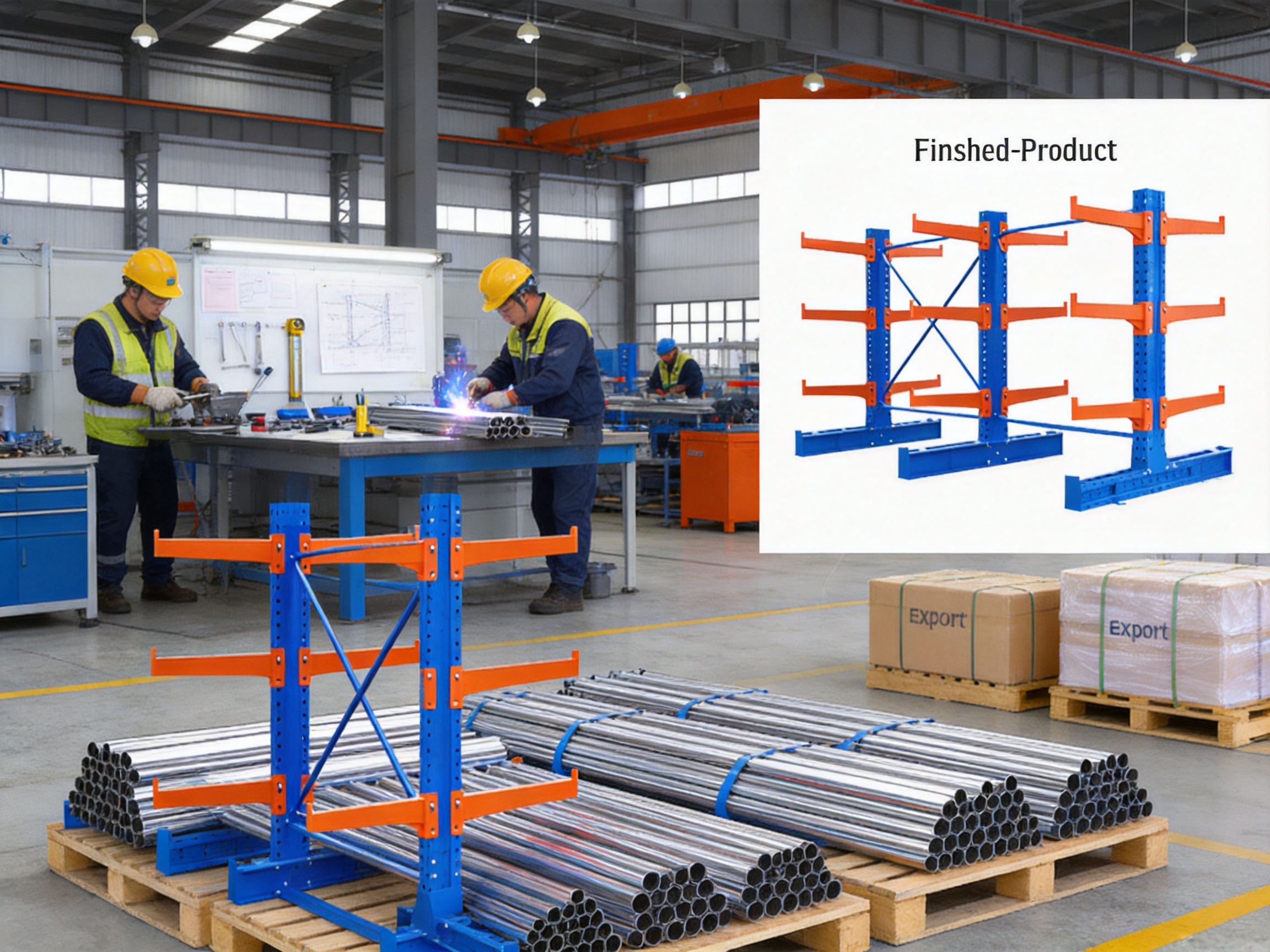
The manufacturing process for steel storage products generally includes material preparation, cutting, forming, welding or connection assembly, surface treatment, finishing, inspection, packing, and shipment. Each stage contributes to the final quality of the rack.
Accurate material preparation helps maintain consistent component dimensions. Forming and fabrication processes influence the strength and fit of columns, arms, and bases. Welding and connection quality affect structural reliability. Surface finishing helps protect the steel and gives the finished product a clean, professional appearance.
For customized orders, process control is especially important because different projects may require different dimensions, colors, components, and packaging specifications. An integrated manufacturing system helps reduce communication gaps between design requirements and production execution.
Quality Control
Quality control should cover raw materials, component dimensions, welds, surface condition, assembly accuracy, load-related design details, and finished-product packaging. Inspection at multiple stages can identify problems earlier and reduce the chance of defective products reaching the customer.
The company’s quality-control approach supports the production of reliable storage equipment for different markets. Customers purchasing heavy-duty cantilever racking can benefit from a supplier that treats product consistency, structural performance, and order accuracy as connected priorities.
OEM and ODM Capability
OEM and ODM services are valuable for distributors, contractors, warehouse solution providers, and businesses with specific branding or technical requirements. OEM production can support customer-defined specifications, packaging, and market needs. ODM service can involve assistance with product configuration, design development, and functional improvements.
This capability is particularly useful when a customer needs more than a standard catalog rack. A project may require a specific arm length, height, shelf combination, finish, color, storage capacity, or layout. Working with an experienced OEM and ODM manufacturer can simplify the process from concept to finished shipment.
Global Market Experience
Shanghai King Global Shelf Co., Ltd. exports products to North America, Southeast Asia, Japan, South Korea, the Middle East, Europe, and other regions. Experience across different markets can help a manufacturer understand varied customer expectations, packaging requirements, communication practices, and application conditions.
International experience is also useful for projects that involve multiple warehouse locations or regional distribution networks. A supplier with export experience may be better positioned to coordinate production and delivery for customers operating across borders.
Broad Product Portfolio
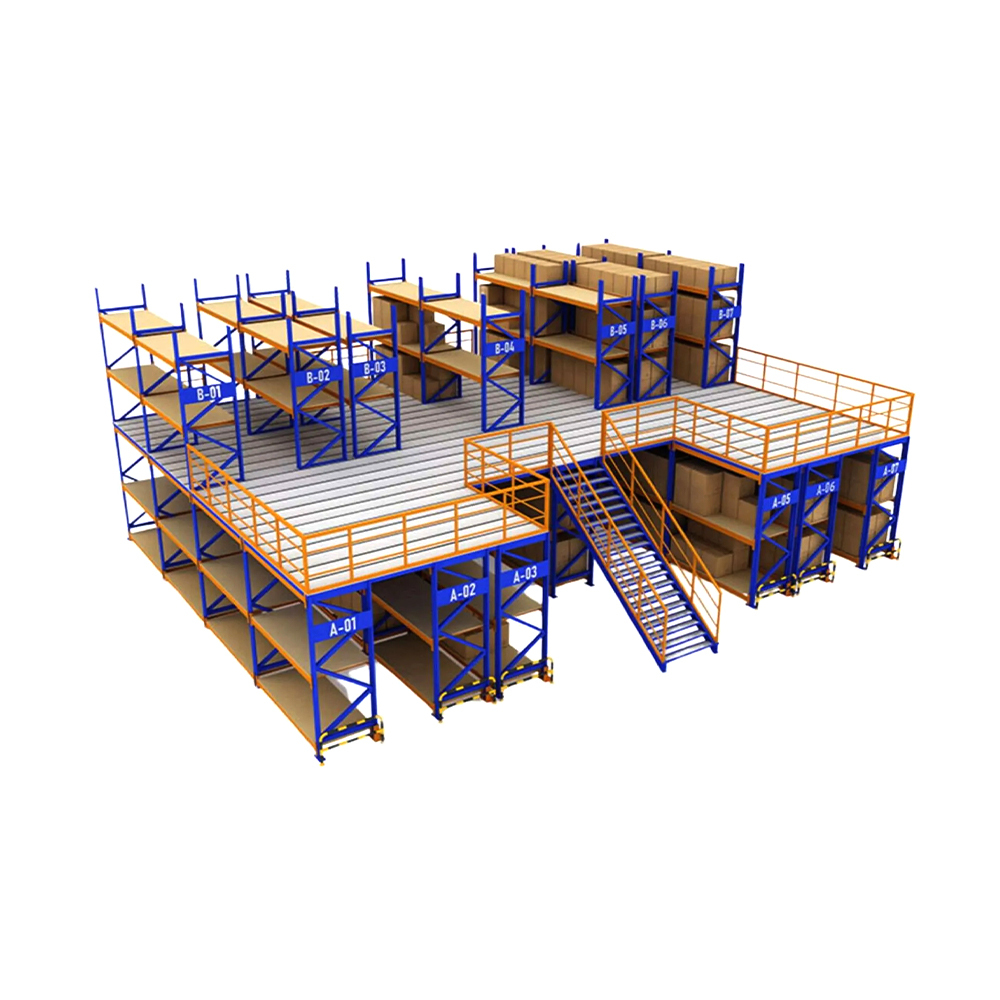
In addition to cantilever racks, the company supplies warehouse racks, pallet racking, mezzanine racking, supermarket shelves, office shelves, home shelves, and other metal storage products. This broad product range supports integrated storage planning.
A customer may need cantilever racks for long materials, pallet racking for boxed inventory, mezzanine racking for additional floor space, and shelving for small parts. Working with a supplier that can provide multiple product categories may simplify procurement and improve consistency across a facility.
Advantages Compared with Low-Cost Generic Alternatives
Price is an important consideration when purchasing storage equipment, but the lowest initial price does not always represent the best long-term value. A rack that is poorly matched to the load, difficult to assemble, or inconsistent in quality may create additional costs through product damage, inefficient handling, frequent replacement, or operational interruptions.
Application-Specific Design
A professional supplier begins with the application rather than offering a fixed product without evaluation. The rack should correspond to the product length, weight, handling equipment, available height, aisle layout, and expected future use. This application-specific approach can provide better performance than a generic rack selected only by appearance or price.
Structural Reliability
Heavy-duty storage requires dependable columns, arms, bases, bracing, and connections. Structural reliability is especially important when materials are valuable, heavy, or frequently moved. A manufacturer with established production processes can provide greater confidence in dimensional consistency and component quality.
Customization Without Losing Standardization
Customization does not need to mean an entirely unique product for every order. An experienced manufacturer can combine standardized components and controlled customization. This may provide the advantages of repeatable production while still meeting project-specific requirements.
Long-Term Service Value
A well-designed cantilever rack can remain useful for many years when it is correctly installed, operated, inspected, and maintained. The ability to add shelves, adjust arms, or expand the layout can extend the practical life of the storage system.
Installation, Operation, and Maintenance
Professional Installation
Installation should follow the supplier’s drawings and instructions. Columns must be positioned accurately, arms must be secured correctly, and the rack must be anchored or braced as required. The floor should be checked before installation, and the finished system should be inspected before it is put into service.
Safe Loading Practices
Products should be placed evenly on the arms and should not exceed the rated capacity. Heavy items should generally be stored at lower levels when appropriate for the application. Loads should be stable, and loose materials should not be placed where they can roll or fall into aisles.
Warehouse employees should understand the difference between static storage capacity and forces created during loading. Forklift contact, sudden placement, dragging, and uneven distribution can create stresses that are not represented by the product’s normal stationary load.
Clear Aisles and Operating Zones
Aisles must provide enough clearance for the selected handling equipment and the products being moved. The rack layout should separate vehicle routes from pedestrian areas whenever possible. Operators should avoid placing materials outside designated storage positions.
Regular Inspection
Routine inspections should look for bent columns, damaged arms, loose components, missing locks, impact marks, corrosion, and changes in rack alignment. Any damaged component should be evaluated before the rack is returned to normal use.
Inspection frequency may depend on the intensity of use and the working environment. Facilities with frequent forklift traffic or heavy product movement may need more frequent checks than light-use storage areas.
Housekeeping and Corrosion Prevention
Clean floors and organized storage reduce the risk of trips, impacts, and blocked access. If the rack is used in a humid, chemically exposed, or outdoor environment, the finish and maintenance program should be suitable for those conditions.
Planning a Cantilever Rack Project
A successful project begins with accurate information. Before requesting a quotation, customers should prepare a list of the products to be stored, including typical and maximum length, weight, shape, quantity, and packaging method.
The warehouse layout should show walls, columns, doors, loading areas, production equipment, pedestrian routes, vehicle aisles, and available ceiling height. Information about forklifts or pallet jacks is also important because the equipment determines the access and clearance requirements.
Customers should identify whether the rack will be placed indoors, under a covered structure, or outdoors. Environmental conditions may influence the surface treatment, corrosion protection, anchoring, and maintenance requirements.
It is also useful to consider future growth. If product volume is expected to increase, the layout may be planned with expansion space. If the product range may change, adjustable arms and optional shelves can provide valuable flexibility.
Environmental and Operational Benefits
Better warehouse organization can support more efficient use of existing facilities. By increasing vertical storage capacity, cantilever racking may reduce the need for immediate building expansion. Avoiding unnecessary expansion can reduce construction, energy, and relocation requirements.
Efficient material handling can also reduce unnecessary forklift travel and repeated repositioning of products. When frequently used materials are stored in logical locations, operators may spend less time searching, moving, and restacking inventory.
Durable steel storage systems can be maintained and reused through business changes. Instead of replacing an entire storage solution when product sizes change, a configurable cantilever rack may be adapted with new arm positions or additional shelf components.
Q&A: Heavy-Duty Cantilever Racking
What products are best suited for cantilever racks?
Cantilever racks are ideal for long, bulky, oversized, or irregularly shaped products. Common examples include pipes, lumber, steel bars, metal profiles, carpets, fabric rolls, construction materials, conduit, and similar goods that do not fit efficiently on standard pallet racks.
How is a cantilever rack different from a pallet rack?
A pallet rack normally uses upright frames and horizontal beams to support pallets. A cantilever rack uses vertical columns with projecting arms and an open front. This makes cantilever racks more suitable for long products that need unobstructed front access.
Can cantilever racks store small items?
Yes. Optional shelves or decking can be added for small cartons, fittings, tools, accessories, and low-height products. This allows one storage area to handle both long materials and related smaller inventory.
Are cantilever racks suitable for forklifts?
Yes. The wide-load-accessible design can be used with forklifts and other warehouse handling equipment. The rack layout must be designed around the equipment’s turning radius, lifting height, load dimensions, and required aisle width.
Can the rack be used on one side or both sides?
Yes. Single-sided racks are suitable for installation against walls or along warehouse boundaries. Double-sided racks can be installed as freestanding islands and accessed from both sides.
Can the arm levels be adjusted?
Many cantilever rack configurations use adjustable arms. Adjustable levels allow operators to adapt the rack to different product heights and changing inventory requirements. The adjustment method and allowable positions depend on the specific design.
How do I select the correct load capacity?
Load capacity should be based on the weight and dimensions of the products, the number of storage levels, the load distribution, the arm length, the column spacing, and the handling method. Customers should provide complete product information to the supplier so the rack can be engineered appropriately.
Can the rack be customized for a particular warehouse?
Yes. Dimensions, arm length, column height, storage levels, shelf options, configuration, finish, and accessories can often be customized. Shanghai King Global Shelf Co., Ltd. provides OEM and ODM services for project-specific storage requirements.
What should be considered before installation?
The warehouse floor, ceiling height, aisle width, equipment access, product dimensions, rack anchoring, traffic routes, and applicable safety requirements should all be reviewed. Professional installation and inspection are recommended for heavy-duty systems.
How should a cantilever rack be maintained?
Operators should inspect the rack regularly for impact damage, bent components, loose connections, corrosion, and alignment changes. Damaged components should be removed from service or professionally evaluated. Load labels and operating procedures should remain visible and current.
Why choose an OEM and ODM manufacturer?
An OEM and ODM manufacturer can support both standard products and customized designs. This is useful for distributors, contractors, warehouse planners, and businesses that need specific dimensions, branding, packaging, or technical configurations.
Conclusion
Heavy-duty cantilever racking provides a practical and flexible solution for warehouses that handle long, oversized, heavy, or irregularly shaped products. Its open-front construction improves access, supports efficient loading and unloading, and helps warehouses use vertical space more effectively. With suitable columns, arms, bases, bracing, shelves, and load ratings, the system can be adapted to a wide range of industrial applications.
Compared with floor stacking or conventional pallet racks, cantilever racking can improve product organization, inventory visibility, material handling efficiency, and space utilization. Its flexible configuration also allows businesses to respond to changing product ranges and future growth.
Shanghai King Global Shelf Co., Ltd. strengthens this product offering through professional manufacturing, integrated product development, quality control, OEM and ODM capability, and experience serving customers in global markets. With a 60,000-square-meter production base, more than 300 employees, and a broad portfolio of storage products, the company can support both individual rack requirements and complete warehouse storage projects.
For businesses seeking a dependable storage system for pipes, lumber, steel, rolls, construction goods, and other difficult-to-store materials, a properly engineered cantilever rack can deliver long-term operational value. The best results come from matching the rack design to the products, equipment, facility, and future needs of the warehouse.
References
1. Material Handling Industry, principles of warehouse storage and material handling equipment selection.
2. Occupational safety guidance for industrial storage racks, load handling, aisle planning, and workplace inspection.
3. General engineering principles for steel storage structures, load distribution, bracing, anchoring, and rack stability.
4. Warehouse planning practices for inventory visibility, vertical space utilization, forklift access, and product protection.
5. Manufacturer information supplied by Shanghai King Global Shelf Co., Ltd. regarding cantilever racks, storage products, OEM and ODM services, manufacturing facilities, and international market coverage.


 English
 Español
 русский
 Français
 한국어
 عربى
 ไทย
 Deutsch
 Bahasa Melayu
 Português
 Polskie