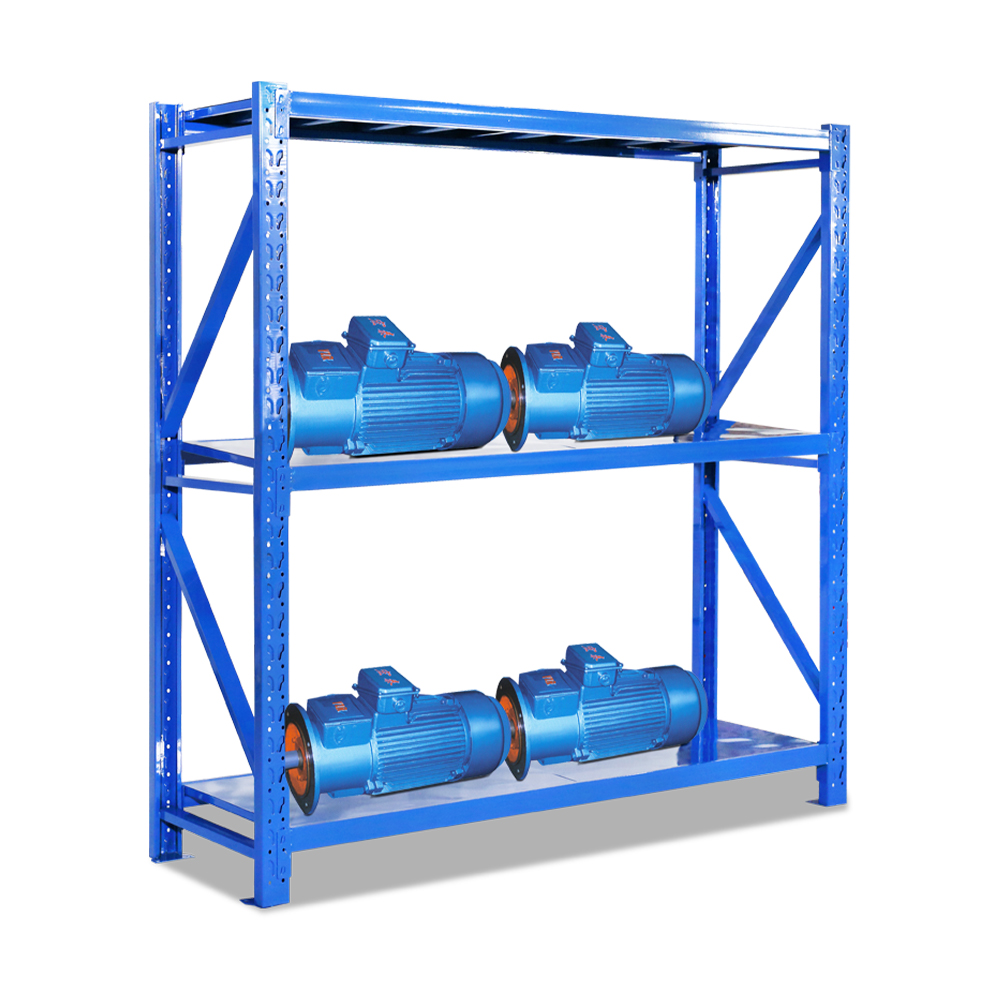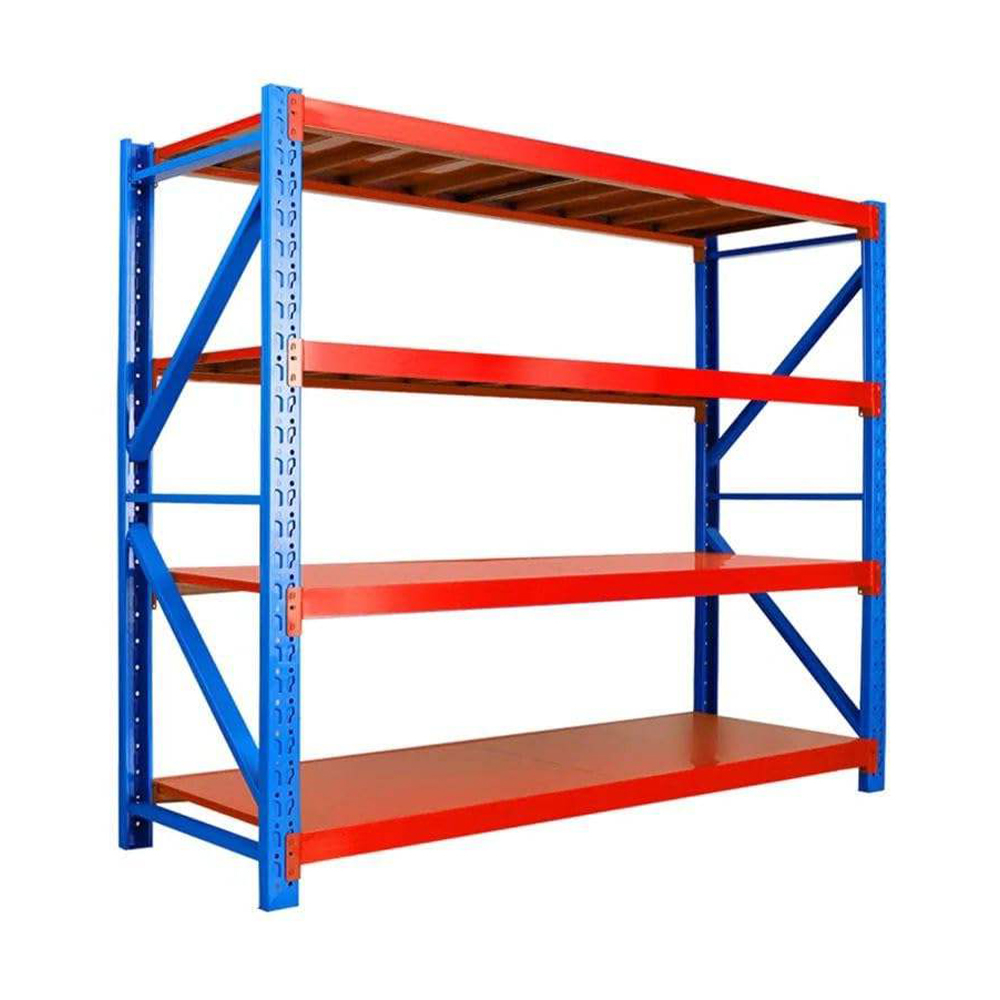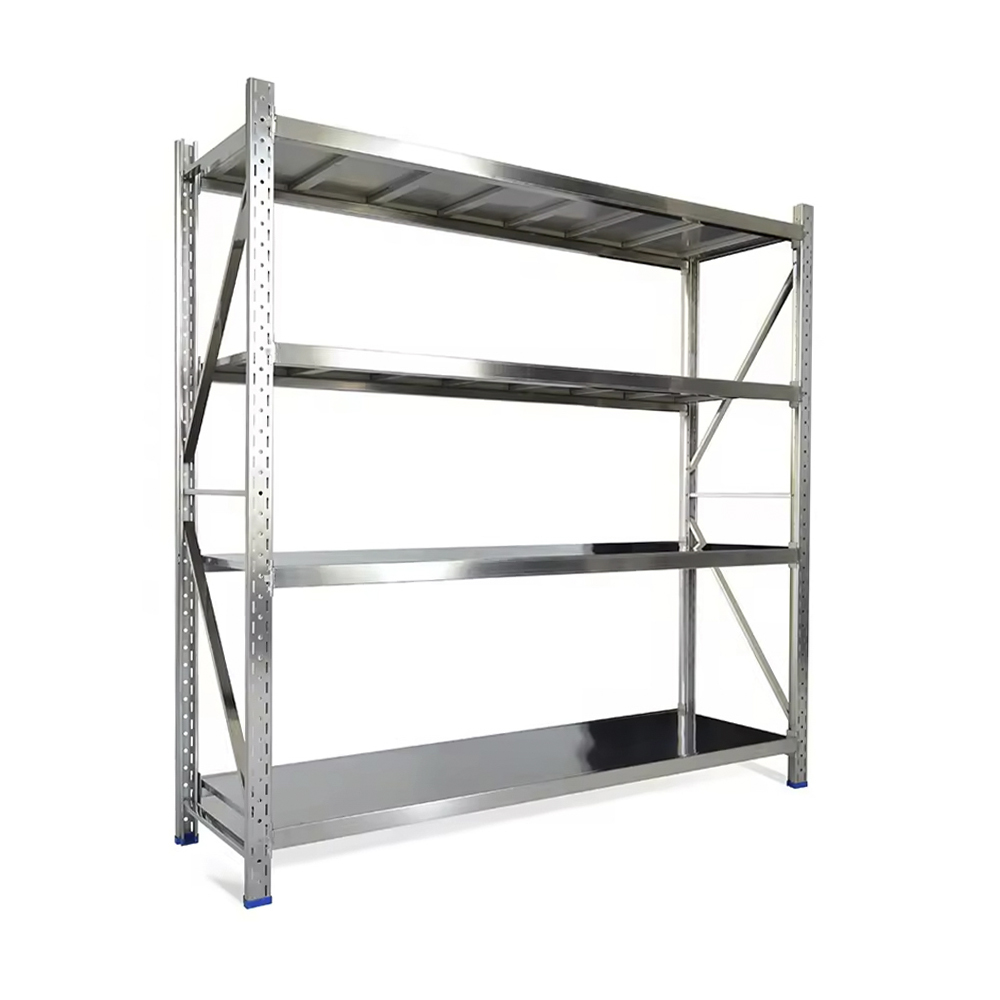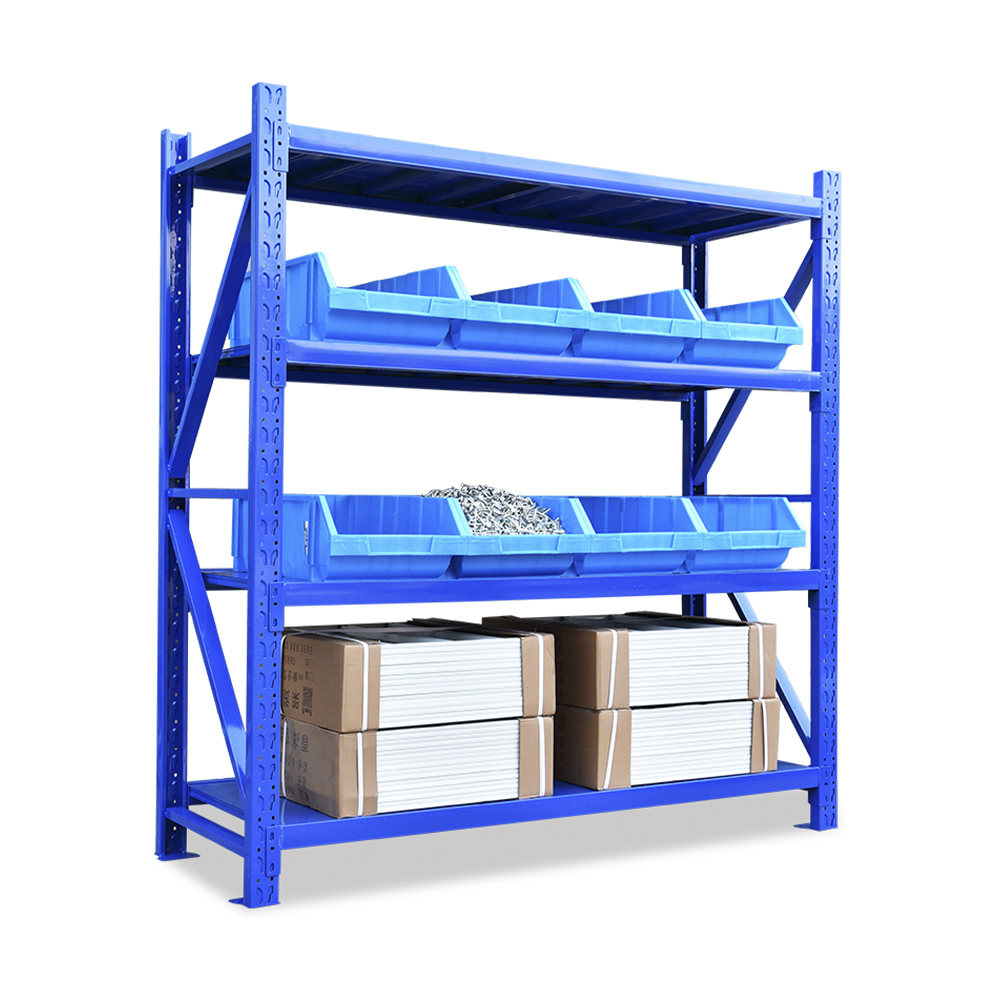
Efficient storage is essential for factories, warehouses, workshops, retail businesses, offices, and even well-organized homes. As inventory increases, floor space becomes more valuable, and businesses need a shelving solution that can handle substantial loads without creating unnecessary complexity. The Medium-Duty Anti-Rust Steel Stacking Shelves for Factory and Warehouse Use are designed to address these requirements with a strong structure, adaptable configuration, compact footprint, and durable surface protection.
These shelves combine the practical advantages of industrial storage equipment with the flexibility required in smaller commercial and residential environments. With a load capacity of approximately 200 to 500 kilograms per layer, reinforced steel shelf panels, multi-bent beams, a one-piece shelf edge, and a butterfly-hole connection system, the rack provides dependable storage for tools, cartons, components, documents, equipment, retail goods, and general inventory.
Unlike light-duty shelving that may bend under demanding use, or overly complicated industrial systems that require specialized installation, this medium-duty rack offers a balanced solution. It is strong enough for heavy goods, simple enough for efficient assembly, and flexible enough to be reconfigured as storage requirements change.
A Practical Storage Solution for Modern Workspaces
Storage equipment must do more than support products. It must help users organize inventory, protect goods, improve accessibility, use vertical space, and maintain a safer working environment. A well-designed shelving system also needs to remain useful when a company changes its product range, reorganizes its warehouse, or expands its operations.
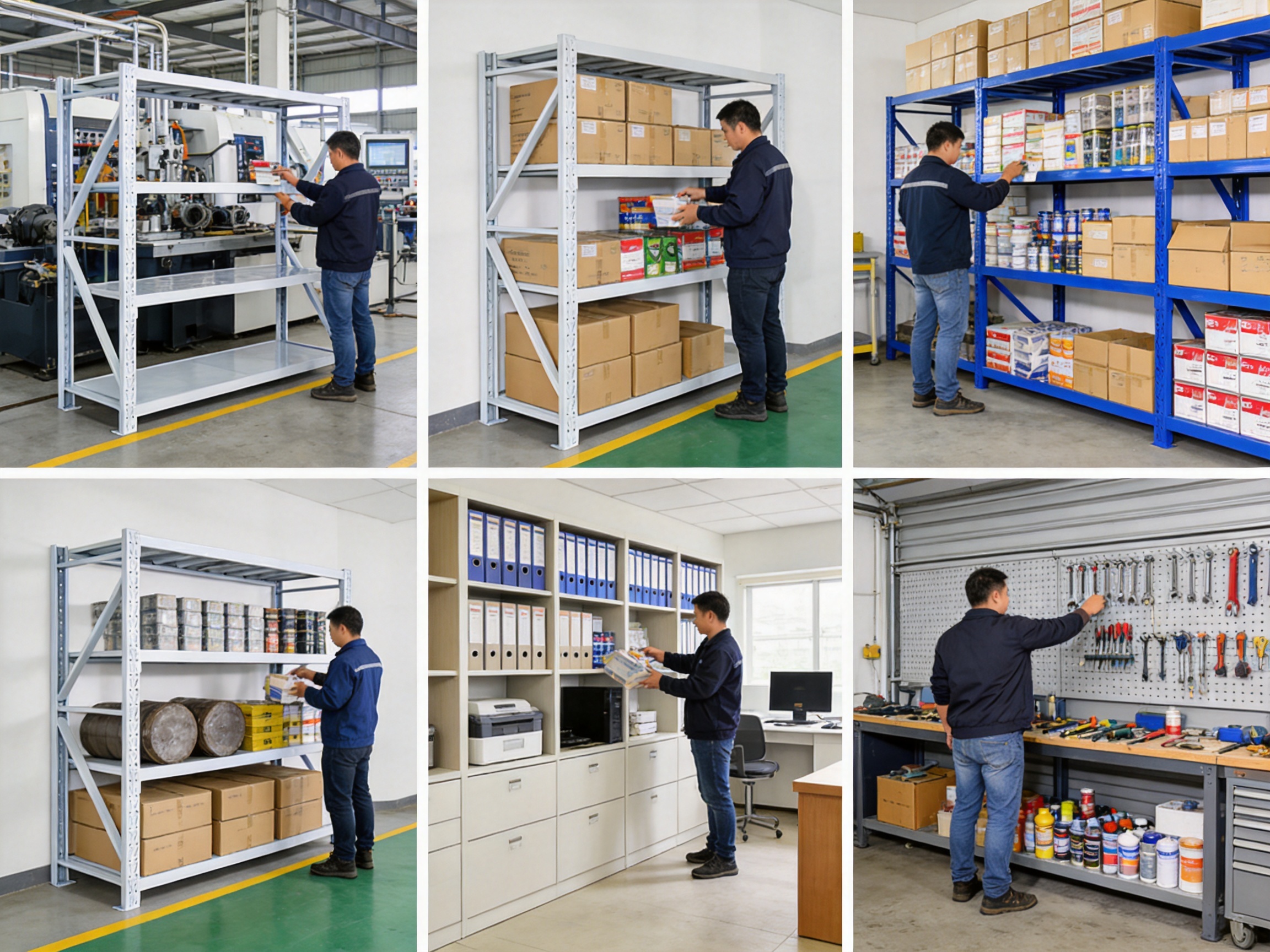
The medium-duty steel stacking shelf is intended for this type of changing environment. It can be used as a freestanding storage unit, arranged in rows, installed along warehouse walls, or combined with other shelving modules. In a garage, it can hold tools, spare parts, paint supplies, and maintenance equipment. In a small warehouse, it can organize cartons, packaged products, and replacement components. In an office, it can store files, archive boxes, stationery, and equipment. In a retail environment, it can support back-room inventory or serve as a practical display and stockholding unit.
The shelf structure is designed to provide a useful balance between strength and convenience. Its reinforced components support higher working loads than ordinary household shelving, while its modular connection design makes installation and future adjustment easier. This combination helps reduce the need for frequent replacement and allows the rack to remain useful as storage needs develop.
Main Product Features
Load Capacity from 200 to 500 Kilograms per Layer
The rack is available with a load capacity of approximately 200 to 500 kilograms per layer, depending on the selected configuration and specifications. This capacity makes the shelf suitable for medium-duty storage applications where ordinary household racks may not provide sufficient strength.
Users can store heavier cartons, tools, machine components, packaged goods, office equipment, and other materials without relying on several weaker shelving units. By consolidating goods onto a stronger vertical system, businesses can improve organization and make better use of limited floor area.
Load capacity should always be considered together with the type of goods, shelf dimensions, weight distribution, installation conditions, and operating environment. Heavy items should be positioned evenly across the shelf panel, with the heaviest products stored on lower levels whenever practical. Proper loading and installation help the rack perform safely and effectively over its service life.
Multi-Bent Beams for Improved Structural Strength
The rack uses multi-bent beam components to improve stiffness and resistance to deformation. Bending the steel into a structured profile increases the beam’s ability to support distributed loads compared with a simple flat strip of the same material.
This design is important in medium-duty shelving because the beams carry the load from the shelf panels and transfer it to the upright frames. A well-formed beam helps maintain shelf stability and reduces the likelihood of visible sagging when the rack is loaded correctly.
Multi-bent beams also contribute to the rack’s professional appearance. Straight, stable shelf levels make it easier to arrange products and create a cleaner storage area. For businesses, this can improve inventory visibility and reduce the time employees spend searching for materials.
Reinforced Steel Shelf Panels
Each shelf is made with reinforced steel panels to provide a stable surface for stored goods. Steel offers a dependable combination of strength, durability, and resistance to everyday wear. The reinforced construction is particularly useful when the rack is used for cartons, tools, components, packaged products, or equipment with concentrated weight.
The shelf panels can support practical storage requirements in factories, warehouses, workshops, offices, stores, and homes. Compared with thin, flexible panels found in some low-cost shelving products, reinforced steel panels provide a more solid platform and a greater sense of stability during regular loading and unloading.
A rigid shelf surface also helps prevent small packages from becoming unstable. When goods rest on a level and properly supported panel, they are easier to stack, label, count, and retrieve. This supports better inventory control and a more efficient workflow.
One-Piece Shelf Edge for Added Safety
The one-piece shelf edge is designed to create a continuous boundary around the shelf area. This feature helps reduce the risk of items sliding or falling from the front and sides during normal use.
The edge is especially valuable in busy storage areas where goods are handled frequently. Employees may move quickly through warehouse aisles, retrieve products from different shelf levels, or store packages of varying shapes. A defined shelf edge provides an additional layer of control and helps keep stored goods within the intended storage zone.
The shelf edge also strengthens the overall visual structure of the rack. Instead of appearing like a loose collection of panels and supports, the shelf has a more integrated appearance. This can be beneficial in retail back rooms, offices, showrooms, and other locations where the storage system remains visible to customers or visitors.
Butterfly-Hole Structure for Fast Installation
The butterfly-hole connection structure is one of the rack’s most practical features. It is designed to support quick setup and convenient reconfiguration without requiring a highly complicated installation process.
The connection system allows shelf levels to be adjusted according to the height of the stored goods. Tall cartons can be accommodated by increasing the distance between levels, while smaller packages can be arranged on closer shelf levels to reduce unused vertical space. This flexibility helps users adapt the rack to different product categories.
Fast assembly is particularly useful for small businesses, workshops, and home users that may not have dedicated installation teams. It can also help warehouses reduce setup time when adding new shelving modules or rearranging storage areas.
Reconfiguration is another important advantage. Storage requirements often change because of seasonal inventory, new product sizes, production adjustments, or business expansion. A rack that can be adjusted without replacing the entire structure offers greater long-term value than a fixed system with limited adaptability.
Anti-Rust Surface Protection
The steel rack is finished with an anti-corrosion surface treatment intended to help protect the material during long-term use. This is important in warehouses, workshops, garages, and other areas where shelves may be exposed to dust, humidity, temperature changes, or occasional contact with moisture.
A durable anti-rust finish helps preserve the rack’s appearance and contributes to its service life. It also supports easier maintenance because the smooth protected surface can be cleaned more conveniently than untreated steel.
Surface protection does not eliminate the need for reasonable care. Users should avoid prolonged exposure to standing water, promptly clean spilled liquids, and inspect the shelf for damage after handling heavy or sharp objects. With appropriate maintenance, the anti-corrosion finish can help the rack remain functional and presentable for many years.
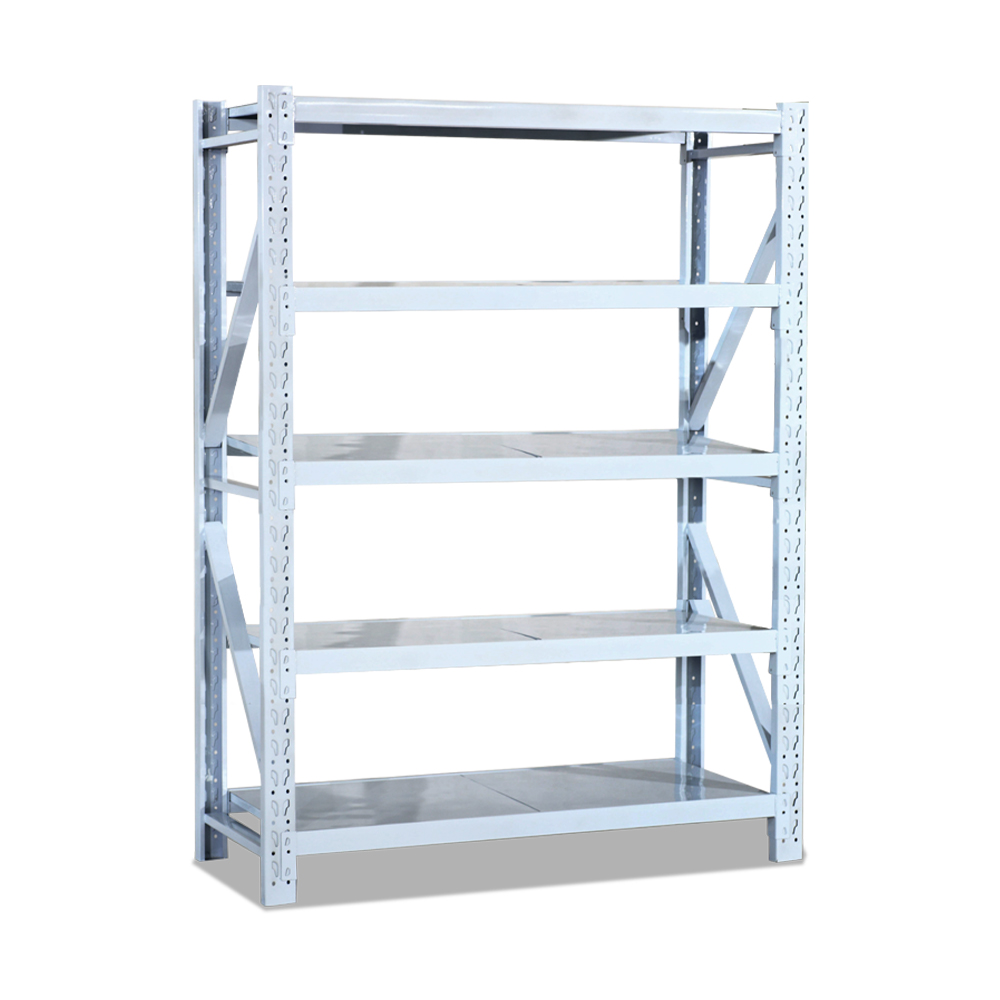
Medium-Duty Anti-Rust Steel Stacking Shelves for Factory & Warehouse Use
Advantages Over Conventional Shelving Options
Storage buyers often compare medium-duty racks with light household shelves, basic angle-steel racks, heavy industrial pallet racking, and custom-built storage systems. Each option has a place, but the medium-duty steel stacking shelf offers a useful balance between capacity, flexibility, cost, and installation convenience.
Compared with Light-Duty Household Shelves
Light-duty household shelves are generally designed for small items, light boxes, decorations, and occasional use. Their frames and panels may not be suitable for heavy tools, dense cartons, or business inventory. When overloaded, light-duty shelves can flex, become unstable, or lose their original shape.
The medium-duty rack provides a stronger alternative for users who need more than basic household storage. Its reinforced steel panels, multi-bent beams, and higher per-layer load capacity make it more appropriate for garages, workshops, offices, retail stockrooms, and small warehouses.
It also offers a more professional storage appearance. The structured layout makes it easier to create organized rows, assign product categories, and maintain a consistent inventory system.
Compared with Fixed Shelving
Fixed shelving may appear simple at the time of purchase, but it can become inconvenient when stored items change in size. A fixed shelf arrangement may leave excessive unused space above short items or fail to accommodate taller cartons.
The butterfly-hole structure provides a more adaptable alternative. Shelf levels can be adjusted so that the vertical space is used more efficiently. This improves the storage density of the rack and helps reduce wasted capacity.
Compared with Overly Heavy Industrial Systems
Heavy industrial pallet racking is highly capable, but it may be unnecessary for smaller products and medium-weight goods. Such systems can require more planning, larger installation areas, specialized handling equipment, and greater investment.
The medium-duty rack is designed for applications that need dependable support without the complexity of a full pallet storage system. It can fit into smaller rooms, workshops, offices, and retail storage areas where forklifts or pallets are not the primary method of handling goods.
This makes it a practical choice for businesses that require industrial-style strength but do not need a large-scale pallet racking infrastructure.
Compared with Low-Cost Unreinforced Racks
Some low-cost shelves prioritize a low purchase price over long-term durability. They may use thin panels, weak connections, limited surface protection, or unstable frames. Although such products can appear economical, frequent deformation or replacement may increase the total cost over time.
The medium-duty rack is intended as a longer-term investment. Its reinforced structure, anti-rust finish, safety edge, and reconfigurable design help provide more practical value during continued use. The initial purchase is supported by durability, versatility, and reduced dependence on replacement shelving.
| Comparison Factor |
Medium-Duty Steel Stacking Shelf |
Light-Duty Household Shelf |
Heavy Industrial Pallet Rack |
| Typical application |
Factories, workshops, small warehouses, offices, stores, garages, and homes |
Light household and personal storage |
Large warehouses and palletized inventory |
| Approximate load range |
200 to 500 kilograms per layer |
Generally lower, depending on construction |
Designed for significantly heavier industrial loads |
| Shelf adjustment |
Flexible adjustment through butterfly-hole connections |
Often limited or fixed |
Adjustable, but may require more planning and equipment |
| Installation complexity |
Designed for quick assembly and reconfiguration |
Usually simple, but may have weaker connections |
More complex and often requires professional installation |
| Space suitability |
Efficient for small and medium-sized storage areas |
Suitable for light, compact storage |
Best for larger industrial facilities |
| Surface protection |
Durable anti-corrosion finish |
Varies widely by product |
Varies according to system and environment |
Applications Across Different Environments
Factory Storage
Factories need organized storage for raw materials, production tools, work-in-process items, replacement components, packaging supplies, and maintenance equipment. Unorganized materials can slow production and create unnecessary movement across the facility.
The medium-duty rack helps create defined locations for frequently used items. Shelf levels can be adjusted to accommodate different component sizes, while the steel structure is suitable for regular handling. The rack can be positioned near workstations, maintenance areas, packing zones, or spare-parts rooms.
By placing products vertically, factories can increase storage capacity without expanding their floor area. Clear labeling and consistent shelf assignments can further improve picking efficiency and stock visibility.
Small Warehouse Operations
Small warehouses often need flexible storage equipment because they handle a variety of products and may have limited floor space. A single facility might store cartons, tools, spare parts, packaged consumer products, seasonal goods, and promotional materials.
The rack’s modular form allows operators to create storage rows or individual units. Its adjustable shelf levels make it possible to accommodate different carton heights, helping reduce unused space. The one-piece shelf edge provides additional support for goods during storage and retrieval.
For growing businesses, the rack can also serve as a starting point for a larger storage plan. Additional units can be organized according to product category, order frequency, or inventory ownership. This creates a scalable approach without immediately investing in a complex warehouse system.
Retail Stockrooms
Retail businesses need stockrooms that are orderly, accessible, and easy to replenish. Products stored randomly on the floor or in unstable piles can increase retrieval time and raise the risk of damage.
The rack can hold packaged merchandise, shipping supplies, promotional items, store fixtures, and reserve inventory. Its professional appearance is appropriate for back-of-house environments, while its compact vertical design helps maximize limited stockroom capacity.
Retailers can dedicate individual shelf levels to product categories, sizes, colors, or replenishment priorities. The ability to adjust the levels makes the system suitable for changing product collections and seasonal inventory.
Office Archives and Equipment Storage
Offices often underestimate the amount of space required for records, equipment, and supplies. Files, archive cartons, printers, promotional materials, and packaging supplies can quickly occupy valuable floor space.
The medium-duty rack provides a sturdy solution for office storage rooms, archives, utility areas, and mailrooms. It can support heavier archive boxes and equipment than many decorative shelves, while the vertical format keeps materials organized and accessible.
With proper labeling, employees can locate records and supplies more quickly. The open shelf design also provides better visibility than closed boxes stacked randomly on the floor.
Garages and Workshops
Garages and home workshops often contain heavy tools, hardware, garden equipment, vehicle supplies, paint products, and spare parts. These items require more support than ordinary decorative shelving can provide.
The rack creates a dedicated storage zone for such materials. Its steel construction is suitable for practical working environments, and the anti-corrosion finish helps protect the surface against everyday conditions when the rack is maintained properly.
Users can position larger tools and containers on lower levels and use higher shelves for lighter items. This arrangement helps keep frequently used equipment accessible while maintaining a safer and more orderly workspace.
Basements and Utility Areas
Basements, utility rooms, and service areas often have irregular storage requirements. Users may need to store cleaning supplies, seasonal decorations, household equipment, packaged goods, and maintenance materials.
The adjustable shelf layout makes it easier to work around different item sizes. Instead of relying on multiple small cabinets, users can organize a broad range of goods on one coordinated rack system.
In areas where humidity may be present, proper ventilation and regular inspection remain important. The anti-rust finish provides useful surface protection, while responsible maintenance helps preserve the product over time.
Design Benefits for Space Utilization
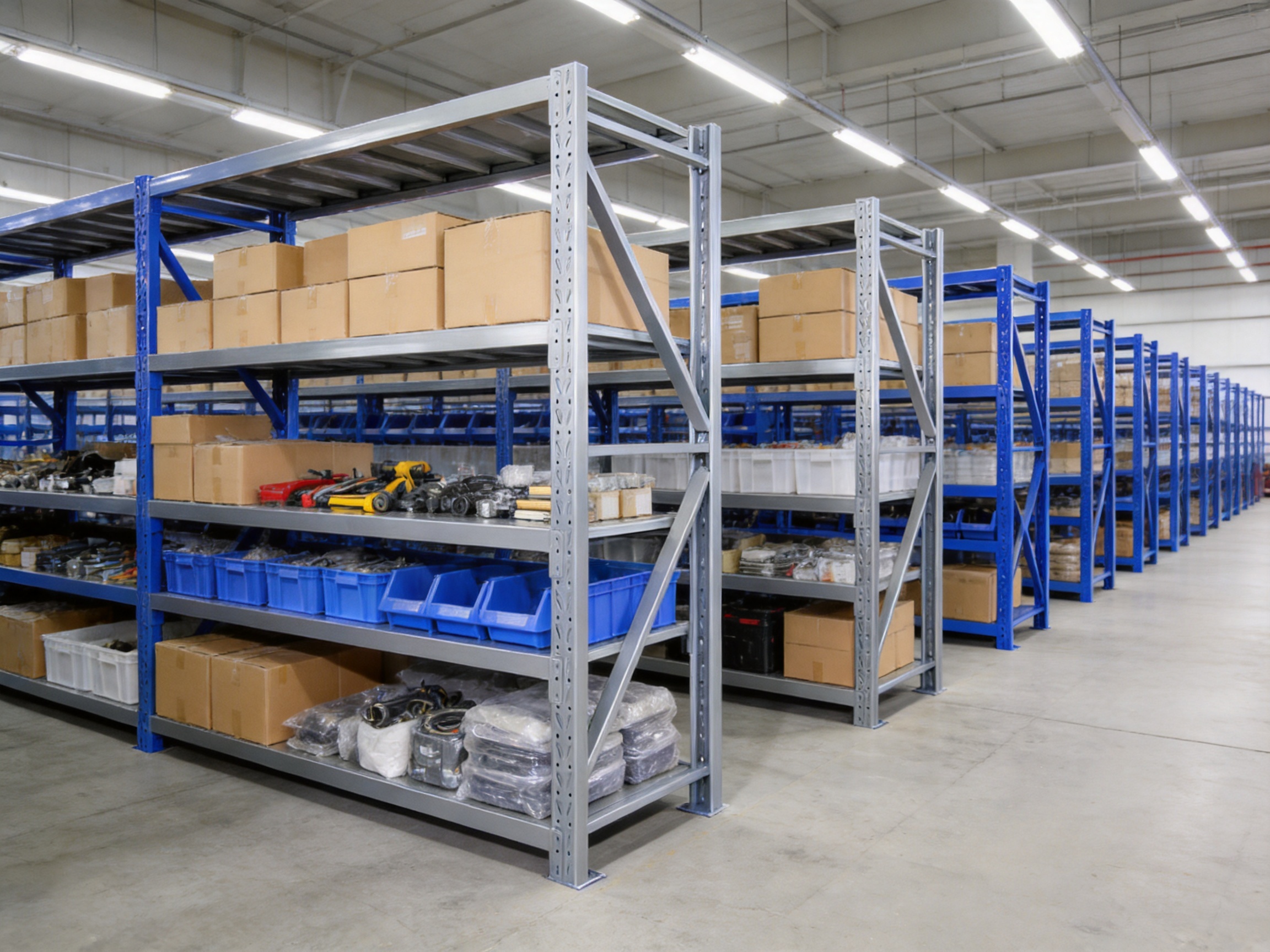
Floor space is one of the most expensive and limited resources in many facilities. Expanding horizontally may require moving equipment, renting additional space, or disrupting normal operations. Vertical storage provides an alternative by increasing capacity within the existing footprint.
The medium-duty rack uses vertical space efficiently while maintaining access to individual shelf levels. Products can be arranged by type, size, frequency of use, or destination. This can reduce clutter and create more predictable material flow.
Vertical storage is especially helpful in compact rooms. A narrow but tall shelving unit can hold many items without blocking large areas of the floor. Multiple units can also be positioned along walls or arranged in straight rows to create organized aisles.
The adjustable structure improves space utilization further. When shelf levels match the height of stored goods, less vertical space is wasted. This allows the same rack to accommodate small containers, medium cartons, and larger packages at different times.
Safety and Stability Considerations
Safe storage depends on both product design and correct use. The rack’s multi-bent beams, reinforced panels, and one-piece shelf edge provide structural and containment benefits, but users should still follow appropriate loading practices.
Goods should be distributed evenly across each shelf instead of being concentrated in one small area. The stated load capacity should not be exceeded. Heavy products should generally be stored on lower shelf levels to help maintain a lower center of gravity and improve overall stability.
The rack should be assembled on a firm, level surface. Users should check that all connections are properly engaged and that the frame is standing squarely before loading it. If the installation environment requires additional anchoring or safety measures, these should be considered according to local conditions and applicable workplace practices.
Regular inspections are useful in busy factories and warehouses. Operators can check the uprights, beams, shelf panels, connection points, and surface finish for visible damage. Any component that has been seriously bent or damaged should be assessed before the rack is returned to service.
Good housekeeping also contributes to safety. Aisles should remain clear, goods should not protrude into walking paths, and frequently handled items should be placed where employees can retrieve them without unsafe stretching or climbing.
Manufacturing Strengths and Quality-Focused Production
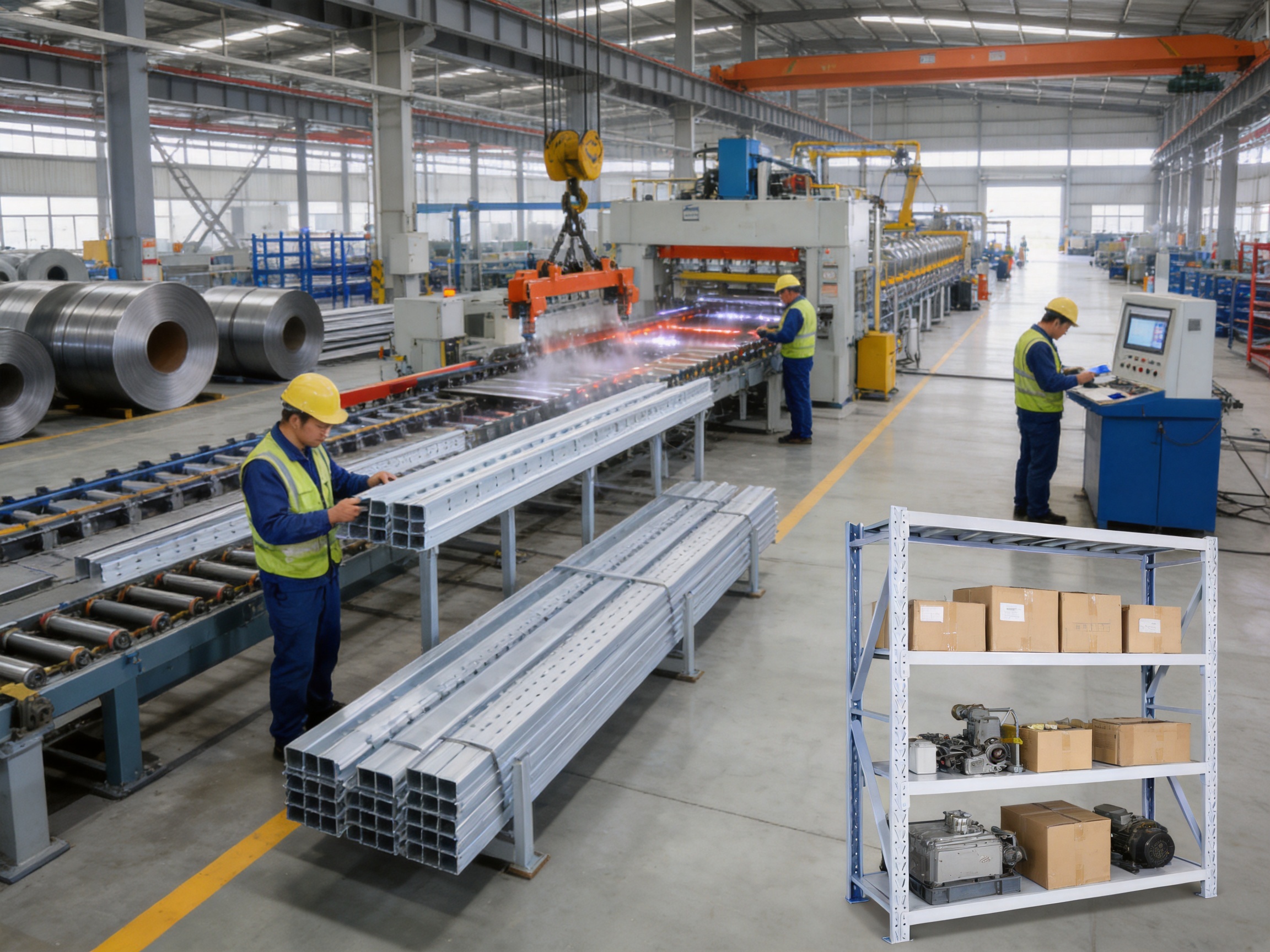
The performance of a storage rack depends heavily on the quality of its manufacturing process. Strong design alone is not enough if steel forming, welding, coating, assembly, or inspection is inconsistent. Shanghai King Global Shelf Co., Ltd. has developed an integrated operating system covering product development, manufacturing, quality control, and market service.
Founded in 2010, the company specializes in shelving and storage products for supermarkets, warehouses, offices, homes, and other commercial environments. Its experience across different applications supports a practical understanding of load requirements, installation expectations, space limitations, and market-specific storage preferences.
Integrated Product Development
Product development is an important part of the company’s manufacturing approach. Storage equipment must be designed around real user requirements, including load performance, assembly speed, shelf adjustability, appearance, durability, and compatibility with different environments.
The medium-duty rack reflects this application-oriented approach. Features such as the butterfly-hole structure, multi-bent beams, reinforced shelf panels, and one-piece shelf edge are not merely decorative details. They address common challenges faced by users who need stronger shelving that remains easy to install and adapt.
The company also provides customized OEM and ODM solutions. This allows customers to request product adjustments for different markets, product categories, dimensions, finishes, branding requirements, and storage conditions, subject to technical evaluation and production specifications.
Large Production Base
The company operates a production base covering approximately 60,000 square meters. A substantial manufacturing base can support coordinated production activities, material handling, quality management, product development, and order fulfillment.
For customers, production capacity is valuable because it can support both standard product programs and larger customized projects. It also provides a foundation for maintaining consistent manufacturing processes when serving customers in multiple markets.
Experienced Technical and Manufacturing Team
With more than 300 employees, the company has a workforce covering technical development, manufacturing, quality control, sales, service, and operational management. A coordinated team structure helps connect product design with practical production requirements.
Technical experience is particularly important for steel shelving because small differences in forming, connection design, panel reinforcement, and surface treatment can influence final performance. A professional manufacturing team can identify these details during development and production rather than treating the rack as a simple collection of parts.
Quality Control and Process Coordination
Quality control is integrated into the company’s overall manufacturing system. For a medium-duty rack, important quality considerations include material consistency, dimensional accuracy, beam forming, shelf panel strength, connection fit, coating condition, and finished appearance.
Process coordination helps ensure that the components work together as a complete system. Uprights, beams, shelf panels, and connection points must be compatible so that assembly is efficient and the finished rack remains stable when loaded correctly.
Customers seeking OEM or ODM products can also benefit from communication between product development and production teams. This helps reduce the risk that a customized design will be difficult to manufacture or inconsistent with the intended application.
International Market Experience
Shanghai King Global Shelf Co., Ltd. exports products to North America, Southeast Asia, Japan, South Korea, the Middle East, Europe, and other regions. Serving different markets requires attention to varied business practices, storage environments, product expectations, packaging requirements, and customer service needs.
International experience can help a manufacturer understand that one shelving design may need to support multiple application scenarios. A rack used in a retail stockroom may have different requirements from one used in a factory or home garage, even when the basic structure is similar.
This broad market exposure supports the company’s ability to provide both standard shelving and customized storage solutions for customers with different operational needs.
OEM and ODM Customization Capabilities
Standard racks are suitable for many applications, but some customers require specialized dimensions, colors, shelf configurations, packaging formats, or branding. OEM and ODM services allow the storage system to be adapted to a customer’s commercial strategy and application environment.
Customization may involve shelf length and depth, number of levels, load range, surface finish, structural details, packaging, labeling, or product presentation. The final design should always be evaluated according to material availability, manufacturing feasibility, expected load, transport requirements, and installation conditions.
For distributors and wholesalers, customized appearance and packaging can help create a consistent product range. For warehouse operators, customized dimensions may improve the use of existing rooms and aisle layouts. For retailers, tailored shelf specifications can support specific merchandise sizes and store back-room requirements.
ODM support can be useful for businesses that want to develop a new storage product without building their own engineering and manufacturing infrastructure. The manufacturer can contribute experience in product structure, steel processing, production coordination, and quality management.
Installation and Configuration Guidance
The butterfly-hole connection system is intended to simplify installation. Before assembly, users should confirm that all components are present and inspect them for visible transport damage. The installation area should be clean, level, and free from obstructions.
During assembly, uprights should be positioned correctly and beams should be fully engaged in their connection points. Shelf panels should sit evenly on the supporting structure. The rack should be checked for alignment and stability before goods are added.
Shelf spacing should be planned according to the actual inventory. Frequently used goods can be placed at convenient working heights, while heavier items can be positioned lower. Higher levels are generally better suited to lighter products that do not need to be retrieved as often.
When the storage layout changes, users can reorganize shelf heights to improve the fit between the rack and the goods. This flexibility is one of the main reasons a modular medium-duty rack can provide better long-term value than fixed shelving.
For larger installations, businesses should create a basic layout plan before assembly. The plan can identify rack locations, aisle widths, product categories, access routes, loading zones, and areas requiring additional protection or anchoring. Local safety requirements and workplace procedures should be followed.
Maintenance for Long-Term Use
Steel shelving is durable, but routine care helps preserve its performance. Dust and debris should be removed periodically, especially in factories and workshops where airborne particles may accumulate on beams and shelf panels.
Spilled liquids should be cleaned promptly. Although the anti-corrosion finish provides protection, prolonged exposure to moisture can eventually affect damaged or unprotected areas. Sharp tools and heavy equipment should be placed carefully to avoid scratching the coating.
Users should avoid dragging heavy objects across the shelf surface whenever possible. Lifting or repositioning goods carefully helps reduce impact damage. If the surface is chipped or deeply scratched, the affected area should be monitored and addressed according to the appropriate maintenance procedure.
Periodic inspections should include the upright frames, beam connections, shelf panels, shelf edges, and overall alignment. A rack that shows unusual leaning, severe deformation, loose components, or other structural concerns should be unloaded and evaluated before continued use.
Purchasing Considerations for Businesses
Before purchasing a medium-duty rack, buyers should identify the weight and dimensions of the goods to be stored. The required shelf depth, width, number of levels, and clearance between shelves should be based on actual inventory rather than estimates alone.
Buyers should also consider how often goods will be handled. A stockroom that requires frequent picking may need shelf levels positioned for fast access. A long-term archive may prioritize maximum capacity and compact arrangement. A workshop may require more open access for tools and equipment.
The operating environment is another important factor. Factories, garages, humid storage rooms, offices, and retail spaces may have different requirements for surface protection, cleaning, appearance, and maintenance.
For larger projects, buyers should evaluate the supplier’s production experience, quality control system, customization capability, communication process, and after-sales support. A manufacturer with integrated development and production capabilities may be better positioned to coordinate a complete storage program.
| Purchasing Question |
Why It Matters |
| What is the expected weight per shelf? |
It helps determine the appropriate load range and configuration. |
| What are the dimensions of the stored goods? |
It guides shelf width, depth, height, and spacing decisions. |
| How frequently will products be accessed? |
It affects shelf positioning, labeling, and aisle planning. |
| Where will the rack be installed? |
The environment influences maintenance, surface protection, and layout. |
| Will inventory change over time? |
If so, adjustable and reconfigurable shelving provides greater value. |
| Is customization required? |
OEM and ODM support may be useful for dimensions, finish, packaging, or branding. |
Frequently Asked Questions
What is the load capacity of the rack?
The stated load capacity is approximately 200 to 500 kilograms per layer, depending on the selected design and specifications. The actual working load should be confirmed for the specific configuration, and goods should be distributed evenly across the shelf.
Is this rack suitable for a small warehouse?
Yes. The rack is designed for medium-duty applications and is suitable for small warehouses, stockrooms, workshops, offices, retail spaces, and other areas that need organized vertical storage without a full pallet racking system.
Can the shelf levels be adjusted?
Yes. The butterfly-hole structure is designed to support quick setup and easy reconfiguration. Shelf levels can be arranged according to the height and type of goods being stored.
What types of products can be stored on it?
The rack can be used for cartons, tools, spare parts, packaged goods, office files, equipment, retail inventory, maintenance supplies, and many other medium-weight products. Users should confirm that the selected configuration is appropriate for the specific goods.
Does the rack resist rust?
The rack uses a durable anti-corrosion finish designed to help protect the steel during long-term use. Regular cleaning, prompt removal of moisture, and inspection of scratches or coating damage are still recommended.
Is professional installation required?
The butterfly-hole structure is intended to make installation faster and more convenient. For large installations or demanding workplace environments, professional assembly and additional safety evaluation may still be appropriate.
How does this rack compare with light-duty shelving?
It provides a stronger and more durable option through reinforced steel shelf panels, multi-bent beams, a safety edge, and a higher load range. It is better suited to tools, cartons, inventory, and equipment than many basic household shelves.
How does it compare with pallet racking?
The medium-duty rack is intended for smaller products and manual handling. Pallet racking is generally designed for larger palletized goods and may require more space, equipment, and installation planning. The best choice depends on the inventory and operating method.
Can the product be customized?
Shanghai King Global Shelf Co., Ltd. provides OEM and ODM solutions. Customers can discuss potential customization involving dimensions, structure, finish, packaging, and other requirements subject to technical and production evaluation.
Who manufactures this storage rack?
The product is manufactured by Shanghai King Global Shelf Co., Ltd., a shelving and storage product manufacturer founded in 2010. The company provides standard and customized solutions for warehouses, supermarkets, offices, homes, factories, and other markets.
Conclusion
The Medium-Duty Anti-Rust Steel Stacking Shelves for Factory and Warehouse Use provide a dependable solution for organizations that need stronger storage than light-duty shelving but more flexibility and simplicity than a large industrial pallet system.
Its 200 to 500 kilogram per-layer load range, multi-bent beams, reinforced steel shelf panels, one-piece shelf edge, butterfly-hole connection system, and anti-corrosion finish combine to create a practical and adaptable storage product. These features support safe organization, efficient vertical space utilization, faster installation, and long-term value.
The rack is suitable for factories, small warehouses, retail stockrooms, offices, garages, workshops, basements, and homes. Its adjustable design enables users to respond to changing inventory, while its strong steel construction supports demanding everyday applications.
Shanghai King Global Shelf Co., Ltd. strengthens the product offering through integrated product development, manufacturing, quality control, market service, OEM and ODM capability, a production base of approximately 60,000 square meters, and a workforce of more than 300 employees. Its experience serving customers across North America, Southeast Asia, Japan, South Korea, the Middle East, Europe, and other regions supports a broad understanding of storage requirements.
For businesses seeking a durable, space-efficient, and configurable storage system, this medium-duty rack offers a balanced combination of strength, safety, flexibility, and manufacturing support.
References
1. Product specifications and application information supplied for the Medium-Duty Anti-Rust Steel Stacking Shelves for Factory and Warehouse Use.
2. Company information supplied by Shanghai King Global Shelf Co., Ltd., including manufacturing capacity, production base, employee resources, export markets, and OEM and ODM services.
3. General principles of industrial shelving design, load distribution, vertical storage planning, and warehouse organization.
4. General workplace storage and material-handling practices concerning shelf loading, inspection, access, housekeeping, and maintenance.
5. General steel product maintenance practices relating to corrosion protection, surface care, and inspection of coated components.


 English
 Español
 русский
 Français
 한국어
 عربى
 ไทย
 Deutsch
 Bahasa Melayu
 Português
 Polskie