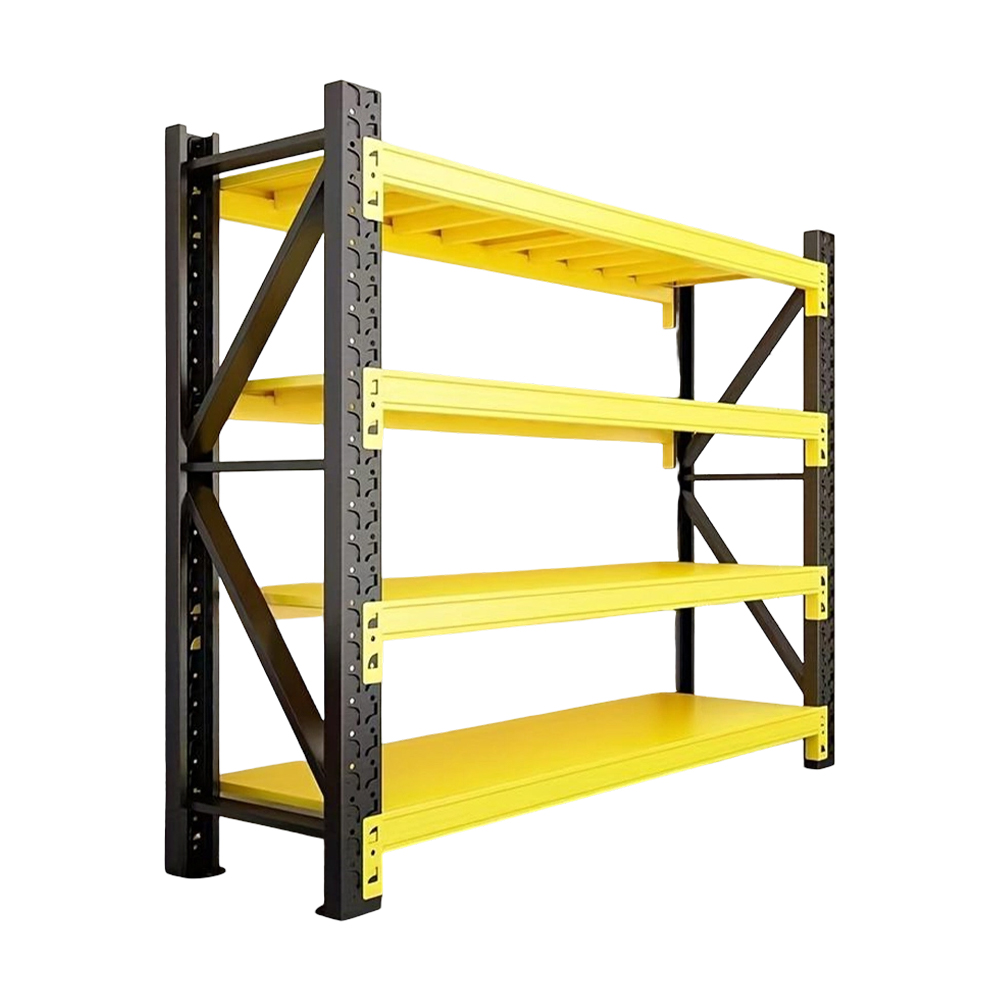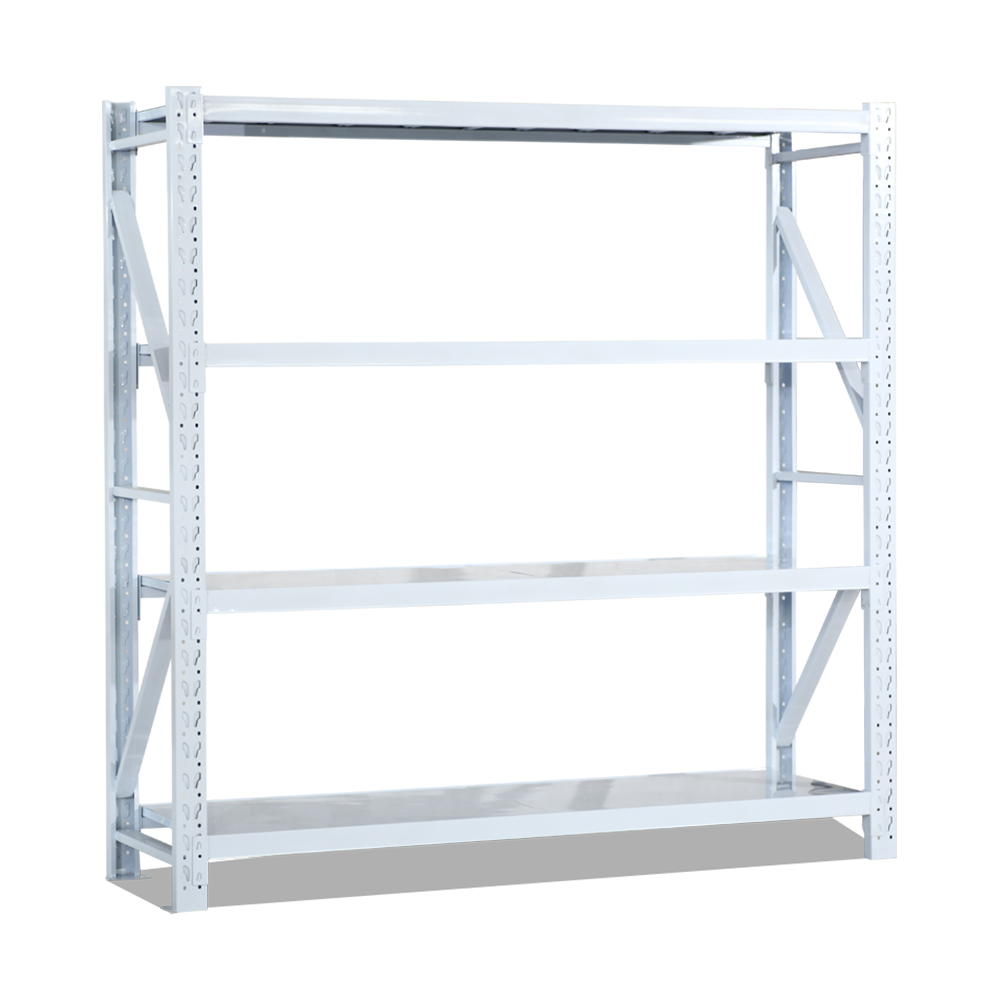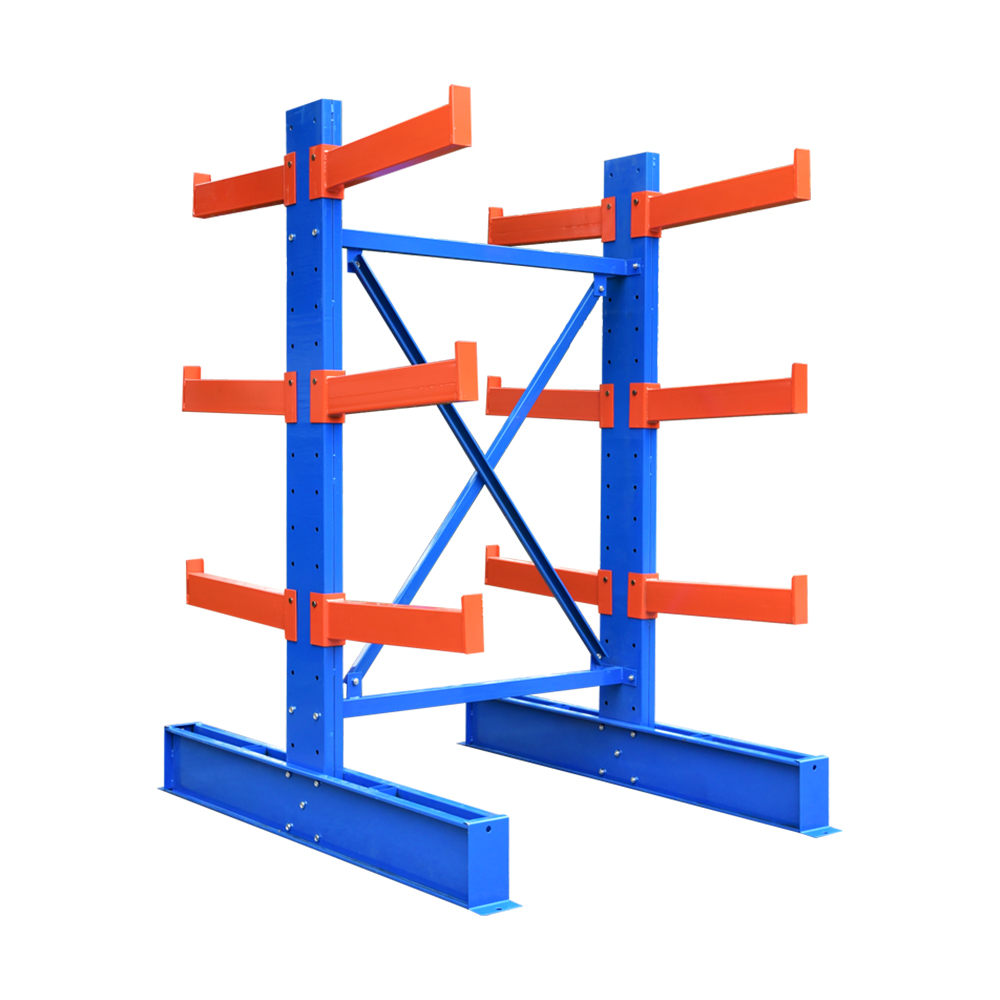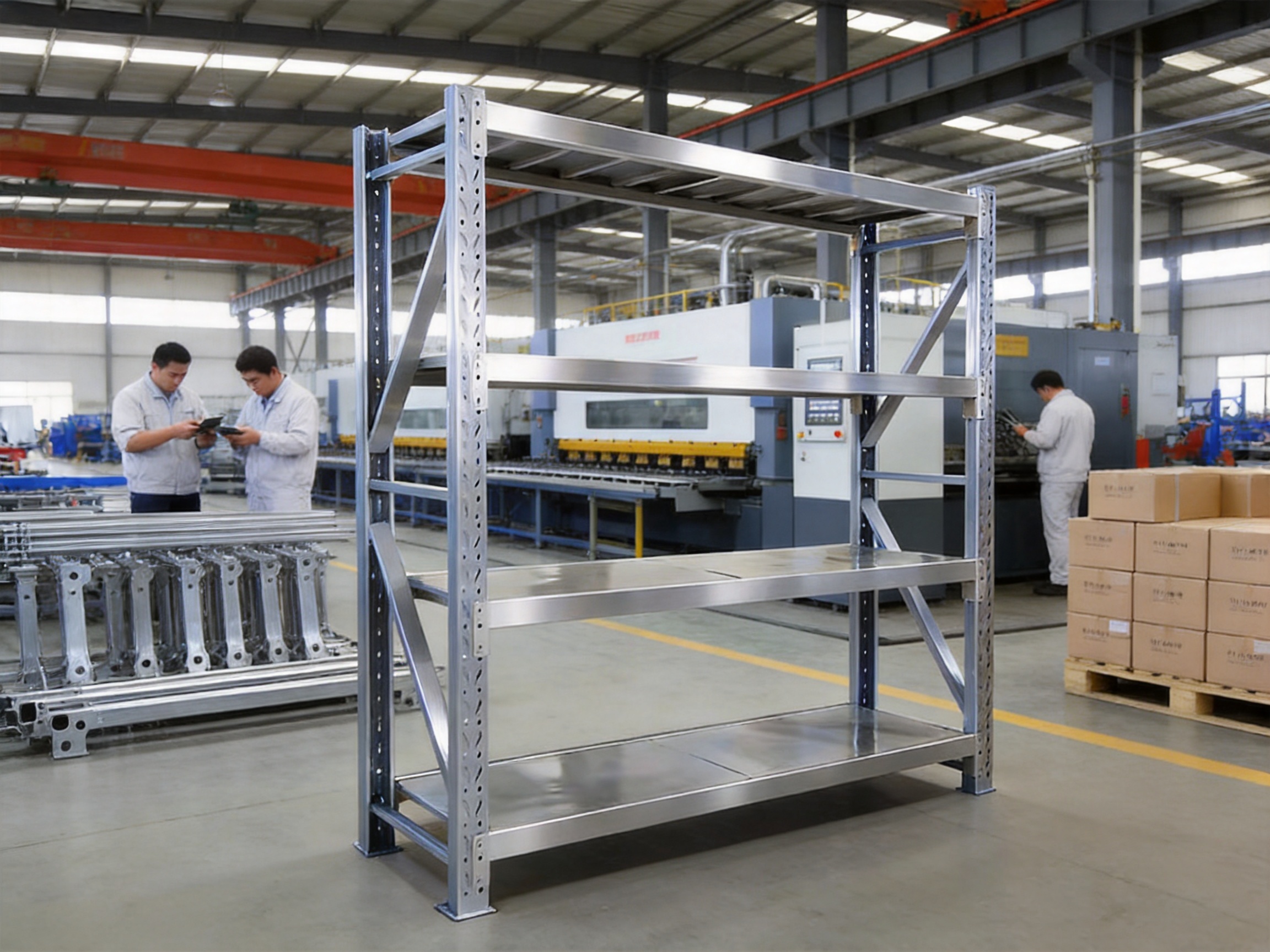
Efficient storage is no longer limited to large warehouses or industrial facilities. Offices, retail stores, workshops, garages, utility rooms, and homes all require practical systems that can organize goods while making the best use of available floor and vertical space. The 4-Layer Adjustable Light-Duty Warehouse Storage Rack is designed to meet this need with a strong, flexible, and easy-to-assemble structure suitable for a wide range of everyday storage applications.
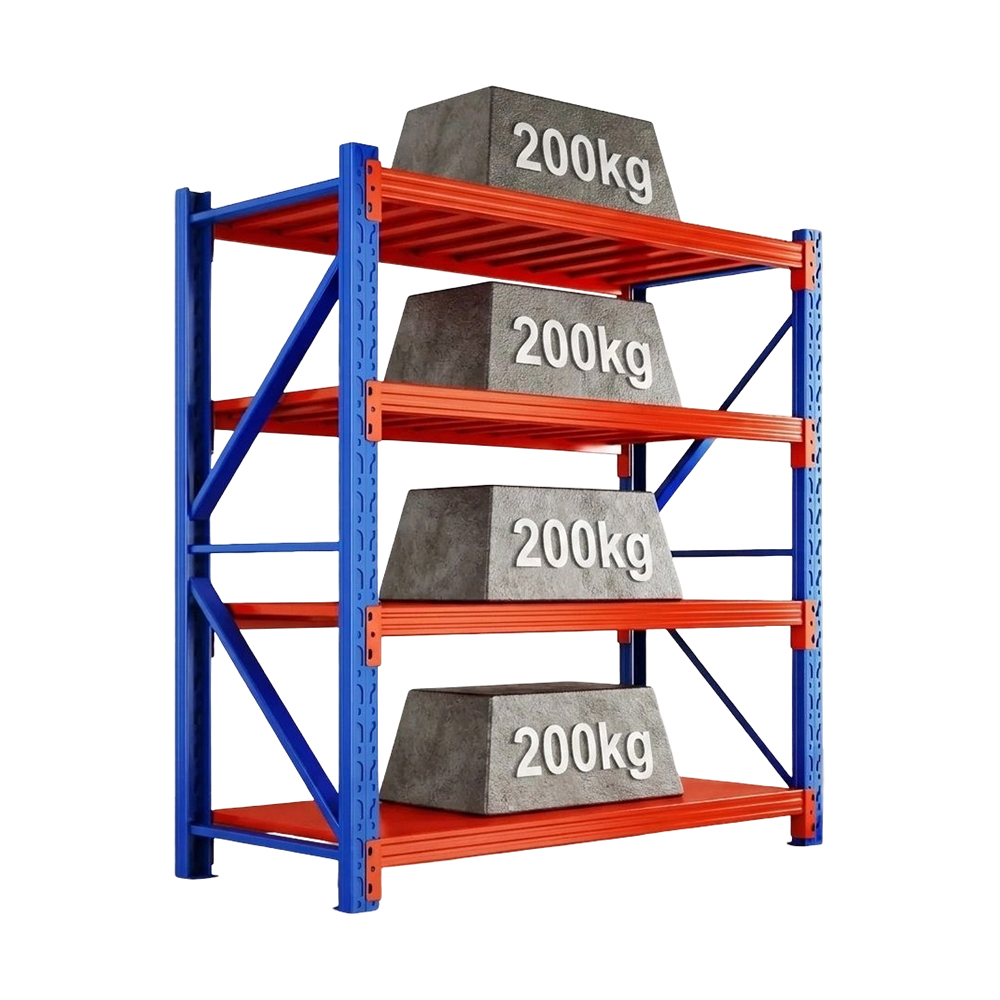
Built for light-duty storage, this rack combines steel construction, adjustable shelf levels, a tool-free butterfly-hole upright system, and an anti-rust surface treatment. It provides a reliable alternative to basic household shelving, improvised storage furniture, and fixed-height racks that cannot adapt as storage requirements change. Each layer supports a load of under 200 kilograms when the rack is correctly assembled, evenly loaded, and used in suitable conditions.
The product is particularly suitable for users who need more capacity than ordinary home shelving but do not require a heavy-duty pallet rack. It offers the accessibility and straightforward installation of a light storage unit while retaining the stability, modularity, and professional appearance expected from warehouse equipment.
Designed for Flexible Storage Across Multiple Environments
The rack is engineered as a versatile storage solution rather than a product limited to one industry. Its four adjustable layers can accommodate cartons, tools, documents, retail inventory, household supplies, small appliances, spare parts, and other items of different sizes.
In an office, the rack can organize archive boxes, stationery, printer supplies, packaging materials, and equipment. In a retail environment, it can be used in a stockroom, back office, preparation area, or light-duty sales display zone. At home, it can help organize books, kitchen supplies, luggage, seasonal items, cleaning products, and general household goods.
Workshops and service areas can use the rack for hand tools, components, consumables, and maintenance materials. Small businesses can also use it to create organized inventory areas without investing immediately in a full warehouse racking system.
This broad application range is one of the product’s key advantages. Instead of requiring separate shelving models for different locations, users can deploy the same basic rack design across multiple areas and adjust the shelf configuration according to the items stored.
Four Adjustable Layers for Better Space Utilization
The four-layer configuration provides useful vertical storage while maintaining a practical footprint for rooms, stock areas, and workspaces. Vertical organization helps reduce clutter on the floor and makes frequently used materials easier to identify and retrieve.
Unlike fixed-height shelves, the rack allows users to adjust the distance between levels. This feature is valuable when the stored items are not uniform in size. Small cartons can be arranged on closely spaced shelves, while larger boxes, containers, or equipment can be accommodated by increasing the clearance of one or more levels.
Adjustable shelf positioning also allows the rack to evolve with the user’s needs. A business may initially store small packaged goods and later change to larger cartons. A household may use the rack for books during one period and seasonal storage boxes during another. The rack can be reconfigured instead of replaced.
Flexible shelf adjustment improves the use of vertical space because it reduces unnecessary gaps between layers. When shelf heights are matched to product dimensions, users can store more items within the same overall rack height. This can help improve room organization and reduce the need for additional cabinets or floor-standing storage units.
The adjustable design also supports better stock visibility. Users can position shelves at levels that make labels, product names, and container contents easier to see. This can reduce the time spent searching for supplies and help maintain a more orderly storage area.
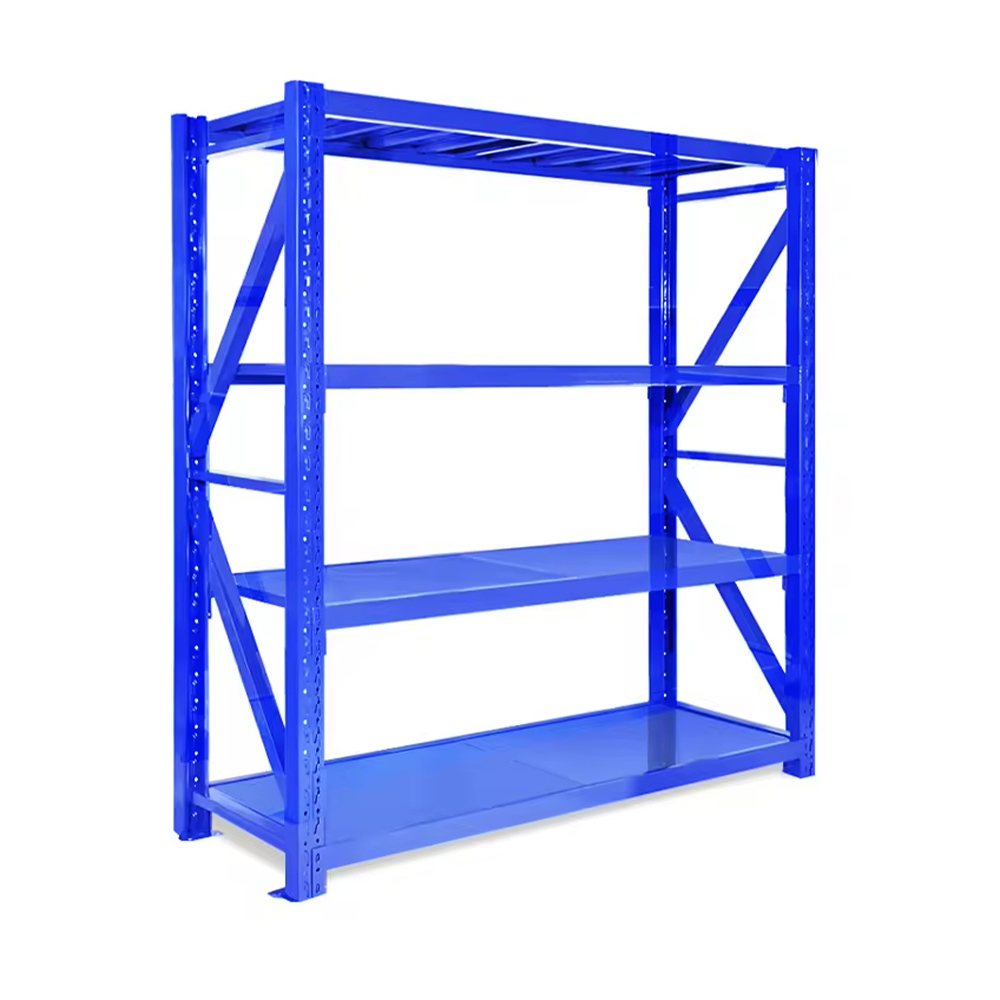
4 Layer Adjustable Light-Duty Warehouse Storage Rack for Offices Retail Home Environments
Light-Duty Capacity for Daily Storage Requirements
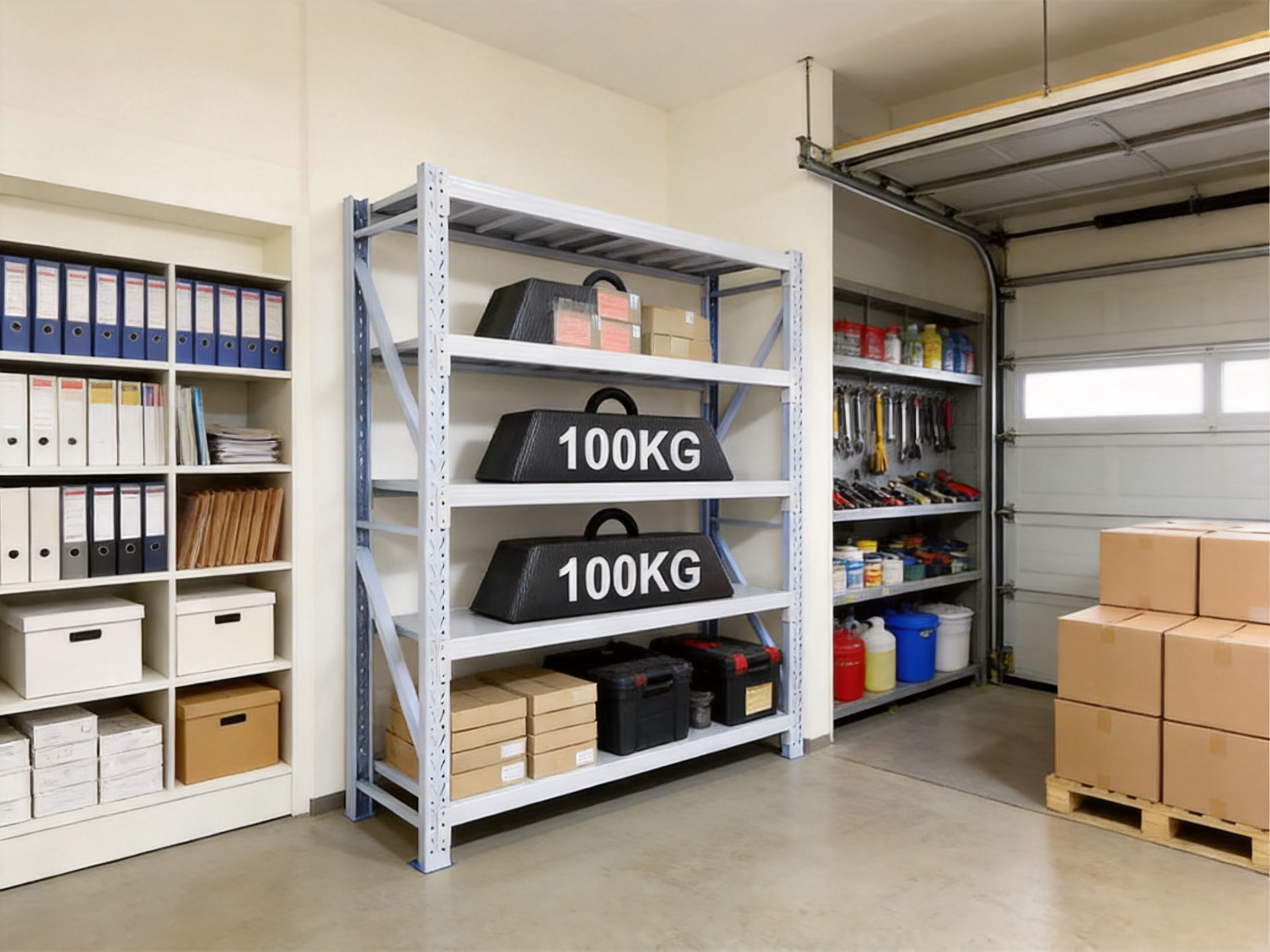
The rack is designed for light-duty applications with a load capacity of under 200 kilograms per layer. This capacity is suitable for many everyday storage requirements, including boxed products, tools, documents, household materials, and workshop supplies.
Load capacity should always be considered together with the way the rack is used. Items should be distributed evenly across each shelf rather than concentrated in one small area. The rack should be placed on a stable and reasonably level surface, and the total load should remain within the specified operating limits.
Proper loading improves stability and helps protect the shelves from unnecessary stress. Heavier items are generally best positioned on lower levels, while lighter items can be stored higher up. This arrangement lowers the center of gravity and makes the rack more comfortable to access.
Compared with ordinary plastic shelving or lightweight household furniture, this steel rack offers a more durable storage structure for users who need greater capacity. Compared with heavy industrial pallet racking, it provides a simpler and more economical solution for storage tasks that do not require forklift access or pallet-level loading.
The product therefore occupies a useful middle ground. It offers more strength and organization than basic consumer shelving while avoiding the cost, complexity, and space requirements of large-scale warehouse systems.
Butterfly-Hole Uprights for Tool-Free Assembly
One of the rack’s defining features is its butterfly-hole upright design. The upright posts are manufactured with a regular connection pattern that allows the shelf supports to engage directly with the frame. This enables assembly without complicated tools or professional installation equipment.
Tool-free assembly can reduce setup time and make the product more accessible to offices, retailers, homeowners, and small businesses. Users do not need to schedule specialist installers or purchase a large collection of assembly tools before putting the rack into service.
The connection system is also useful when the rack needs to be reconfigured. Shelf levels can be changed as storage requirements develop, allowing users to modify the rack without dismantling an entire room or investing in a replacement system.
A tool-free structure does not mean that assembly quality is unimportant. Users should follow the installation manual, ensure that all components are correctly engaged, and verify that the unit is stable before loading it. The rack should not be used if an upright, shelf support, or connecting component is improperly installed.
The butterfly-hole structure provides a practical balance between convenience and structural organization. It helps simplify installation while maintaining the modular character expected from professional storage shelving.
Steel Construction for Reliable Everyday Use
The main structural components are manufactured from steel to provide the strength required for repeated daily use. Steel is widely used in storage equipment because it offers a favorable combination of load-bearing performance, rigidity, durability, and manufacturing consistency.
For offices and homes, steel construction provides a more professional alternative to temporary plastic units or low-strength composite furniture. For retail and workshop applications, it helps the rack withstand the repeated handling associated with stock movement, tool storage, and routine replenishment.
The reinforced structure is intended to reduce unwanted movement when the rack is correctly assembled and loaded. A stable shelving unit improves user confidence and helps keep stored goods in place. It also contributes to a cleaner appearance, especially in customer-facing retail spaces or shared office environments.
Steel shelves can support a wide range of storage containers, but users should still consider the nature of the goods being stored. Sharp, abrasive, wet, or chemically aggressive materials should be handled in accordance with appropriate safety practices. Protective containers may be needed for liquids or items that could damage the surface finish.
The use of steel also supports long service life. Rather than treating the rack as disposable furniture, users can maintain and reconfigure it over an extended period, improving the value of the original investment.
Anti-Rust Surface Treatment for Long-Term Performance
The rack uses a surface treatment process that includes acid pickling and powder coating. These processes work together to improve surface preparation and provide protection against normal corrosion risks encountered in indoor storage environments.
Acid pickling helps remove contaminants, oxidation, and surface impurities from the steel before coating. Effective surface preparation is important because a clean and properly treated substrate helps the coating adhere more consistently.
Powder coating then creates a durable protective layer over the prepared steel. Compared with a basic uncoated metal surface, a powder-coated finish offers better resistance to everyday abrasion, handling, and environmental exposure. It also gives the rack a more uniform and professional appearance.
The anti-rust treatment is especially beneficial in storage areas where the rack may be exposed to humidity, changing temperatures, dust, or frequent handling. Although the coating improves protection, the rack is primarily intended for suitable indoor or controlled environments. Prolonged exposure to standing water, strong chemicals, salt spray, or extreme outdoor conditions may reduce service life.
Routine care can further extend the finish. Users should remove dust and spills promptly, avoid dragging heavy objects across the shelves, and inspect the rack periodically for scratches or signs of corrosion. If the coating is damaged, the affected area should be cleaned and repaired using an appropriate protective method.
Structural Stability and Safer Organization
Storage capacity is valuable only when the rack remains stable and usable. The reinforced frame is designed to provide dependable support during normal loading and unloading. Shelf supports, upright posts, and connecting components work together to form a structured storage unit rather than a collection of independent shelves.
Stable organization can reduce the risk of items shifting or falling during routine use. It also makes it easier for users to retrieve goods without disturbing neighboring products. In offices and homes, this can contribute to a more orderly environment. In retail stockrooms and workshops, it can support faster picking and replenishment.
Correct installation is essential to the rack’s performance. The rack should be assembled on a stable surface, and the frame should be checked for alignment before use. Loads should be distributed across the shelf area rather than stacked unevenly at the front or side.
Users should avoid climbing on the rack, hanging from the shelves, or using it for purposes outside its intended storage function. Where local regulations or site conditions require additional anchoring or safety accessories, those measures should be evaluated by the responsible facility manager or installer.
How the Product Compares with Other Storage Options
The market includes many storage products, but each type has limitations. Plastic shelving is often easy to move and inexpensive, yet it may offer lower capacity and reduced rigidity. Wooden cabinets can provide an attractive appearance, but they are generally less adaptable when shelf heights need to change. Fixed metal shelving may be strong, but it can waste vertical space when the stored products vary in size.
This adjustable light-duty rack addresses these limitations through a combination of features rather than relying on a single advantage. Its steel structure offers strength, the adjustable shelves provide flexibility, the anti-rust coating improves durability, and the butterfly-hole connection supports straightforward assembly.
Compared with heavy-duty pallet racking, the product is more suitable for smaller goods and lighter operational environments. It does not require forklifts, pallets, or extensive warehouse planning. Its compact and adaptable design can be used in locations where industrial pallet systems would be excessive or impractical.
Compared with low-cost shelving imported as flat-pack furniture, the product is designed with storage performance and modular reconfiguration in mind. The rack is not simply a cabinet substitute; it is a practical shelving system for users who want accessible and adjustable storage.
| Storage Option | Main Strength | Common Limitation | Advantage of This Rack |
|---|
| Plastic shelving | Lightweight and easy to move | Lower rigidity and capacity in many models | Steel construction and stronger load support |
| Wooden cabinets | Enclosed appearance | Limited shelf adjustment and reduced ventilation | Open access and flexible shelf positioning |
| Fixed metal shelving | Durable metal structure | Shelf levels may not adapt to changing goods | Adjustable four-layer configuration |
| Heavy-duty pallet racking | Very high industrial capacity | Higher cost, larger footprint, and more complex installation | Practical light-duty solution for smaller storage needs |
| Improvised storage | Low initial cost | Inconsistent safety, appearance, and organization | Purpose-built frame with professional finish |
Main and Sub-Frame Expandable Structure
The product information includes a main and sub-frame expandable structure intended to help save space and cost. This modular concept can be valuable for customers planning storage in stages or arranging multiple units in a limited area.
An expandable structure allows the storage layout to be considered as a system rather than as isolated pieces of furniture. Depending on the configuration and installation requirements, users may be able to extend or organize the rack arrangement more efficiently than with completely separate units.
This approach can help businesses begin with a manageable storage investment and expand as inventory grows. It may also reduce duplicated structural components in suitable layouts, helping improve the use of available space and materials.
Before combining or extending units, customers should confirm the intended configuration, component compatibility, installation method, and applicable safety requirements. Expansion should always follow the manufacturer’s technical guidance rather than relying on improvised connections.
For warehouses, retail stockrooms, and offices with changing requirements, modular expansion can be more valuable than a fixed one-size-fits-all solution. It allows storage planning to respond to business development, seasonal inventory, and changes in room layout.
Applications in Offices
Offices often contain a mixture of documents, consumables, equipment, and personal items. A standard cupboard may not provide enough accessible space, while open shelves without a structured frame can quickly become disorganized. This rack provides a middle solution with visible, adjustable storage.
Archive boxes can be placed on lower shelves, while frequently used stationery and office supplies can be positioned at convenient working heights. Printer paper, packaging materials, folders, and small office machines can be organized according to frequency of use.
The open design makes it easier to see stored materials and identify low stock. It also supports air circulation around items, which can be helpful for general storage areas. In a shared office, clearly arranged shelves can help employees return items to consistent locations.
The rack can also support office relocation and workspace changes. Because the shelves are adjustable and the assembly system is designed for straightforward installation, the unit can be adapted as departments, storage categories, or room layouts change.
Applications in Retail Stores
Retail stores require efficient back-of-house storage to maintain product availability and keep sales areas organized. The rack can be used for boxed stock, packaging, promotional materials, spare supplies, and products awaiting replenishment.
Its four levels make use of vertical space without requiring a large industrial installation. Staff can organize items by product category, size, sales frequency, or replenishment schedule. Adjustable shelf heights help accommodate both small packages and larger cartons.
The professional powder-coated surface is suitable for many retail back rooms and service areas where appearance matters. The rack can also be used in selected light-duty display or preparation areas, provided that the load, layout, and safety conditions are appropriate.
In small retail operations, a modular rack can help create a more efficient stockroom without requiring a major renovation. It can be placed along walls, within storage rooms, or in designated inventory zones while preserving access for staff.
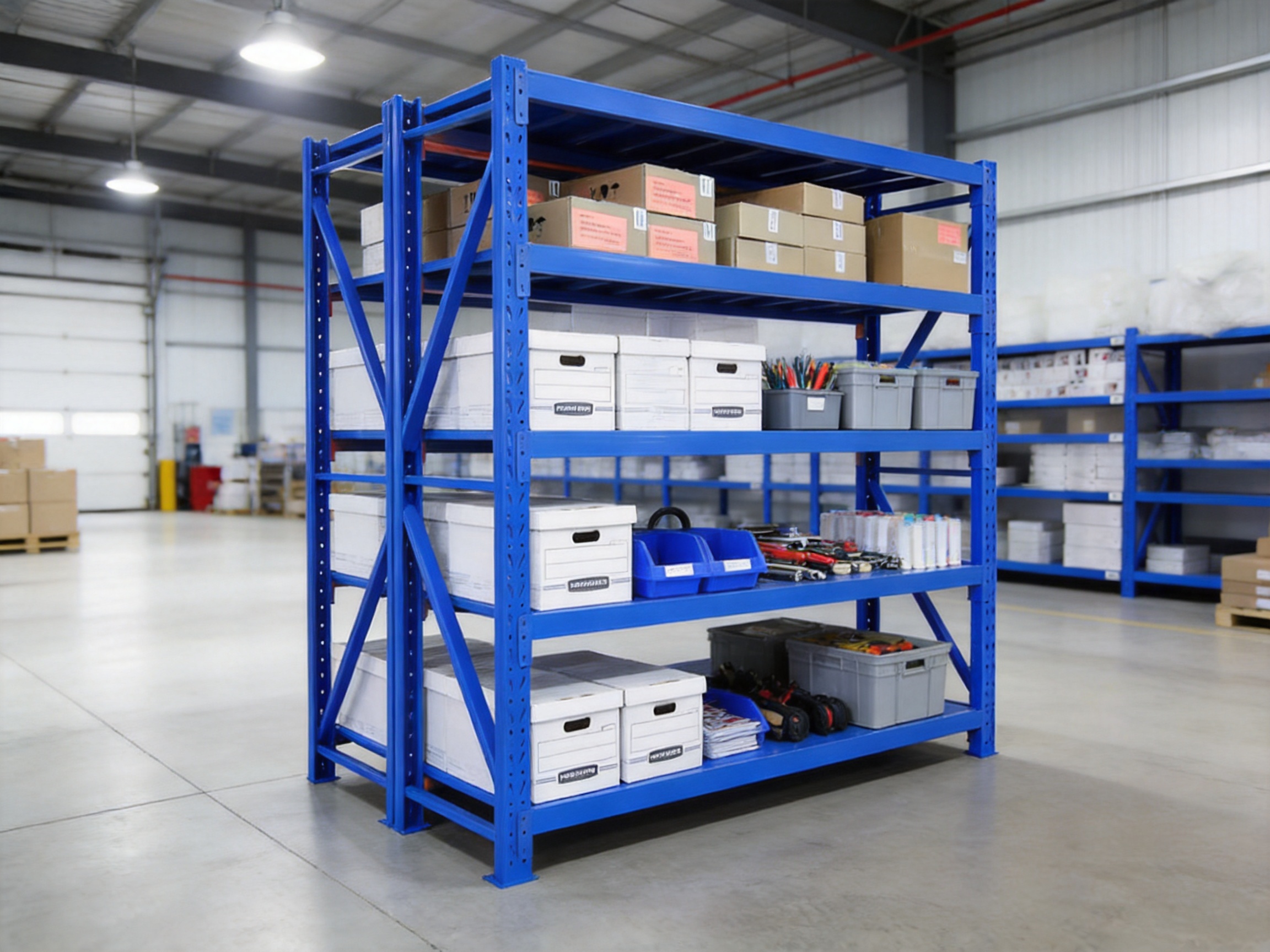
Applications in Homes and Garages
Households often accumulate items that do not fit comfortably into drawers or cabinets. Luggage, storage boxes, tools, sports equipment, cleaning products, and seasonal decorations all require a place that is easy to access but does not occupy unnecessary floor area.
The adjustable rack can help turn a garage, utility room, basement, study, or storage room into a more organized area. Larger items can be assigned to shelves with greater vertical clearance, while smaller containers can be grouped on closer levels.
Unlike enclosed furniture, open shelving allows users to identify stored items quickly. Transparent boxes, labels, and category grouping can further improve organization. The rack’s steel structure also provides a more robust option for garages and workshops than many lightweight domestic shelves.
Household users should consider the installation surface, room humidity, and load distribution. Items that may leak should be placed in suitable trays or containers, and heavy objects should be kept on lower levels where practical.
Applications in Workshops and Light Industrial Areas
Small workshops, maintenance rooms, service departments, and light industrial areas often need organized storage for tools and components without requiring pallet rack infrastructure. This rack can provide an accessible location for hand tools, spare parts, fasteners, packaging, and regularly used materials.
Adjustable shelves are especially useful in workshops because stored items may vary significantly in size. A low shelf can hold tool cases or containers, while a higher shelf can store small bins or labeled components.
Open access can support efficient work processes. Staff can identify materials quickly, return tools after use, and maintain clearer work surfaces. Dividing the rack into categories can also reduce the likelihood of mixing similar components.
For industrial environments, the rack should be selected according to the actual load, operating conditions, and safety requirements. Heavy machinery parts, hazardous substances, high-impact operations, or outdoor exposure may require specialized industrial equipment.
Manufacturing Expertise Behind the Product
Shanghai King Global Shelf Co., Ltd. is a professional shelving and storage manufacturer established in 2010. The company develops, produces, and sells storage products for warehouses, supermarkets, offices, homes, and other commercial environments.
Its manufacturing capability covers product development, production, quality control, and market service. This integrated approach allows the company to coordinate the design of storage systems with the practical requirements of manufacturing and customer application.
The company operates a 60,000-square-meter production base and has more than 300 employees. This scale supports the production of standard shelving products while also providing resources for customized OEM and ODM projects.
A broad manufacturing base can help improve production consistency, component coordination, and order management. It may also support different finishing requirements, product variations, packaging formats, and market specifications.
The company’s products are supplied to customers in North America, Southeast Asia, Japan, South Korea, the Middle East, Europe, and other regions. International market experience requires attention to product consistency, communication, packaging, delivery coordination, and customer-specific requirements.
Product Development and Engineering Approach
A professional storage rack begins with more than an attractive appearance. Its upright dimensions, shelf supports, connection points, surface treatment, and load expectations must work together as a functional system.
The development of the four-layer rack reflects this system-based approach. The product combines a tool-free connection concept with adjustable shelf levels and a reinforced steel frame. These features are intended to address the practical concerns users face during installation, loading, reconfiguration, and daily access.
Product development also involves balancing strength, weight, manufacturing efficiency, and cost. A rack that is unnecessarily heavy may increase transport and handling costs, while a rack that is too light may not meet customer expectations for stability. The design must therefore be matched to its intended light-duty application.
Customization is another important part of professional product development. OEM and ODM customers may require different dimensions, colors, shelf configurations, packaging standards, labels, or market-specific adaptations. A manufacturer with integrated development and production capabilities is better positioned to evaluate these requirements.
Manufacturing Process Considerations
The rack’s performance depends on consistency throughout the manufacturing process. Steel components must be formed accurately so that uprights, shelves, and supports fit together correctly. Connection holes must maintain consistent positioning to support reliable shelf adjustment and assembly.
Welding or structural joining operations, where used, must be controlled to maintain frame strength and alignment. Poor alignment can make assembly difficult, reduce stability, or create uneven loading. Professional production systems help reduce variation between batches.
Surface preparation is another important stage. Acid pickling helps remove impurities and prepare the steel for coating. The effectiveness of this stage influences coating adhesion and the overall durability of the finished surface.
Powder coating requires controlled application and curing conditions. A consistent coating process helps produce an even finish and supports resistance to normal handling and environmental exposure. Color and surface appearance can also be monitored to meet customer expectations.
Quality control should include checks of dimensions, component fit, coating appearance, structural condition, packaging, and product identification. These checks help ensure that the rack delivered to the customer corresponds with the intended specification.
Quality Control and Customer Reliability
Storage equipment is a functional product, so quality must be evaluated in terms of use rather than appearance alone. A professional quality-control program considers whether components assemble correctly, whether shelves sit securely, and whether the completed rack provides the expected stability under suitable loading.
Inspection procedures may be used at different stages of production. Incoming steel and components can be reviewed before processing. In-process inspections can identify dimensional or forming issues early. Final inspections can verify the finished rack and its packaging before shipment.
Clear product information is equally important. Customers need to understand the load rating, assembly method, shelf adjustment range, recommended applications, and maintenance requirements. Accurate instructions support safer and more satisfactory use.
For OEM and ODM customers, documentation and communication are particularly important. Product specifications, packaging details, labeling, sample approval, and production confirmation should be coordinated before mass manufacturing begins.
Shanghai King Global Shelf Co., Ltd. positions its manufacturing and service system to support both standard products and customized storage solutions. This can benefit distributors, importers, retailers, project contractors, and businesses seeking private-label or market-specific products.
OEM and ODM Advantages for International Buyers
International buyers often need storage products adapted to a specific market. Requirements may include different dimensions, colors, load specifications, packaging designs, instruction languages, or combinations of components.
OEM manufacturing allows a customer to purchase a product produced according to its own branding, packaging, or commercial requirements. ODM cooperation can provide a more extensive development service in which the manufacturer contributes design and engineering capabilities.
For this rack category, customization may involve changing the number of layers, adjusting width or depth, selecting a different coating color, modifying shelf materials, or developing a related storage configuration. The feasibility of each change should be confirmed through technical review and sample evaluation.
A manufacturer with its own development and production resources can simplify communication between design and manufacturing teams. This may reduce the risk of misunderstandings that can occur when product development and production are handled by unrelated suppliers.
Customers should still define their requirements in detail. Important information includes target application, expected load, available installation space, storage item dimensions, order quantity, packaging expectations, destination-market regulations, and delivery schedule.
Installation and Operating Recommendations
Before assembly, users should confirm that all components are present and inspect them for visible damage. The installation area should be clear, stable, and sufficiently large to allow the frame to be assembled safely.
The uprights should be positioned correctly, and shelf supports should be fully engaged in the butterfly-hole connection pattern. Each shelf should be checked for proper seating before the rack is loaded.
Once assembled, the rack should be inspected for wobbling, misalignment, or loose connections. Any issue should be corrected before use. Shelf levels can then be adjusted according to the dimensions and weight of the stored goods.
Load items should be distributed evenly. Heavy goods should generally be stored on lower shelves, while lighter goods can be placed higher. Loads should not exceed the stated capacity of under 200 kilograms per layer, and the actual safe capacity may depend on the configuration, environment, and installation conditions.
The rack should not be used as a ladder, platform, workbench, or support for suspended loads unless specifically designed and approved for those purposes. Periodic inspection is recommended, especially in busy stockrooms or workshops.
Maintenance for Longer Service Life
Routine maintenance is simple but important. Dust and loose debris can be removed using a soft cloth or suitable cleaning method. Spills should be cleaned promptly, particularly if they contain substances that may affect the coating or steel.
Users should inspect the rack for scratches, dents, bent components, loose shelf supports, and signs of corrosion. Small coating damage should be addressed early to prevent moisture from reaching a larger area of exposed steel.
Overloading should be avoided even if the rack appears stable. Repeated excessive loading can place unnecessary stress on shelves and connections. The rack should be reorganized if stored goods become concentrated on one side or if shelf levels are no longer suitable.
When moving the rack, it should be unloaded first whenever possible. Dragging a loaded rack across the floor may damage the frame, the floor, or the shelf connections. If relocation is required, the unit should be handled with appropriate care and manpower.
Why This Rack Is a Practical Long-Term Investment
The value of a storage rack is measured by more than its initial purchase price. A product that can be adjusted, reconfigured, maintained, and used in different locations may provide greater long-term value than a cheaper unit with limited adaptability.
This four-layer rack is designed to serve multiple stages of use. It can begin as a basic household or office storage solution and later support a small stockroom or workshop. Shelf levels can change, storage categories can be reorganized, and the rack can be incorporated into a broader modular layout.
The steel frame and anti-rust coating support continued use, while the tool-free assembly system reduces the effort required to install or modify the unit. The combination of these features helps reduce replacement needs caused by changing storage requirements.
For businesses, organized storage can also improve labor efficiency. Clearly grouped goods are easier to locate, count, replenish, and inspect. Although the rack is a relatively simple product, its effect on daily workflow can be meaningful when it is used as part of a planned storage system.
Purchasing Considerations for Distributors and Project Buyers
Distributors should evaluate the product according to the needs of their target customers. Important factors include rack dimensions, shelf configuration, load capacity, finish, packaging, assembly method, and expected market application.
Project buyers should assess the available room height, aisle width, floor condition, access routes, and required storage categories. A site plan can help determine how many units are needed and whether a main and sub-frame expandable arrangement would be suitable.
For international orders, buyers should discuss export packaging, labeling, documentation, inspection procedures, production lead time, and shipping arrangements with the supplier. Sample approval is recommended when the product is being customized or sold under a private brand.
The company’s OEM and ODM capabilities can support customers who need more than a standard catalog product. However, all customized details should be documented clearly before production begins to minimize variation between the approved sample and the final order.
Frequently Asked Questions
What type of storage is this rack designed for?
This is a light-duty steel storage rack intended for offices, homes, retail stores, workshops, stockrooms, and similar environments. It is suitable for general goods, tools, cartons, documents, supplies, and household items.
How much weight can each layer hold?
Each layer has a stated load capacity of under 200 kilograms. The rack must be correctly assembled, placed on a suitable surface, and evenly loaded. Actual use should always remain within the approved product specifications.
Does the rack require special tools for assembly?
The butterfly-hole upright design is intended to support tool-free assembly. Users should still follow the included installation instructions and verify that every shelf support and frame connection is fully engaged.
Can the shelf heights be changed after assembly?
Yes. The shelves are designed to be adjusted to different heights so that the rack can accommodate items of different sizes. Reconfiguration should be performed carefully, preferably after removing stored goods from the affected shelf.
Is the rack suitable for outdoor use?
The anti-rust treatment improves protection against normal corrosion risks, but the rack is primarily intended for indoor or controlled environments. Long-term exposure to rain, standing water, salt air, or aggressive chemicals may reduce service life.
What is the advantage of the powder-coated finish?
Powder coating provides a durable, uniform surface that improves resistance to everyday wear and environmental exposure. It also gives the rack a clean and professional appearance.
Can the rack be used in a warehouse?
Yes, it can be used in warehouses for light-duty storage, stockrooms, and operational areas. It is not a substitute for heavy-duty pallet racking when palletized goods, forklifts, or very high loads are involved.
Can the rack be customized?
Shanghai King Global Shelf Co., Ltd. provides standard products as well as OEM and ODM solutions. Possible customization may include dimensions, colors, shelf arrangements, packaging, and related specifications, subject to technical confirmation.
What should be stored on the lower shelves?
Heavier goods are generally best placed on lower shelves to support a lower center of gravity. This can improve stability and make the rack more comfortable to use.
How should the rack be maintained?
Keep the rack clean and dry, remove spills promptly, avoid impact and overloading, and inspect the frame and coating periodically. Damaged components or serious corrosion should be evaluated before continued use.
Conclusion
The 4-Layer Adjustable Light-Duty Warehouse Storage Rack provides a practical combination of capacity, adaptability, durability, and ease of installation. Its steel frame, anti-rust treatment, butterfly-hole uprights, adjustable shelves, and expandable structure make it suitable for a broad range of everyday storage applications.
Compared with basic plastic, wooden, fixed-height, or improvised shelving, it offers a more organized and professional solution. Compared with heavy industrial racking, it provides a simpler and more economical option for light-duty storage where pallet handling and forklift access are unnecessary.
Its value is further supported by the manufacturing capabilities of Shanghai King Global Shelf Co., Ltd., including integrated product development, production, quality control, OEM and ODM services, a large production base, and international market experience.
For offices, homes, retail stores, workshops, and light industrial areas, the rack can improve the use of vertical space while allowing storage arrangements to change over time. When installed correctly, loaded within its stated limits, and maintained appropriately, it can serve as a reliable foundation for cleaner, safer, and more efficient storage.
References
1. General principles of steel storage equipment design and application, industrial shelving practice literature.
2. Powder coating process guidance for fabricated steel products, surface finishing industry publications.
3. Warehouse storage planning and material-handling principles, logistics and operations management references.
4. Occupational safety guidance for shelving installation, loading, inspection, and maintenance.
5. Manufacturer-provided product specifications for four-layer adjustable light-duty storage racks.
6. Manufacturer-provided information concerning OEM, ODM, production facilities, quality control, and international storage solution services.


 English
 Español
 русский
 Français
 한국어
 عربى
 ไทย
 Deutsch
 Bahasa Melayu
 Português
 Polskie