Introduction
Retail space is valuable, especially in convenience stores, supermarkets, specialty shops, and compact commercial environments where every square meter must contribute to product visibility and sales. A well-designed shelving system does more than hold merchandise. It organizes the shopping journey, improves product access, supports efficient replenishment, and helps retailers create attractive displays that encourage purchasing decisions. The adjustable double-sided store rack system is designed to meet these demands through a practical combination of space efficiency, flexibility, durability, and modern appearance.
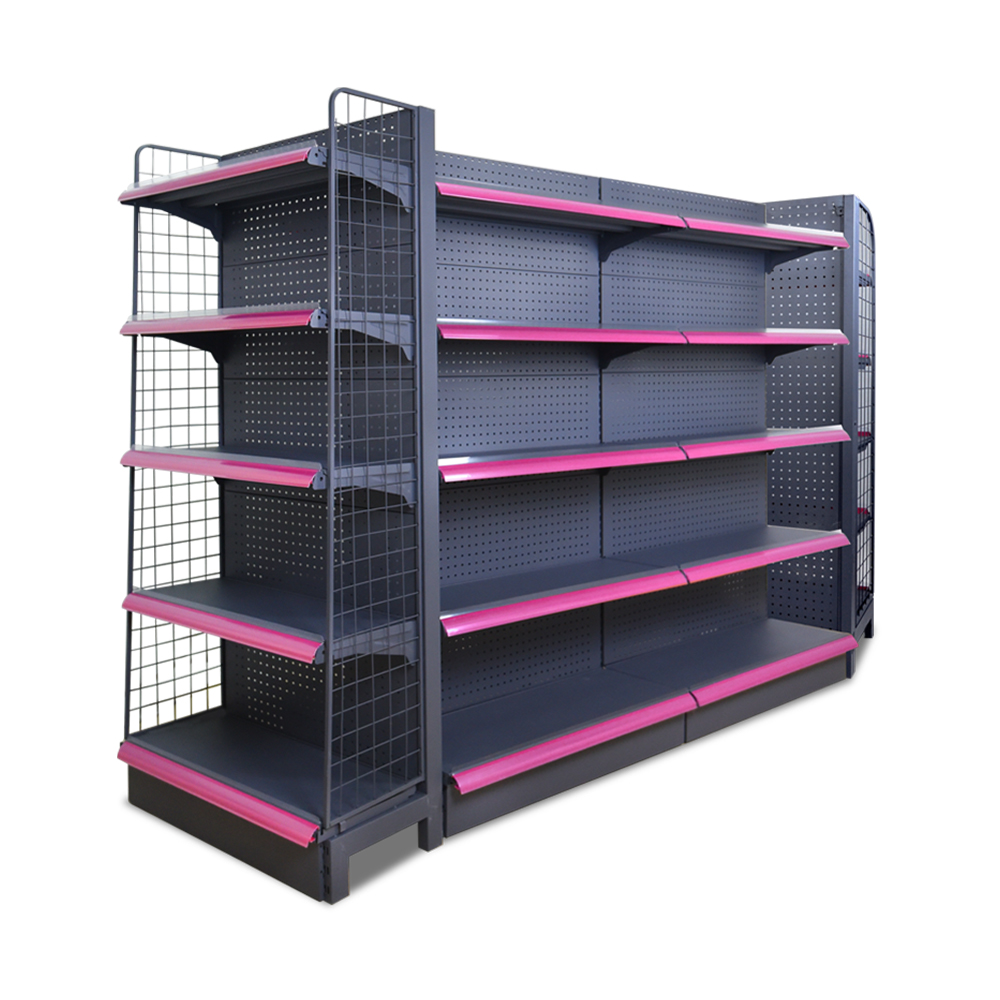
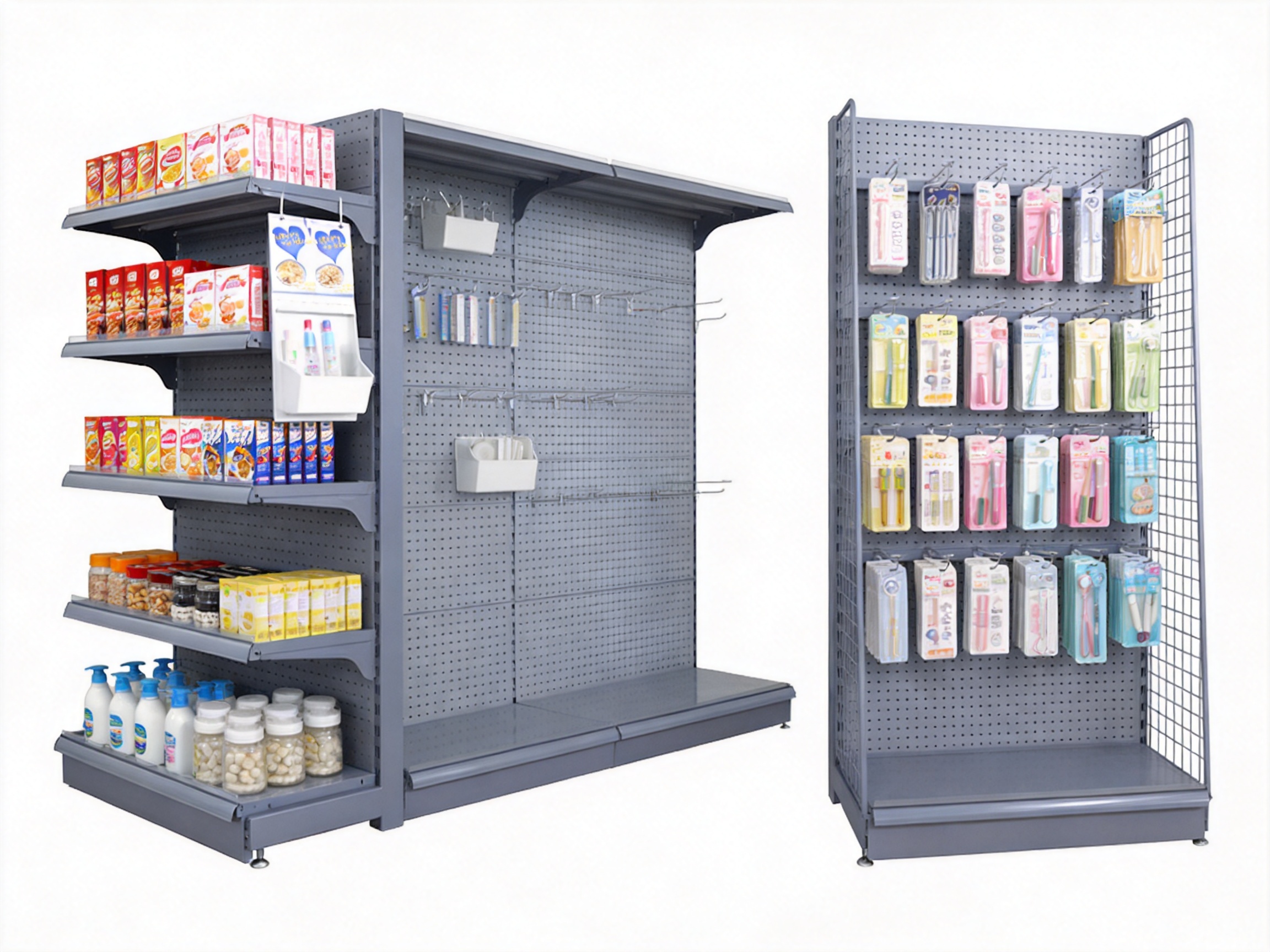
This retail display rack uses a double-sided structure to provide merchandising opportunities on both faces of the unit. Compared with a conventional single-sided wall shelf, it can present more products within the same floor area while also helping retailers divide a store into clear product zones. The adjustable shelving structure allows different product categories to be displayed at suitable heights, making the system appropriate for snacks, beverages, cosmetics, household goods, packaged food, accessories, electronics, and many other retail items.
Manufactured by Shanghai King Global Shelf Co., Ltd., the system reflects the company’s experience in developing and producing shelving and storage equipment for supermarkets, warehouses, offices, homes, and commercial facilities. The company combines product development, manufacturing, quality control, and market service within an integrated operating system. This approach supports consistent production, customized solutions, and reliable service for customers in different markets.
More than a simple metal shelf, this rack system is a configurable retail tool. Its steel construction, anti-rust powder coating, adjustable shelf levels, grid or pegboard back panels, smooth edges, and reconfigurable assembly make it suitable for changing retail environments. Whether used as a central aisle display, a product divider, a promotional rack, or a modular store fixture, it can be adapted to a wide range of merchandising strategies.
Adjustable Store Rack System for Retail Shop Convenience Store Shelving
What Is an Adjustable Double-Sided Store Rack System?
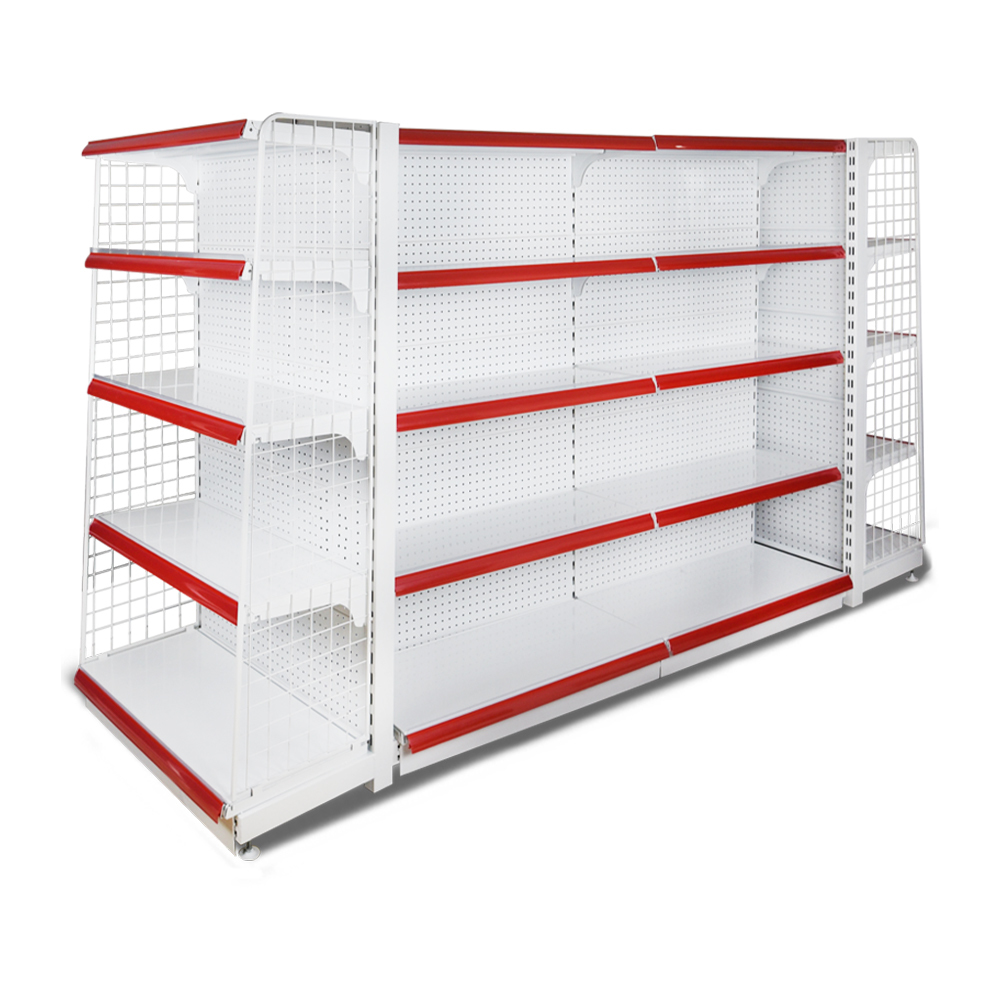
An adjustable double-sided store rack system is a freestanding retail shelving unit designed to display merchandise from both sides. Unlike a wall-mounted shelf that generally faces one direction, this structure can be positioned in the center of a store, between aisles, near an entrance, or in a promotional area. Both sides remain accessible to shoppers, which helps retailers increase product exposure without continuously expanding the store footprint.
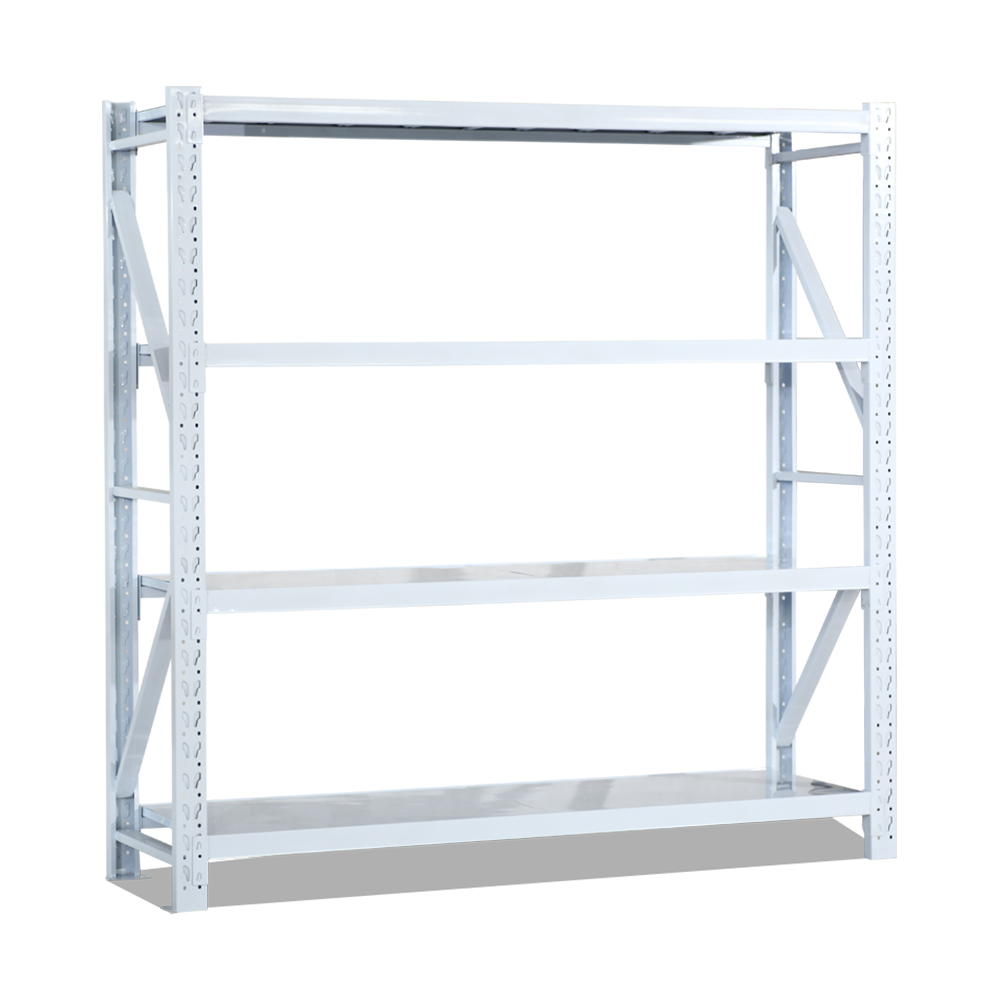
The rack is built around a stable steel frame with multiple shelf levels. Shelves can be moved to different heights according to the dimensions of the merchandise. This adjustment is especially useful for retailers that regularly change their product mix. A shelf arrangement suitable for small packaged goods may not be appropriate for large household products, bottles, storage containers, or boxed electronics. Adjustable levels allow the same fixture to support different products throughout the year.
The back section can include grid or pegboard panels. These panels provide additional merchandising flexibility by supporting hooks, accessories, signs, promotional materials, and lightweight hanging products. A solid back panel may create a more defined product zone, while a grid-style panel can preserve visual openness and allow products or promotional information to be viewed from different angles.
The system is also designed for assembly and reconfiguration. Retail operators can install the rack with the supplied hardware and instructions, then relocate or modify it as their store layout changes. This feature is important for seasonal promotions, new product launches, holiday displays, clearance campaigns, and changes in customer traffic patterns.
Core Product Characteristics
The main characteristics of the retail rack include double-sided product access, adjustable shelf heights, steel construction, anti-rust surface treatment, modular components, flexible back panels, and a contemporary appearance. Together, these features allow the rack to perform multiple roles within a commercial environment.
| Feature | Retail Value | Typical Application |
|---|
| Double-sided design | Increases product exposure within a limited floor area | Central aisles, store dividers, promotional zones |
| Adjustable shelves | Accommodates products with different heights and packaging sizes | Snacks, cosmetics, household goods, electronics |
| Steel frame | Provides stability and long-term structural support | High-use retail and commercial environments |
| Anti-rust powder coating | Improves corrosion resistance and maintains appearance | Indoor stores, stockrooms, and semi-humid locations |
| Grid or pegboard panels | Supports hooks, signs, and flexible merchandising accessories | Small goods, accessories, promotional displays |
| Modular assembly | Allows installation, relocation, and future reconfiguration | Changing store layouts and seasonal campaigns |
| Rounded edges | Helps improve customer and employee safety | Public shopping areas and busy aisles |
Efficient Use of Retail Floor Space
One of the strongest advantages of a double-sided store rack is its ability to use floor space efficiently. Retailers often face a constant balance between offering a broad product range and preserving comfortable customer circulation. Adding more single-sided fixtures can make a store feel crowded, while using too few shelves may reduce product variety and sales opportunities. A double-sided unit provides an intermediate solution by creating two merchandising surfaces in one freestanding structure.
When placed in the center of a sales area, the rack can divide the store into organized sections without creating a permanent architectural partition. One side may display packaged food, while the opposite side presents household products. Alternatively, one face can be dedicated to regular merchandise and the other to seasonal promotions. This flexibility helps store operators create a logical shopping route without investing in fixed construction.
The open design also supports visibility. Customers can see products from both directions as they move through the store. A well-organized central display can attract shoppers who approach from different aisles, increasing the number of potential interactions with the merchandise. The result is a fixture that performs both a storage function and a visual merchandising function.
For convenience stores and smaller shops, the double-sided format can be especially useful. Compact stores often need to display many stock-keeping units while maintaining clear paths for customers and staff. The system can be configured with shelves that match the merchandise, reducing unused vertical space and helping retailers make better use of the available height.
Supporting Better Store Layouts
The rack can be used to establish several common retail layouts. It may serve as a gondola-style center display, a low visual divider between departments, an end-of-aisle promotional station, or a flexible fixture near the checkout zone. Because the unit is not limited to wall placement, retailers can experiment with different arrangements based on customer movement and sales performance.
A modular display arrangement can also support future expansion. Additional units may be positioned in a consistent line to create a continuous merchandising run, or they may be separated to create individual product islands. The ability to rearrange fixtures without major construction reduces disruption when a store changes its assortment or branding strategy.
Adjustable Shelves for Diverse Product Categories
Retail products are rarely uniform. A supermarket may sell small packets, tall bottles, cartons, jars, cleaning supplies, cookware, and seasonal items in the same store. A fixture with fixed shelf positions can create unused gaps or force products into unsuitable spaces. Adjustable shelves provide a practical response by allowing each level to be positioned according to the product being displayed.
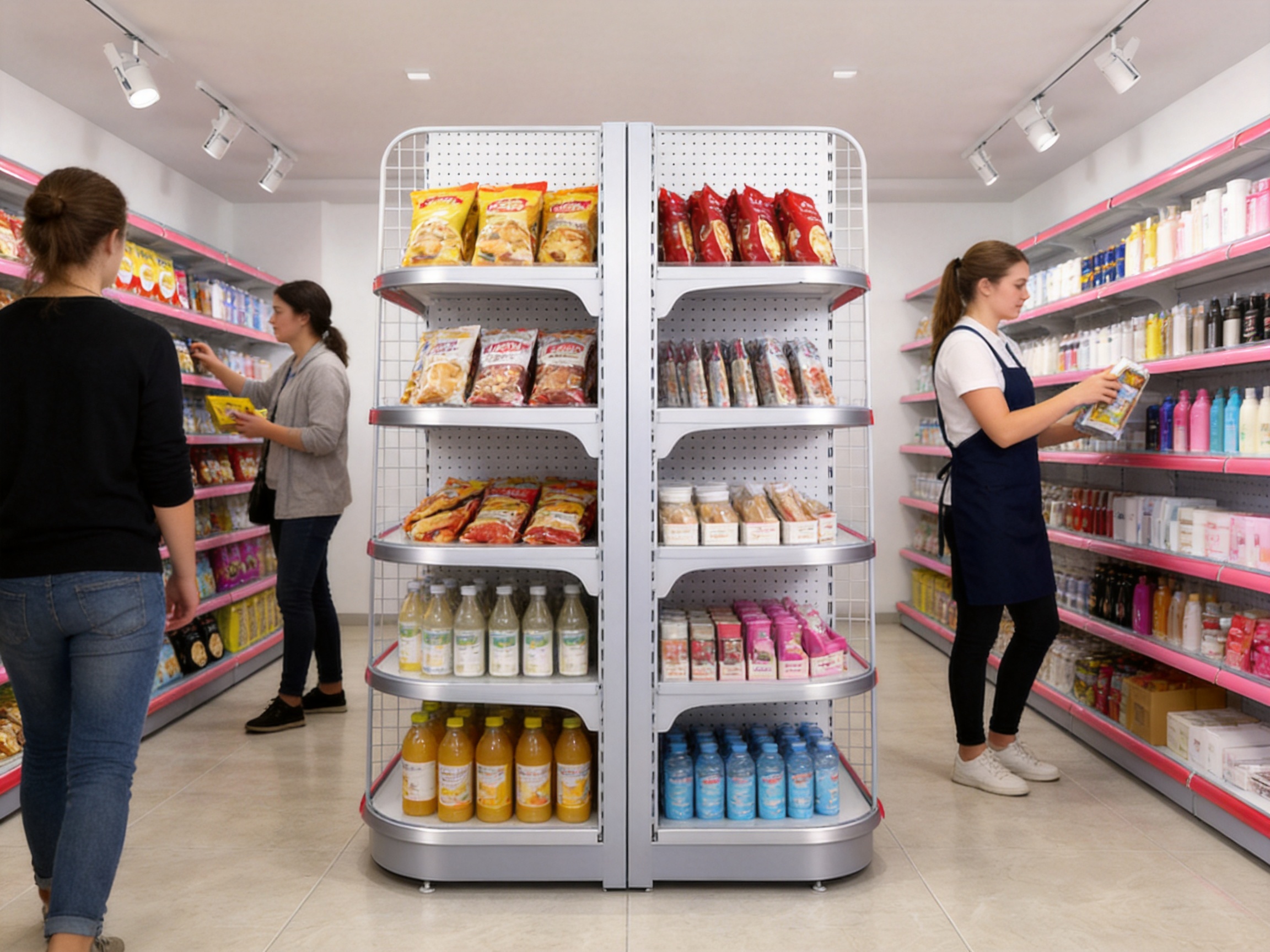
For small items such as cosmetics, snacks, stationery, and accessories, shelves can be positioned closer together to increase display density. For taller products such as household containers, large bottles, boxed appliances, or packaged goods, the shelf spacing can be increased. This makes the rack useful for both high-density product presentation and larger merchandise display.
Adjustability also supports visual organization. Retailers can align similar products at consistent heights, create stepped presentations, or reserve a larger section for promotional bundles. Products can be displayed with labels facing forward, improving customer recognition and reducing the time required to locate a specific item.
As product ranges change, store employees can modify the shelf configuration rather than replacing the entire fixture. This reduces the need to purchase different shelving for every product category. It also supports a more sustainable operating model because the same rack can remain useful through many changes in assortment and store planning.
Merchandising Flexibility
The grid or pegboard back panels add another layer of flexibility. Retailers can use hooks for lightweight packaged products, hanging accessories, tools, small household items, or promotional merchandise. Sign holders and display accessories can also be attached where appropriate, helping stores communicate prices, product benefits, special offers, and category information.
Open back panel designs can make the unit appear lighter and more accessible. They can also allow shoppers to recognize activity and merchandise on the opposite side, which is useful in busy retail areas. Where stronger visual separation is needed, the panel can help define a product category and provide a consistent background for branded displays.
This flexibility gives the rack an advantage over basic fixed shelving. A conventional shelf may provide storage capacity, but it may not offer the same ability to combine horizontal shelving with vertical hanging display. The adjustable store rack system can support both methods in a single modular structure.
Durable Steel Construction
Retail fixtures are exposed to frequent use. Customers touch products, employees replenish stock, shelves are cleaned, and store layouts may be changed several times each year. A rack must remain stable and presentable under these conditions. The product uses a steel construction designed to provide a strong foundation for everyday retail operations.
Steel is widely used in commercial shelving because it offers a useful balance of strength, durability, formability, and maintenance value. When properly processed and assembled, steel components can support repeated use without the instability associated with lightweight consumer furniture. The structure is designed to hold a substantial quantity of merchandise while maintaining a professional appearance.
Structural stability is important for more than load support. A stable unit is easier for customers to use, easier for employees to replenish, and less likely to create a poor shopping experience through wobbling or misalignment. Stable shelves also help products remain organized, reducing the likelihood of merchandise sliding, falling, or becoming difficult to access.
The rack’s steel components are finished with a durable anti-rust powder coating. This finish helps protect the metal surface from corrosion and contributes to a clean, consistent appearance. It also allows the product to be supplied in different colors, making it possible for retailers to coordinate the fixture with store branding, interior design, or product categories.
Powder Coating and Surface Protection
Powder coating is a dry finishing process commonly used for metal products. In a typical production sequence, prepared metal components receive a controlled coating of powder material and are then cured so that the coating forms a uniform protective layer. The result is a finished surface that can provide resistance to ordinary wear, handling, and environmental exposure.
Surface preparation and process control are important to the quality of the finished product. Metal components must be properly cleaned and prepared before coating so that the finish adheres effectively. Coating coverage, curing conditions, color consistency, and surface appearance also require production control. These factors influence the final durability and visual quality of the shelving.
For retailers, a protected surface can reduce maintenance concerns and help the rack retain its professional appearance over an extended service period. The coating is not a substitute for correct installation or suitable environmental conditions, but it is an important part of a commercial-grade shelving solution.
Modern Design and Customer Experience
Retail shelving contributes directly to the appearance of a store. Customers often form an impression of cleanliness, organization, and product quality before they make a purchase. A rack with a modern, minimalist structure can support a more orderly environment than improvised storage furniture or mismatched fixtures.
The open design allows products to remain visible and accessible. Customers can approach both sides of the unit, compare items, and remove products without asking staff for assistance. This supports a self-service shopping experience and can increase the convenience of browsing.
Smooth, rounded edges are another useful design feature. Retail fixtures are placed in areas where customers and employees move continuously, so sharp exposed corners can create unnecessary risks. Rounded edges help create a more customer-friendly structure while also improving the visual finish of the product.
Good retail design also considers the relationship between product presentation and movement. Shelves should provide sufficient capacity without blocking sightlines or making aisles feel unnecessarily narrow. The double-sided system can be selected and arranged according to the dimensions of the store, the type of merchandise, and the desired traffic pattern.
Supporting Impulse Purchases
Product visibility is closely connected with retail performance. Merchandise that is easy to see, reach, and understand has more opportunities to attract attention. A central double-sided display can place products in the natural path of customers, while adjustable shelving allows high-interest items to be positioned at convenient viewing and reaching heights.
Retailers may use the system for seasonal items, new products, promotional packages, or complementary merchandise. For example, one side may display drinks and the opposite side may present snacks. In a household goods store, one side may show cleaning products while the other displays storage accessories. These arrangements can encourage customers to discover related products during the same shopping trip.
Although a shelving unit alone cannot guarantee increased sales, a flexible display environment can help retailers test different product positions and promotional concepts. The ability to modify the fixture makes it easier to respond to observed customer behavior and sales data.
Easy Assembly, Relocation, and Reconfiguration
Retail businesses frequently change their layouts. Seasonal campaigns, promotional events, new merchandise, store renovations, and changes in customer traffic can all require fixtures to be moved. A rack that is difficult to assemble or relocate can increase labor costs and cause unnecessary operational disruption.
This store rack system is supplied with necessary assembly hardware and an installation manual. Clear instructions can help store teams understand the component sequence, connection points, and adjustment method. Proper assembly is essential to achieving the intended stability and performance of the structure.
The rack’s modular form also supports relocation. When a display needs to be moved from one zone to another, the unit can be reconfigured according to the new space. Retailers may change the number or spacing of shelves, revise the use of the pegboard area, or alter the arrangement of multiple units. This adaptability is valuable for stores that need to respond quickly to commercial opportunities.
Relocation should always be carried out carefully. The rack should be emptied or safely secured before moving, and the final position should provide a stable, level base. Retailers should also follow the supplied instructions regarding assembly, loading, and safe use. These practices help preserve the working life of the fixture and maintain a safe environment for shoppers and employees.
Advantages Over Fixed Retail Fixtures
Fixed fixtures can be appropriate for permanent departments, but they are less flexible when a store changes its product strategy. The adjustable store rack system offers several advantages over basic fixed shelving:
First, its double-sided format can provide more usable display surfaces within the same general floor area. Second, adjustable shelves reduce the unused space that often occurs when shelf levels cannot be changed. Third, the modular structure allows the retailer to update the layout without discarding the entire fixture. Fourth, the grid or pegboard back panel supports both shelf-based and hanging merchandising methods.
Compared with low-cost furniture-style shelving, the steel commercial structure is better suited to demanding retail use. Compared with highly specialized fixtures designed for only one product category, the adjustable format can support a broader range of merchandise. Compared with wall-mounted systems, the freestanding double-sided configuration provides greater placement freedom.
| Comparison Point | Basic Fixed Shelf | Adjustable Double-Sided Rack System |
|---|
| Display direction | Usually one-sided | Two-sided access and visibility |
| Shelf positioning | Limited or fixed | Adjustable for different product heights |
| Placement options | Often dependent on wall position | Suitable for central and open-floor placement |
| Merchandising methods | Primarily horizontal shelving | Shelving plus grid or pegboard accessories |
| Layout flexibility | More difficult to relocate or modify | Designed for reconfiguration and relocation |
| Product range | Best for a limited category | Suitable for varied retail merchandise |
| Visual function | Storage-focused | Combines storage, display, and space division |
Advanced Manufacturing Capabilities
The performance of a shelving product depends not only on its visible design but also on the manufacturing processes used to produce it. Shanghai King Global Shelf Co., Ltd. operates as an integrated manufacturer covering product development, production, quality control, and market service. This integrated model enables the company to manage projects from initial concept through final delivery.
Founded in 2010, the company has developed experience in shelving and storage products for supermarkets, warehouses, offices, homes, and other commercial environments. Its production base covers approximately 60,000 square meters and employs more than 300 people. These resources support the development of standard products as well as customized OEM and ODM solutions.
A substantial production base can provide advantages in material handling, equipment organization, production planning, and order coordination. It may also support the manufacture of different shelving categories within one operating system, including supermarket shelves, warehouse racks, pallet racking, cantilever racks, office shelves, and home storage products.
Product Development and Engineering
Product development begins with understanding how a rack will be used. Engineers and product teams must consider the intended merchandise, display direction, shelf adjustment method, structural configuration, surface finish, installation process, and store environment. A retail rack is not simply a collection of metal panels; it is a coordinated system in which each component must work with the others.
During development, the company can evaluate the relationship between visual design and practical performance. The frame must provide stability, the shelves must fit securely, adjustment points must be consistent, and the overall structure must be suitable for assembly. The product should also maintain a clean appearance after coating and final installation.
For customers with specific requirements, OEM and ODM capabilities can support modifications in dimensions, colors, configurations, branding elements, shelf layouts, and accessory arrangements. Customization may be especially useful for retail chains, franchised convenience stores, supermarket groups, export distributors, and store fixture contractors that require consistency across multiple locations.
Metal Processing and Component Production
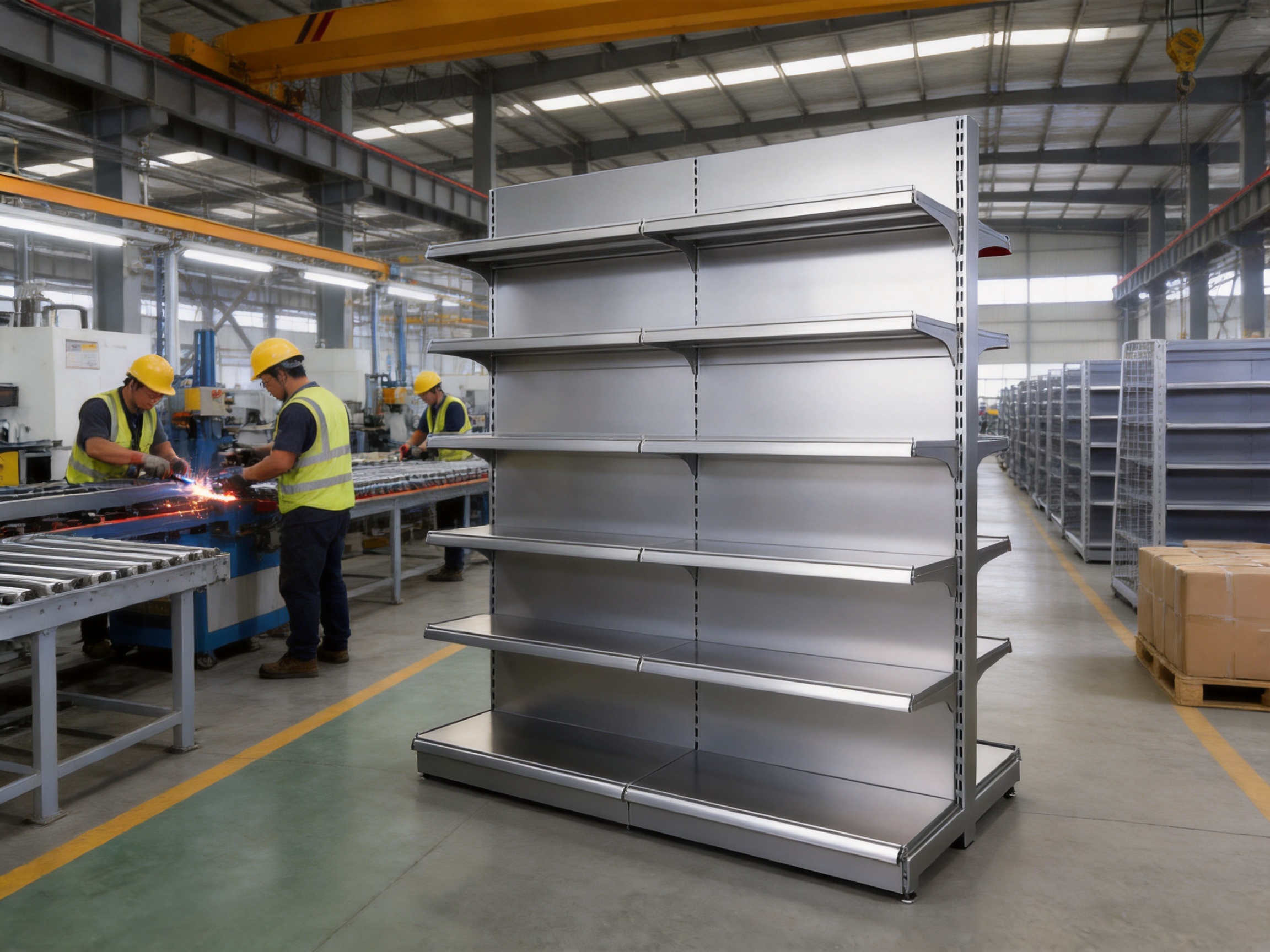
Metal shelving production generally involves a sequence of controlled processes, which may include material preparation, cutting, forming, punching, welding, grinding, surface treatment, powder coating, assembly, inspection, and packing. Each stage influences the fit, appearance, and performance of the final product.
Cutting and forming processes determine the dimensions and shape of metal components. Accurate forming helps ensure that frames, support members, shelves, and panels fit together correctly. Punching or perforation processes must produce consistent openings when adjustable supports or pegboard accessories are used. Consistency is important because uneven spacing can make shelf adjustment difficult or create an unattractive display.
Welding or mechanical joining methods connect structural components and affect the rigidity of the frame. Weld quality, alignment, and finishing require attention during production. Any rough or exposed areas should be treated appropriately before the surface finishing stage. These details influence both safety and appearance.
After fabrication, components can be prepared for powder coating. Proper surface preparation helps create a more uniform finish and supports coating adhesion. Controlled curing then develops the protective surface required for commercial use. Color management is also important when customers need racks that match brand guidelines or interior design schemes.
Quality Control and Production Consistency
Quality control is an important part of a reliable shelving manufacturing system. Inspections may take place at different stages, including incoming material checks, dimensional verification, weld and connection inspection, coating appearance review, assembly testing, and final packing inspection.
Dimensional consistency helps ensure that components from the same product series can be assembled and adjusted correctly. Surface inspection helps identify coating defects, scratches, uneven coverage, or visible contamination. Assembly checks can reveal issues with alignment, hardware, shelf supports, or back panels before products are shipped to customers.
Packaging quality also matters because shelving components may travel long distances before installation. Appropriate packing helps protect coated surfaces and reduce the possibility of damage during handling and transportation. A controlled packing process supports more efficient installation at the customer’s location.
The company’s integrated approach allows manufacturing feedback to be connected with product development. If a production issue is identified, engineering and production teams can work together to improve component design, process settings, tooling, or inspection methods. This continuous relationship between design and production supports more stable product quality.
OEM and ODM Support for Global Retail Projects
Retail customers do not always require an off-the-shelf product. Store chains may have specific aisle widths, ceiling heights, branding colors, product dimensions, or installation practices. An OEM and ODM supplier can help transform these requirements into a practical shelving program.
OEM support may include production according to a customer’s drawings, specifications, packaging requirements, or brand guidelines. ODM support may involve developing a solution based on the customer’s application, target market, and desired retail style. These services can be valuable when a customer needs a consistent fixture across several locations or regions.
Customization can involve rack height, width, depth, shelf quantity, shelf type, back panel design, color, signage, accessory hooks, base components, and packaging. It may also involve combining the double-sided rack with other product categories, such as wall shelving, warehouse storage, checkout displays, or backroom racks.
For international projects, coordination is essential. Product specifications, drawings, sample approvals, production schedules, quality expectations, shipping arrangements, and installation instructions must be clearly managed. A manufacturer with experience serving multiple markets can help customers organize these steps more efficiently.
Serving Different Market Requirements
Shanghai King Global Shelf Co., Ltd. exports products to North America, Southeast Asia, Japan, South Korea, the Middle East, Europe, and other regions. Different markets may have different retail formats, design preferences, packaging expectations, and space limitations. Experience across these regions can help the company understand the need for adaptable products and clear project communication.
A rack intended for a compact convenience store may require a different configuration from a supermarket center aisle unit. A specialty shop may prioritize appearance and color coordination, while a warehouse showroom may prioritize capacity and durability. The same basic double-sided concept can be adapted to different priorities through changes in dimensions, shelf spacing, back panels, accessories, and finish.
The company also maintains service resources in several locations and regions, supporting communication with international customers. Regional contact capability can be useful for product discussions, project follow-up, and coordination between suppliers, distributors, contractors, and end users.
Applications in Retail and Commercial Environments
Convenience Stores
Convenience stores need to display many products in a limited area, often with a strong focus on fast shopping and efficient replenishment. The double-sided rack can be placed in a central aisle to display snacks, drinks, personal care items, packaged food, or daily necessities. Adjustable shelves help store operators accommodate different package heights and seasonal product mixes.
Supermarkets
Supermarkets can use the rack as a supplementary gondola, promotional display, category divider, or seasonal merchandising unit. It can be positioned near entrances, checkout areas, end caps, or high-traffic aisles. Grid or pegboard panels can support promotional signs and smaller hanging products while shelves hold boxed or packaged merchandise.
Specialty Shops
Specialty retailers may use the system for cosmetics, accessories, hardware, electronics, home goods, stationery, pet supplies, or sporting products. Adjustable shelf levels make it easier to present products according to their packaging and value. The clean appearance of the powder-coated steel structure can support a professional brand environment.
Wholesale and Cash-and-Carry Stores
Wholesale stores and cash-and-carry outlets often require fixtures that can handle frequent product movement and large quantities. The steel structure can provide a durable display foundation, while the adjustable layout supports different package formats. The double-sided design can help create clear product zones in open sales areas.
Office and Home Applications
Although designed primarily for retail display, the system concept can also be adapted for offices, studios, stockrooms, showrooms, and organized home storage. It can hold office supplies, documents, packaged materials, tools, craft items, or household products. The exact configuration should be selected according to the intended load, environment, and safety requirements.
Installation and Operating Recommendations
Proper installation supports the stability and service life of any shelving system. Before assembly, the installation area should be checked to ensure that the floor is level, the surrounding space is adequate, and customers will have sufficient room to move safely around the unit.
Components should be identified and arranged according to the installation manual. Hardware should be tightened correctly, and shelf supports should be fully engaged before products are placed on the shelves. If multiple units are installed in a line or group, their alignment should be reviewed so that the finished display is stable and visually consistent.
Products should be distributed evenly across the shelves rather than concentrated in one small area. Heavier merchandise should generally be positioned on lower levels to improve stability and make handling easier. Retailers should follow the supplier’s applicable loading and installation guidance instead of exceeding recommended capacity.
Routine cleaning can be performed with suitable non-abrasive materials. Spills should be removed promptly, especially in food, beverage, or cleaning-product areas. Retail staff should periodically check shelf supports, fasteners, panels, and visible surfaces. Any damaged component should be evaluated and replaced or repaired as appropriate.
Planning a Productive Display
Before installing the racks, retailers should consider product category, customer flow, replenishment routes, sightlines, promotional priorities, and accessibility. A display that holds many products but blocks circulation may reduce the overall shopping experience. Similarly, a rack placed in a low-traffic area may not provide the same commercial value as one positioned near a customer decision point.
The adjustable shelves should be planned around the actual product assortment. Excessive empty space can make a display look incomplete, while overly tight spacing can make products difficult to remove. Retailers should leave sufficient clearance for labels, packaging, and customer access.
Signage and color can also be used to create a clear category structure. Different rack colors may identify departments, while signs attached to pegboard panels can communicate promotions or product information. The system’s flexibility allows the display to be refined over time based on customer feedback and sales results.
Why Choose a Professional Shelf Manufacturer?
Selecting a shelving supplier involves more than comparing the appearance of one rack with another. Retail customers should consider manufacturing capability, consistency, customization, quality control, export experience, communication, and after-sales support. A professional manufacturer can provide a more coordinated solution from product selection through delivery and installation planning.
Shanghai King Global Shelf Co., Ltd. combines industry experience with a large production base, technical personnel, integrated manufacturing processes, and international market service. Its product range covers warehouse racks, pallet racking, cantilever racks, supermarket shelves, office shelves, and home storage products. This broad capability allows customers to source related storage products from one experienced supplier.
The company’s OEM and ODM services are another advantage for customers with specialized requirements. Instead of adapting an unsuitable standard product, buyers can discuss dimensions, finishes, accessories, and layouts that better match their stores. Custom development can be particularly valuable for projects involving multiple branches, franchise standards, or regional distribution.
Continuous product improvement is supported by the company’s focus on development, manufacturing, quality control, and service. The objective is not only to produce metal shelving but to create storage and display solutions that improve space utilization, operating efficiency, product organization, and shopping safety.
Frequently Asked Questions
What makes this rack different from a standard retail shelf?
The rack combines a double-sided structure with adjustable shelving and flexible back panels. It can display products from both sides, be placed in open floor areas, accommodate different merchandise heights, and support hooks or promotional accessories. These features make it more adaptable than a basic one-sided or fixed-height shelf.
Can the shelves be adjusted for different products?
Yes. The shelf levels can be configured at different heights to accommodate products ranging from small packaged goods and cosmetics to larger household items, cartons, and boxed merchandise. The exact adjustment method and range should be confirmed according to the selected configuration.
Is the rack suitable for convenience stores?
Yes. Its double-sided format helps convenience stores use central floor space efficiently, while adjustable shelves support a mixture of snacks, beverages, personal care products, household items, and seasonal merchandise.
Can the rack be used as a store divider?
Yes. Because the unit is freestanding and accessible from both sides, it can divide product categories or guide customer movement without requiring a permanent wall. Retailers can use one side for one category and the other side for a related or complementary category.
What are the back panels used for?
The grid or pegboard back panels can support hooks, hanging products, signs, promotional materials, and merchandising accessories. They can also help define a product zone while maintaining an open and flexible display structure.
Is the steel surface resistant to rust?
The rack uses a durable anti-rust powder coating designed to improve corrosion resistance and protect the metal surface during normal indoor use. Proper cleaning, installation, and environmental control are still recommended to maintain the product over time.
Can the rack be supplied in different colors?
Multiple colors are available depending on the product configuration and project requirements. Color selection can help match store branding, interior design, product categories, or promotional themes.
Is assembly difficult?
The rack is designed for practical assembly and is supplied with necessary hardware and installation instructions. The installation team should follow the manual carefully, ensure that all connections are secure, and confirm that the unit is stable before loading products.
Can the rack be customized?
OEM and ODM services may support customization of dimensions, shelf configuration, colors, panels, accessories, and other project details. Customers should provide application information and technical requirements so the appropriate solution can be developed.
Where can the rack be used?
Typical applications include supermarkets, convenience stores, specialty shops, wholesale stores, showrooms, offices, stockrooms, and home storage areas. The final configuration should match the intended products, space, environment, and loading requirements.
How should products be loaded?
Products should be distributed evenly, with heavier items generally placed on lower shelves. Retailers should avoid exceeding the supplier’s recommended capacity and should check that every shelf support is properly engaged. Specific capacity information should be confirmed for the selected model.
Does the company provide other storage products?
Yes. The company manufactures and supplies a range of products including warehouse racks, pallet racking, mezzanine racking, cantilever racks, supermarket shelves, office shelves, and home storage solutions. This enables customers to coordinate retail and storage projects through one supplier.
Conclusion
The adjustable double-sided store rack system provides a practical and flexible solution for modern retail merchandising. Its two-sided display structure helps retailers use floor space efficiently, while adjustable shelves accommodate products with different sizes and packaging formats. Steel construction supports commercial durability, and the anti-rust powder coating contributes to long-term surface protection and a professional appearance.
The system’s grid or pegboard panels expand merchandising possibilities by supporting hooks, signs, and promotional accessories. Rounded edges, open access, and a clean modern design help create a more customer-friendly shopping environment. Easy assembly and reconfiguration allow retailers to adapt the fixture as product ranges, seasonal campaigns, and store layouts change.
Its advantages are strengthened by the manufacturing capabilities of Shanghai King Global Shelf Co., Ltd. With an integrated system covering product development, production, quality control, and market service, the company is equipped to supply standard shelving as well as customized OEM and ODM solutions. Its large production base, technical team, export experience, and broad product portfolio support projects for supermarkets, warehouses, offices, homes, and commercial facilities in multiple regions.
For retailers seeking a display fixture that combines space efficiency, flexible merchandising, durable construction, and professional manufacturing support, this adjustable double-sided rack system offers a versatile foundation for organized and effective store design.
References
1. Retail Store Planning and Merchandising Principles, commercial fixture planning reference.
2. Metal Furniture and Commercial Shelving Manufacturing Practices, industrial production reference.
3. Powder Coating Application and Surface Protection Guidelines, metal finishing reference.
4. Retail Space Utilization and Customer Circulation Studies, store planning reference.
5. Warehouse and Retail Storage Safety Principles, material handling reference.
6. Product Development and Quality Control Procedures for Metal Storage Systems, manufacturing management reference.
7. Shanghai King Global Shelf Co., Ltd. Product and Company Information, supplier-provided corporate materials.


 English
 Español
 русский
 Français
 한국어
 عربى
 ไทย
 Deutsch
 Bahasa Melayu
 Português
 Polskie