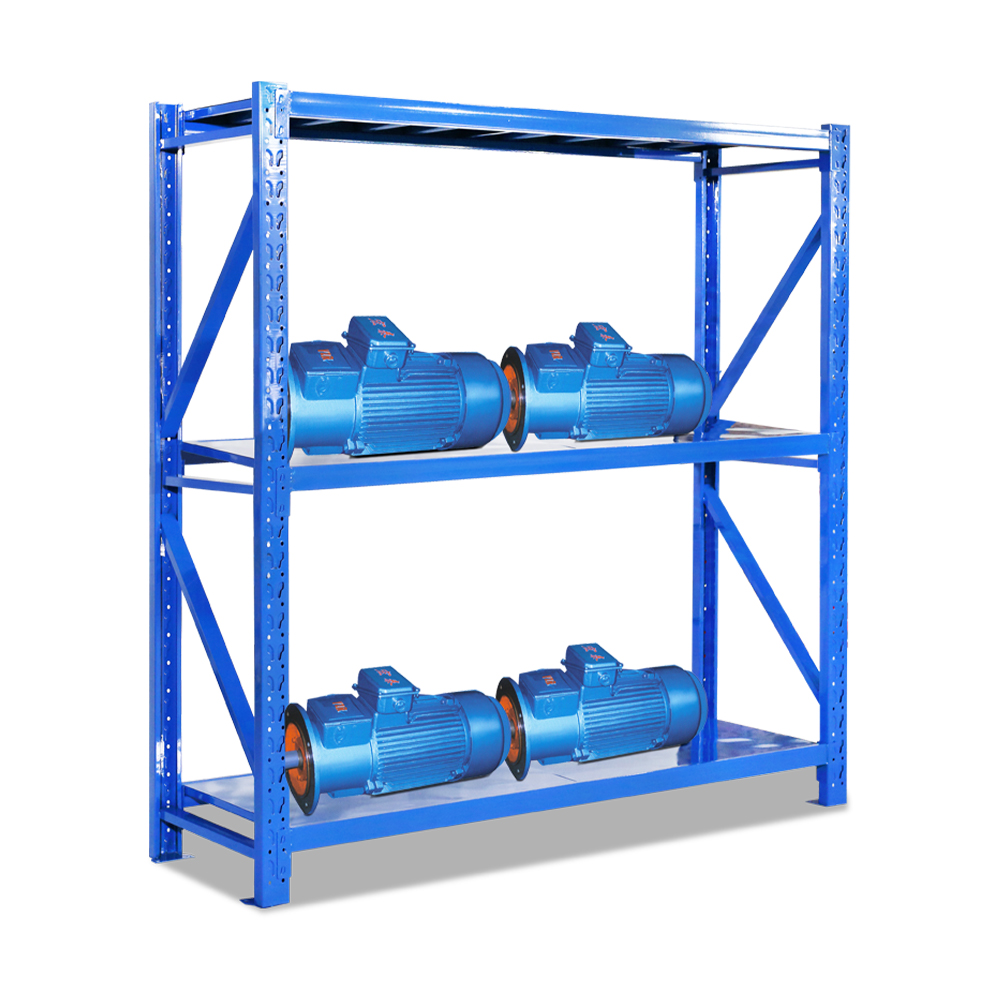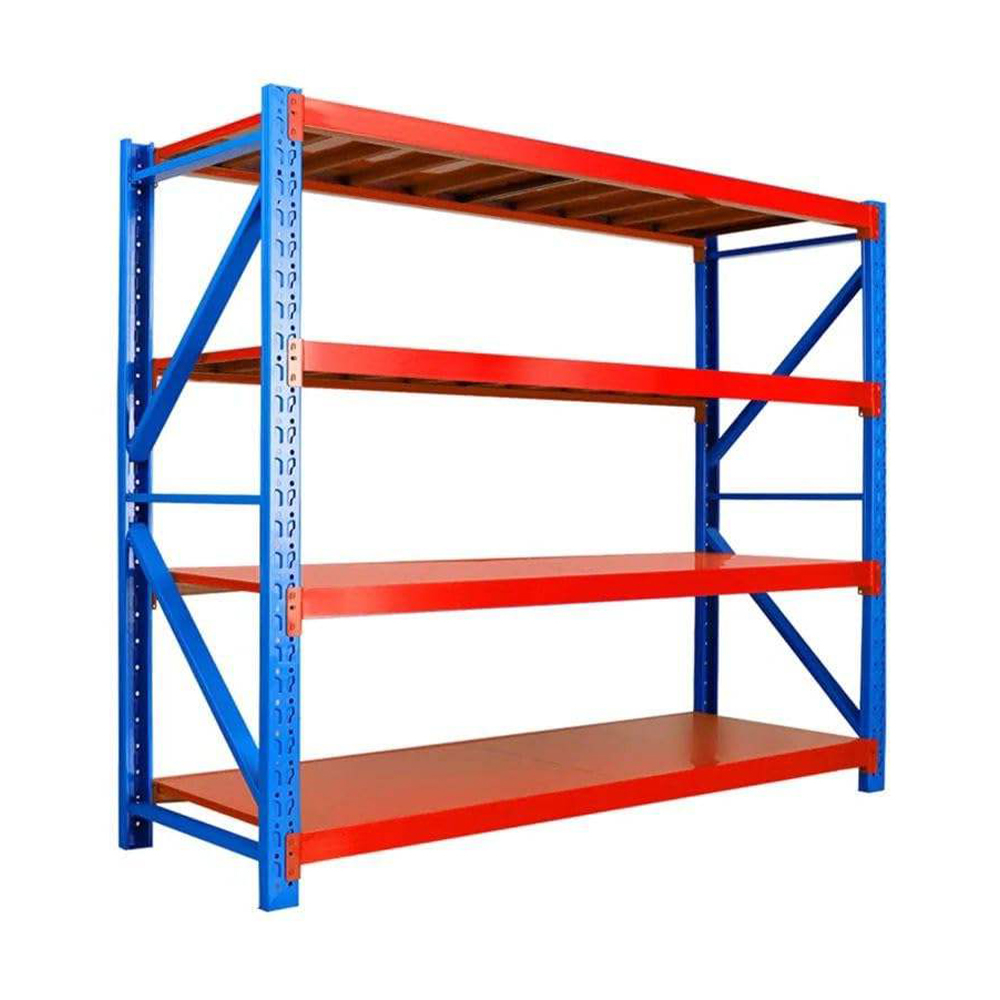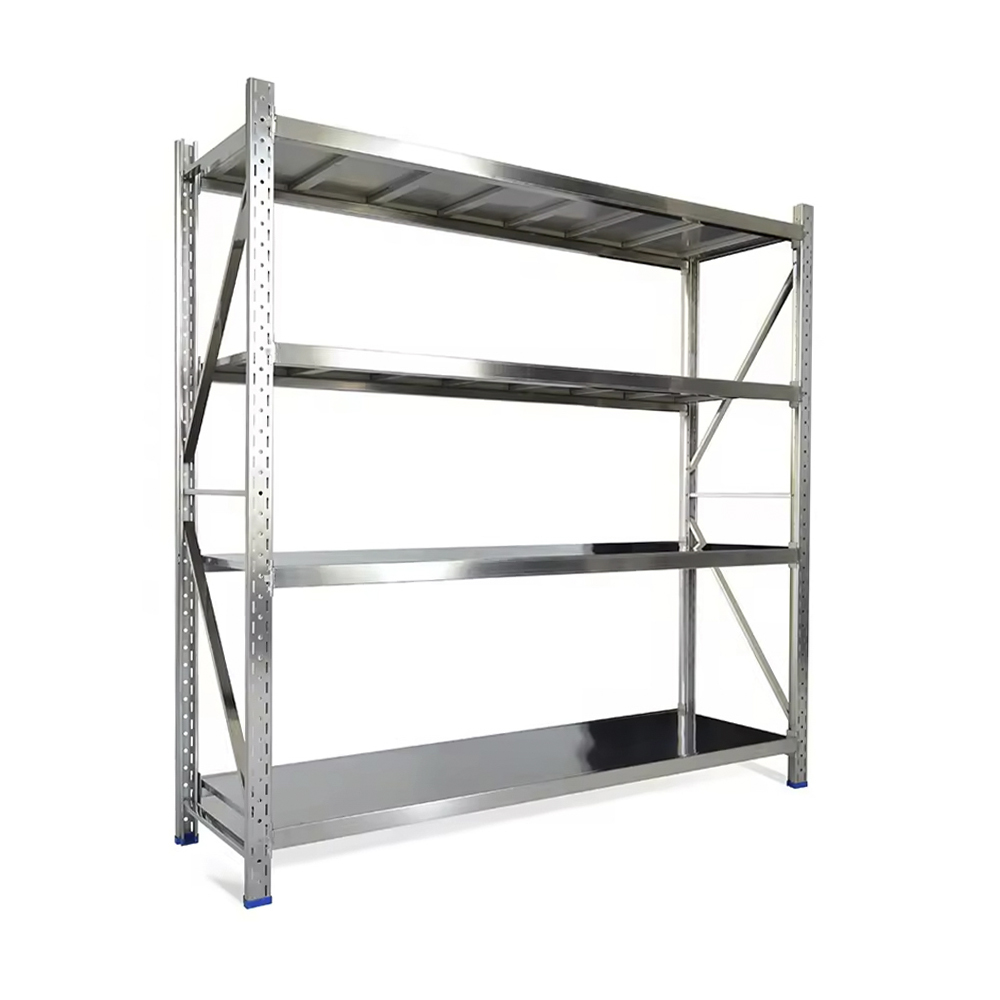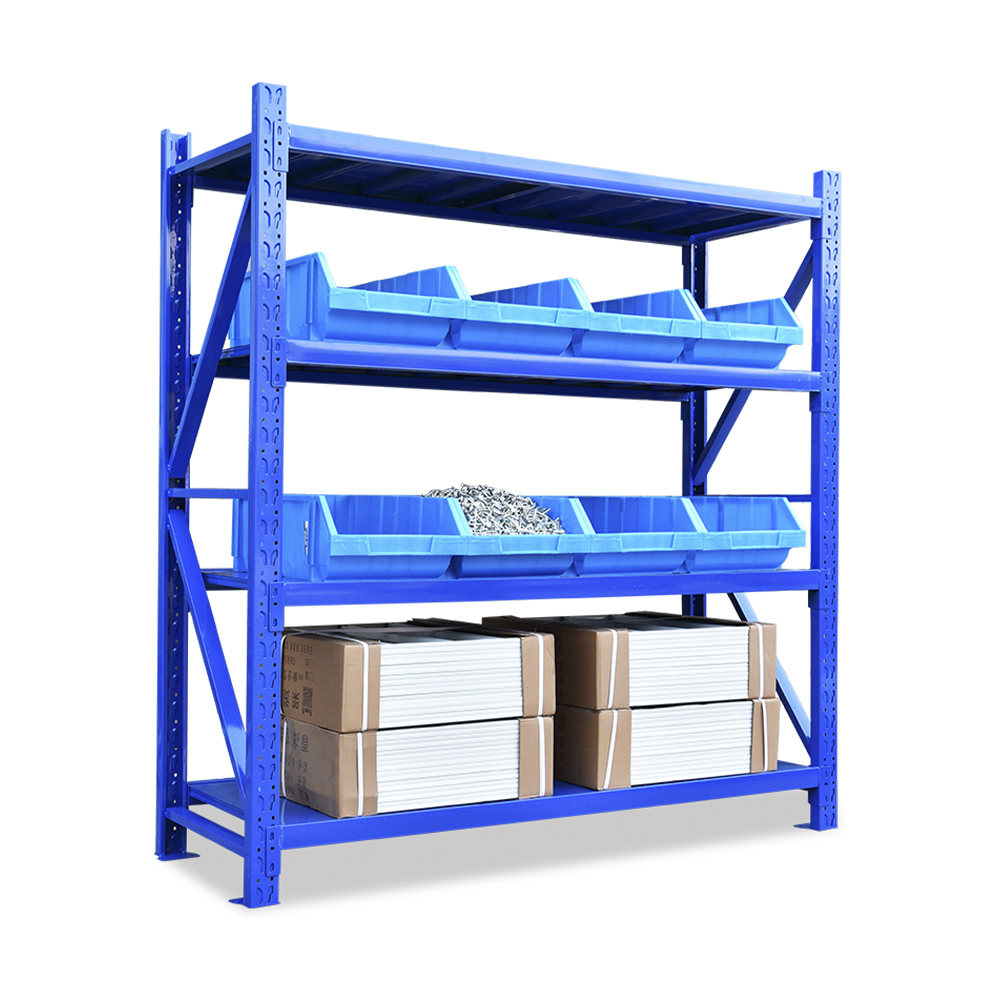
Efficient storage is essential for factories, warehouses, workshops, retail stores, offices, garages, and homes. As inventory levels increase and available floor space becomes more valuable, businesses and households need a storage system that combines strength, safety, flexibility, and long service life. The medium-duty anti-rust steel stacking shelf is designed to meet these demands with a practical structure, dependable load-bearing performance, and easy configuration.
With a load capacity of 200–500 kilograms per layer, this storage rack provides a reliable solution for organizing tools, cartons, spare parts, files, equipment, merchandise, and other medium- to heavy-weight goods. Its reinforced steel shelf panels, multi-bent beams, one-piece shelf edges, and butterfly-hole connection structure give it advantages over many ordinary shelves that rely on thin panels, weak connections, or complicated assembly methods.
This product is suitable for customers who need more than a lightweight household shelf but do not require a large-scale heavy-duty pallet racking system. It occupies a practical position between light storage furniture and industrial warehouse racks, offering a balanced combination of capacity, accessibility, adaptability, and cost efficiency.
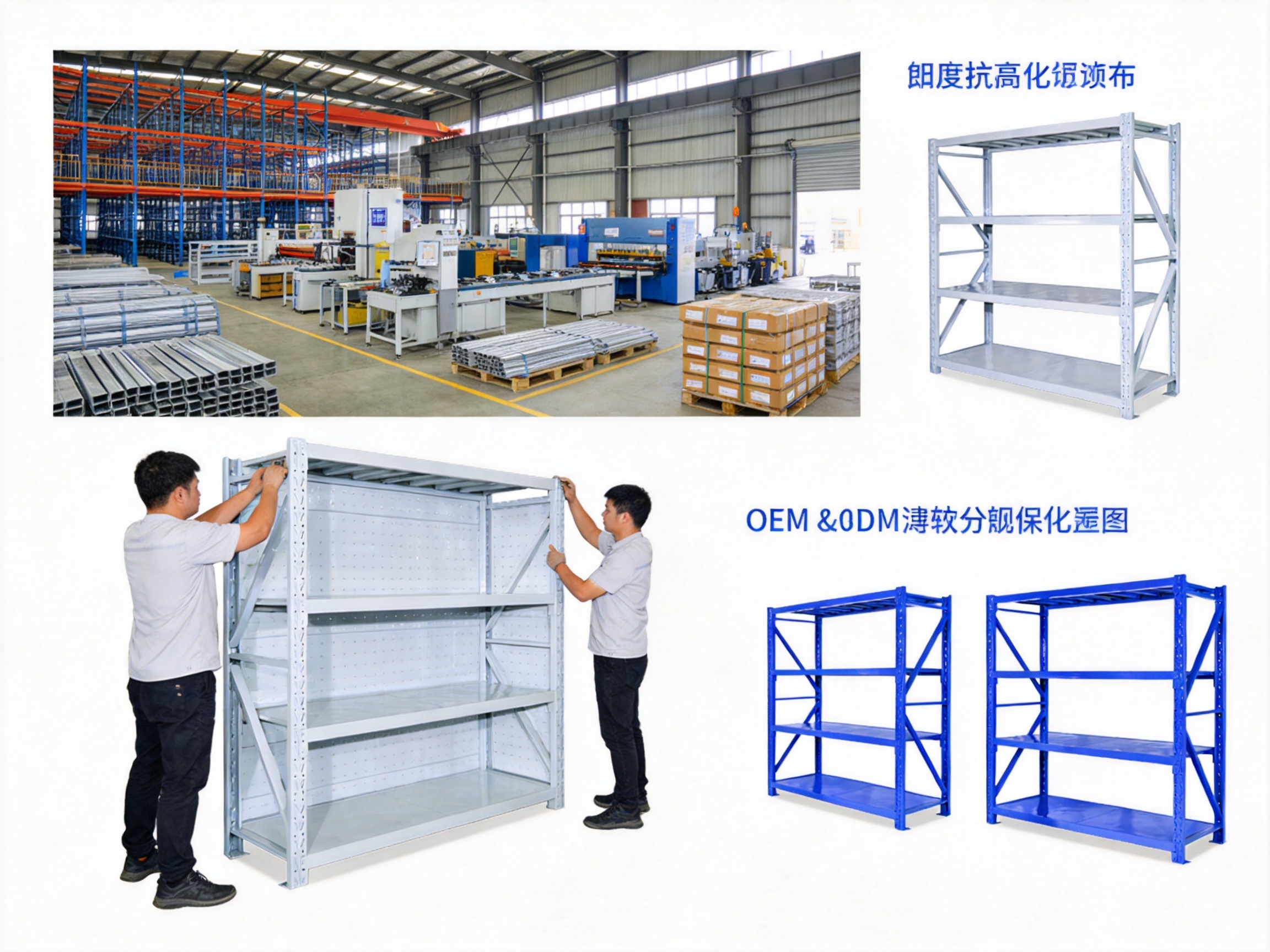
Manufactured by Shanghai King Global Shelf Co., Ltd., the rack benefits from professional product development, integrated manufacturing, quality control, and market service. The company has specialized in shelving and storage solutions since 2010, serving customers in North America, Southeast Asia, Japan, South Korea, the Middle East, Europe, and other markets.
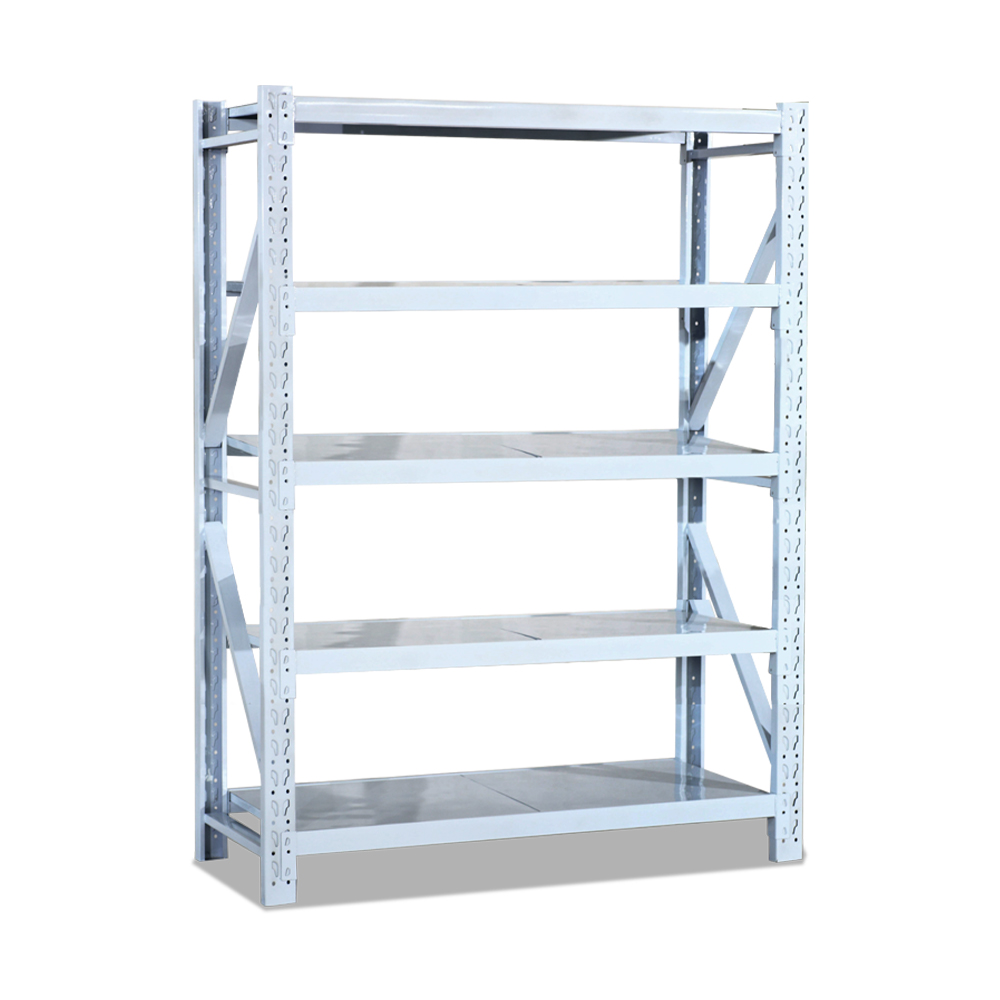
Medium-Duty Anti-Rust Steel Stacking Shelves for Factory & Warehouse Use
Understanding the Medium-Duty Storage Rack
A medium-duty storage rack is designed for applications where products are too heavy or bulky for ordinary household shelving but do not need the extremely high capacity of pallet rack systems. It is commonly used to store boxed goods, tools, components, archive materials, equipment, spare parts, packaged products, and workshop supplies.
The featured rack has a rated capacity of 200–500 kilograms per layer, depending on the selected specifications, dimensions, configuration, and loading conditions. This capacity allows users to organize a significant amount of material vertically while maintaining a relatively compact footprint.
The vertical design is particularly valuable in facilities where floor space is limited. Instead of spreading goods across the floor, users can use the height of a room to create multiple accessible storage levels. This helps reduce clutter, improves visibility, and makes better use of existing warehouse or workplace space.
Unlike fixed storage furniture, the rack can be configured for different storage requirements. The butterfly-hole structure enables quick installation and convenient adjustment of shelf levels. When product sizes, inventory categories, or workplace layouts change, the storage system can be reconfigured rather than replaced.
The rack is also suitable for expansion. A small business can begin with a limited number of units and add more shelving as inventory grows. This makes it a practical choice for startups, independent retailers, workshops, offices, and small warehouses that need a storage investment capable of supporting future development.
Key Advantages of the Product
High Load Capacity for Medium- and Heavy-Weight Goods
The most important performance feature is the rack’s load capacity of 200–500 kilograms per layer. This enables each shelf level to carry goods that would quickly overload common light-duty shelving.
Heavy tools, electrical components, machinery accessories, cartons, packaging materials, hardware, automotive parts, and office archives can all be organized on the rack when the correct configuration is selected. The multi-level design also helps distribute goods across several shelves instead of placing excessive weight in one location.
Load capacity is supported by more than the shelf panel alone. The beams, uprights, connectors, and frame work together as a storage structure. The rack’s multi-bent beams are designed to improve stiffness and reduce deformation under load. Reinforced shelf panels provide additional support for stored items and help maintain a stable loading surface.
As with any storage system, the stated load rating should be observed according to the manufacturer’s specifications. Loads should be distributed evenly, heavy items should be positioned on lower levels whenever possible, and the rack should be installed on a suitable floor.
Anti-Rust Steel Construction
Steel provides the strength required for a medium-duty rack, while the anti-corrosion finish helps protect the surface during long-term use. This is especially important in garages, workshops, warehouses, basements, and other environments where shelves may be exposed to humidity, dust, changing temperatures, or occasional contact with moisture.
Compared with unprotected metal shelving, an anti-rust finish can help reduce surface corrosion and maintain a cleaner appearance over time. It also contributes to longer product life, reducing the need for frequent replacement.
The anti-rust treatment is not simply a visual improvement. A well-protected steel surface supports the long-term integrity of the rack by helping prevent corrosion from weakening components. Users should still avoid prolonged direct exposure to standing water, aggressive chemicals, or highly corrosive environments unless a specially selected finish is provided for those conditions.
Multi-Bent Beams for Improved Structural Strength
The beam design is an important difference between a professionally engineered storage rack and a basic metal shelf. Multi-bent beams use formed sections to increase rigidity and improve resistance to bending.
A beam with carefully designed bends can provide more structural support than a flat strip of the same material. The formed profile helps transfer the weight of stored products toward the vertical frame, improving the overall stability of the shelf system.
This structural approach supports a higher load capacity without requiring an unnecessarily bulky design. The result is a rack that remains practical for warehouses, workshops, offices, and retail environments where both strength and efficient use of space are important.
One-Piece Shelf Edge for Safer Storage
The one-piece shelf edge creates a continuous boundary around the shelf panel. This feature helps prevent stored items from sliding or falling from the edge during normal use.
A defined shelf edge is particularly useful for smaller boxes, loose tools, files, components, and packaged products. It also gives the shelf a more finished and professional appearance while improving user confidence during loading and unloading.
Safety edges cannot replace proper loading practices, but they provide an additional layer of protection. Items should still be placed securely, shelves should not be overloaded, and frequently handled products should be stored at convenient heights.
Reinforced Steel Shelf Panels
The shelf panels are reinforced to support heavier loads and provide a stable storage platform. Reinforcement helps reduce panel deflection, especially when products are distributed across a large surface area.
Stable shelf panels are important for both safety and operational efficiency. Products are easier to stack when the shelf is level and firm. Boxes are less likely to tilt, small components are easier to organize, and workers can retrieve goods without dealing with a flexible or unstable surface.
The reinforced panel design also supports a wider range of storage applications. Users can store cartons, bins, tools, files, spare parts, and equipment without requiring a separate support platform for every shelf level.
Butterfly-Hole Structure for Quick Assembly
The butterfly-hole connection system is designed for fast setup and easy adjustment. This type of connection allows the beams to attach to the uprights through prepared holes, reducing the need for complicated installation procedures.
Compared with systems that require extensive bolting, drilling, or specialized tools, a quick-connect structure can reduce installation time and labor requirements. It is also convenient when shelf levels need to be changed to accommodate taller or shorter items.
Easy reconfiguration is a major benefit in active storage environments. Inventory changes frequently, and a fixed shelf layout can quickly become inefficient. With adjustable levels, users can create more space for large cartons, reduce unused vertical gaps, or reorganize the rack according to product categories.
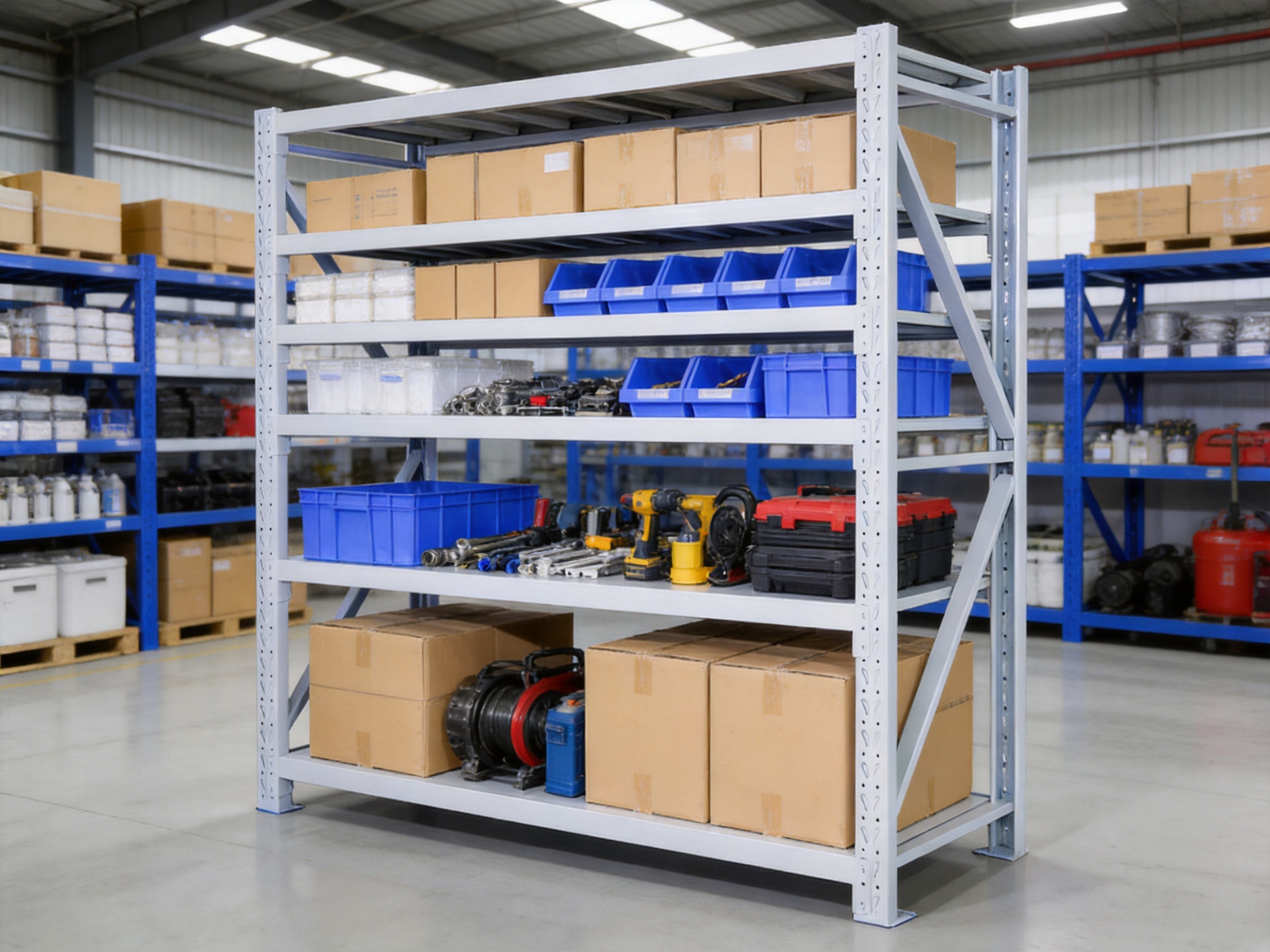
Advantages Over Ordinary Competitor Shelving
More Strength Than Light-Duty Shelves
Many low-cost shelves are designed for light household items and may not be suitable for tools, spare parts, or commercial inventory. Their thin panels can bend, their frames may sway, and their connectors may loosen under repeated loading.
The medium-duty rack offers a stronger alternative. Its 200–500 kilogram per-layer capacity, reinforced panels, and formed beams make it better suited to demanding storage tasks. This allows customers to use one properly designed rack instead of installing several lightweight units that consume more floor space.
More Flexibility Than Fixed Storage Cabinets
Storage cabinets can provide enclosed protection, but their internal layouts are often difficult to change. Fixed shelves may leave wasted space when product dimensions vary.
The adjustable butterfly-hole structure gives this rack greater flexibility. Shelf levels can be adapted to cartons, tools, archive boxes, bins, and equipment. Open access also allows users to identify inventory quickly without opening doors or drawers.
Better Space Utilization Than Floor Storage
Floor storage makes retrieval simple but quickly creates clutter and reduces walking space. It may also expose products to accidental impact, dirt, or moisture from the floor.
Vertical shelving uses the available height of the room. By creating multiple storage levels, it increases capacity without requiring a proportional increase in floor area. This is valuable for small warehouses, workshops, retail back rooms, and home garages.
Longer Service Potential Than Poorly Protected Metal Racks
Low-quality metal shelving may develop rust, surface damage, or structural weakness after relatively short use. Replacement costs can become significant when several units need to be discarded.
The anti-rust steel construction is intended to provide better durability and lower long-term ownership costs. A more durable rack can remain in service through multiple inventory cycles, relocations, and layout changes.
More Accessible Than Closed Storage Systems
Open shelving allows users to see stored products from the aisle. This improves inventory recognition and reduces the time needed to find frequently used items.
For warehouses and workshops, open access is especially useful when workers need to retrieve tools or components repeatedly during the day. In retail environments, it can support back-room organization. In offices, it can make archive boxes and equipment easier to identify.
Applications Across Different Environments
Factories and Production Workshops
Factories often need organized storage for raw materials, spare parts, maintenance tools, packaging supplies, work-in-progress items, and finished goods. The medium-duty rack can be placed near production lines, maintenance areas, or material preparation zones.
Its adjustable shelf levels allow the same rack to accommodate different component sizes. Small parts may be placed in labeled bins, while larger cartons or equipment can be stored on lower shelves. This supports leaner work areas and reduces the need for materials to remain on the floor.
In maintenance workshops, the rack can hold hand tools, replacement parts, lubricants, safety supplies, and repair equipment. Proper organization helps workers locate essential items more quickly and reduces unnecessary movement.
Small and Medium Warehouses
Small and medium warehouses may not need a complete pallet racking installation, particularly when goods are handled manually rather than by forklift. Medium-duty shelving provides a practical alternative for carton-level storage.
It can be used for e-commerce inventory, spare parts, consumer goods, packaging materials, seasonal products, and wholesale stock. Shelves can be labeled by product code, category, or order frequency to improve picking efficiency.
Because the system can be reconfigured, warehouse operators can adapt the layout as product lines change. This is an important advantage for businesses that cannot predict future storage requirements with certainty.
Retail Stores and Stockrooms
Retail businesses need accessible back-room storage that supports quick replenishment. The rack can hold packaged goods, display stock, promotional materials, cleaning supplies, and seasonal inventory.
Open shelves help staff identify stock at a glance. Products can be grouped by brand, category, size, or replenishment schedule. The one-piece shelf edge helps keep stored packages in place and gives the stockroom a more organized appearance.
Offices and Archive Rooms
Offices often accumulate documents, archive boxes, stationery, printers, electronic equipment, and event materials. Standard cabinets may not provide enough capacity, while light shelving may not be strong enough for dense archive boxes.
The medium-duty rack offers a practical way to store heavier office materials. Archive boxes can be placed on lower levels, while lighter supplies can occupy upper shelves. Adjustable shelf heights allow the rack to accommodate different box sizes and office equipment.
Garages and Home Workshops
For home users, the rack can organize power tools, hand tools, sports equipment, automotive supplies, gardening products, storage bins, and household goods. It is suitable for garages, basements, utility rooms, and hobby areas.
Vertical storage can free valuable floor space for vehicles, workbenches, or household activities. The steel construction also provides a more durable solution than plastic shelves when storing dense or heavy items.
Basements and Utility Areas
Basements and utility rooms frequently require storage for seasonal products, cleaning supplies, spare fixtures, and household equipment. A corrosion-resistant finish is useful in these areas, where humidity may be higher than in ordinary living spaces.
Users should maintain adequate ventilation and avoid placing the rack directly in standing water. With suitable placement and reasonable care, the rack can provide an organized storage area for long-term household use.
Technical Features at a Glance
| Feature |
Product Benefit |
Typical Application Value |
| Load capacity |
200–500 kilograms per layer, depending on configuration |
Supports tools, cartons, components, equipment, and dense inventory |
| Material |
High-quality steel construction |
Provides strength, rigidity, and long-term structural performance |
| Surface protection |
Anti-rust finish |
Helps resist surface corrosion in ordinary warehouse and workshop conditions |
| Beam design |
Multi-bent beams |
Improves stiffness and load distribution |
| Shelf structure |
Reinforced steel shelf panels |
Creates a stable platform for medium- and heavy-weight items |
| Safety feature |
One-piece shelf edge |
Helps keep products from sliding or falling from the front edge |
| Connection system |
Butterfly-hole structure |
Supports fast assembly and convenient shelf-level adjustment |
| Configuration |
Multi-level vertical storage |
Maximizes storage volume while conserving floor space |
Manufacturing Strengths and Production Capabilities
Integrated Product Development
Shanghai King Global Shelf Co., Ltd. operates as a professional shelving and storage manufacturer with capabilities covering product development, manufacturing, quality control, and market service. This integrated structure allows the company to manage the product process from design concept to finished shipment.
Product development is important because storage racks must balance several requirements at the same time. A rack needs to be strong without becoming unnecessarily heavy, adjustable without becoming unstable, and economical without sacrificing important safety features.
Engineering decisions influence beam profiles, shelf reinforcement, connection points, frame dimensions, surface treatment, packaging, and assembly instructions. An integrated manufacturer can coordinate these elements more effectively than a trading company that only purchases products from unrelated factories.
Modern Production Base
The company operates a production base covering approximately 60,000 square meters. This provides space for manufacturing equipment, material processing, assembly, finishing, quality inspection, warehousing, and logistics coordination.
A dedicated production base supports more consistent workflows. Raw materials can be handled through defined production stages, work-in-progress can be managed more efficiently, and finished products can be inspected and prepared for shipment within an organized manufacturing system.
Production scale also supports both standard products and customized solutions. Customers may require different dimensions, shelf levels, colors, load capacities, packaging methods, or layouts. A capable factory can evaluate these requirements and coordinate the necessary production adjustments.
Professional Technical Team
The company employs a professional technical team to support product design, production improvement, and customer requirements. Technical expertise is essential for developing storage equipment that performs reliably under practical operating conditions.
For a rack system, small design details can have significant effects on performance. The shape of a beam, the position of a connector, the thickness of a panel, the fit between components, and the quality of surface preparation all influence the final product.
Technical personnel can also help customers select suitable configurations. A storage solution should be based on product weight, product dimensions, loading frequency, available space, access methods, and expected service conditions rather than appearance alone.
Quality Control Throughout the Process
Reliable storage products require quality control at multiple stages. Material inspection helps verify that steel components meet the required specifications. Forming and fabrication checks help ensure that beams, panels, and uprights are produced consistently. Assembly checks verify the fit and function of the connection system.
Surface treatment inspection is also important. A uniform anti-rust finish contributes to appearance and durability, while packaging inspection helps protect components during transportation and delivery.
Quality control should not be limited to the finished product. Monitoring each stage makes it easier to identify deviations before they affect a large batch. This approach supports consistent production and reduces the risk of receiving components that do not assemble correctly.
OEM and ODM Service
Shanghai King Global Shelf Co., Ltd. provides OEM and ODM solutions for customers with specific market or project requirements. OEM service can support buyers who need products manufactured according to an existing design, brand specification, packaging requirement, or distribution plan.
ODM service can support customers who need assistance developing a storage product or adapting an existing structure for a particular market. This may involve changes to dimensions, loading requirements, shelf layouts, surface colors, labeling, packaging, or installation methods.
Customized manufacturing is valuable for distributors, retailers, warehouse contractors, and project buyers. Instead of selecting a standard product that only partially meets their needs, they can work with the manufacturer to create a more suitable storage solution.
International Market Experience
The company exports products to North America, Southeast Asia, Japan, South Korea, the Middle East, Europe, and other regions. Experience across international markets helps the manufacturer understand different customer expectations, packaging needs, installation preferences, and storage applications.
International supply also requires coordination in documentation, production schedules, packaging, shipping, and communication. These capabilities are important for overseas buyers who need predictable delivery and professional support.
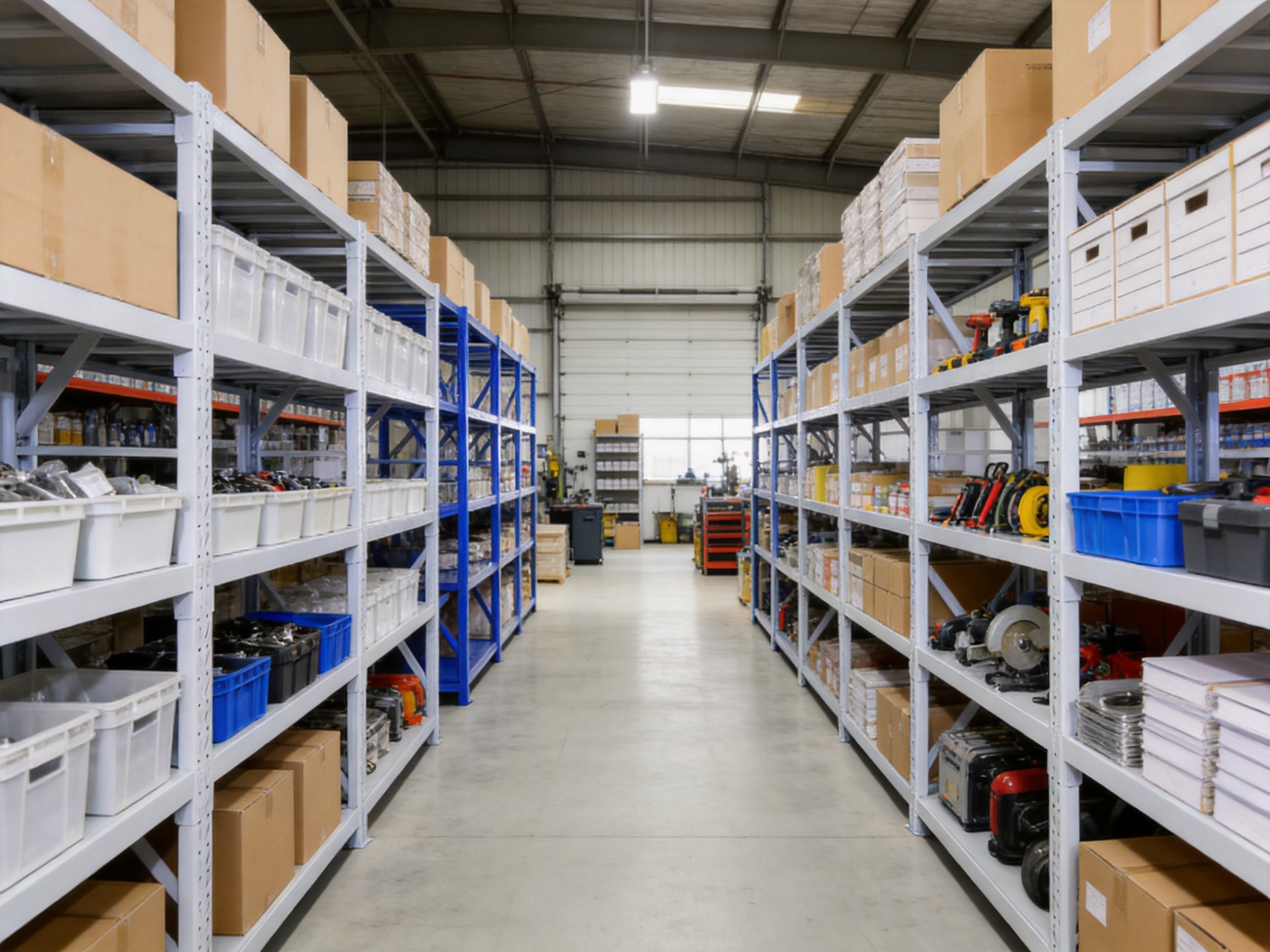
How the Rack Improves Warehouse Efficiency
Faster Product Identification
Organized shelving makes products easier to see and identify. When each category has a defined location, employees spend less time searching through mixed cartons or floor piles.
Businesses can use labels, barcodes, color coding, or location numbers to establish a logical storage system. The open design of the rack supports visual inventory checks and simplifies routine stock counting.
Shorter Picking Routes
Rack placement affects the distance workers must travel to retrieve products. Frequently ordered goods can be stored near packing or dispatch areas, while slower-moving inventory can be placed in less accessible positions.
Adjustable shelves allow operators to create a layout that matches product turnover and packaging size. This can help reduce unnecessary movement and improve order preparation efficiency.
Reduced Product Damage
Products stored directly on the floor are more likely to be exposed to impacts, dirt, moisture, and accidental contact with vehicles or pedestrians. Shelving separates goods from the floor and gives each category a controlled storage position.
The shelf edge provides an additional barrier against items sliding forward. Properly distributed loads also reduce the risk of unstable stacks that may fall or become damaged.
Improved Workplace Safety
A clear storage layout can reduce trip hazards and keep walkways open. Tools and materials are easier to return to their designated locations after use, supporting better housekeeping.
Safe operation still depends on correct installation and use. The rack should be positioned on a stable surface, loaded within its rated capacity, and inspected periodically for damage, loosened components, or signs of corrosion.
Installation and Configuration Guidance
Prepare the Installation Area
Before assembly, users should confirm that the floor is level, strong enough for the intended load, and free from obstructions. The surrounding area should provide adequate room for assembly, loading, unloading, and routine access.
Measurements should include not only the rack footprint but also aisle space, door clearance, ceiling height, lighting, and any nearby equipment. Careful planning helps prevent the rack from interfering with walkways or emergency access.
Inspect Components Before Assembly
All uprights, beams, shelf panels, connectors, and accessories should be checked before assembly. Components should be free from serious deformation or damage caused during transportation.
Users should compare the delivered parts with the packing list or assembly instructions. Missing or damaged components should be reported before the rack is placed into service.
Assemble the Frame Correctly
The butterfly-hole system is designed to simplify connection between the beams and uprights. Components should be fitted according to the manufacturer’s instructions, and each connection should be fully engaged.
The rack should be assembled on a stable surface. Users should avoid forcing components into place or modifying structural parts without professional guidance. Any optional bracing, support, or anchoring accessories should be installed as required by the selected configuration.
Set Shelf Levels According to Product Size
Shelf heights should be planned according to the dimensions and weight of the stored products. Avoid creating unnecessarily large gaps between levels because unused vertical space reduces storage efficiency.
At the same time, enough clearance should be left for safe loading and retrieval. Frequently handled items should be placed between waist and shoulder height where practical. Heavier goods are generally best stored on lower levels to improve stability and reduce manual handling risk.
Distribute Loads Evenly
Products should be distributed across the shelf rather than concentrated in one small area. Dense items should not be stacked excessively at the front edge or on one side of the shelf.
Load ratings should be followed according to the product specification. The total weight on a shelf should remain within the stated capacity, and the entire rack should be used in a way that maintains balanced loading.
Maintenance and Long-Term Use
Routine maintenance helps preserve the rack’s appearance and performance. Shelves should be kept clean and dry, especially in workshops, basements, and storage areas where dust or moisture may accumulate.
Users should periodically inspect the frame, beams, shelf panels, and connectors. Any bent component, cracked weld, damaged finish, or loose connection should be evaluated before the rack continues carrying heavy loads.
Small surface marks should be addressed promptly when appropriate to prevent moisture from reaching exposed steel. Cleaning products should be compatible with the surface finish, and aggressive chemicals should be avoided unless the coating has been designed for that environment.
Products should not be dragged across shelf panels in a way that damages the finish. The rack should not be used as a ladder, work platform, or support for activities outside its intended storage function.
When the storage layout changes, the rack should be unloaded before shelf levels are adjusted. Reconfiguration under load can place unnecessary stress on connections and create avoidable safety risks.
Cost Efficiency and Return on Investment
The purchase price of a storage rack is only one part of its total value. Buyers should also consider service life, load capacity, maintenance, adaptability, floor-space savings, installation time, and the cost of replacing inferior products.
A low-priced light-duty shelf may appear economical initially, but it may require multiple units to hold the same inventory. It may also need replacement if panels bend, connections loosen, or corrosion develops. A stronger medium-duty system can provide better value when used for demanding storage applications.
The adjustable design further improves cost efficiency. When business needs change, users can modify the shelf configuration instead of purchasing an entirely new storage system. This supports a longer product lifecycle and reduces unnecessary equipment spending.
Vertical storage can also create indirect savings. Better organization may reduce product damage, shorten picking time, improve stock visibility, and make better use of existing premises. For small businesses, these operational benefits can be especially important because every square meter of usable space contributes to productivity.
Why Choose a Professional Storage Rack Manufacturer?
Professional manufacturing experience provides advantages that are difficult to evaluate from product photographs alone. A reputable supplier should be able to explain load ratings, materials, connection methods, surface treatment, customization options, packaging, and installation requirements.
Manufacturers with integrated design and production capabilities can respond more effectively to technical questions. They can assess whether a requested dimension is structurally appropriate, recommend a suitable configuration, and coordinate changes across engineering, production, quality control, and shipping.
Shanghai King Global Shelf Co., Ltd. combines manufacturing scale, technical resources, international market experience, and OEM/ODM capability. Its product range covers warehouse racks, pallet racking, mezzanine racking, cantilever racks, supermarket shelving, office shelves, home shelves, and related storage solutions.
This broader product knowledge can be useful when a customer’s needs grow beyond medium-duty shelving. A small warehouse may begin with medium-duty racks and later require pallet racking, mezzanine storage, or specialized cantilever systems. Working with a supplier that understands multiple rack categories can make future expansion easier.
Q&A: Medium-Duty Anti-Rust Steel Storage Shelves
What is the load capacity of this storage rack?
The stated load capacity is 200–500 kilograms per layer, depending on the selected design and configuration. Buyers should confirm the exact capacity for the required dimensions and follow the manufacturer’s loading recommendations.
Can the shelf levels be adjusted?
Yes. The butterfly-hole structure is designed to support quick setup and easy reconfiguration. Shelf positions can be changed to accommodate different product heights and storage requirements.
Is the rack suitable for a small warehouse?
Yes. It is suitable for carton-level inventory, spare parts, tools, packaging materials, retail stock, and other products commonly found in small and medium warehouses.
Can it be used in a home garage?
Yes. The rack can organize tools, equipment, automotive products, household goods, sports supplies, and storage bins in a garage, basement, utility room, or home workshop.
What makes the rack safer than a basic metal shelf?
The rack includes a one-piece shelf edge, reinforced steel shelf panels, multi-bent beams, and a structured connection system. These features help improve stability, support load distribution, and reduce the likelihood of products sliding from the shelf edge when the rack is correctly installed and loaded.
Does the anti-rust finish make the rack suitable for outdoor use?
The anti-rust finish helps protect the steel in ordinary indoor storage environments, including warehouses, workshops, garages, offices, and basements. Outdoor use or exposure to standing water, severe humidity, salt spray, or aggressive chemicals may require a specially selected product and surface treatment.
Can the rack be customized?
OEM and ODM services are available for suitable projects. Customization may include dimensions, shelf configuration, color, packaging, labeling, and other requirements, subject to technical evaluation and production conditions.
Does the rack require complicated tools for assembly?
The butterfly-hole structure is designed for convenient installation and reduced assembly complexity. The exact tools and procedure depend on the selected model, so users should follow the supplied instructions and safety recommendations.
What products can be stored on the shelves?
Typical products include tools, cartons, spare parts, components, files, equipment, packaged goods, retail stock, household supplies, and workshop materials. The weight and dimensions of each item should remain within the configuration’s specified limits.
How should heavy items be positioned?
Heavy products should generally be placed on lower shelf levels and distributed evenly across the shelf. This supports stability and makes manual handling safer. The rack should never be overloaded or used beyond its intended purpose.
How can businesses improve organization with this rack?
Businesses can assign shelf locations by product category, item code, order frequency, or department. Labels, bins, barcodes, and inventory records can be used to improve identification and picking efficiency.
Why is vertical storage valuable for small facilities?
Vertical storage increases usable capacity without requiring the same amount of additional floor space. It helps small warehouses, workshops, offices, and garages keep walkways clear while storing more products in an organized manner.
Conclusion
The medium-duty anti-rust steel stacking shelf is a practical and adaptable solution for factories, warehouses, retail stores, offices, garages, workshops, and homes. Its 200–500 kilogram per-layer capacity provides substantial support for medium- and heavy-weight products, while the vertical structure improves the use of limited floor space.
Multi-bent beams, reinforced steel shelf panels, a one-piece shelf edge, and a butterfly-hole connection system distinguish the rack from ordinary light-duty shelving. Together, these features provide improved strength, safer storage, easier assembly, and greater flexibility for changing inventory requirements.
The anti-rust finish supports long-term use in a range of indoor environments, helping customers reduce maintenance and replacement costs. Adjustable levels allow the rack to evolve with the user’s storage needs, making it suitable for both current applications and future expansion.
Behind the product is an integrated manufacturing system supported by professional product development, a large production base, technical personnel, quality control, international market experience, and OEM/ODM capabilities. Shanghai King Global Shelf Co., Ltd. provides more than a standard storage product; it offers a foundation for organized, efficient, and scalable storage planning.
For buyers seeking a balance between capacity, durability, flexibility, and value, this medium-duty storage rack is a dependable choice for improving workplace organization and making better use of available space.
References
1. General principles of industrial storage rack design and safe loading practices.
2. Steel storage equipment manufacturing and surface protection guidelines.
3. Warehouse organization, vertical space utilization, and inventory accessibility practices.
4. Material handling and workplace housekeeping recommendations for commercial storage areas.
5. Product specifications and company information supplied for the medium-duty anti-rust steel stacking shelf.


 English
 Español
 русский
 Français
 한국어
 عربى
 ไทย
 Deutsch
 Bahasa Melayu
 Português
 Polskie