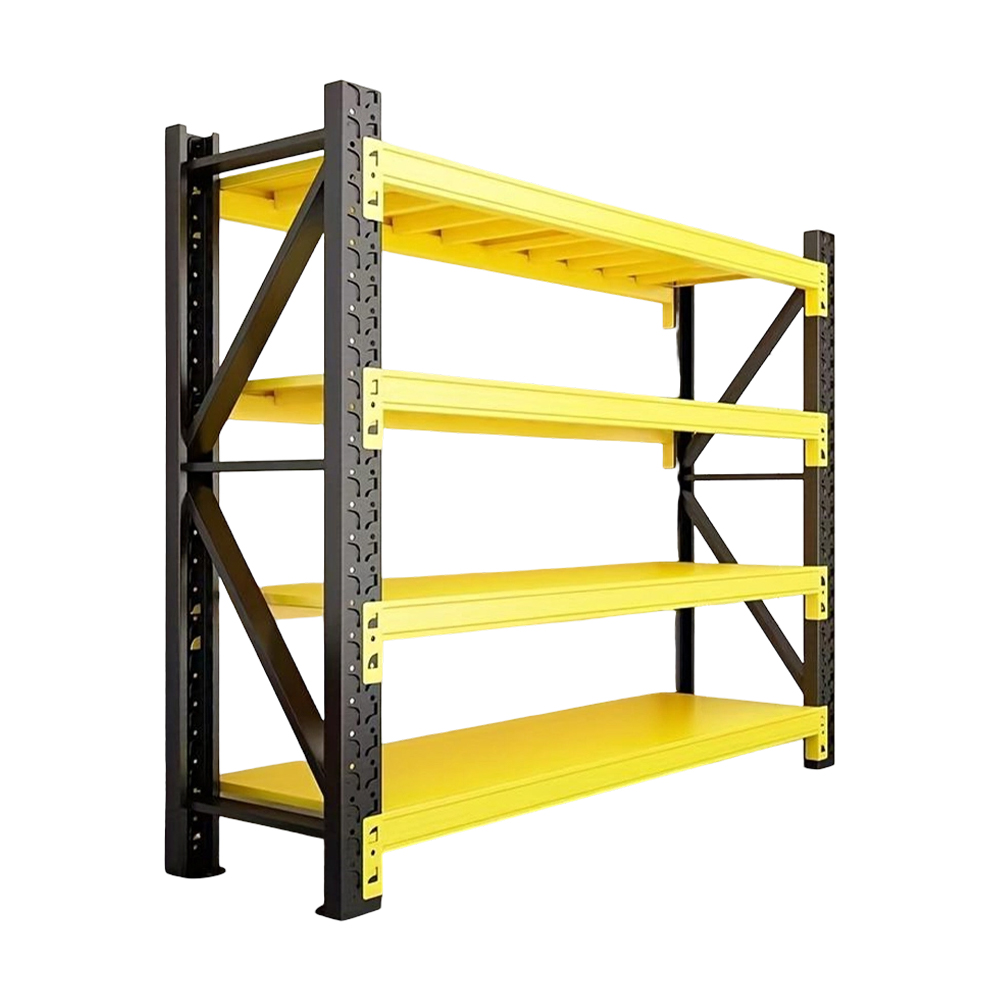
Storage needs are rarely fixed. A bedroom may need space for clothing boxes and household supplies today, then become a home office or nursery tomorrow. A garage may begin as a place for bicycles and tools before gradually filling with paint cans, cartons, garden equipment, and seasonal goods. In a small shop, storage requirements can change with every product shipment. A practical shelving system must therefore do more than provide a few horizontal surfaces. It must be strong, adjustable, easy to assemble, resistant to corrosion, economical to transport, and flexible enough to adapt as the user’s space changes.
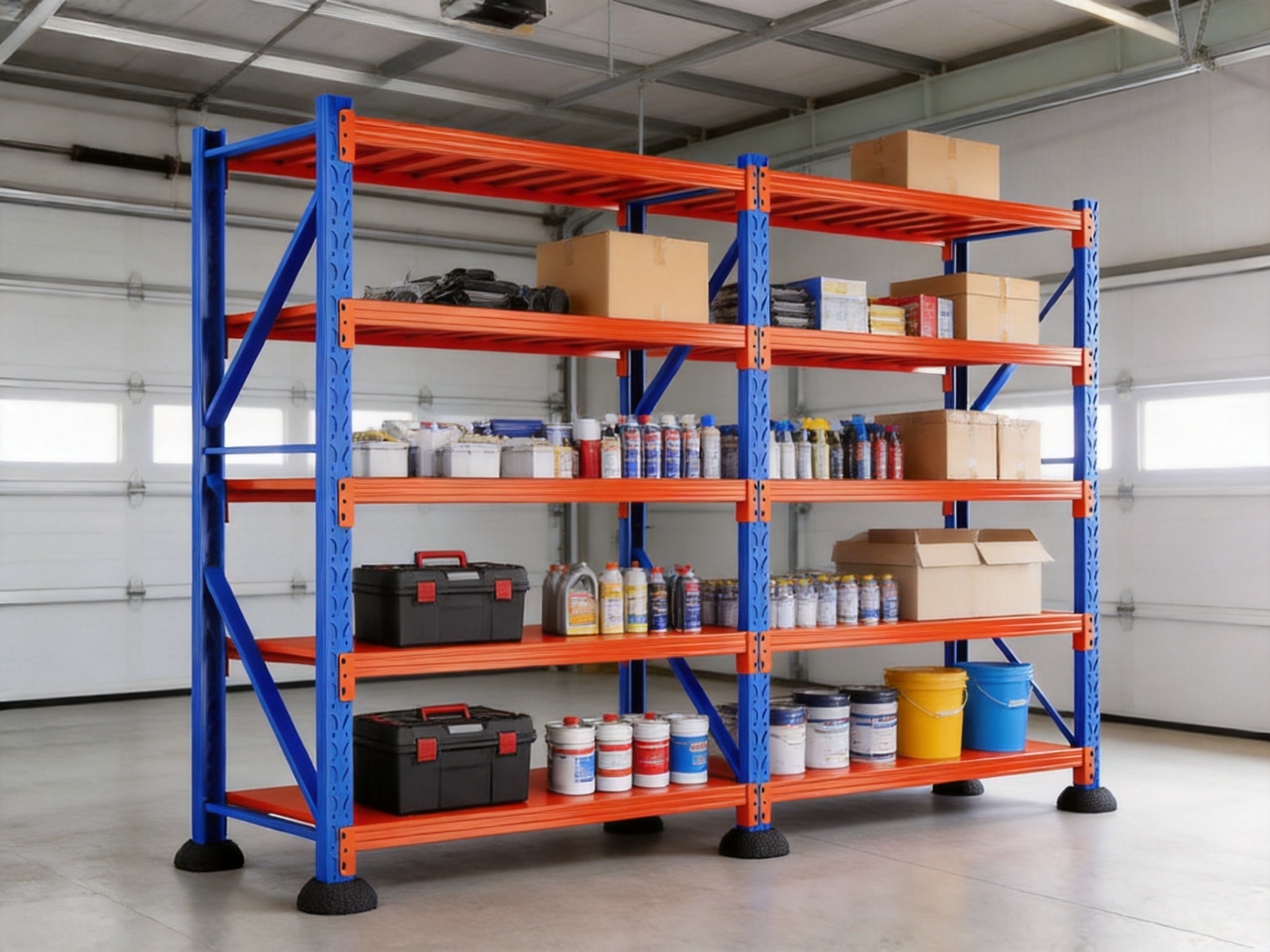
The four-tier light-duty rack described in this article is designed around those everyday requirements. It combines a 200-kilogram load capacity per shelf with tool-free assembly, adjustable shelf levels, compact dimensions, modular expansion, and a multi-stage anti-rust finish. Although it is suitable for homes, its performance and construction also make it useful in pantries, garages, storerooms, workshops, retail back rooms, offices, and small commercial environments.
Unlike many low-cost shelves that prioritize appearance over stability, this rack is built around a reinforced frame, Ω-shaped columns, wider foot plates, and a buckle-fit installation system. Unlike bulky industrial shelving that may require several people, drills, or specialized tools, it can be assembled by one person in minutes. This balance between strength and convenience gives it a clear advantage over many competing storage products in the same category.
The rack is manufactured by Shanghai King Global Shelf Co., Ltd., an established shelving and storage products manufacturer with an integrated development, production, quality-control, and service system. The company operates a 60,000-square-meter production base, employs more than 300 people, and supports standard products as well as OEM and ODM programs. This manufacturing foundation allows buyers to source directly from a producer rather than relying only on a trading intermediary.
Light Duty Rack for Home Storage
1. A Practical Storage Rack for Changing Spaces
The most important quality of a home storage rack is often not its appearance but its ability to remain useful after the first installation. Many shelves look suitable in a product photograph but become inconvenient when the user needs to store taller objects, heavier cartons, or differently shaped containers. A fixed shelf layout can leave wasted vertical space, while a weak frame may begin to bend or wobble under normal household loads.
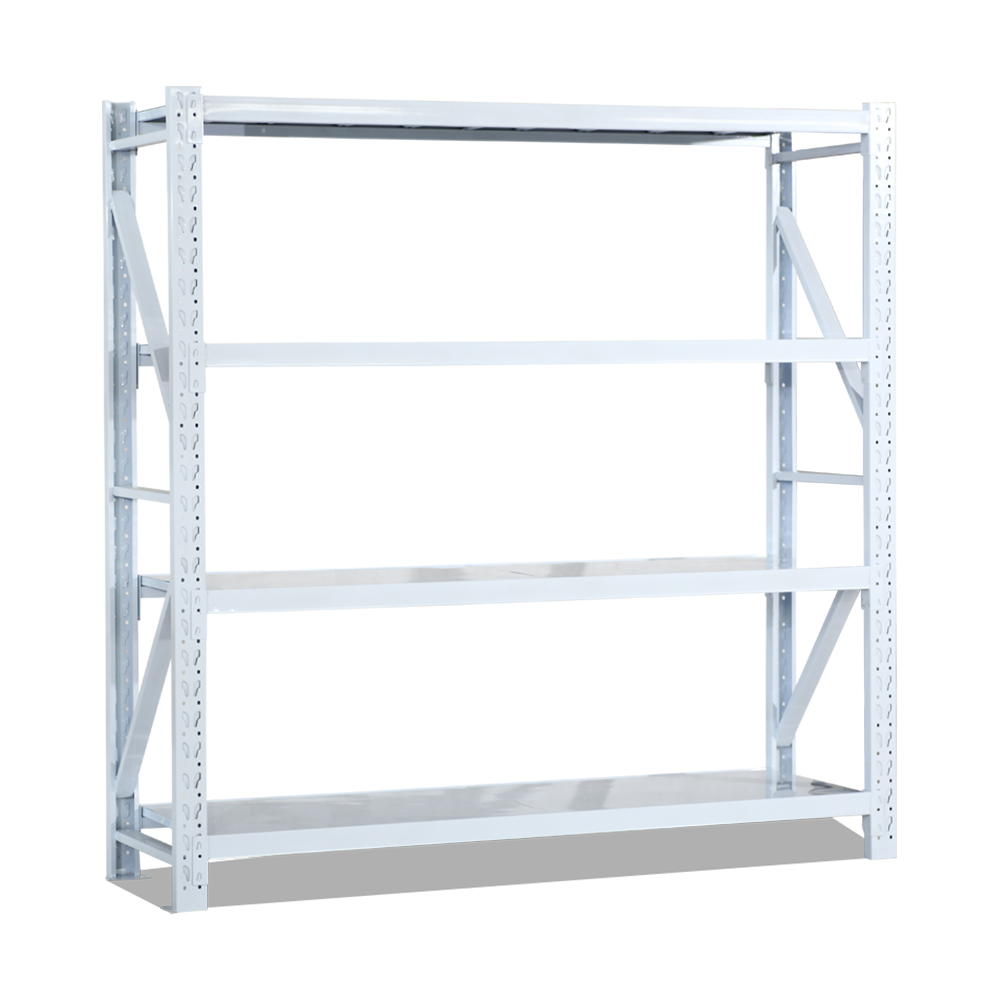
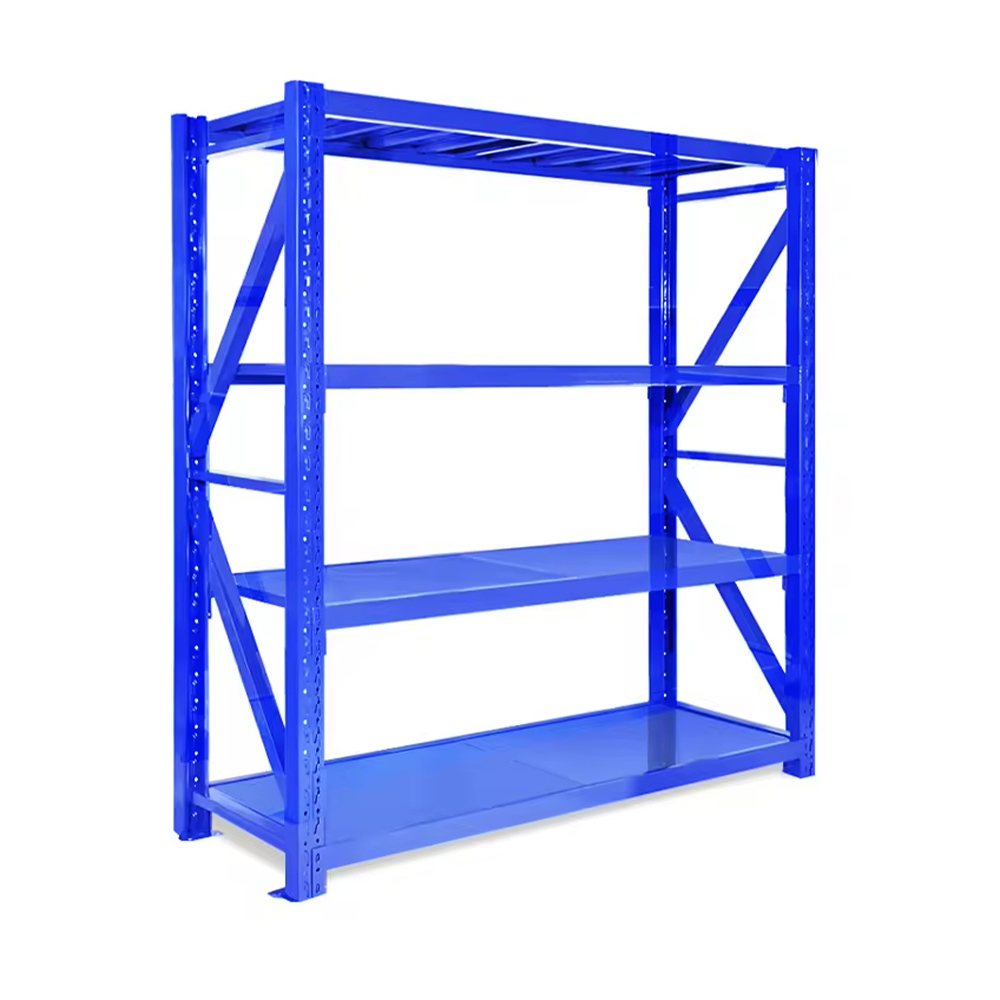
This light-duty rack addresses those problems with four height-adjustable levels. The shelf positions can be changed according to the objects being stored. Users can create more clearance for buckets, appliances, toolboxes, or large cartons, then reduce the spacing later for books, food containers, parts bins, or smaller household products.
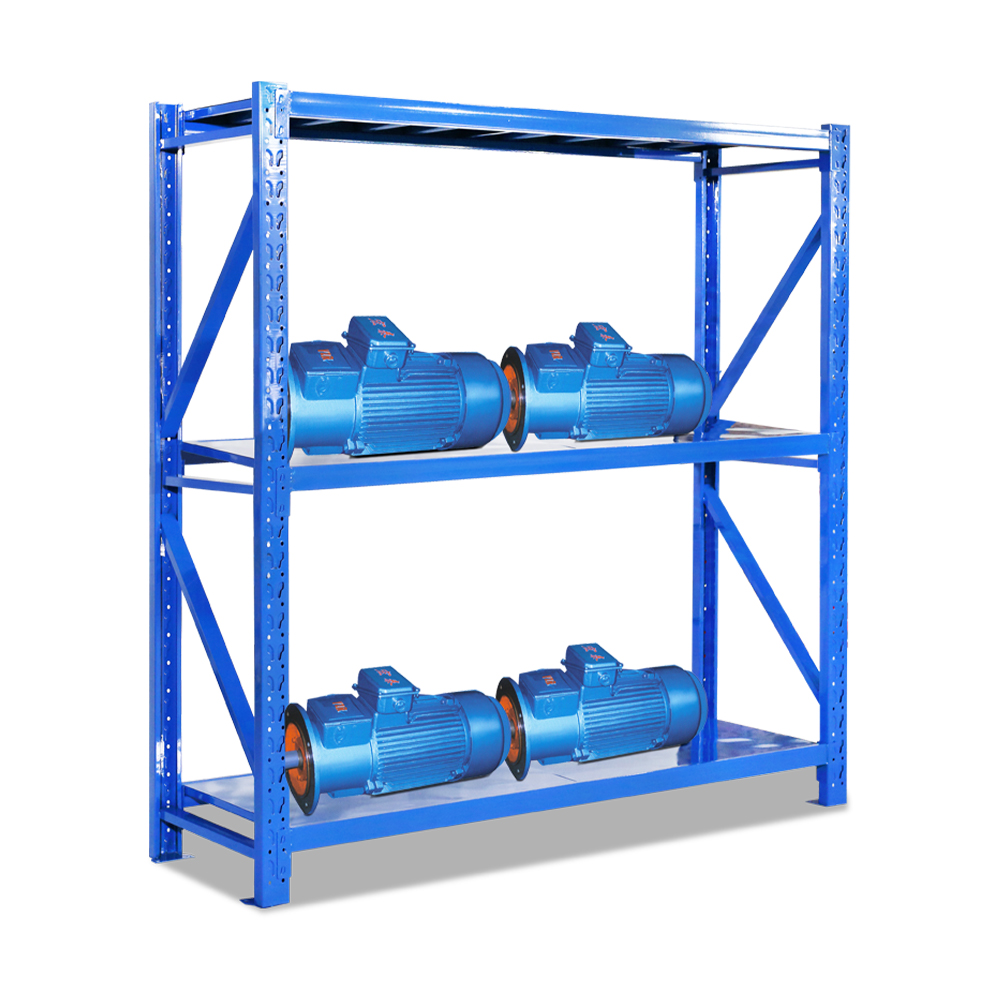
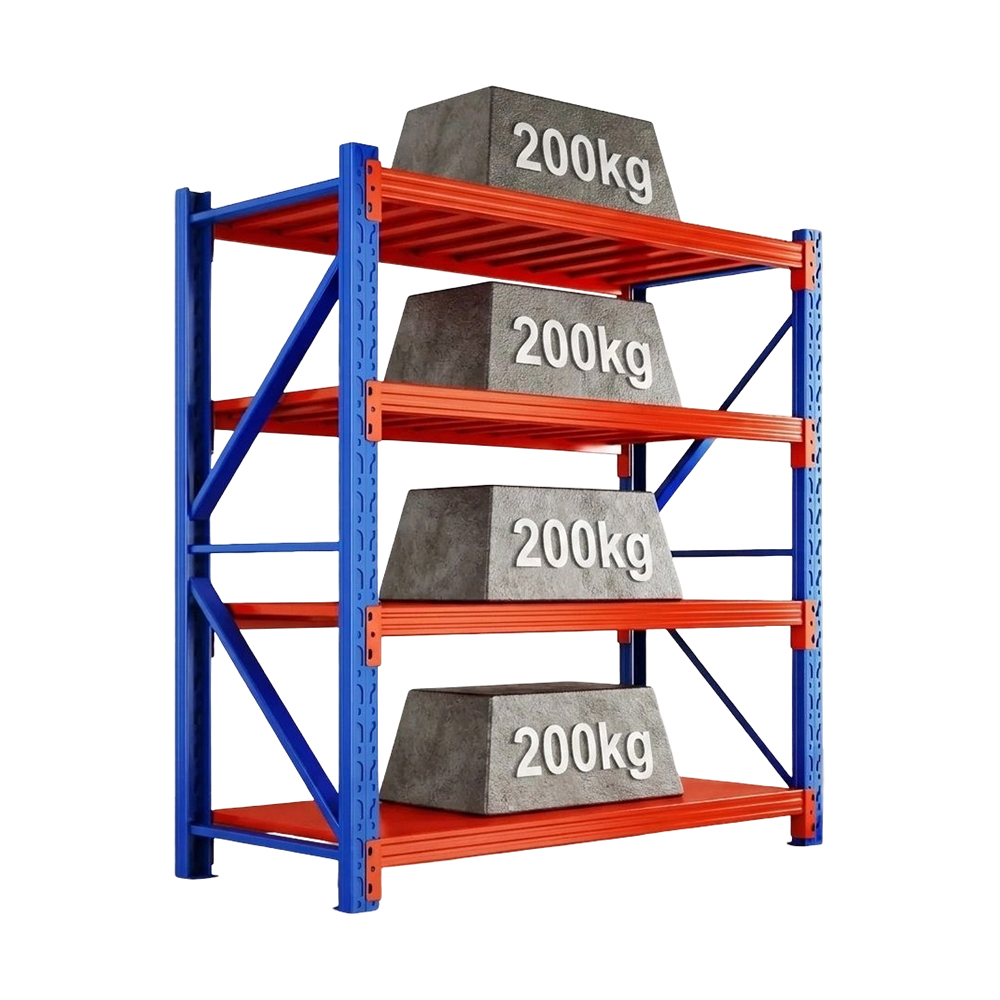
The standard configuration supports up to 200 kilograms per layer, subject to appropriate loading and installation conditions. That capacity is suitable for many items commonly found in domestic and light commercial storage areas, including:
• Toolboxes and hand tools
• Paint cans and maintenance supplies
• Cartons and packaged goods
• Canned food and pantry supplies
• Small appliances
• Cleaning products
• Plastic storage containers
• Office files and archived documents
• Small parts bins and workshop accessories
The frame family is also available in versions rated at 120 kilograms and 250 kilograms per layer. This gives buyers a practical way to match the rack to the intended application instead of paying for a heavier design when it is unnecessary or selecting a light structure that does not meet the load requirement.
2. Product Specifications at a Glance
The rack is available in several size, color, layer, and capacity combinations. Standard dimensions are designed for common rooms and storage areas, while customized dimensions can be discussed for projects requiring a precise fit.
| Item | Available or Standard Option | Practical Benefit |
|---|
| Product type | Light-duty metal storage rack | Suitable for homes, offices, pantries, shops, and workshops |
| Standard configuration | Four adjustable tiers | Provides organized vertical storage without excessive floor use |
| Load capacity | 200 kg per layer | Supports tools, cartons, household goods, and small appliances |
| Alternative capacities | 120 kg or 250 kg per layer | Allows selection according to budget and storage demand |
| Height range | Approximately 160–200 cm | Fits many bedrooms, garages, shops, and utility areas |
| Depth range | Approximately 40–60 cm | Supports both compact rooms and deeper storage applications |
| Layer options | Two to six layers on request | Offers flexibility for different storage volumes |
| Assembly | Tool-free buckle installation | Reduces installation time and avoids drills or bolts |
| Surface treatment | Seven-layer anti-rust process | Improves resistance in humid and demanding environments |
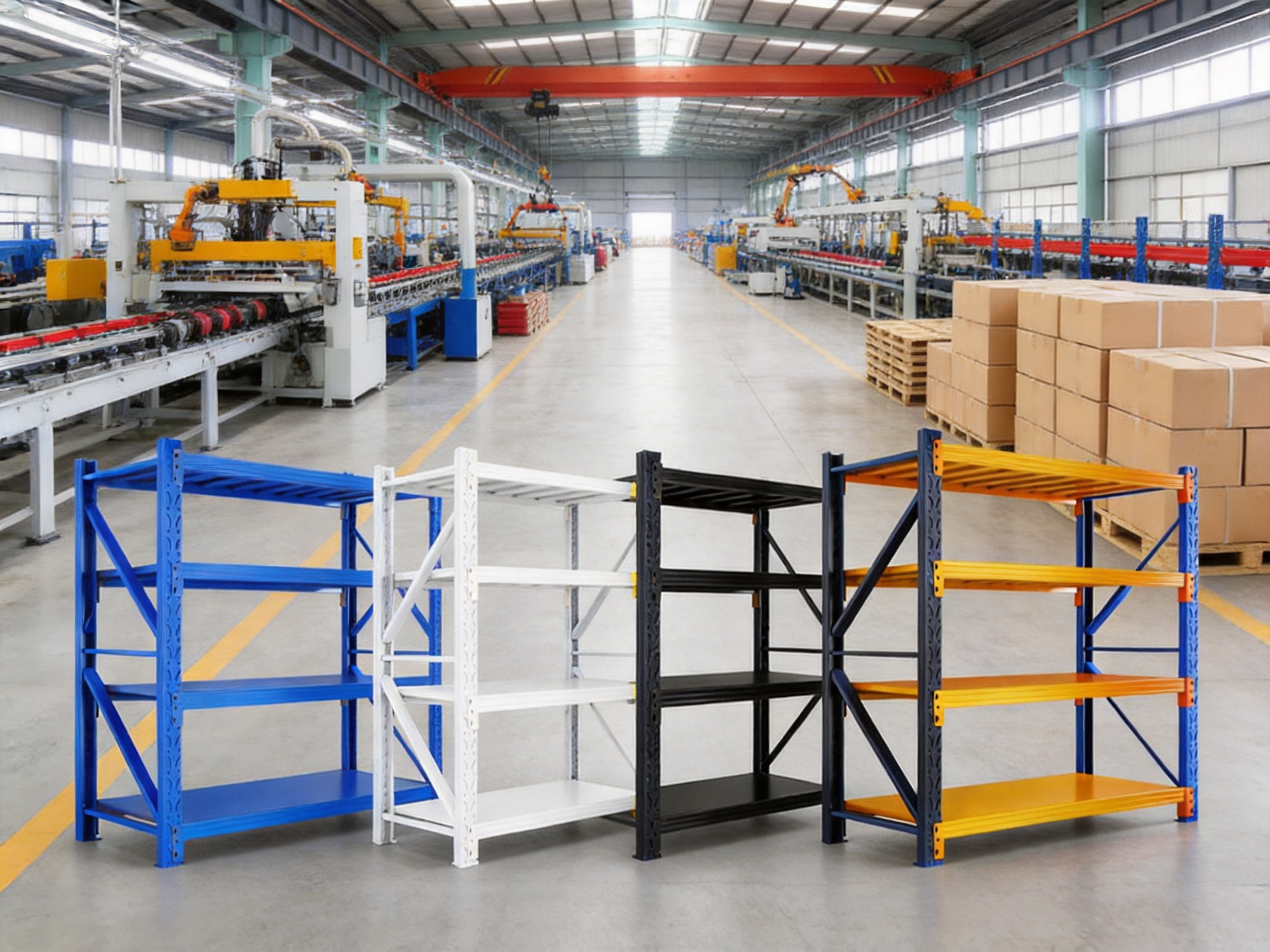
| Color choices | Blue, white, black, yellow-black, blue-orange, and more | Supports home styling, product identification, and brand programs |
| Customization | Length, width, height, color, capacity, and logo | Supports OEM, ODM, distributor, and project requirements |
Dimensions and loading performance should always be confirmed against the final configuration, shelf material, installation method, and intended use. For commercial projects, buyers can request drawings, samples, packing details, and technical confirmation before placing a production order.
3. Strong Capacity Without an Overly Complicated Structure
A storage rack must be strong enough for its intended load but should not become unnecessarily heavy, difficult to move, or expensive to ship. The product is positioned in the light-duty category, yet its 200-kilogram-per-layer rating gives it a level of practical capacity that exceeds many ordinary household shelves.
The design uses Ω-shaped columns to improve the rigidity of the upright members. A shaped column can provide better resistance to deformation than a simple flat strip of similar material. In use, this helps the frame retain its shape when the shelves are loaded and reduces the likelihood of visible bending or twisting.
Wider foot plates improve contact with the floor and help distribute the load over a larger area. This is especially useful on hard indoor surfaces where narrow feet may concentrate pressure or make a rack feel unstable. Free rubber sleeves are also provided to help protect flooring, reduce direct metal-to-floor contact, and improve grip.
These details are important because rack stability depends on the entire structure rather than on the shelf panels alone. The upright columns, shelf connections, feet, and floor contact points must work together. A shelf with a high advertised load rating may still be inconvenient if the frame wobbles, the feet slide, or the joints loosen during ordinary use.
When loading the rack, heavier goods should be placed on the lower levels whenever possible. Loads should be distributed across the shelf rather than concentrated at one corner. The rack should stand on a firm, level surface, and any supplied safety or anchoring accessories should be used when the installation environment requires additional restraint.
4. Tool-Free Assembly That Saves Time
Traditional shelving systems often require bolts, nuts, drills, screwdrivers, or several people to hold the frame in position during assembly. Those requirements increase the time needed for installation and create additional challenges for renters, homeowners, store employees, and small businesses without maintenance staff.
This rack uses butterfly-hole uprights and single-column buckle installation. The components lock together by hand, allowing a user to assemble the structure without drilling or tightening a large number of fasteners. One person can complete a standard rack within minutes after becoming familiar with the assembly sequence.
Tool-free installation provides several practical benefits:
• It reduces the need to purchase or locate installation tools.
• It allows a rack to be assembled in a room where noise and drilling are undesirable.
• It makes installation more accessible to ordinary household users.
• It reduces labor time for shops, offices, and warehouses installing multiple units.
• It makes the rack easier to dismantle during relocation or renovation.
• It supports faster reconfiguration when the storage layout changes.
The same feature is helpful for distributors and project installers. A product that can be assembled quickly is easier to demonstrate in a showroom, easier to install for an end customer, and simpler to service after delivery. Reduced installation complexity can also lower the total cost of ownership even when the purchase price is similar to that of a competing rack.
Assembly should still be completed carefully. Uprights must be fully seated, shelves must be level, and all connection points should be checked before loading. Tool-free does not mean inspection-free. A few minutes spent confirming that the buckles are engaged can help ensure safe and stable use.
5. Adjustable Shelves for Real-Life Storage
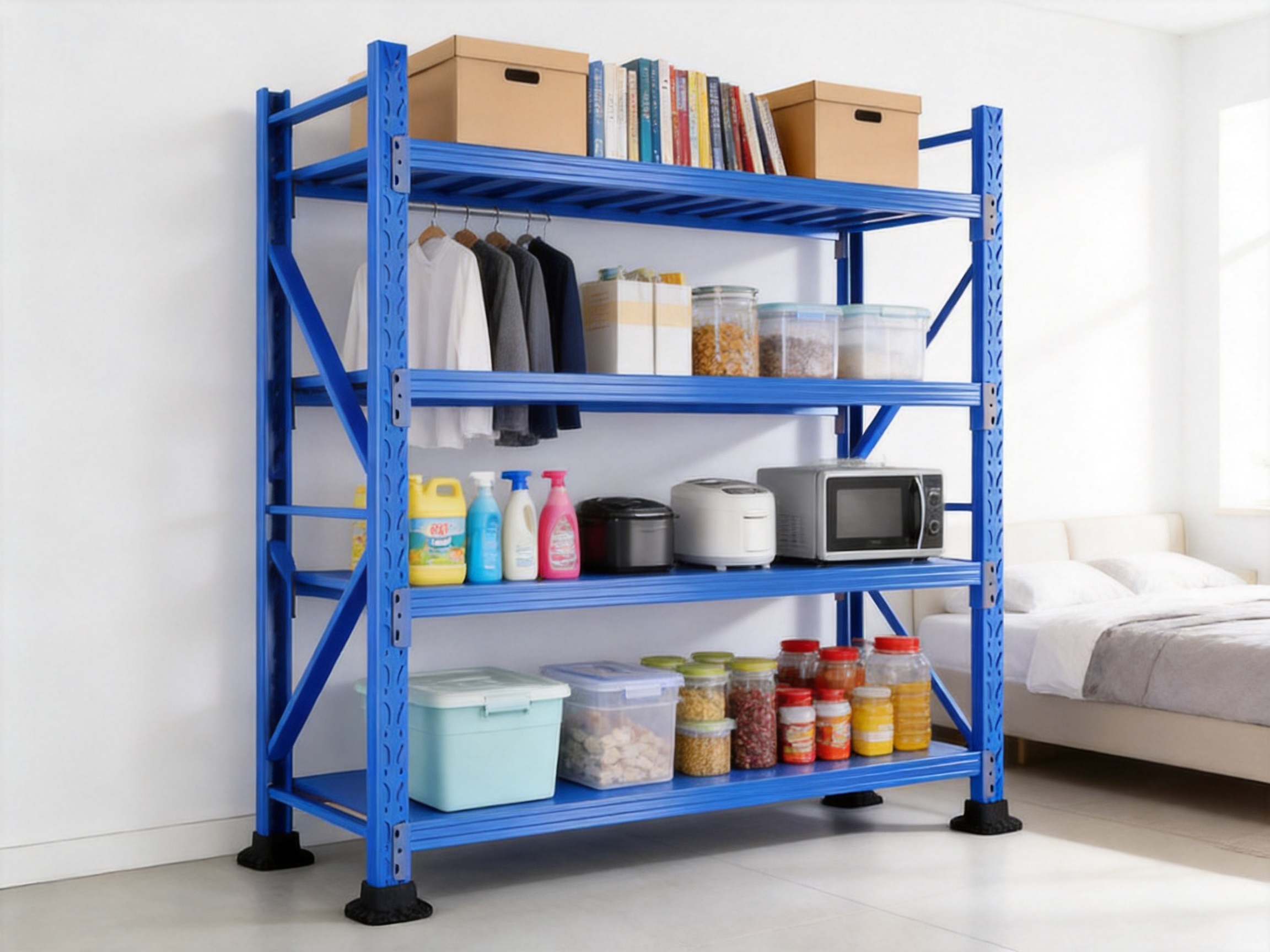
Fixed shelf spacing is one of the most common limitations of basic storage furniture. A fixed design may work for one group of products but leave unusable gaps above or below other products. Adjustable levels make the same rack more useful across different rooms and changing seasons.
In a pantry, closely spaced shelves can hold cans, jars, and food boxes in an organized arrangement. In a garage, the user can create taller openings for paint buckets, cleaning equipment, or tool cases. In a bedroom, the rack can hold folded clothing, luggage, storage boxes, and household accessories. In a shop back room, shelf heights can be changed to accommodate different cartons as inventory changes.
This adaptability is also valuable in rental properties, dormitories, temporary offices, and small businesses. Users do not need to replace the complete rack simply because the stored products have changed. Instead, they can reposition the shelves and continue using the same frame.
The rack can also be used as part of a broader storage wall. Its main-and-sub-frame design allows multiple bays to be connected side by side. This creates a continuous storage arrangement that uses wall space more efficiently than a collection of unrelated standalone units.
Connecting several bays can offer advantages in both residential and commercial applications. A home user may organize one wall for tools, another section for seasonal goods, and a third section for pantry supplies. A retailer may create a back-room wall divided by product category. A small workshop may arrange shelves according to workstations or production stages.
Expanding a storage system bay by bay can also control investment. Buyers may begin with one unit and add sections as storage needs grow. This approach avoids the immediate cost and floor-space commitment of a large fixed installation.
6. Seven-Stage Anti-Rust Protection
Moisture is a major cause of premature deterioration in metal shelving. Garages, basements, coastal areas, utility rooms, and semi-open workshops may expose racks to condensation, humidity, salt particles, or occasional splashes. A surface treatment designed only for dry indoor conditions may not provide sufficient protection in these environments.
The rack uses a seven-layer anti-rust process that includes acid pickling, phosphating, electrostatic spraying, and high-temperature curing. Each stage contributes to surface preparation, coating adhesion, appearance, or durability.
Acid pickling helps remove surface contaminants and oxidation from the metal before later treatment. A clean and properly prepared surface gives the subsequent layers a more consistent foundation. Phosphating creates a conversion layer that can improve coating adhesion and add another level of corrosion protection.
Electrostatic powder spraying helps distribute coating material across the prepared metal surface. The charged powder is attracted to the component, supporting even coverage around the frame. High-temperature curing then fuses the powder into a durable finish.
No coating can make a steel rack immune to every environmental condition. However, a controlled multi-stage treatment is generally more dependable than a basic single-coat finish. It is especially valuable when the rack is used in damp garages, basements, workshops, storage rooms, or coastal regions.
Users can further extend service life by keeping the rack reasonably dry, wiping away standing water, avoiding prolonged contact with corrosive chemicals, and repairing any deep coating damage. For applications involving aggressive chemicals, outdoor exposure, or unusual humidity, buyers should request a suitability review before ordering.
7. More Than a Home Shelf
The product is marketed as a light-duty rack for home storage, but its configuration gives it a wider range of uses. The combination of load capacity, adjustable levels, and modular design allows it to serve different user groups without requiring a completely different product platform.
Bedrooms and Living Areas
In a bedroom, the rack can store folded clothing, bags, bedding, shoes, books, and household containers. Its available height range allows it to use vertical space while remaining suitable for many residential rooms. White, black, or other selected finishes can help the rack blend with interior décor, while shelf spacing can be customized for boxes of different heights.
Pantries and Kitchens
Pantries often contain a mixture of cans, cartons, jars, small appliances, and cleaning materials. Adjustable shelves allow the user to reduce wasted space and keep frequently used goods visible. The metal structure is also useful for buyers who prefer an open shelf arrangement rather than closed cabinets.
Garages and Workshops
Garages require storage for heavier and less uniform objects. Toolboxes, paint cans, spare parts, and maintenance supplies can be organized by size or frequency of use. The anti-rust finish and reinforced frame make the rack more suitable for these environments than decorative household shelving that was designed only for light indoor objects.
Retail Back Rooms
Small shops need to use limited back-room space efficiently. A rack can organize cartons, promotional materials, replacement stock, packaging supplies, and store equipment. Its tool-free assembly and adjustable levels are useful when product categories or inventory volumes change.
Offices and Utility Rooms
Offices can use the rack for archived files, printer paper, stationery, cleaning items, and equipment accessories. Utility rooms can use it for maintenance supplies, household tools, and spare products. In both cases, vertical organization can reduce clutter and make stock easier to identify.
8. Advantages Compared With Common Alternatives
Buyers evaluating shelving products usually compare more than price. They consider capacity, installation, finish, available sizes, expansion options, appearance, and supplier reliability. This rack offers a combination of features that may give it an advantage over several common alternatives.
Compared With Plastic Shelving
Plastic shelving is lightweight and can be suitable for very light storage. However, it may flex under heavier cartons, become brittle in certain environments, or offer limited dimensional customization. A metal rack with a 200-kilogram-per-layer rating provides a stronger option for tools, packaged goods, and workshop materials.
Compared With Basic Bolt-Together Racks
Bolt-together racks can be stable, but they usually require more installation time and tools. They may also be inconvenient to relocate. The buckle-fit structure of this rack reduces assembly effort and makes disassembly easier without sacrificing the benefits of a rigid metal frame.
Compared With Fixed-Height Shelves
Fixed shelves are simple, but they often leave unused vertical space. Adjustable shelves accommodate more product types and make the rack useful in more rooms. This flexibility can delay or eliminate the need to purchase another unit when storage needs change.
Compared With Decorative Household Furniture
Cabinets and decorative shelving may offer an attractive appearance, but they can be more expensive per usable shelf area and less suitable for damp garages or heavy cartons. The light-duty rack emphasizes capacity, accessibility, ventilation, and practical organization.
Compared With Heavy Industrial Racking
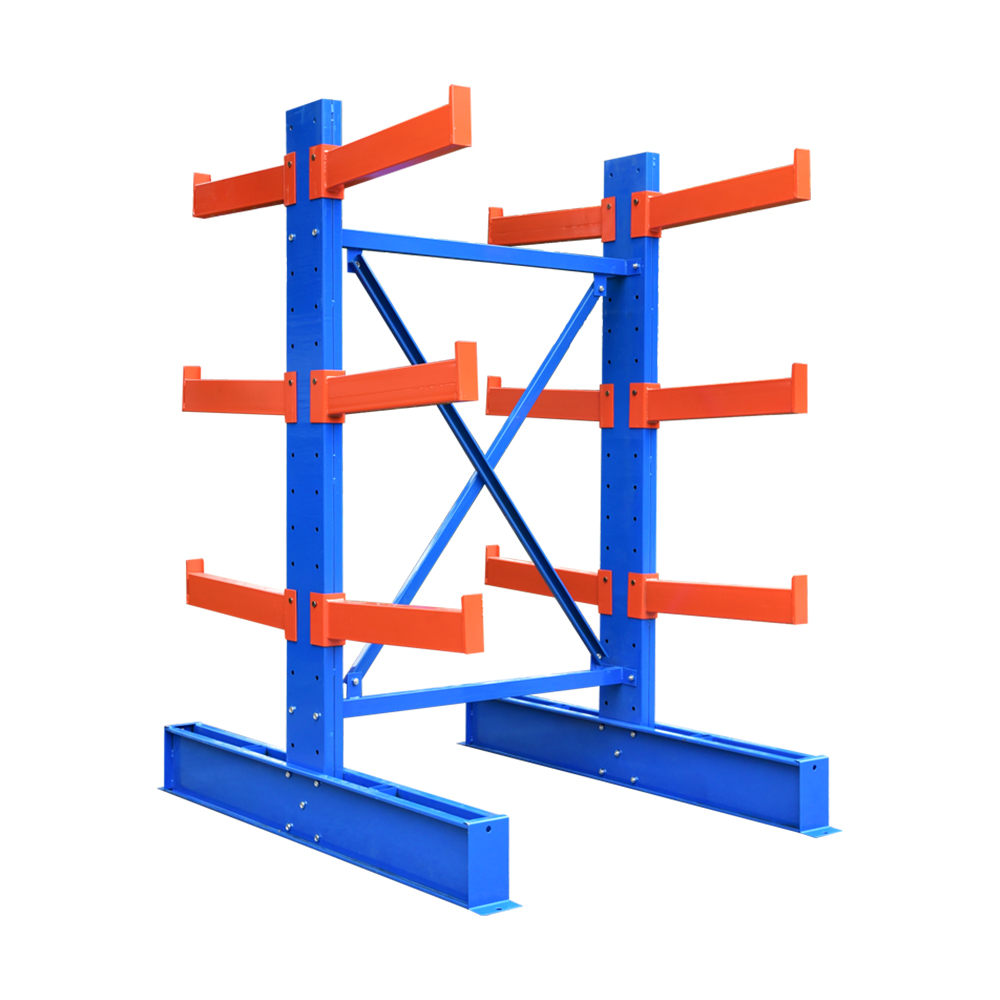
Industrial pallet racking is designed for much heavier loads and forklift operations. It is not always appropriate for a bedroom, pantry, office, or small shop. This rack occupies a useful middle position: stronger and more adaptable than ordinary household furniture, yet simpler and more compact than heavy warehouse infrastructure.
| Comparison Factor | Light-Duty Rack | Typical Basic Shelf | Heavy Industrial Rack |
|---|
| Assembly | Hand-installed buckle system | Often requires bolts or tools | Usually requires professional installation |
| Typical application | Home, garage, office, shop, light storage | Light indoor household use | Warehouse and palletized goods |
| Shelf adjustment | Flexible level positioning | May be fixed or limited | Adjustable but more complex |
| Mobility and relocation | Easy to dismantle and reassemble | Varies by design | Usually difficult after installation |
| Corrosion protection | Multi-stage anti-rust treatment | Varies widely | Depends on system and environment |
| Space suitability | Compact residential and commercial spaces | Small indoor spaces | Dedicated warehouse areas |
9. Manufacturing Strength Behind the Product
A storage rack is only as dependable as the process used to produce it. Consistent dimensions, accurate punching, reliable forming, uniform coating, and careful packaging all influence the final user experience. A supplier with integrated manufacturing capabilities can control more of these stages directly.
Shanghai King Global Shelf Co., Ltd. was founded in 2010 and specializes in the development, production, and sales of shelving and storage products. Its manufacturing base covers approximately 60,000 square meters and includes more than 17 production lines. The company employs more than 300 people and maintains stock exceeding 10,000 units according to the supplied company information.
This scale supports several practical advantages for buyers. Production capacity can help shorten lead times for standard products, while stocked units may support urgent or mixed requirements. Multiple production lines also provide flexibility when customers require different colors, dimensions, load ratings, or product categories in one program.
The company’s product range includes warehouse racks, pallet racking, mezzanine racking, cantilever racks, supermarket shelves, office shelves, home shelves, and related storage solutions. This broader product knowledge can be valuable when a customer’s project develops beyond one light-duty rack. A supplier that understands multiple storage environments can help coordinate compatible systems rather than treating each product as an isolated purchase.
Integrated Product Development
Integrated product development allows the manufacturer to adjust structure, dimensions, appearance, and packaging according to market needs. For the light-duty rack, this includes variations in shelf quantity, frame height, depth, color, capacity, and logo application.
OEM and ODM capability is particularly useful for importers, distributors, retailers, and regional brands. A buyer may require a private-label color, a specific carton design, a local market dimension, or a product variation adapted to a particular sales channel. These requirements can be discussed directly with the manufacturer.
Production and Quality Control
Quality control is relevant at every stage, from raw material preparation and component forming to coating, assembly checks, and final packing. Consistent punching and forming help ensure that the buckle connections align correctly. Controlled coating supports a more uniform appearance and helps reduce early surface corrosion. Packaging checks help protect components during international transportation.
The company states that ISO 9001, CE, and RoHS documentation is available. Buyers should identify the exact documents and product configurations required for their destination market before ordering. Documentation requirements may vary by country, application, electrical accessories, packaging, and sales channel.
International Supply Capability
The manufacturer serves customers in North America, Southeast Asia, Japan, South Korea, the Middle East, Europe, and other regions. The supplied information also indicates regular container shipments and experience with both mixed orders and full-container programs. This international experience can simplify communication about packaging, documentation, production schedules, and export procedures.
10. Factory-Direct Value for Importers and Distributors
Buying directly from a manufacturer can create advantages beyond a lower unit price. It may provide clearer communication about specifications, faster feedback on customization, and better visibility into production schedules. When the supplier controls manufacturing, buyers can discuss structural changes, colors, labels, packing methods, and capacity options with the team responsible for making the product.
Factory-direct sourcing is especially relevant for distributors that need a stable product line. A distributor may want to offer a family of racks with 120-kilogram, 200-kilogram, and 250-kilogram capacities, several colors, and different heights. Using a common frame family can simplify catalog management and make sales training easier.
Regional distributors may also benefit from a structured cooperation program. The supplied company information indicates that the manufacturer is seeking national agents and regional distributors and can discuss regional price protection, customization, and logo support. A serious distributor should provide its target market, estimated annual volume, preferred product mix, sales channels, and expected packaging requirements so the supplier can prepare a program quotation rather than a price for one unit.
For importers, the product’s modular nature can support mixed-container purchasing. A shipment may combine different sizes, colors, shelf quantities, or capacity ratings, subject to production planning and minimum order requirements. This flexibility can help new buyers test a market before committing to one large standardized order.
When evaluating a factory-direct proposal, buyers should confirm the following points:
• Final dimensions and dimensional tolerances
• Rated load per layer and loading conditions
• Shelf material and thickness
• Upright and frame construction
• Surface-treatment process
• Color standard and finish appearance
• Carton dimensions and gross weight
• Quantity per container
• Minimum order quantity
• Sample and approval procedure
• Production lead time
• Warranty and spare-part policy
• Required certificates and destination-market documents
11. Customization Options
Standard products are useful for fast purchasing, but customization can improve the fit between the rack and a particular market. The product family supports customization of length, width, height, color, capacity, layer count, and logo, subject to technical review and order quantity.
Dimensions
The standard height range of approximately 160 to 200 centimeters and depth range of approximately 40 to 60 centimeters cover many common applications. Custom dimensions can be considered when a rack must fit a narrow corridor, a low ceiling, a specific wall length, or a regional packaging standard.
Capacity
The 120-kilogram, 200-kilogram, and 250-kilogram versions allow buyers to create a product range for different customer budgets and applications. A retailer may position the lower-capacity model for bedrooms and light pantry use, the standard model for garages and shops, and the higher-capacity version for workshops or commercial storage.
Colors and Branding
Available colors include blue, white, black, yellow-black, blue-orange, and other options. Color selection can support visual organization, interior styling, or brand identity. For private-label programs, customers may also discuss logos, labels, instruction manuals, carton printing, and other branding elements.
Layer Count
Two to six layers can be requested depending on the desired height and storage arrangement. Fewer layers may provide taller openings for large objects, while additional levels can increase organization for smaller goods.
12. Installation and Loading Recommendations
Although the rack is designed for easy assembly, correct installation remains essential. Before assembly, users should check that all columns, shelves, feet, sleeves, and connection components are present and undamaged.
The rack should be assembled on a level surface. Uprights should be positioned according to the instructions, and each buckle connection should be pressed or seated completely. Shelves should be installed at matching heights so the frame remains square. After assembly, users should gently check the structure for movement and confirm that no connection is partially engaged.
When loading the rack, distribute goods evenly across each shelf. Avoid placing a single extremely heavy object at the outer edge. Heavy goods should generally be stored on lower levels, while lighter items can be placed higher. Do not exceed the specified capacity, and do not assume that the total rack capacity is simply the same as the shelf rating multiplied by the number of layers without considering the final configuration and installation conditions.
For taller racks, narrow rooms, public spaces, or areas where children may be present, additional anchoring or anti-tip measures may be appropriate. The final safety arrangement should reflect the floor type, rack height, loading pattern, and local requirements.
Regular inspection is simple. Users can check whether shelves remain level, whether the frame has shifted, whether feet remain in contact with the floor, and whether any coating damage or corrosion is visible. Early correction is preferable to waiting until the rack becomes unstable or overloaded.
13. Sustainability and Long-Term Use
A durable storage rack can reduce waste by remaining useful through several changes of location and purpose. Instead of replacing a shelf whenever the household moves, the user can dismantle the rack, transport it, and assemble it again. Adjustable levels and modular expansion further extend its useful life.
Metal shelving is also suitable for organized material recovery at the end of its service life, subject to local recycling systems and the condition of the components. A product that can be repaired, reconfigured, or expanded is generally more resource-efficient than a disposable storage solution.
Manufacturing efficiency also matters. A production base with multiple lines and established quality procedures can help reduce inconsistent batches, unnecessary rework, and shipping damage. Buyers seeking larger programs can discuss packaging optimization, mixed-container planning, and component standardization with the manufacturer.
14. How to Choose the Correct Configuration
The correct rack configuration depends on the room, the goods, the available floor area, and the expected growth of storage demand. Buyers should begin by measuring the installation area, including wall clearance, door swing, ceiling height, and walking space.
Depth is particularly important. A 40-centimeter rack may be preferable in a bedroom, hallway, or narrow pantry, while a 60-centimeter version may be more suitable for toolboxes and large cartons. Height should be selected according to the available ceiling clearance and the user’s ability to reach the upper shelf safely.
The load rating should be based on the heaviest expected shelf load rather than the average load. If a shelf will hold small boxes and a few household items, the 120-kilogram option may be sufficient. If it will hold tools, cartons, or workshop supplies, the 200-kilogram version may provide a more appropriate margin. Where heavier storage is expected, the 250-kilogram version can be evaluated.
Buyers should also decide whether they need a standalone unit or a connected storage wall. A standalone rack offers mobility and simplicity. Multiple connected bays can provide better organization along a long wall and may reduce wasted gaps between separate units.
15. Frequently Asked Questions
Q1: Is this rack suitable for home use?
Yes. It is designed for bedrooms, pantries, garages, utility rooms, offices, and other residential areas. Its adjustable shelves and available depth range help it fit different home environments.
Q2: How much weight can each shelf hold?
The standard version is rated for up to 200 kilograms per layer. Versions rated at 120 kilograms and 250 kilograms per layer are also available. The final capacity should be confirmed for the selected configuration and used with evenly distributed loads.
Q3: Does assembly require tools?
No standard tools are required for the buckle-fit assembly system. Butterfly-hole uprights and single-column connections are designed to lock by hand. Users should still follow the assembly instructions and inspect every connection before loading.
Q4: Can the shelf heights be changed after assembly?
Yes. The shelf levels are adjustable, allowing users to create more space for tall items or closer spacing for smaller goods. The rack can be reconfigured as storage needs change.
Q5: Is the rack suitable for humid garages or basements?
The seven-stage anti-rust treatment is designed to improve protection in humid environments, including garages and basements. The rack should nevertheless be kept away from standing water and aggressive chemicals, and coating damage should be repaired when necessary.
Q6: What sizes are available?
Standard heights are approximately 160 to 200 centimeters, and standard depths are approximately 40 to 60 centimeters. Custom length, width, and height can be discussed for suitable orders.
Q7: Can several racks be connected?
Yes. The main-and-sub-frame design allows bays to be connected side by side to create a larger storage wall. This can improve floor-space use and provide a more organized layout.
Q8: Are different colors available?
Available colors include blue, white, black, yellow-black, blue-orange, and other options. Custom colors and branding can be discussed for OEM or distributor programs.
Q9: Is this a warehouse pallet rack?
No. This product is a light-duty storage rack rather than a heavy-duty pallet racking system. It is intended for household goods, tools, cartons, small appliances, shop supplies, and similar loads. Businesses requiring forklift handling or palletized warehouse storage should evaluate a dedicated pallet racking solution.
Q10: Can the manufacturer provide OEM or ODM service?
Yes. The manufacturer supports standard products and customized OEM and ODM solutions. Buyers can discuss dimensions, capacities, colors, layer counts, logos, packaging, and other program requirements.
Q11: What documents may be available?
The supplied information indicates that ISO 9001, CE, and RoHS reports are available. Buyers should confirm which documents apply to the selected product and destination market before ordering.
Q12: Is this product suitable for distributors?
Yes. The product family can be offered in multiple capacities, dimensions, colors, and layer configurations. Regional distributors can discuss pricing programs, customization, logo support, and market-specific requirements with the manufacturer.
16. Conclusion
The light-duty rack for home storage combines features that are often separated among competing products. It provides substantial capacity for its category, yet remains practical for bedrooms, pantries, garages, offices, shops, and workshops. Its tool-free buckle assembly reduces installation effort, while adjustable shelves allow the rack to adapt to changing storage needs.
The Ω-shaped columns, wider foot plates, and rubber sleeves contribute to a more stable and floor-friendly structure. The seven-stage anti-rust process supports use in humid garages, basements, and coastal environments. The main-and-sub-frame design allows multiple bays to form a storage wall, helping users expand capacity without replacing the original unit.
From a sourcing perspective, the product is supported by an established manufacturer with a 60,000-square-meter production base, more than 17 production lines, over 300 employees, international export experience, and OEM and ODM capabilities. These strengths matter to both end users and commercial buyers because they support consistent production, customization, documentation, and long-term supply.
For homeowners, the rack offers a straightforward way to organize valuable vertical space. For retailers and distributors, it provides a flexible product family that can be adapted to different markets. For businesses, it offers a practical bridge between ordinary household shelving and more complex industrial systems. Its combination of capacity, adjustability, corrosion protection, easy assembly, and factory-direct customization makes it a dependable choice for modern everyday storage.
References
1. Product specification and feature information supplied for the light-duty rack for home storage.
2. Manufacturer-provided company profile and production capability information.
3. ISO 9001 quality management system principles for manufacturing organizations.
4. General guidance on corrosion protection and powder-coating processes for metal products.
5. General principles of safe shelving installation, distributed loading, and storage-area organization.


 English
 Español
 русский
 Français
 한국어
 عربى
 ไทย
 Deutsch
 Bahasa Melayu
 Português
 Polskie