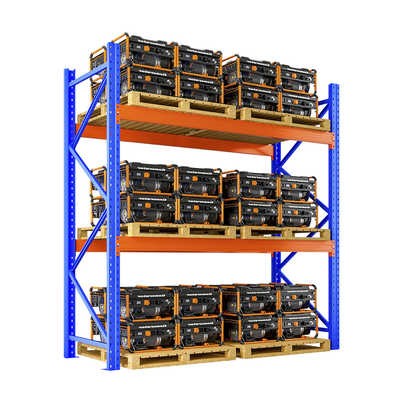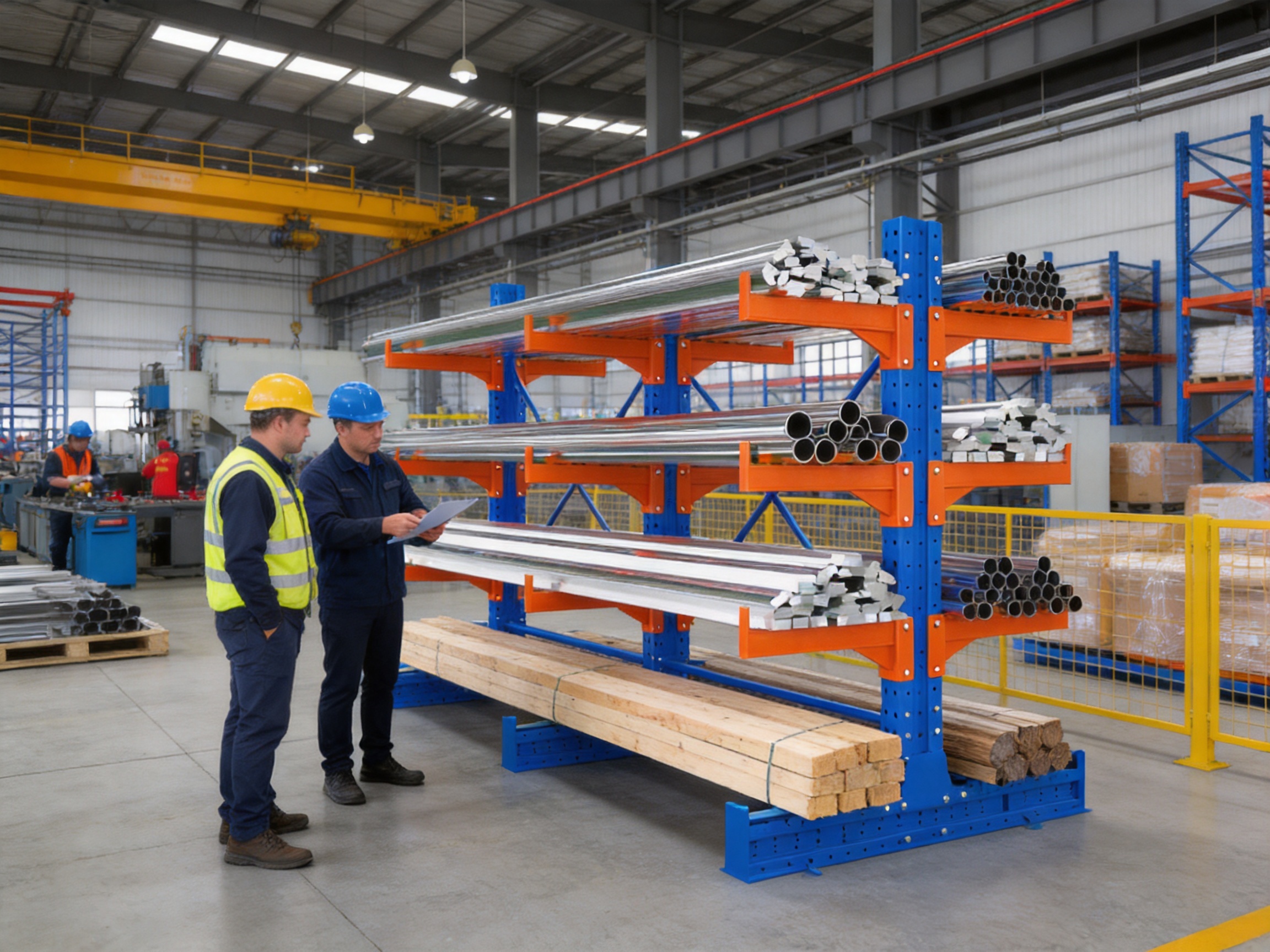
Long, heavy, and irregularly shaped materials create storage challenges that conventional pallet racks and standard shelving systems cannot solve efficiently. Pipes, timber, steel bars, carpet rolls, metal profiles, construction materials, and other oversized products often extend beyond the dimensions of ordinary shelves. When these goods are stored on unsuitable equipment, warehouses may lose valuable floor space, handling operations can become slower, and the risk of product damage or unsafe loading may increase.
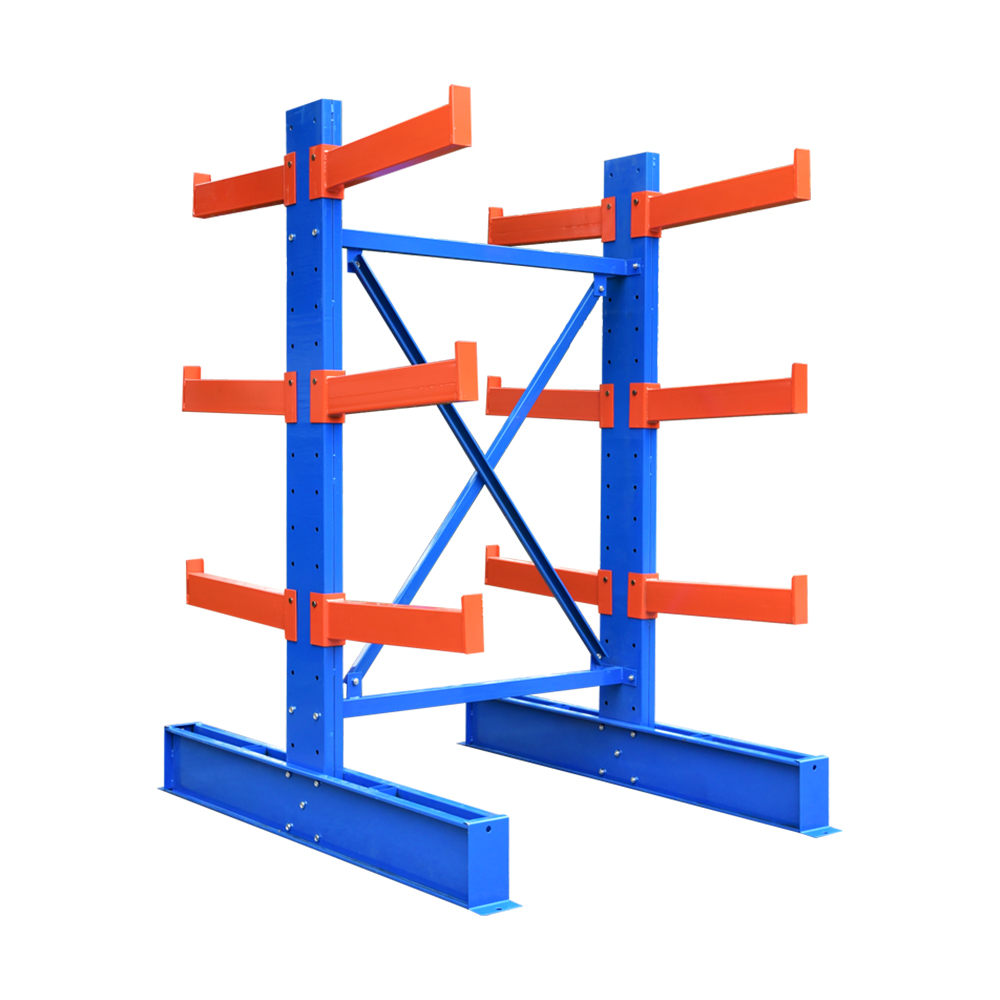
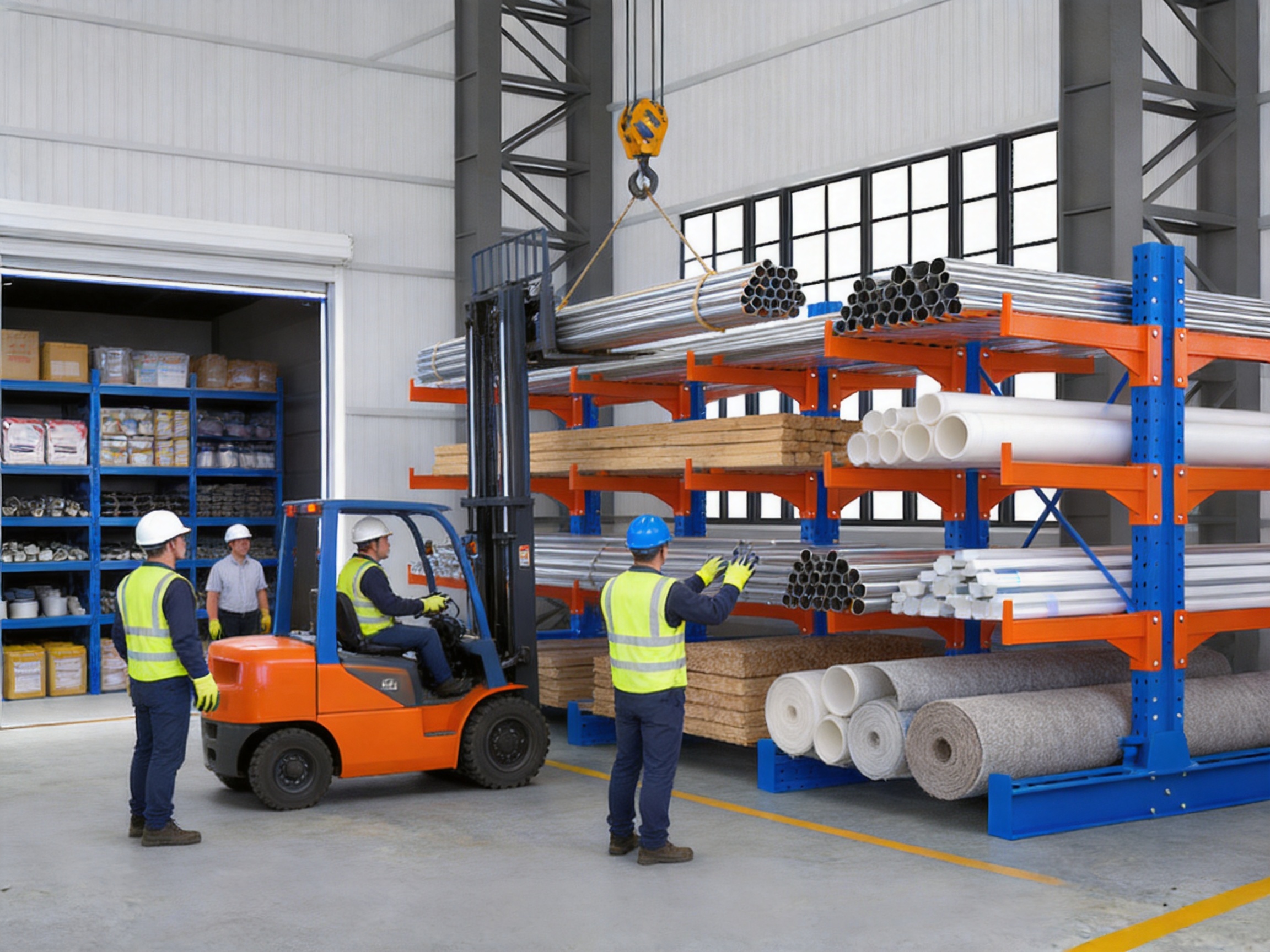
The heavy-duty industrial warehouse storage cantilever shelf rack is designed specifically for these demanding applications. Its open-sided structure, reinforced steel columns, strong supporting arms, and modular configuration create a practical storage system for materials that are long, bulky, or difficult to place on conventional horizontal shelves. Unlike enclosed rack systems, the cantilever design provides unobstructed access from the front, allowing operators to load and retrieve goods more easily with forklifts, pallet jacks, cranes, or other wide-load handling equipment.
This storage solution is suitable for warehouses, factories, construction material suppliers, metal processing facilities, timber yards, furniture production sites, carpet distributors, and many other industrial environments. It can be configured for light-, medium-, or heavy-duty requirements, while optional shelves can improve the organization of smaller or lower-height products.
Why Long Materials Require a Specialized Storage System
Traditional pallet racking is highly effective for standardized pallets and boxed goods, but it is not always suitable for products that are exceptionally long or irregularly shaped. Long products may overhang the pallet, interfere with neighboring rack positions, or require additional handling space. If materials are placed directly on the floor, the available storage area may be used inefficiently and workers may need to move several items before reaching the product they need.
Conventional shelving can also create access limitations. Uprights and shelf panels positioned close together may prevent forklifts or lifting equipment from approaching the load at a practical angle. This is especially inconvenient when storing steel bars, pipes, wood boards, rolls, and profiles that require lateral access rather than front loading into a closed bay.
A cantilever rack addresses these limitations by using vertical columns with horizontal arms extending outward. Because the front of the rack is free from front posts, products can be placed onto the arms from the front or removed in the same direction. The open structure improves visibility, supports faster identification of stored materials, and allows long goods to be handled without forcing them into confined shelf openings.
The design also helps separate products from the floor. This reduces unnecessary contact with dust, moisture, dirt, and traffic in busy warehouse areas. By assigning products to organized rack levels, warehouse teams can improve inventory control and reduce the time required to locate, count, and retrieve stock.
Core Design of the Cantilever Shelf Rack
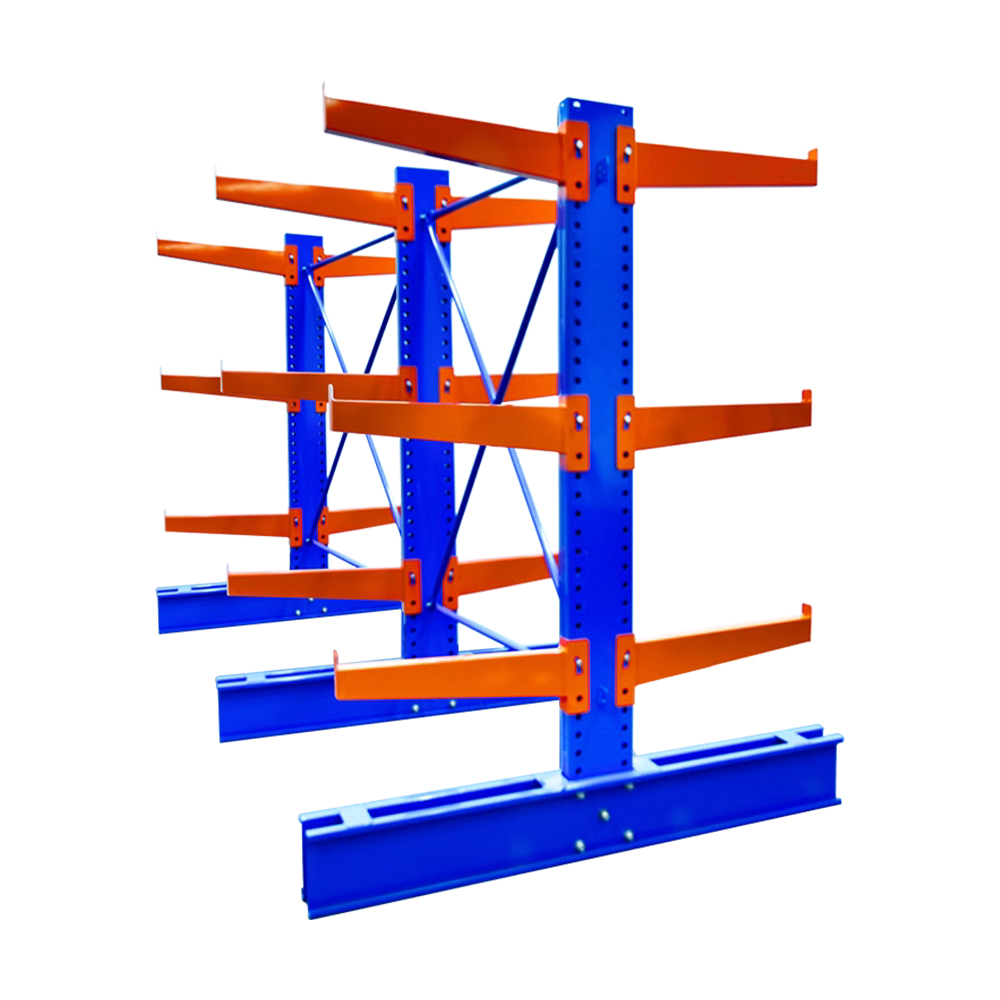
The rack is built around a reinforced steel column and arm construction. Vertical columns provide the main structural support, while horizontal arms extend from the columns to hold stored products. The arrangement creates open storage levels that can accommodate different product lengths and load dimensions.
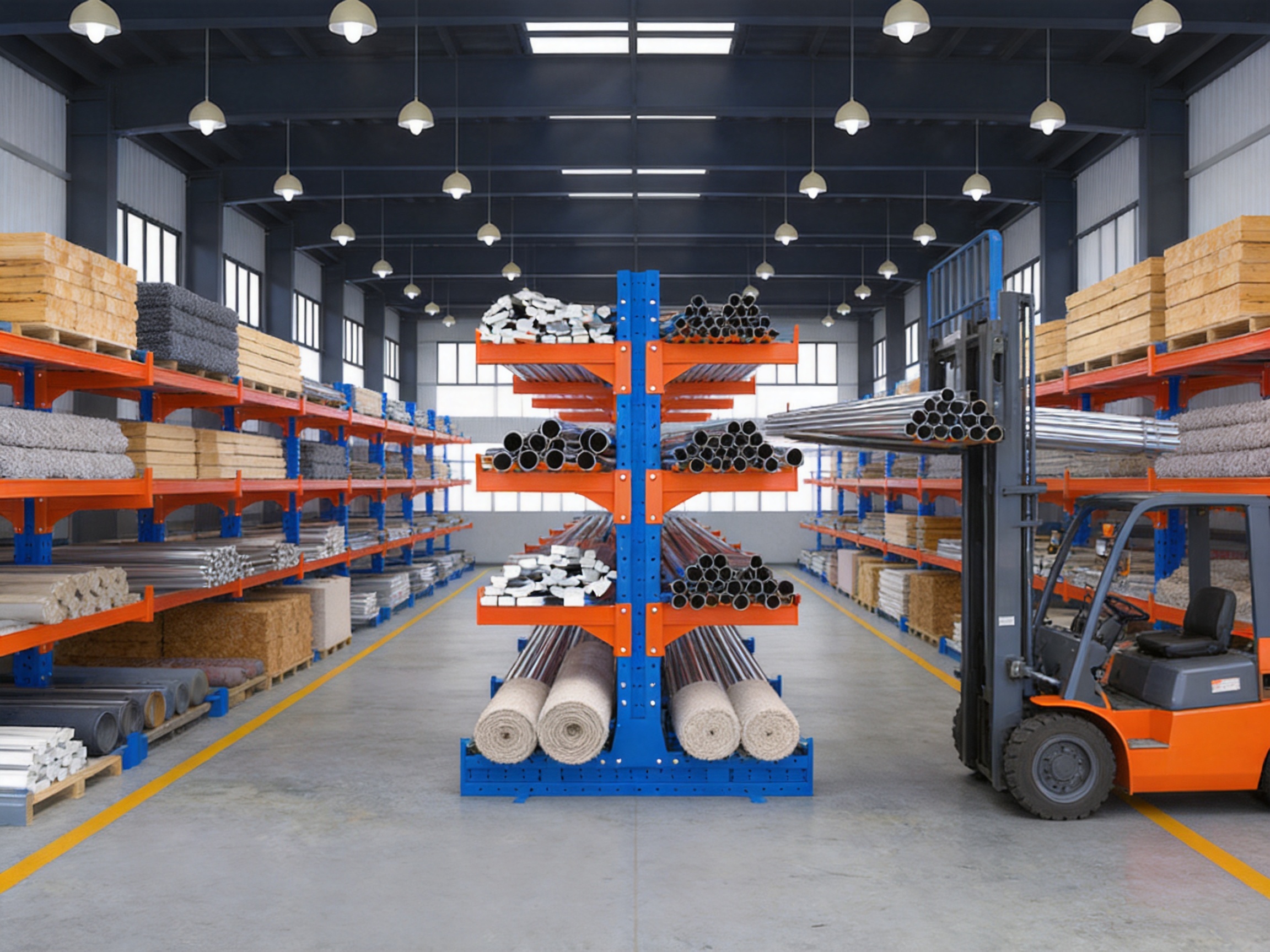
Depending on the application, the rack can be arranged as a single-sided or double-sided configuration. A single-sided layout is suitable for installation against a wall or at the edge of a storage area. A double-sided arrangement can be positioned in the center of a warehouse aisle, allowing products to be stored and retrieved from both sides. The appropriate arrangement depends on the warehouse layout, handling equipment, required capacity, and available aisle space.
The modular structure allows the rack to be customized according to the length, height, and width of the stored goods. Upright spacing can be adjusted to suit the load, and arm levels can be planned to create a balance between storage density and accessibility. This flexibility is valuable for businesses whose product ranges change over time or whose inventory includes multiple dimensions.
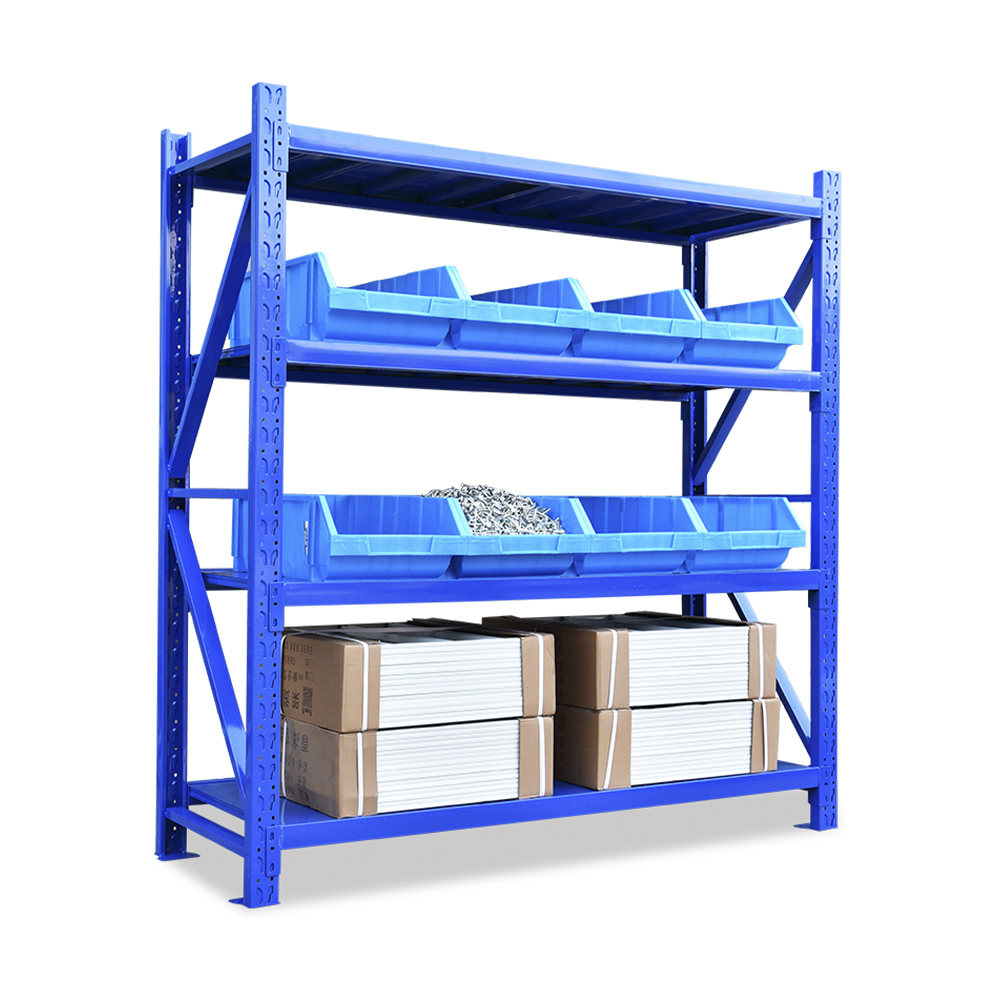
Optional shelf panels can be added when the rack must store smaller products, accessories, or low-height goods in addition to long items. This creates a hybrid storage solution that combines the open accessibility of cantilever racking with the organizational benefits of shelf storage.
Reinforced Steel Columns
The vertical columns form the central support structure of the rack. They are designed to carry the load transferred from the cantilever arms and to maintain stability during normal storage and handling activities. Reinforced steel construction provides the strength required for heavy industrial materials and helps the system remain reliable under demanding warehouse conditions.
Strong columns are especially important when the rack is fully loaded. A properly engineered column system helps distribute forces through the frame and into the base structure. The result is a storage system that is better suited to repeated daily use than light-duty shelving designed only for small cartons or household items.
Strong Horizontal Arms
The horizontal arms support the stored products and create the open levels required for long-item storage. Their position and spacing can be planned to support different load sizes. This allows warehouse operators to avoid placing long materials directly on the floor or stacking them in unstable piles.
The arms may be configured for light, medium, or heavy-duty use according to the product range and expected loading conditions. For particularly long goods, the number and spacing of uprights can be selected to provide consistent support along the length of the material. Proper support helps reduce unnecessary sagging, product deformation, and difficult retrieval conditions.
Open Front Access
The open-front layout is one of the most important advantages of the cantilever rack. A forklift can approach a load without navigating around a front frame, while a crane or pallet jack can be used where appropriate. Workers can also visually inspect products from the aisle without opening doors or moving unrelated stock.
Open access is particularly valuable in industries where loads are too long to be placed conveniently into enclosed rack bays. It can reduce handling steps and support more direct loading and unloading operations. When the warehouse layout and handling equipment are properly planned, this can improve material flow and help operators use their working time more efficiently.
Materials Suitable for Storage
The rack is intended for long or irregularly shaped products. Typical applications include pipes, lumber, steel bars, metal profiles, carpet rolls, tubes, construction materials, furniture components, plastic sections, aluminum extrusions, and other oversized goods.
Pipe and metal stock often has a long cylindrical or rectangular shape that is difficult to store on ordinary pallet racks. The cantilever arms provide an organized horizontal support surface while keeping different sizes separated. Timber and boards can be arranged by length, grade, or material type, improving stock visibility and simplifying order preparation.
Carpet rolls and other rolled materials may require open access because their diameter, length, and weight vary. A suitable cantilever configuration can provide dedicated storage levels while leaving sufficient room for handling equipment. Construction material suppliers can also use the rack for profiles, pipes, panels, and other goods that need to be stored close to dispatch or cutting areas.
The rack is not limited to one industry. Its flexibility makes it appropriate for distribution centers, fabrication workshops, maintenance stores, building material warehouses, and manufacturing plants. The correct configuration should always be selected according to product weight, dimensions, center of gravity, handling methods, and the facility’s operating conditions.
Heavy-duty Industrial Warehouse Storage Cantilever Shelf Rack
Advantages Over Conventional Storage Equipment
Better Use of Vertical Space
Floor stacking is a common solution for long materials, but it can quickly consume valuable warehouse space. Products placed on the floor usually require wide clearance for access, and unused vertical space above the stack may remain unavailable. A cantilever rack creates multiple storage levels, allowing the facility to make better use of its vertical volume.
Increasing vertical storage does not simply mean adding more levels. It also means organizing materials so that each storage position can be reached without moving a large number of unrelated products. The rack’s open layout helps combine vertical space utilization with practical access.
More Efficient Handling of Long Goods
Standard pallet racks are optimized for palletized loads, whereas the cantilever shelf rack is designed around long-product handling. The absence of front obstructions gives forklifts and other wide-load equipment a clearer approach. This can reduce awkward positioning and make the loading process more direct.
When goods are stored according to length and category, operators can identify the required material faster. Improved accessibility can contribute to shorter retrieval cycles, fewer unnecessary movements, and better coordination between storage and dispatch operations.
Flexible Configuration
A fixed shelf system may become unsuitable when product sizes change. By contrast, the modular nature of the cantilever rack makes it easier to plan different lengths, heights, and widths. Upright spacing and arm levels can be customized for the facility’s current inventory while leaving room for future adjustments.
This flexibility can be useful for businesses that carry several product categories. A supplier may need to store short metal profiles, medium-length pipes, and long timber products in the same warehouse. With an appropriate layout, one cantilever system can accommodate these different needs without requiring an entirely separate storage method for every product group.
Improved Product Organization
Unorganized floor storage can make inventory counting and product identification difficult. Materials may become mixed together, partially hidden, or placed in locations that are hard to record accurately. Dedicated cantilever levels help create a clearer storage map.
Products can be grouped by type, length, diameter, material, customer order, or turnover rate. Optional shelves can be used for fasteners, small components, packaging materials, and other accessories. This combination supports a more organized warehouse while maintaining the open access required for long items.
Durability in Industrial Environments
Industrial storage equipment must withstand repeated loading, unloading, movement of handling equipment, and exposure to dust or demanding working conditions. The rack uses heavy-duty steel construction to provide structural strength and long-term service capability.
Its powder coating finish adds another layer of protection. The finish is designed to resist rust, corrosion, and scratches, helping the rack remain in good condition during long-term use. This is particularly useful in warehouses, factories, and construction-related facilities where equipment may experience frequent contact, changing environmental conditions, and heavy daily activity.
Powder Coating and Surface Protection
Surface treatment plays an important role in the useful life of a metal storage system. Unprotected steel may be more vulnerable to moisture, corrosion, and surface damage. The powder coating used on this rack provides a durable industrial finish across the main components.
Powder coating creates a consistent protective surface that can help reduce the effects of ordinary warehouse wear. The coating also contributes to a clean and professional appearance, which is valuable in customer-facing distribution facilities as well as production environments.
Although the finish improves resistance, the rack should still be installed and maintained in a way that prevents prolonged exposure to standing water, corrosive chemicals, or conditions outside its intended application. Regular inspection can identify scratches, impact marks, loose connections, or other issues before they affect the storage system’s performance.
Customization for Different Warehouse Requirements
No two warehouses have exactly the same products, building dimensions, aisle arrangements, or operating procedures. For this reason, a successful cantilever rack project should begin with a clear assessment of the intended application.
Important planning factors include the length and weight of the goods, the number of storage levels, the height of the building, the reach of the handling equipment, the available aisle width, the location of doors and columns, and the desired storage density. The rack can then be configured to balance capacity, access, and safety.
| Planning Element | Purpose | Typical Consideration |
|---|
| Product length | Determines the required arm and rack span | Long items may require additional support points |
| Product weight | Determines the required duty level | Light-, medium-, or heavy-duty construction may be selected |
| Product shape | Influences support and retention requirements | Round, flat, rolled, or irregular goods may need different arrangements |
| Rack height | Controls vertical storage capacity | Must correspond with building height and handling equipment |
| Arm spacing | Separates products and supports organization | Spacing can be adapted to different load dimensions |
| Aisle width | Provides room for loading and unloading | Must suit forklifts, cranes, pallet jacks, or manual handling |
| Optional shelves | Supports smaller products | Useful for accessories, low-height goods, and packaged items |
Customization may involve the total rack length, column height, arm depth, number of levels, spacing between uprights, and the addition of shelf panels. These details should be evaluated as a complete system rather than selected independently. A change in product weight or handling method may affect the required structure, aisle arrangement, or support spacing.
For projects involving heavy or unusually shaped products, the final configuration should be reviewed by qualified storage-system professionals. Product dimensions, loading procedures, floor conditions, and applicable local requirements should be considered before installation.
Application in Warehouses and Distribution Centers
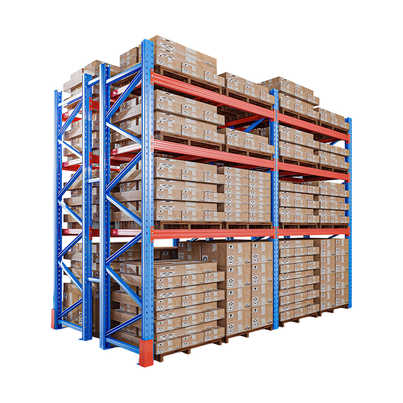
In a warehouse, the cantilever rack can serve as a dedicated zone for long materials. This keeps oversized products separate from palletized cartons and reduces interference between different handling processes. For example, a facility may use pallet racks for boxed inventory and cantilever racks for pipes, timber, or steel profiles.
Positioning the rack near receiving or dispatch areas can shorten the movement distance for frequently handled goods. Alternatively, it can be placed near processing equipment if materials must be cut, assembled, or prepared before shipment. The open structure makes it easier to monitor stock and coordinate movement between storage and workstations.
Distribution centers may benefit from arranging products by turnover rate. Frequently ordered items can be placed at convenient access levels, while slower-moving stock can be assigned to higher or less central positions, provided the selected handling equipment is suitable. Clear product grouping can support order accuracy and simplify replenishment.
Application in Manufacturing and Fabrication
Manufacturing facilities often store raw materials with different dimensions and weights. Metalworking operations may require steel bars, pipes, tubes, or profiles. Woodworking facilities may handle boards and panels. Furniture factories may store long components before assembly. The cantilever rack provides a structured location for these materials while keeping them accessible to production teams.
In fabrication environments, material flow is important. Operators may need to select one length or grade from a group of similar products without disturbing the rest of the stock. Separate rack levels and clearly planned storage positions can make this process more efficient.
The rack can also support a staging function. Materials scheduled for a particular production order may be placed in a designated area before processing. This can help connect warehouse management with manufacturing planning, provided the storage positions are labeled and the inventory records are maintained accurately.
Application in Construction Material Storage
Construction material suppliers commonly handle products that are long, heavy, and difficult to stack safely. Pipes, reinforcing products, profiles, timber, tracks, rails, and similar goods may need to be stored outdoors, indoors, or in semi-protected areas depending on the business and the material.
The cantilever structure is well suited to organized storage of these product categories because it provides direct access and multiple levels. Materials can be arranged by product family, length, or project order. This can reduce the need to search through unstable floor stacks and may make loading customer vehicles more orderly.
When the rack is used in an environment exposed to weather or high humidity, the facility should select a suitable installation location and establish an appropriate inspection and maintenance program. The powder coating helps resist corrosion and scratches, but all industrial equipment benefits from proper environmental management.
Manufacturing Strengths of Shanghai King Global Shelf Co., Ltd.
Shanghai King Global Shelf Co., Ltd. is a professional manufacturer specializing in the development, production, and sales of shelving and storage products. Founded in 2010, the company serves supermarkets, warehouses, offices, homes, and other commercial or industrial environments.
The company’s integrated operating system covers product development, manufacturing, quality control, and market service. This structure is important for customized racking projects because a storage system must be coordinated from initial design through production and delivery. A supplier that understands the complete product cycle can better connect customer requirements with practical manufacturing and service procedures.
The company operates a 60,000-square-meter production base and has more than 300 employees. These resources support the production of standard products as well as customized OEM and ODM solutions. The combination of production space, technical personnel, and an established manufacturing process allows the company to serve different markets and product specifications.
Its product range includes warehouse racks, pallet racking, mezzanine racking, cantilever racks, supermarket shelving, office shelves, and home storage products. This broad product background gives the company experience across multiple storage applications. Knowledge gained from different sectors can be useful when developing a cantilever system that must work alongside pallet racks, shelving, or other warehouse equipment.
Product Development
Product development begins with understanding how goods are stored, handled, and retrieved. For a cantilever system, this may include reviewing product length, weight, shape, handling equipment, and available space. The company’s development capability supports both standard configurations and customized requirements.
A practical development process should consider not only the rack itself but also how it fits into the customer’s operating environment. The objective is to create a storage solution that supports access, capacity, organization, and long-term use rather than simply supplying a metal frame.
Manufacturing Integration
Manufacturing integration helps connect design requirements with production execution. Consistent coordination between technical teams, production personnel, and quality-control staff can reduce misunderstandings during customized projects. It also supports repeat orders when customers need to expand a storage system or equip additional facilities.
For buyers, this integrated approach can simplify communication. Instead of managing separate suppliers for design, fabrication, and service, the customer can work with one manufacturer that provides a coordinated storage solution.
Quality Control
Quality control is essential for industrial storage equipment because structural components must work together under repeated loading. The company identifies quality control as part of its integrated business system. For a cantilever rack, quality attention may include the consistency of steel components, the accuracy of manufactured connections, the surface finish, and the conformity of the final product to the agreed design.
Customers should provide accurate load and application information so that quality control can be aligned with the actual project requirements. Clear technical communication is particularly important when products are heavy, unusually long, or handled with specialized equipment.
OEM and ODM Capability
The company supplies OEM and ODM solutions for different markets. OEM support can be useful when a distributor or project supplier requires products under a specific commercial arrangement. ODM capability is valuable when a customer needs a storage product adapted to regional preferences, operational requirements, or a particular warehouse layout.
Customization may include dimensions, storage levels, configuration, finish, packaging, or other project details. The final options depend on the technical requirements and the agreed production plan.
Why Choose a Specialized Manufacturer
Purchasing industrial racking from a specialized manufacturer offers advantages over selecting generic shelving without application support. A specialist understands that storage equipment must be matched to the product, handling method, and warehouse environment.
Specialized manufacturing experience can also help customers avoid common planning problems, such as insufficient aisle clearance, unsuitable arm spacing, poor product grouping, or a mismatch between load requirements and rack duty level. The manufacturer can discuss these factors during the specification stage and help develop a more appropriate configuration.
Another advantage is product consistency. When a business expands its facility or opens another warehouse, it may prefer racks that match existing equipment. A manufacturer with a broad product range can support both the original project and future additions, helping maintain a consistent storage environment.
International experience is also relevant for a supplier serving multiple markets. Shanghai King Global Shelf Co., Ltd. exports products to North America, Southeast Asia, Japan, South Korea, the Middle East, Europe, and other regions. This international customer base reflects experience in serving different commercial environments and project expectations.
Operational Benefits for Warehouse Managers
Faster Identification
The open design provides a clear view of stored products. Warehouse personnel can identify material types and approximate quantities without opening enclosed cabinets or moving several stacks. Labels, signs, and location codes can further improve inventory visibility.
Reduced Floor Congestion
By lifting long products from the floor and organizing them on dedicated levels, the rack can reduce scattered storage. Clearer floor areas may improve pedestrian movement, equipment access, and housekeeping. The exact benefit depends on the warehouse layout and the quality of the storage plan.
Improved Stock Rotation
Storage positions can be assigned according to product turnover. Frequently used items can be placed in accessible locations, while reserve stock can be kept in less frequently accessed positions. This approach supports more orderly stock rotation and can reduce the time required for replenishment.
Adaptation to Product Changes
Businesses often add new product dimensions or change their inventory mix. A modular cantilever rack can be more adaptable than a fixed-purpose storage unit. Its configuration can be reviewed and adjusted as product requirements change, subject to structural and safety considerations.
Installation and Use Considerations
Proper installation is essential for the performance of any industrial storage rack. The installation area should be assessed for floor condition, levelness, access routes, building obstacles, and the movement of handling equipment. The rack should be assembled according to the approved design and installation instructions.
Load distribution should be considered during daily use. Products should be placed so that the intended load is supported by the arms and columns. Operators should avoid placing loads beyond the approved capacity or creating excessive concentrated weight on a single position.
Long items should be positioned in a stable manner, with adequate support along their length. Round products may require additional measures to prevent rolling, depending on the product shape and rack configuration. The storage arrangement should also prevent materials from projecting into aisles or interfering with adjacent operations.
Handling equipment operators should approach the rack at a controlled speed and use suitable lifting procedures. Forklifts, cranes, pallet jacks, and other equipment have different operating requirements. The selected equipment must be compatible with the rack layout, load dimensions, and available clearance.
Maintenance and Inspection
Regular inspection helps identify potential problems before they affect warehouse operations. Managers can establish a schedule for checking columns, arms, connections, base areas, and surface finish. Any visible deformation, severe impact, loose component, or unusual movement should be investigated promptly.
The powder-coated surface should be kept reasonably clean so that damage and corrosion can be detected. Scratches or impact points should not be ignored, particularly in environments with moisture or corrosive materials. Repairs or replacement components should be handled according to professional recommendations.
Rack loading signs and capacity information should remain visible. If the product range or storage configuration changes, the rack should be reassessed rather than modified informally. Adding extra arms, changing level spacing, or increasing loads without technical review may affect the original design assumptions.
Safety-Focused Storage Practices
Safe operation depends on the complete system, including the rack, floor, handling equipment, products, and people. Employees should receive instruction on loading methods, product placement, aisle clearance, and emergency procedures.
Products should not be stored in a way that blocks exits, fire equipment, electrical panels, or designated pedestrian routes. Aisles should remain sufficiently clear for the equipment and traffic expected in the area. Good housekeeping is especially important when storing long materials, because loose pieces may extend beyond their assigned location.
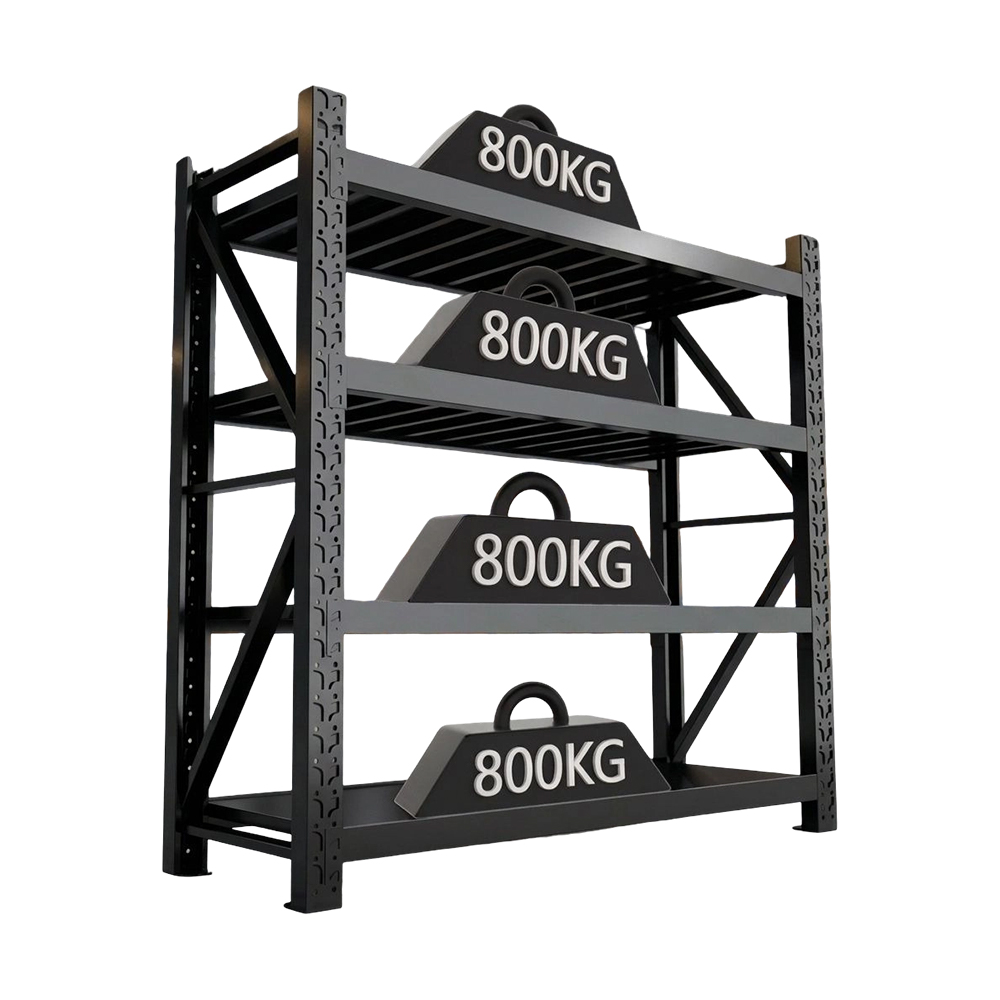
The rack should be used within its intended duty level. Light-duty, medium-duty, and heavy-duty configurations are not interchangeable simply because they have a similar appearance. The weight, dimensions, and distribution of the stored goods should determine the appropriate selection.
Where local regulations or site-specific engineering requirements apply, the project should be reviewed by qualified professionals. The manufacturer’s technical information should be considered together with local building, fire, workplace, and material-handling requirements.
Cost and Long-Term Value
The purchase price is only one part of the value of a storage system. A rack that improves access, reduces floor stacking, and supports better organization may contribute to lower handling effort and more efficient use of warehouse space.
Durability is another factor in long-term value. Heavy-duty steel construction and a protective powder coating can help extend service life when the rack is correctly selected, installed, loaded, and maintained. A modular design may also reduce future replacement costs because the system can be adapted as the warehouse changes.
For businesses handling long materials, the cost of inefficient storage can include wasted floor area, extended retrieval times, product damage, blocked aisles, and unnecessary labor. A purpose-built cantilever rack addresses these issues more directly than improvised floor stacking or unsuitable standard shelving.
Project Planning Process
A successful project can begin with a product inventory. Customers should list the types of goods to be stored, their minimum and maximum lengths, weights, diameters, widths, packaging methods, and expected turnover. Photographs, drawings, or sample product information can help clarify unusual shapes.
The next step is to review the facility. Important information includes building dimensions, clear height, floor conditions, door locations, columns, loading areas, aisle requirements, and available handling equipment. The rack layout should support the actual flow of goods rather than occupy space without considering receiving and dispatch operations.
After the requirements are collected, the manufacturer can propose a suitable configuration. The customer and supplier should review the number of levels, arm dimensions, upright spacing, total capacity, optional shelves, finish, and installation details. Any special environmental conditions should also be discussed.
Before production, all important technical details should be confirmed. Clear approval procedures help reduce errors and provide a reliable reference for manufacturing, delivery, assembly, and future expansion.
Frequently Asked Questions
What is a cantilever rack used for?
A cantilever rack is used to store long, bulky, or irregularly shaped products that are difficult to place on conventional pallet racks or standard shelving. Typical examples include pipes, lumber, steel bars, carpet rolls, metal profiles, and construction materials.
How is a cantilever rack different from pallet racking?
Pallet racking is mainly designed for palletized loads stored within framed bays. A cantilever rack uses vertical columns and projecting arms, leaving the front open. This makes it more suitable for long products that require direct front access and may not fit into enclosed pallet positions.
Can the rack be customized?
Yes. The modular design can be adapted in length, height, width, upright spacing, arm levels, and other configuration details. Optional shelves can also be added for smaller or low-height products. The final design should be based on product dimensions, load weight, handling equipment, and facility conditions.
What types of handling equipment can be used?
The open design allows access with suitable wide-load handling equipment, including forklifts, pallet jacks, and cranes. The equipment must be appropriate for the load and compatible with the aisle width, rack height, and operating procedures.
Is the rack suitable for heavy products?
The rack is available in configurations intended for light-, medium-, or heavy-duty applications. The correct duty level must be selected according to the actual product weight, dimensions, load distribution, and storage arrangement. Heavy products should not be placed on a configuration that has not been specified for them.
Can smaller products be stored on the rack?
Yes. Optional shelf panels can be included for small, low-height, or accessory products. This enables the system to store both long materials and smaller items when the layout is planned appropriately.
How does the powder coating help?
The powder coating provides a durable industrial finish designed to resist rust, corrosion, and scratches. It helps protect the steel during long-term use, although proper installation, cleaning, inspection, and environmental management remain important.
What information should be provided for a quotation?
Customers should provide product types, dimensions, weights, quantities, desired storage levels, warehouse height, available floor space, aisle requirements, handling equipment, and any special environmental conditions. A layout drawing or product photographs may also help the manufacturer recommend a suitable configuration.
Can the rack be used with other warehouse systems?
Yes. Cantilever racks can be planned as part of a broader storage system that includes pallet racking, warehouse shelving, mezzanine racking, or work areas. The complete layout should be coordinated so that aisles, traffic routes, and storage functions do not interfere with one another.
Why work with an OEM and ODM manufacturer?
An OEM and ODM manufacturer can provide standard products while also supporting customized designs for different markets and applications. This can simplify project coordination and help distributors, contractors, and warehouse operators obtain storage equipment suited to their specific requirements.
Conclusion
The heavy-duty industrial warehouse storage cantilever shelf rack provides a practical answer to the challenges of storing long and irregularly shaped products. Its reinforced steel columns, strong arms, open-front design, modular configuration, optional shelves, and durable powder coating make it suitable for demanding warehouse, factory, construction, and distribution applications.
Compared with floor stacking, ordinary shelving, and pallet racks designed for standardized loads, the cantilever structure offers more direct access to long goods and better use of vertical storage space. It can help improve organization, support more efficient handling, reduce floor congestion, and adapt to changing product requirements.
Shanghai King Global Shelf Co., Ltd. supports this product with experience in shelving and storage manufacturing, integrated product development, production, quality control, market service, and international supply. Its 60,000-square-meter production base, workforce of more than 300 employees, and OEM and ODM capabilities provide a foundation for standard and customized storage projects.
For the best result, the rack should be specified as part of a complete storage plan. Product dimensions, weight, access requirements, handling equipment, building conditions, and future expansion should all be evaluated before production and installation. When properly selected and maintained, a cantilever rack can provide an efficient, durable, and adaptable foundation for long-item warehouse storage.
References
1. Shanghai King Global Shelf Co., Ltd., Product Information for Heavy-Duty Industrial Warehouse Storage Cantilever Shelf Rack.
2. Shanghai King Global Shelf Co., Ltd., Corporate Manufacturing and Company Profile Materials.
3. General Principles of Industrial Warehouse Layout and Material-Handling Planning.
4. General Guidance on Storage Rack Inspection, Loading Practices, and Warehouse Safety Management.
5. General Reference Materials on Powder-Coated Steel Storage Equipment and Corrosion-Resistant Finishes.


 English
 Español
 русский
 Français
 한국어
 عربى
 ไทย
 Deutsch
 Bahasa Melayu
 Português
 Polskie