Shopping baskets and carts are essential equipment in modern supermarkets, convenience stores, grocery shops, department stores, and retail environments. They influence how customers move through a store, how comfortably they collect products, and how efficiently they complete their purchases. A well-designed basket or cart can make the difference between a smooth, pleasant shopping experience and a trip that feels inconvenient, tiring, or disorganized.
The shopping baskets and carts presented in this article are designed to provide a practical solution for everyday retail shopping. The product range combines lightweight handheld baskets for smaller purchases with durable wheeled carts for larger or heavier loads. This combination allows retailers to serve different customer needs while providing shoppers with flexible, convenient, and reliable carrying options.
Unlike low-quality baskets and unstable carts that may crack, bend, become difficult to maneuver, or occupy excessive storage space, these products are developed for repeated daily use. Their design focuses on lightweight handling, load-bearing performance, smooth movement, ergonomic comfort, easy cleaning, and stackable storage. These features make them suitable not only for customers but also for supermarkets seeking dependable equipment that supports efficient store management.
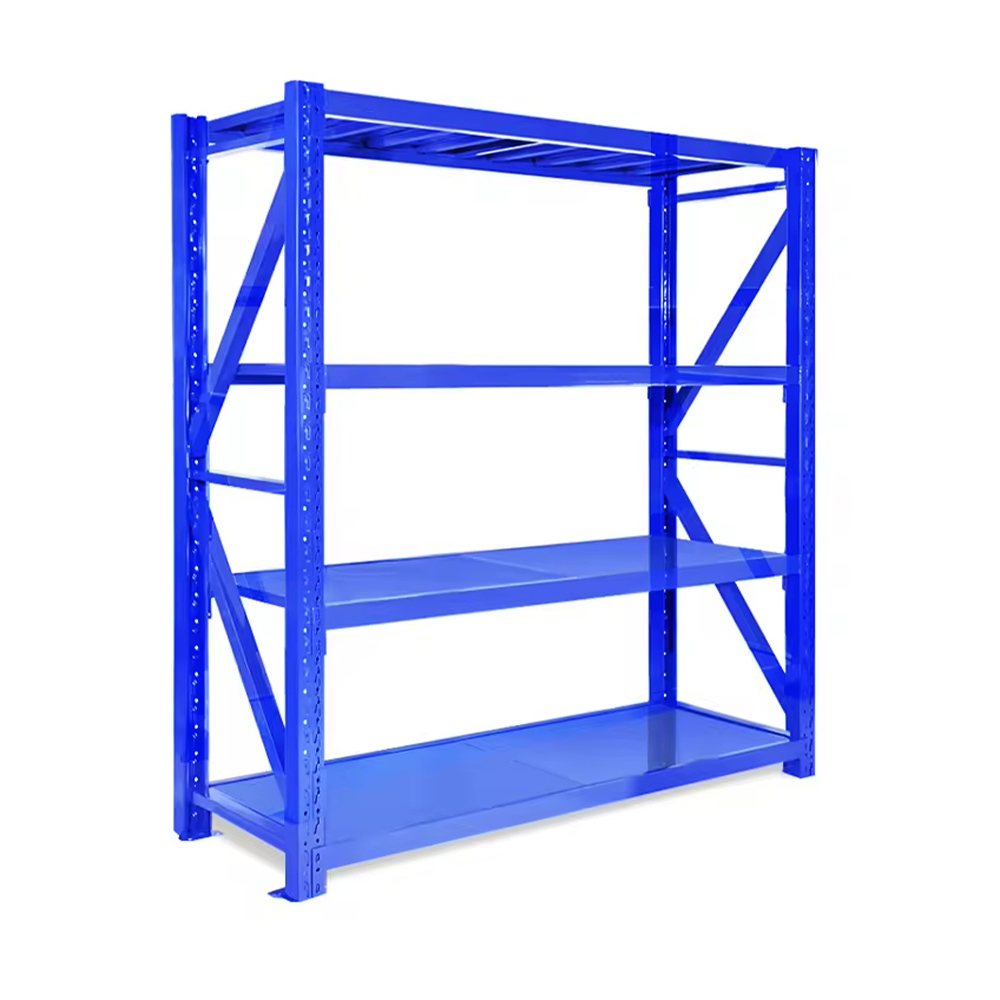
The products are manufactured by Shanghai King Global Shelf Co., Ltd., a professional shelving and storage equipment manufacturer founded in 2010. With experience in product development, manufacturing, quality control, and international market service, the company provides standard products as well as customized OEM and ODM solutions. Its manufacturing capabilities support the production of retail equipment, storage systems, supermarket fixtures, warehouse racks, office shelves, and home storage products.
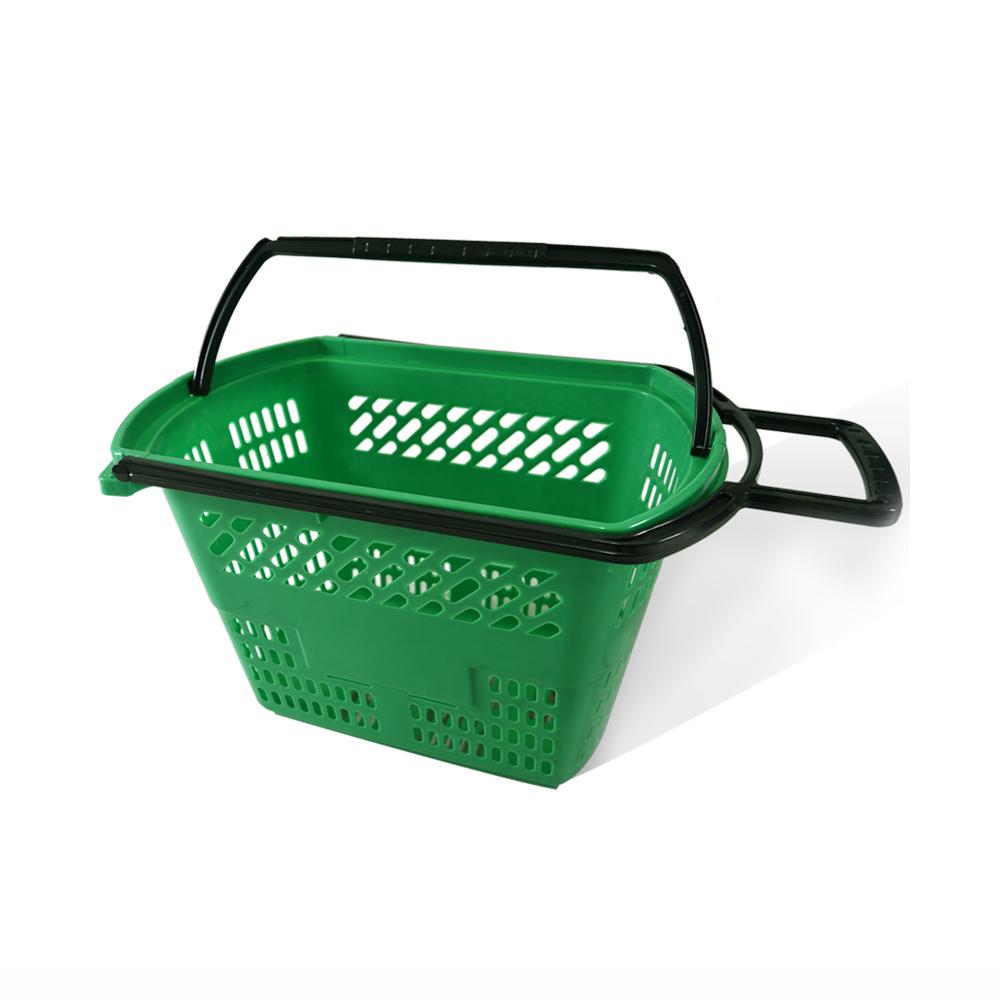
Shopping Baskets for Supermarkets
Why Shopping Baskets and Carts Matter in Retail
Customers begin evaluating a supermarket before they reach the checkout counter. Store layout, shelf organization, product visibility, lighting, cleanliness, and shopping equipment all contribute to the overall impression. A basket that is uncomfortable to hold or a cart that is difficult to push can create friction throughout the customer journey.
Shopping baskets are especially useful for customers buying a small number of items. They allow shoppers to move quickly through the store without handling a large cart. For convenience stores, pharmacies, small supermarkets, and express checkout areas, a basket can improve traffic flow and encourage customers to pick up additional products.
Carts are more suitable for weekly grocery shopping, family shopping, bulk purchases, and products that are heavy or difficult to carry. A stable cart reduces the physical effort required from the customer and offers sufficient space for a broader selection of goods. When the cart rolls smoothly and the handle is comfortable, shoppers can move through aisles with less strain.
From the retailer’s perspective, baskets and carts also support sales performance. Customers who can carry products comfortably may spend more time browsing and may be more willing to purchase additional items. Convenient shopping equipment can also reduce the likelihood of products being placed randomly on shelves because customers are struggling to carry them.
Well-designed shopping equipment improves store organization as well. Stackable baskets and carts can be returned to a designated area without creating excessive clutter. Easy-to-clean surfaces help retailers maintain hygiene standards, while durable construction reduces the frequency of replacement and lowers long-term operating costs.
Product Overview
The product range includes shopping baskets for small and medium purchases and shopping carts designed for larger loads. The two formats complement each other and can be used together in the same retail environment. Retailers may provide baskets near store entrances, checkout zones, or high-traffic areas, while carts can be positioned at the entrance for customers planning a longer shopping trip.
The basket format is lightweight and easy to carry. Its practical design allows customers to place everyday items inside without feeling that the container itself adds unnecessary weight. A comfortable handle supports one-handed carrying and allows customers to keep the other hand available for selecting products or using a mobile phone.
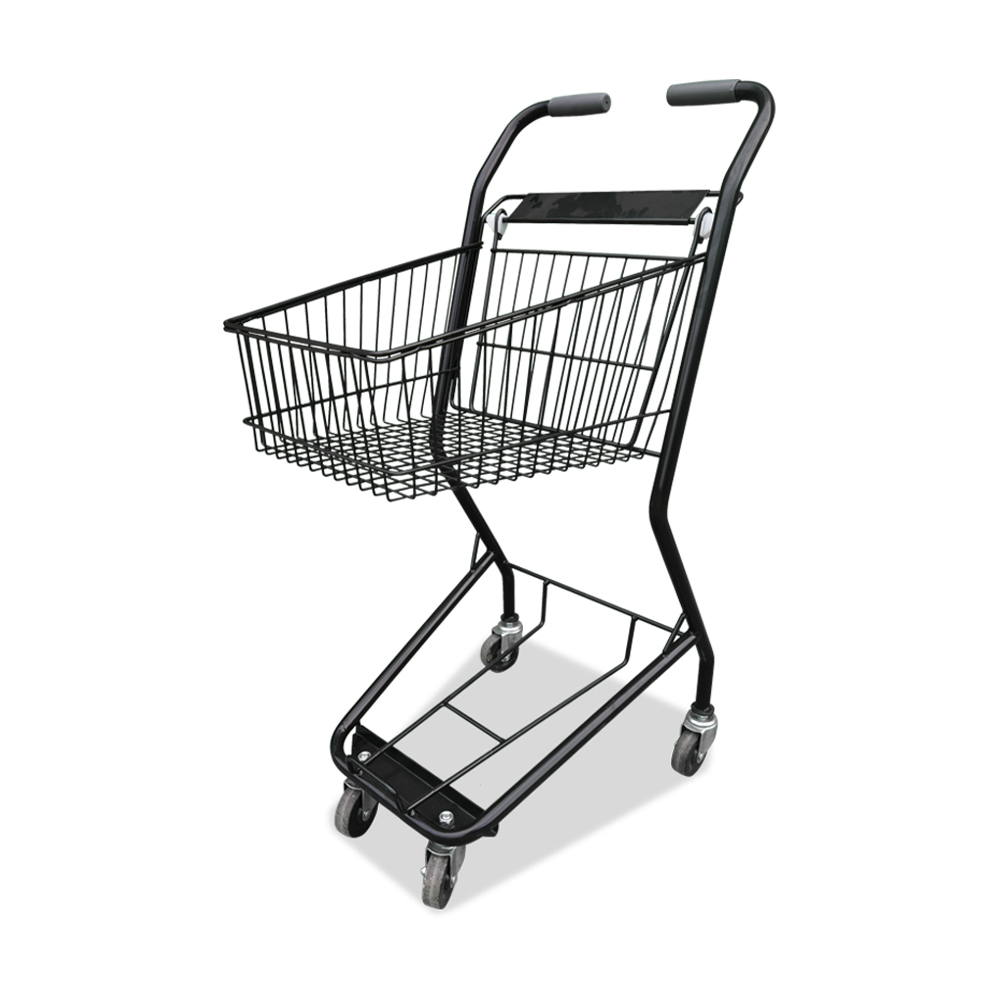
The cart format is built for higher load requirements. Smooth-rolling wheels support easier movement across supermarket floors, while the handle helps customers maintain control when turning, stopping, or navigating around displays. The cart can be used for food products, household supplies, packaged goods, bottled drinks, laundry products, and other common retail items.
Both formats are intended for repeated use. Instead of treating baskets and carts as disposable accessories, the design approach emphasizes durability, maintainability, and practical service life. This is particularly important for supermarkets, where equipment may be used by hundreds or thousands of customers over an extended period.
Core Product Features
Lightweight construction makes the baskets easier to carry and return. Reduced product weight is especially valuable for elderly customers, children accompanied by adults, and shoppers who only need a small number of items.
Durable materials help the carts and baskets withstand routine handling. They are designed to resist common forms of daily wear, including repeated placement on floors, contact with shelves, loading and unloading, and movement through busy retail spaces.
Load-bearing performance gives the cart practical value for larger shopping trips. Customers can place heavier products inside without relying on multiple bags or carrying items directly in their arms.
Smooth wheels support easier movement and reduce pushing effort. Good wheel performance also helps customers maintain a consistent direction and reduces the risk of sudden resistance when the cart changes direction.
Ergonomic handles improve comfort during longer shopping sessions. The handle design is intended to reduce pressure on the hands and provide a more natural pushing or pulling position.
Easy-clean surfaces simplify routine maintenance. Retail staff can clean the products regularly, helping the store maintain a neat and hygienic appearance.
Stackable construction saves space when multiple baskets or carts are not in use. This is valuable for supermarkets with limited entrance, checkout, or storage space.
Advantages Over Ordinary Shopping Equipment
Many basic shopping baskets and carts appear similar at first glance, but their performance can differ considerably after repeated use. A low-cost product may provide an attractive initial purchase price while creating higher replacement and maintenance costs later. Handles may become uncomfortable, wheels may stop rolling smoothly, or materials may deform under regular loading.
The products described here are designed with a more complete understanding of retail operating conditions. Their value comes from the combination of portability, durability, mobility, ergonomics, hygiene, and storage efficiency rather than from a single feature.
Better Balance Between Weight and Strength
A basket should be light enough for convenient carrying but strong enough to hold ordinary shopping items without flexing excessively. Achieving this balance requires appropriate material selection and structural design. A basket that is too heavy discourages customers from using it, while one that is too weak can crack or lose its shape.
The product design aims to provide practical strength without adding unnecessary bulk. This makes the basket comfortable for short shopping trips and suitable for repeated circulation between the entrance, checkout area, and storage location.
More Stable Cart Performance
Cart stability is important for customer safety and shopping comfort. An unstable cart can wobble, drift, or become difficult to control when loaded. This creates frustration and may result in products falling or customers avoiding the cart altogether.
The wheeled cart is designed to support controlled movement. Smooth-rolling wheels and a comfortable handle help customers push or pull the cart through aisles, around corners, and between product displays. Retailers benefit because a stable cart is less likely to be abandoned in inconvenient locations or damaged through rough handling.
Improved Customer Comfort
Shopping can take longer than expected, especially in large supermarkets. Customers may need to compare products, wait for family members, search for items, or visit several departments. A comfortable basket handle or cart grip reduces discomfort during this time.
Ergonomic design is not limited to appearance. It includes the position, shape, and usability of handles, the balance of the load, the height of the cart, and the ease with which the product can be moved. These details help reduce hand fatigue and physical strain during routine shopping.
More Efficient Use of Store Space
Storage space is expensive in retail environments. Baskets and carts that cannot be nested or stacked may occupy valuable floor area near entrances or checkout counters. Stackable products allow retailers to organize more units in a smaller footprint.
Space-saving storage also improves the visual appearance of the store. A neat row of baskets or carts gives customers a clear starting point and makes it easier for staff to collect and redistribute equipment during busy periods.
Lower Long-Term Operating Costs
Durability influences the total cost of ownership. A product that lasts longer, requires less repair, and remains presentable after repeated use can offer greater value than a cheaper product that needs frequent replacement.
For retailers, long-term savings may come from several areas: fewer broken handles, fewer damaged baskets, less wheel maintenance, reduced replacement frequency, and less staff time spent managing defective equipment. Durable products also help maintain a consistent store image.
| Evaluation Area | Basic Equipment Risk | Advantages of the Product Range | Retail Benefit |
|---|
| Carrying comfort |
Heavy or uncomfortable handles may discourage use |
Lightweight baskets and ergonomic handling features |
Improved customer convenience |
| Cart movement |
Uneven rolling, resistance, or poor turning control |
Smooth wheels and practical maneuverability |
More comfortable movement through aisles |
| Durability |
Cracking, bending, or premature wear |
Materials and construction intended for daily use |
Reduced replacement frequency |
| Storage |
Large footprint when unused |
Stackable design for compact organization |
Better use of entrance and backroom space |
| Maintenance |
Difficult-to-clean shapes or surfaces |
Practical surfaces that are easy to clean |
Lower cleaning effort and better presentation |
| Application range |
Limited to one shopping situation |
Baskets for small trips and carts for larger loads |
Equipment for different customer needs |
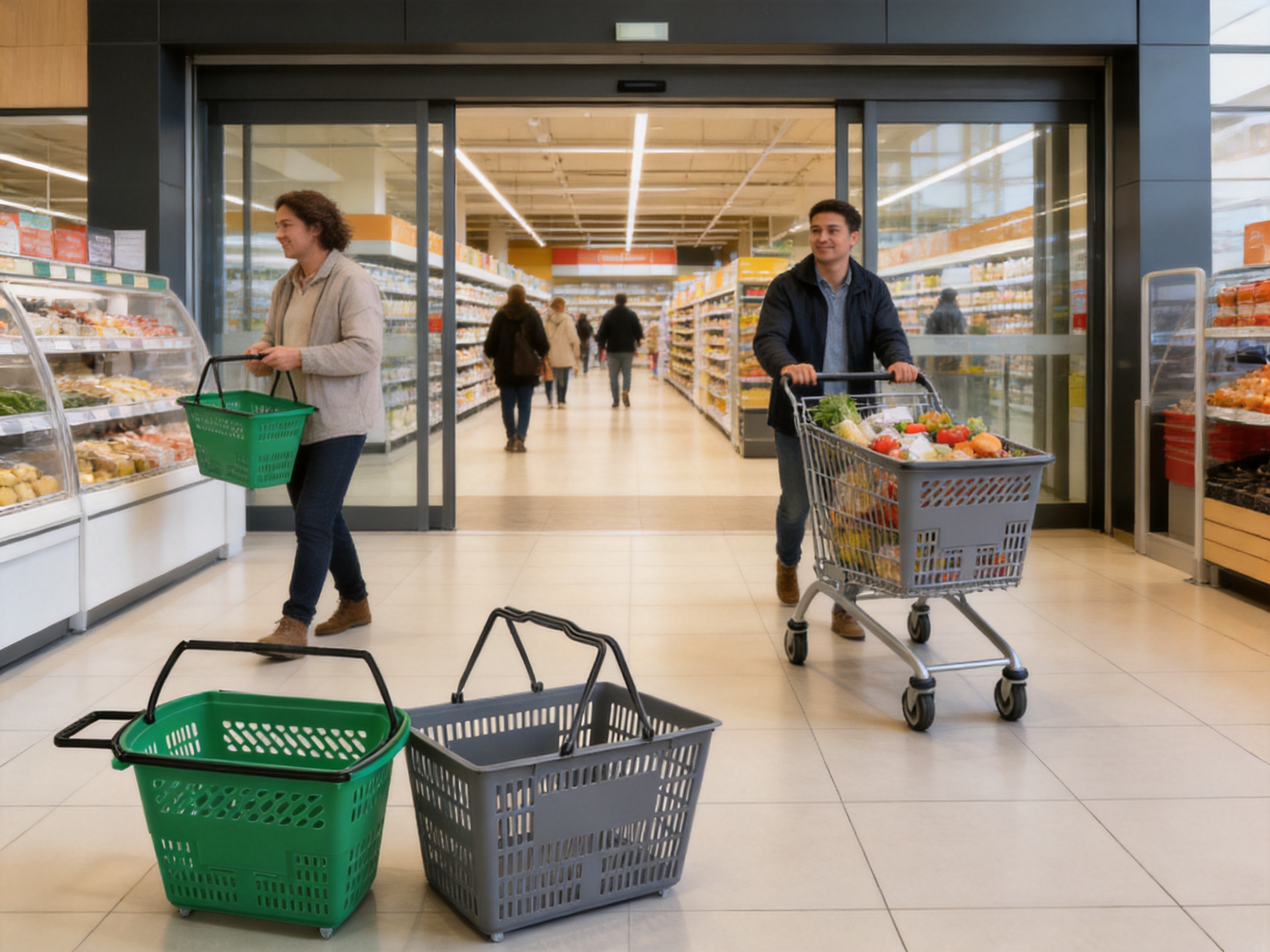
Designed for Everyday Grocery Shopping
The most important purpose of the product is to support daily grocery shopping. A customer visiting a supermarket may purchase only a few products, complete a full weekly shop, or buy heavy household supplies. The availability of both baskets and carts ensures that the customer can select the most suitable carrying method.
For a quick purchase, a basket offers speed and flexibility. Customers can pick one up at the entrance, move directly to the required aisle, and proceed to checkout without handling a large cart. This is especially useful during lunch breaks, after-work visits, or short trips to a convenience store.
For larger shopping trips, a cart provides additional capacity and reduces physical effort. Customers can place products into the cart as they shop instead of carrying them from one department to another. This is useful for heavy beverage packs, cleaning products, pet supplies, canned goods, and other high-density items.
The combined use of baskets and carts can improve customer flow. Retailers can position baskets in highly visible locations while keeping carts accessible at the entrance. Signage, floor markings, or organized collection points can help customers choose the right option quickly.
Suitable for Different Retail Formats
Large supermarkets can use the product range to support high customer volumes. Multiple units can be arranged at entrance areas and replenished throughout the day. The stackable design helps stores manage demand during peak shopping periods without requiring a large permanent storage area.
Convenience stores can use baskets to support fast shopping and reduce congestion around narrow aisles. A compact basket is often more suitable than a full-size cart for customers buying snacks, drinks, personal care items, or prepared food.
Wholesale and bulk retail environments can use carts for larger purchases. Durable load-bearing performance is important when customers buy cases, cartons, large packages, or multiple household products.
Department stores, home improvement stores, garden centers, and specialty retailers may also use the carts and baskets for non-food products. Their practical design can support the movement of packaged goods, small tools, accessories, home products, and seasonal merchandise.
Versatile Use Beyond Supermarkets
Although the primary application is retail shopping, these products can also support many tasks in homes and workplaces. A basket can be used to organize small items, move laundry, collect toys, store craft materials, or transport gardening accessories.
A wheeled cart can help move household supplies, folded clothing, bottled water, cleaning products, or storage containers. Its mobility is useful for people who want to reduce the physical effort involved in carrying heavy items over longer distances.
In offices, baskets may be used to transport documents, supplies, stationery, and shared equipment. In hospitality environments, carts can assist with light material movement, although users should always observe the appropriate load limits and operational requirements for the specific application.
In schools, libraries, and community facilities, baskets can help organize educational resources, books, sports equipment, or activity materials. Their easy-clean surfaces are helpful in environments where products are handled by many different users.
This versatility increases the product’s value for distributors and wholesalers. A retailer or importer does not need to market the equipment only to supermarkets. The same general product family can serve household, commercial, institutional, and specialty retail applications.
Manufacturing Capabilities and Quality Strengths
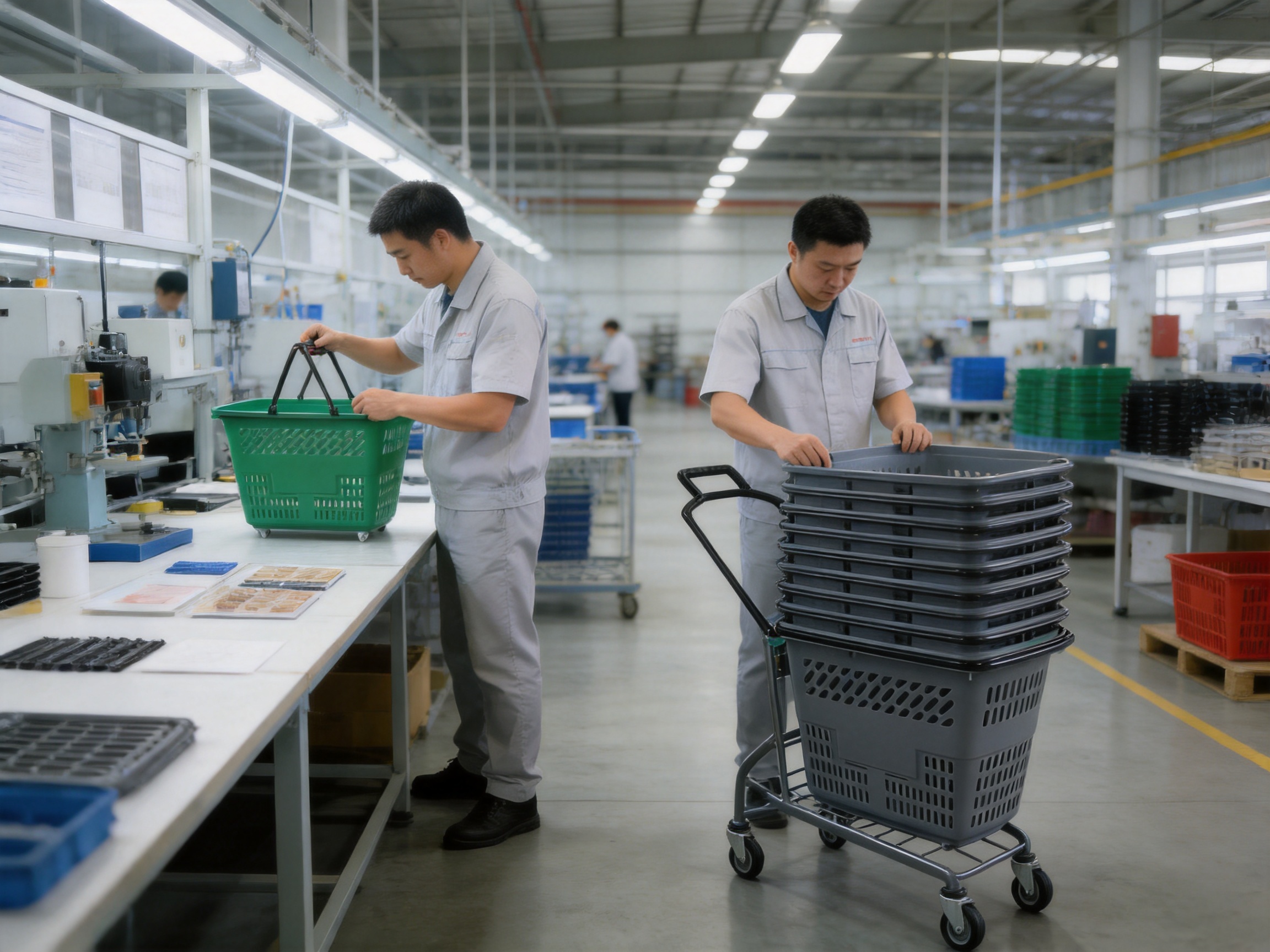
The performance of shopping baskets and carts depends on more than product appearance. Reliable manufacturing requires controlled material selection, consistent forming or assembly, dimensional accuracy, surface inspection, wheel installation, handle fitting, and final quality checks.
Shanghai King Global Shelf Co., Ltd. operates an integrated system covering product development, manufacturing, quality control, and market service. This structure allows the company to manage the product cycle from initial concept through production and customer support.
The company was founded in 2010 and has developed experience in shelving and storage product manufacturing. Its broader product portfolio includes warehouse racks, pallet racking, mezzanine racking, cantilever racks, supermarket shelves, office shelving, and home storage products. This experience gives the company a strong understanding of load management, retail environments, space utilization, and practical product construction.
The company operates a production base covering approximately 60,000 square meters and employs more than 300 people. This scale supports production coordination, technical development, quality management, order processing, and export service. It also provides a foundation for handling both standard product orders and customized projects.
Product Development
Product development begins with understanding how equipment will be used. Shopping baskets and carts must be convenient for customers, efficient for staff, and compatible with the physical environment of the store. Important development considerations include product dimensions, handle position, load distribution, wheel behavior, stackability, cleaning requirements, and packaging efficiency.
For customized projects, the development process may also consider brand colors, product labeling, logo placement, basket dimensions, cart configuration, packaging requirements, and market-specific preferences. OEM and ODM capability allows buyers to request products based on their own sales channels or customer expectations.
By combining product development with manufacturing experience, the company can identify practical improvements that may not be visible in a basic product drawing. For example, a small change to handle geometry, basket reinforcement, wheel configuration, or stacking clearance may improve usability across thousands of daily shopping interactions.
Manufacturing Process Control
Consistent manufacturing is essential when products are ordered in volume. Retail customers expect every basket and cart in a shipment to offer similar dimensions, appearance, handling, and performance. Variation can create difficulties during store deployment and may affect the customer experience.
A controlled production system helps maintain consistency between batches. Materials are selected according to product requirements, components are processed using appropriate production methods, and assemblies are checked before shipment. Manufacturing teams can coordinate the production of individual components and complete products according to the order specification.
For shopping baskets, production attention may include the shape of the container, handle strength, edge finishing, surface uniformity, and stackability. For carts, it may include frame or body assembly, wheel installation, handle connection, balance, and movement testing.
Quality Control
Quality control is an important part of the company’s integrated manufacturing system. Inspection can be carried out at different stages, including incoming materials, component production, assembly, finishing, packaging, and final shipment preparation.
Quality checks help identify issues such as sharp edges, uneven surfaces, loose components, poor wheel alignment, weak handle connections, inconsistent dimensions, or packaging damage. Detecting these issues before shipment helps protect the buyer’s investment and reduces the possibility of problems during store installation or product distribution.
Quality control also supports customer confidence in repeat orders. Retail chains, distributors, and importers need reliable product consistency when expanding a store network or replenishing equipment. A stable manufacturing partner can help them maintain a uniform appearance and operating standard across different locations.
Materials, Construction, and Daily Durability
Shopping equipment is exposed to repeated mechanical contact. Baskets may be placed on floors, counters, shelves, and other baskets. Carts may be pushed across different surfaces, loaded with dense products, turned sharply, and stored in groups. The product construction therefore needs to accommodate repeated impact, friction, handling, and cleaning.
Durable material selection helps the products retain their shape and function. The basket should remain stable when filled with ordinary shopping items, while the cart should continue to support practical loads without becoming difficult to control. Product life will also depend on correct use, appropriate load distribution, and regular maintenance.
Surface finishing is another important consideration. Smooth, well-finished surfaces are easier to wipe and less likely to collect dirt in unnecessary grooves. Rounded or carefully finished edges can improve handling comfort and reduce the risk of snagging clothing or packaging.
Wheel performance is particularly important for carts. Wheels should be properly fitted and aligned so that the cart can move in the intended direction. Smooth movement reduces customer effort and can also reduce noise in the store. Retailers should periodically inspect wheels for trapped debris, wear, or damage to maintain the best performance.
Hygiene and Easy Maintenance
Shopping baskets and carts are handled by many customers every day. Regular cleaning is therefore part of responsible retail operation. Products that are easy to clean can help staff maintain a more hygienic and attractive shopping environment.
The practical surfaces of these products support routine wiping and cleaning. Retailers can establish cleaning schedules based on customer volume, store policy, local regulations, and product use. Handles and frequently touched areas may require particular attention because they receive repeated contact throughout the day.
Easy maintenance also affects product appearance. Clean baskets and carts communicate care and professionalism. Customers are more likely to use equipment confidently when it looks well maintained and free from visible dirt or damage.
Retailers can extend service life by combining cleaning with basic inspections. Staff may check for cracked baskets, loose handles, damaged wheels, sharp edges, or excessive deformation. Early maintenance can prevent minor issues from developing into more serious failures.
Space-Saving Storage and Store Organization
Space efficiency is a major concern for supermarkets. Entrance areas must accommodate customers, promotional displays, baskets, carts, security systems, and sometimes self-checkout queues. Backroom areas must also store packaging, replenishment stock, and equipment.
Stackable baskets help stores keep multiple units in a compact and orderly arrangement. Staff can quickly count available baskets and distribute them during busy hours. When not required, the baskets can be returned to a designated position without taking up unnecessary floor space.
Cart organization is equally important. Carts can be grouped in an entrance area or moved to a storage location after collection. A well-planned arrangement reduces obstruction and improves the first impression of the store.
For distributors and wholesalers, stackable products may also improve warehouse efficiency. More units can be stored within a defined area, and packaging can be planned to optimize transportation. Buyers should confirm product dimensions, packaging quantities, and container loading requirements during the quotation process.
OEM and ODM Customization Options
Different retail markets may require different product dimensions, colors, identification methods, and packaging formats. A supermarket chain may want equipment that matches its store design, while an importer may require a product configuration suited to a particular regional market.
OEM production allows buyers to supply their own specifications, brand requirements, packaging instructions, or identification details. ODM production allows the manufacturer to contribute design and product development expertise while producing a solution for the buyer’s market.
Possible customization areas may include basket size, cart style, handle design, colors, surface markings, logo application, labels, packaging, and shipment configuration. The exact options depend on the product model, order quantity, technical feasibility, and production schedule.
A professional customization process normally begins with a discussion of the intended application. Buyers should provide information about store type, customer profile, expected load, available storage area, target market, required quantity, preferred delivery schedule, and any compliance or packaging requirements.
After the requirements are reviewed, the manufacturer can recommend a suitable configuration and confirm technical details. Samples, drawings, or product specifications may be used to verify the design before mass production. This process helps reduce misunderstandings and ensures that the final product is suitable for the customer’s intended use.
International Supply and Market Service
Shanghai King Global Shelf Co., Ltd. supplies products to customers in North America, Southeast Asia, Japan, South Korea, the Middle East, Europe, and other regions. International experience is valuable because different markets may have different expectations regarding product design, packaging, communication, delivery, and after-sales support.
Export-oriented manufacturing requires coordination between production planning, quality control, documentation, packaging, and logistics. A reliable supplier should be able to communicate clearly about specifications, lead times, order quantities, shipping arrangements, and product handling.
The company’s international market service supports buyers seeking retail and storage solutions from China. Its product portfolio allows customers to source shopping equipment together with shelving and storage systems, which may simplify supplier management for supermarket projects, warehouse developments, and commercial fit-outs.
For large projects, shopping baskets and carts may be ordered alongside supermarket shelves, warehouse racks, pallet racking, or other fixtures. Working with a supplier that understands the relationship between customer flow, product display, storage, and logistics can help create a more coordinated retail environment.
How to Select the Right Configuration
Buyers should evaluate several factors before ordering shopping baskets or carts. The correct configuration depends on store size, product range, customer traffic, shopping patterns, floor layout, storage space, and budget.
Store Type and Customer Behavior
A convenience store may require more handheld baskets than carts because customers typically purchase fewer products and spend less time inside. A large supermarket may require a balanced combination, with carts available for full shopping trips and baskets positioned for quick visits.
A wholesale store may prioritize carts with stronger load-bearing performance. A specialty retailer may need baskets with dimensions suitable for small products or fragile merchandise. Understanding customer behavior helps prevent the purchase of unsuitable equipment.
Expected Load
Buyers should consider the types of products customers will place inside the equipment. Lightweight packaged goods create different demands from bottled beverages, canned goods, cleaning products, or hardware items. The expected load should be discussed with the supplier so that the appropriate product model can be selected.
Users should not exceed the recommended load capacity. Overloading can affect stability, wheel performance, handle strength, and product life. Clear internal store guidelines can help staff and customers use the equipment properly.
Available Storage Area
The entrance, checkout zone, and backroom should be measured before ordering. Buyers should consider the space required for stacked baskets, grouped carts, customer circulation, emergency access, and cleaning operations.
Stackable products can help reduce the required area, but the store should still plan for convenient retrieval and return. Equipment that is difficult to access may not deliver its full operational value.
Cleaning and Maintenance Procedures
Retailers should establish responsibility for cleaning and inspection. A simple maintenance program may include daily visual checks, scheduled cleaning, wheel inspection, handle inspection, and prompt removal of damaged units.
Maintenance procedures should be appropriate for the product materials and the retailer’s hygiene policy. Buyers can ask the supplier for recommended cleaning methods and storage practices before finalizing the order.
Quantity Planning
The number of baskets and carts required depends on store size, peak customer flow, average shopping duration, and local shopping habits. Retailers should consider weekday and weekend demand, seasonal peaks, promotional events, and the number of checkout lanes.
It is also useful to maintain a small reserve for cleaning, repair, or unexpected demand. A supplier with OEM and ODM capability can help plan repeat orders if the store network expands.
Recommended Retail Deployment Strategy
A practical deployment strategy begins with clear equipment zones. Baskets and carts should be placed where customers can see them immediately after entering the store. The location should not block doors, promotional displays, or customer movement.
Signs or simple visual cues can explain where equipment should be collected and returned. Staff should regularly gather abandoned baskets and carts from different areas of the store. This keeps aisles clear and ensures that equipment remains available for incoming customers.
During busy periods, additional units can be moved from compact storage to the entrance. At quieter times, excess equipment can be stacked or grouped to preserve space. This flexible approach helps retailers balance convenience with efficient floor utilization.
Retailers may also place baskets near departments where customers often purchase small groups of products. For example, baskets can be useful near personal care, prepared food, pharmacy, stationery, or convenience sections, depending on the store format.
Company Strengths as a Manufacturing Partner
The company’s primary strength is its integrated approach to product development, production, quality control, and service. Customers are not limited to purchasing isolated products from a trading source; they can work with a manufacturer that has experience in shelving, storage, retail display, and customized solutions.
Its production scale supports both standard products and project-based orders. The 60,000-square-meter production base and workforce of more than 300 employees provide resources for coordinating manufacturing activities and supporting international customers.
The company’s product knowledge extends across warehouses, supermarkets, offices, and homes. This broad application experience helps it understand how products must perform in different environments. Shopping baskets and carts are part of a wider storage and retail ecosystem that includes shelves, racks, display systems, and material-handling solutions.
OEM and ODM capabilities provide flexibility for importers, wholesalers, retail chains, and project contractors. Instead of relying only on fixed catalog models, buyers can discuss product specifications and request adjustments suited to their market.
International export experience is another important advantage. Serving customers across multiple regions requires attention to communication, packaging, manufacturing consistency, and delivery coordination. These capabilities support buyers who need a dependable long-term supply partner rather than a one-time purchase.
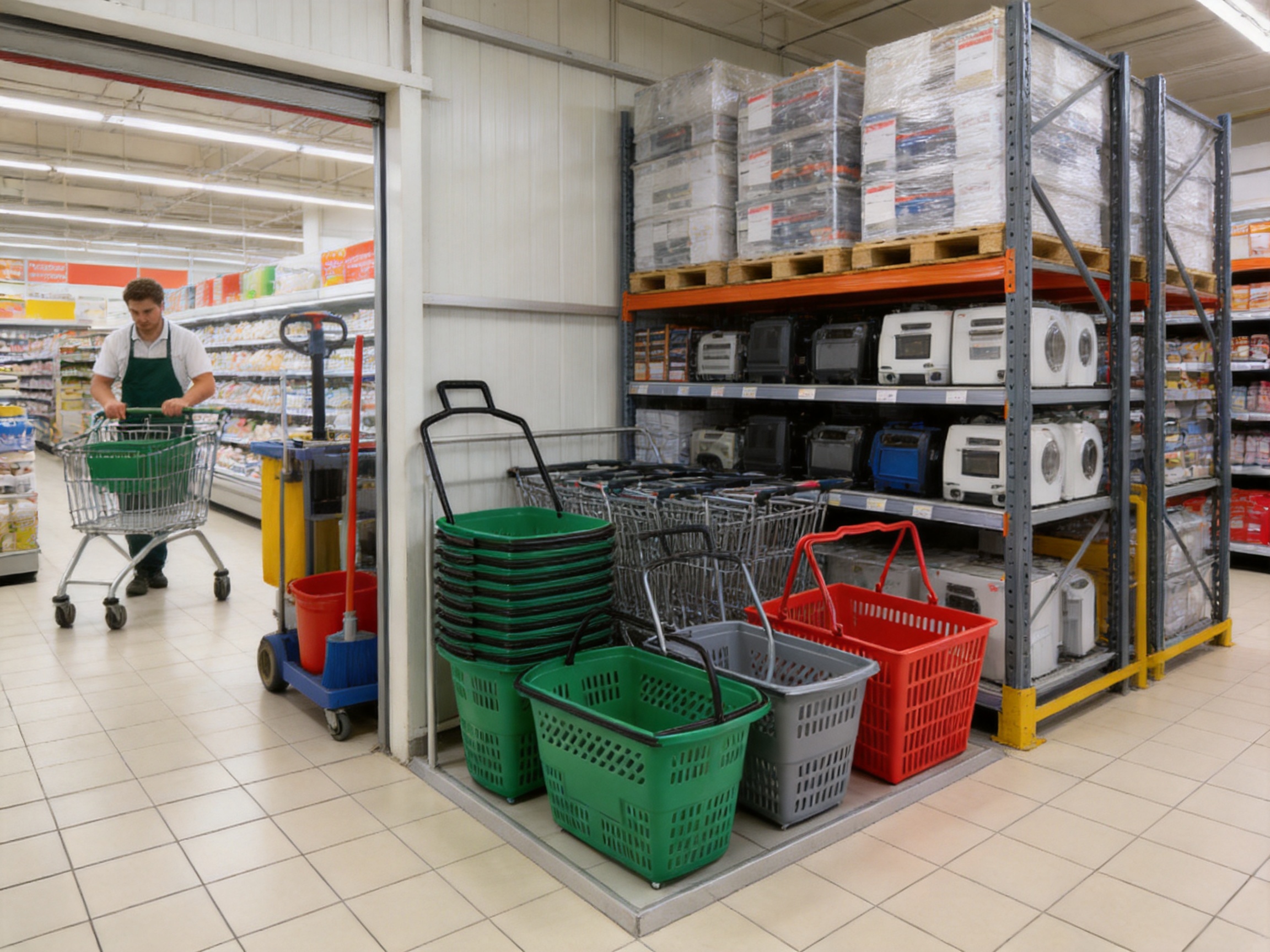
Applications in Complete Retail and Storage Projects
Shopping baskets and carts can be incorporated into broader commercial projects. A new supermarket may require shelving, checkout-area equipment, warehouse storage, display fixtures, and customer-use accessories. Sourcing several categories from one experienced manufacturer can improve coordination between different parts of the project.
For warehouse and distribution operations, retail carts and baskets may support internal movement of small goods, order preparation, returns processing, or staff supply distribution. They should be selected according to the specific load and working conditions.
Office and home storage applications may also benefit from the company’s broader product portfolio. Office shelves can organize documents and supplies, while home shelves can support household storage. Warehouse racks and pallet racking can manage inventory behind the retail operation.
This complete-solution capability is useful for businesses that want to improve space utilization throughout their organization. The front-of-store shopping experience and the back-of-store storage system can be considered as connected parts of the same operational plan.
Ordering and Project Consultation
When requesting a quotation, buyers should provide as much product information as possible. Useful details include the required basket or cart type, estimated quantity, intended application, preferred dimensions, colors, customization requirements, packaging expectations, delivery destination, and target delivery schedule.
Buyers should also ask about product specifications, recommended load limits, available samples, quality inspection procedures, packaging dimensions, replacement components, and after-sales support. These questions help establish a clear understanding before production begins.
For customized orders, approval of drawings or samples is recommended. A sample allows the buyer to evaluate handle comfort, basket proportions, cart movement, surface finish, stackability, and appearance. It also provides a reference for mass production.
For large retail projects, buyers may benefit from discussing the entire store environment rather than ordering baskets and carts as isolated products. Information about aisles, checkout points, entrance space, storage rooms, customer traffic, and shelf layout can help the supplier recommend a more suitable combination.
Frequently Asked Questions
What is the difference between the shopping basket and the shopping cart?
The shopping basket is designed for smaller purchases and short shopping trips. It is lightweight, portable, and easy to carry. The shopping cart is designed for larger or heavier purchases and uses wheels to reduce the effort required to move products through the store. Retailers can offer both formats to support different customer needs.
Are these products suitable for daily supermarket use?
Yes. The baskets and carts are designed for repeated daily use in retail environments. Their features include durable construction, practical handling, smooth movement, easy cleaning, and stackable storage. Proper use and routine maintenance will help maximize their service life.
Can the products be used outside supermarkets?
Yes. Baskets can be used for laundry, toys, household organization, gardening supplies, office materials, and other small items. Carts can help move household supplies, packaged goods, and other appropriate loads. The recommended application and load limits should always be considered.
Are the baskets easy to store?
The baskets are designed to be stackable, allowing retailers and households to store multiple units in a compact area. Buyers should confirm the exact stacking dimensions and recommended storage arrangement for the selected model.
How do the carts reduce shopping fatigue?
The carts allow customers to move heavier purchases on wheels rather than carrying them by hand. Smooth wheels and ergonomic handles make pushing or pulling easier and help reduce strain during longer shopping trips.
Can the carts be customized?
Customization may be available through OEM or ODM production. Possible options can include dimensions, colors, handles, markings, logos, packaging, and other product details. The exact options depend on the model, quantity, technical requirements, and production plan.
How should retailers maintain the products?
Retailers should clean the surfaces regularly and inspect baskets and carts for cracks, sharp edges, loose parts, damaged handles, and wheel problems. Damaged units should be removed from service until they are repaired or replaced. Staff should also avoid overloading the equipment.
Can a buyer order shopping equipment together with storage racks?
Yes. The manufacturer also supplies warehouse racks, pallet racking, mezzanine racking, cantilever racks, supermarket shelves, office shelves, and home storage products. Buyers can discuss combined requirements for retail, warehouse, office, or household projects.
What information is needed for a quotation?
Buyers should provide the desired product type, quantity, application, dimensions, customization requirements, destination, packaging expectations, and delivery schedule. If the project involves a store or warehouse, layout information can also help the manufacturer recommend an appropriate solution.
Why is manufacturer experience important for this product?
Manufacturer experience supports better control of materials, production consistency, assembly, quality inspection, packaging, and customization. It also helps the supplier understand how shopping equipment interacts with retail layouts, storage systems, customer movement, and daily operating conditions.
Conclusion
Shopping baskets and carts are simple products with an important role in the retail experience. They influence customer comfort, store traffic, product handling, cleanliness, and operational efficiency. A lightweight basket makes quick shopping easier, while a durable wheeled cart supports larger and heavier purchases.
The product range described here combines practical features that retailers need: lightweight handling, load-bearing performance, smooth wheels, ergonomic design, easy cleaning, and stackable storage. These advantages help the products perform better than basic equipment that may be uncomfortable, unstable, difficult to store, or costly to replace.
Manufacturing strength is equally important. With an integrated system covering development, production, quality control, and market service, Shanghai King Global Shelf Co., Ltd. can support standard orders, customized OEM projects, and ODM product development. Its production base, professional workforce, international market experience, and broader shelving portfolio make it a suitable partner for supermarkets, distributors, wholesalers, contractors, and commercial projects.
For buyers planning a new retail store, upgrading existing equipment, or sourcing a complete storage solution, shopping baskets and carts should be selected as part of the overall operating plan. The correct product combination can improve customer satisfaction, protect store efficiency, reduce physical strain, and provide durable value over years of daily use.
References
1. International Organization for Standardization. General Principles of Ergonomics and Human-Centered Product Design.
2. International Labour Organization. Guidance on Workplace Safety, Manual Handling, and the Reduction of Physical Strain.
3. Retail Design Institute. Principles of Customer Flow, Store Layout, and Retail Equipment Planning.
4. Materials Handling Institute. Recommendations for the Selection and Maintenance of Manual Material-Handling Equipment.
5. International Facility Management Association. Best Practices for Commercial Space Utilization and Equipment Maintenance.
6. Shanghai King Global Shelf Co., Ltd. Product Development, Manufacturing, Quality Control, and Storage Solution Information.


 English
 Español
 русский
 Français
 한국어
 عربى
 ไทย
 Deutsch
 Bahasa Melayu
 Português
 Polskie