Industrial warehouses often handle materials that cannot be stored efficiently on conventional pallet racks. Pipes, steel bars, timber, carpet rolls, fabric rolls, construction products, profiles, panels, and other long or irregularly shaped goods may extend beyond the dimensions of standard pallets. When these products are placed directly on the floor, stacked against walls, or stored in improvised bundles, valuable space is lost and the risk of product damage, workplace incidents, and inefficient handling increases.
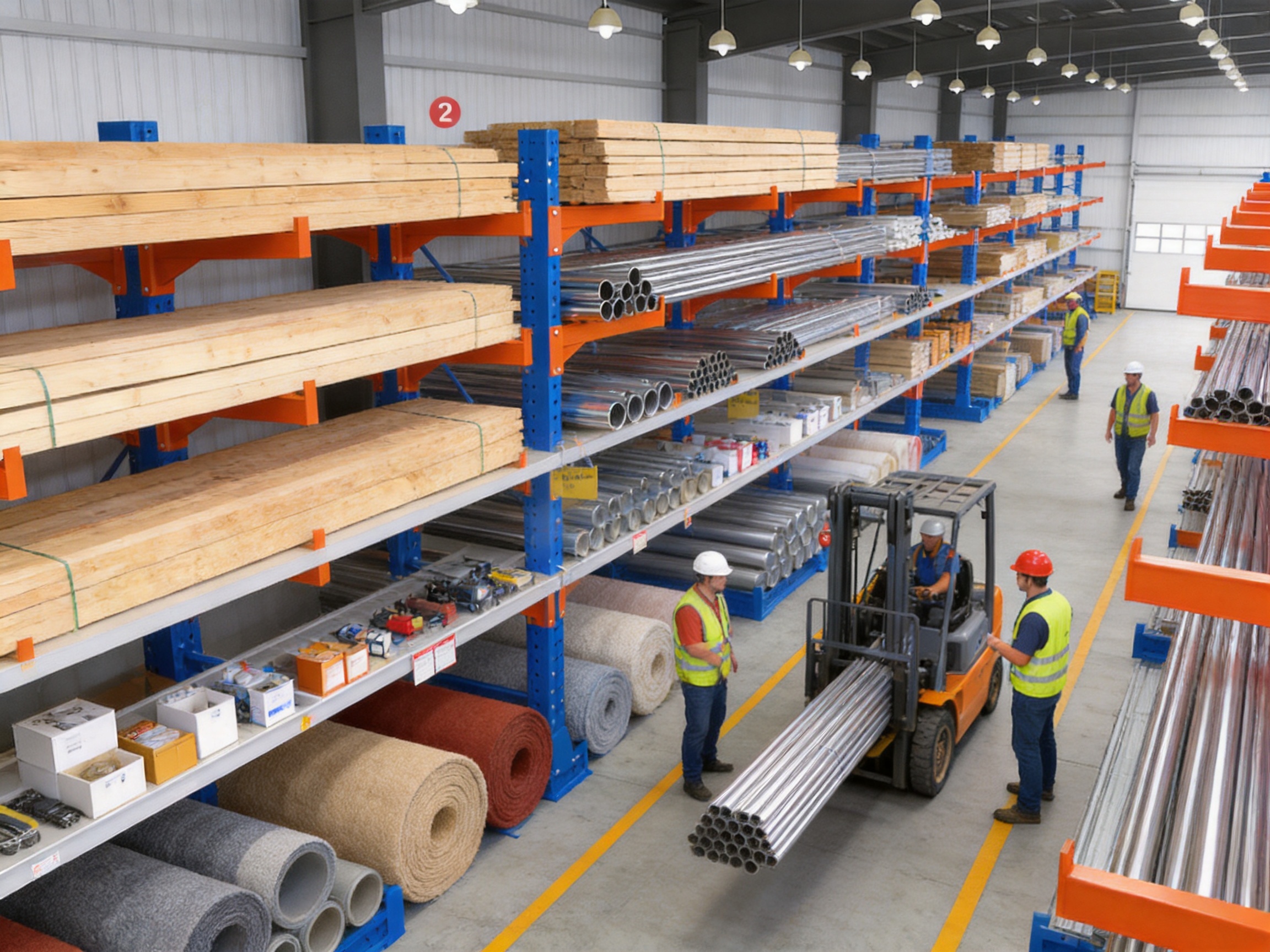
Heavy-duty cantilever racking provides a purpose-built solution for these demanding storage conditions. Its open-front design, strong vertical columns, projecting arms, and adaptable configuration make it suitable for goods that require unobstructed loading access. Unlike conventional pallet racking, which depends on horizontal beams and pallet positions, cantilever racking supports loads from the side. This makes it particularly effective for long, oversized, bulky, or irregular products.
Shanghai King Global Shelf Co., Ltd. develops and manufactures cantilever racks and other storage systems for warehouses, factories, construction sites, lumber yards, plumbing suppliers, industrial distributors, and commercial facilities. With an integrated product development, manufacturing, quality-control, and market-service system, the company supplies standard storage products as well as customized OEM and ODM solutions for different markets.
This article explains the design, operating advantages, manufacturing strengths, customization possibilities, safety considerations, and practical applications of heavy-duty cantilever racking for industrial storage.
Understanding Heavy-Duty Cantilever Racking
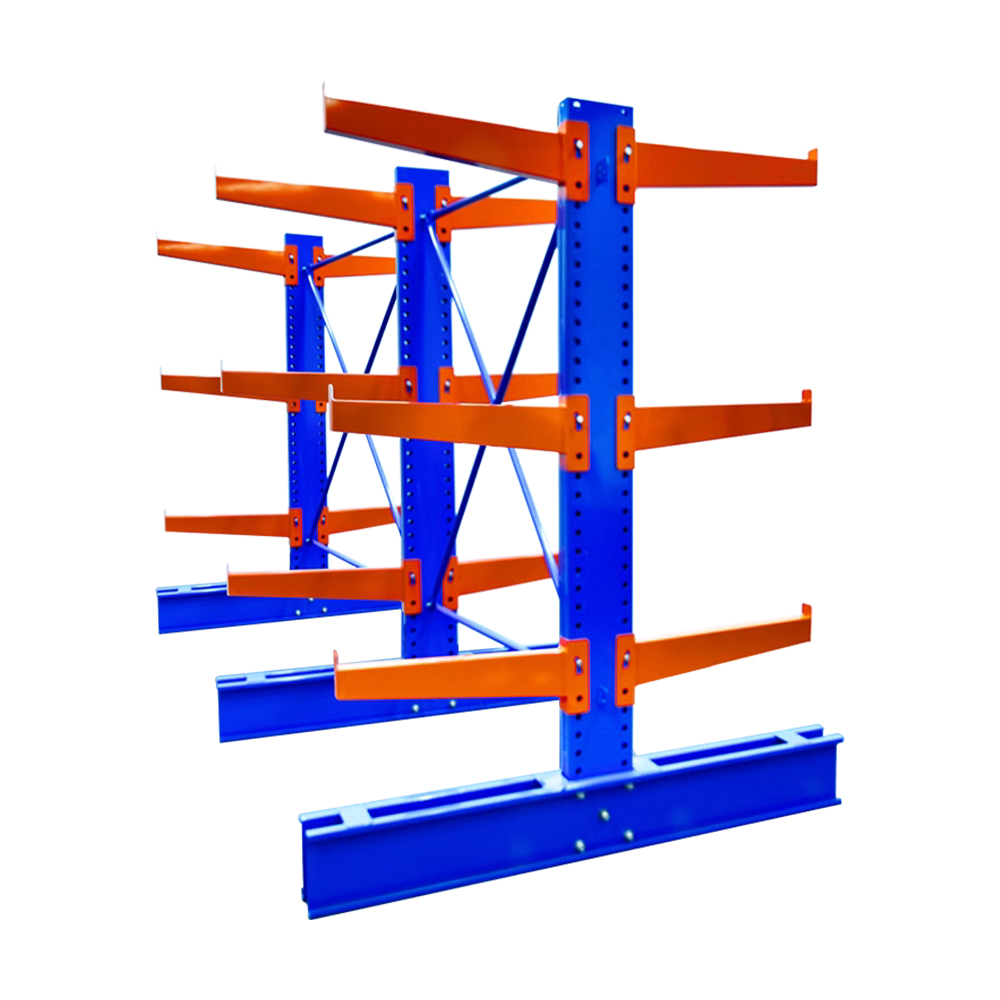
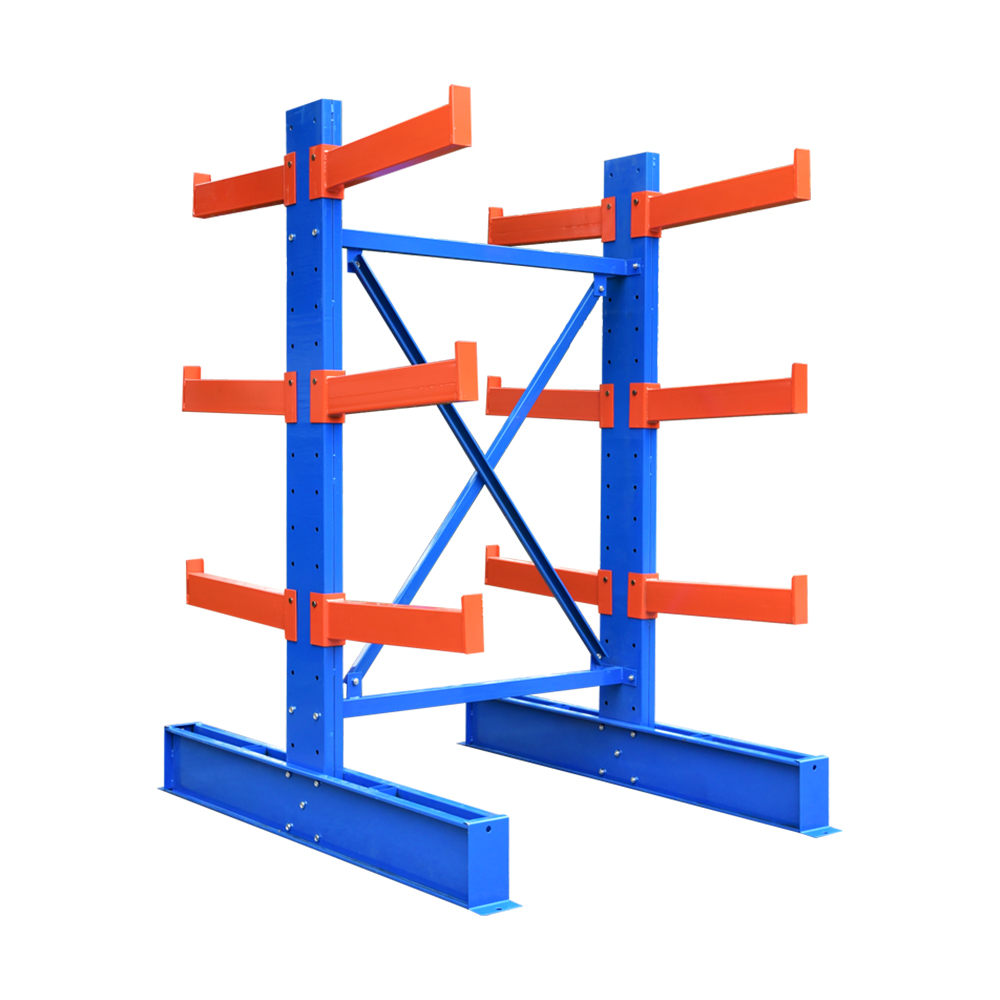
A cantilever rack is a storage structure designed around vertical columns and horizontal arms. The columns carry the primary structural load, while the arms extend outward to support stored products. Because the front of the rack is free from upright frames and front beams, operators can place long goods onto the arms from the front or side using suitable handling equipment.
The structure may be configured as a single-sided or double-sided system. A single-sided rack is normally positioned against a wall or at the edge of a storage area. A double-sided rack uses columns and arms on both sides, creating a central storage unit that can be accessed from two directions. The appropriate arrangement depends on warehouse layout, aisle planning, product dimensions, equipment movement, and available floor space.
Heavy-duty versions are designed for industrial materials that require substantial support and stable load distribution. The exact capacity depends on the rack design, column dimensions, arm length, spacing, material properties, anchoring arrangement, and loading method. For this reason, a cantilever rack should always be engineered or selected according to the actual product weights and dimensions rather than relying on a generic capacity assumption.
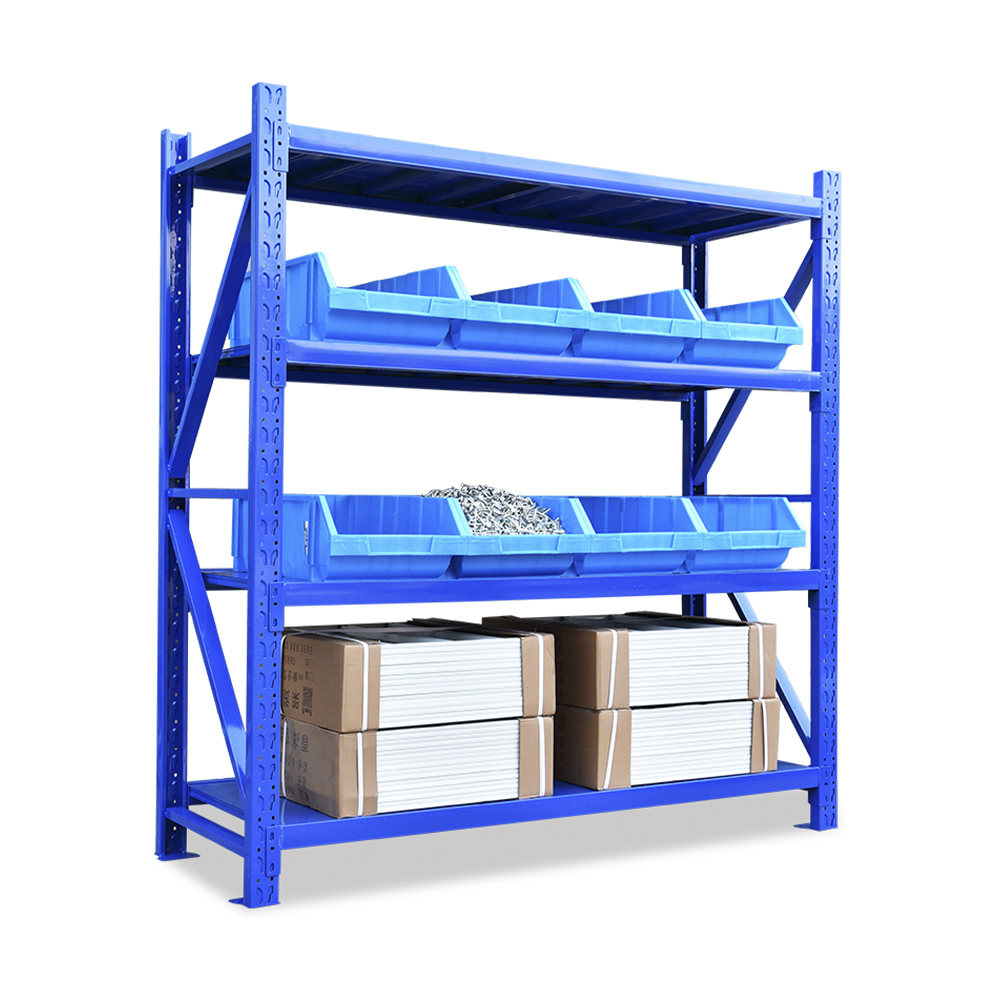
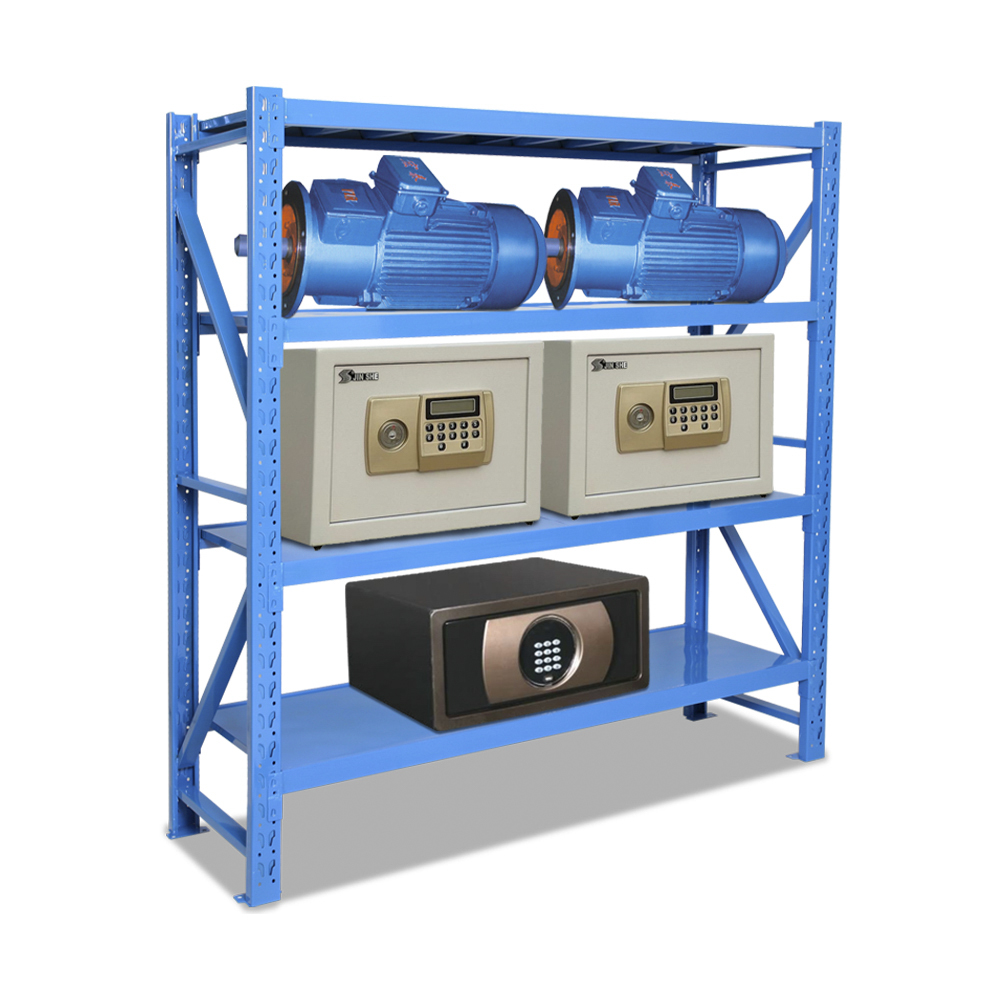
The open structure is one of the main distinctions between cantilever racking and other storage systems. There are no front frame posts blocking the ends of long goods. This feature simplifies loading and unloading while allowing the rack to accommodate products with different lengths. Optional shelves or decking can also be added when the user needs to store smaller items, low-height goods, boxed materials, or products that do not naturally rest across the arms.
Why Conventional Pallet Racks Are Not Always Suitable
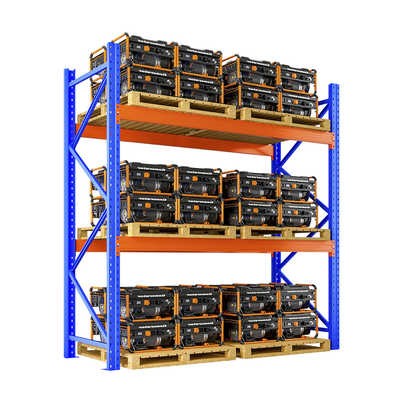
Pallet racking is highly effective for palletized cartons, containers, and uniform unit loads. However, it is not always suitable for long or irregular products. A standard pallet rack expects goods to fit within defined pallet positions and to remain within the boundaries of its horizontal beams. Long materials may overhang, become unstable, or occupy multiple pallet locations without using the available space efficiently.
Long products stored on pallet racks may also require additional pallets, custom cradles, or support structures. These additions can increase handling complexity and reduce storage density. If materials are placed directly on the warehouse floor instead, aisles may become obstructed and the products may be exposed to impact, moisture, dirt, or deformation.
Cantilever racking addresses these limitations by providing adjustable support along the length of the load. The distance between arms can be selected according to the characteristics of the stored goods. A long steel profile, for example, may require evenly distributed support points, while timber or pipe bundles may need a different arrangement. The open front also makes it easier to place products without trying to align them with enclosed pallet positions.
| Storage requirement | Conventional pallet racking | Heavy-duty cantilever racking |
| Long pipes, profiles, and bars |
May require special pallets or multiple positions |
Designed specifically for long and linear products |
| Irregularly shaped goods |
Often difficult to position securely |
Open arms can be adjusted for practical support |
| Front loading access |
Restricted by front frames and beams |
Open-front access simplifies loading and unloading |
| Variable product lengths |
Storage positions may be inflexible |
Arm spacing and levels can be configured for different goods |
| Vertical space utilization |
Dependent on pallet dimensions |
Levels can be arranged for long goods and available building height |
| Small supplementary goods |
Suitable when stored on pallets or decking |
Optional shelves can support smaller or low-height items |
Key Product Advantages
Purpose-Built Support for Long Goods
The most important advantage of cantilever racking is its suitability for goods that do not fit standard storage formats. The system can hold pipes, lumber, metal bars, carpet rolls, fabric rolls, construction materials, profiles, and other extended products. Instead of forcing these materials into rectangular pallet positions, the rack provides a support arrangement that follows their physical characteristics.
This purpose-built design can help reduce product bending, uncontrolled overhang, and unstable stacking. When support points are appropriately positioned, the load is distributed more consistently across the rack structure. Products can be separated into organized storage levels rather than piled together on the floor, making identification and retrieval easier.
Unobstructed Loading and Unloading
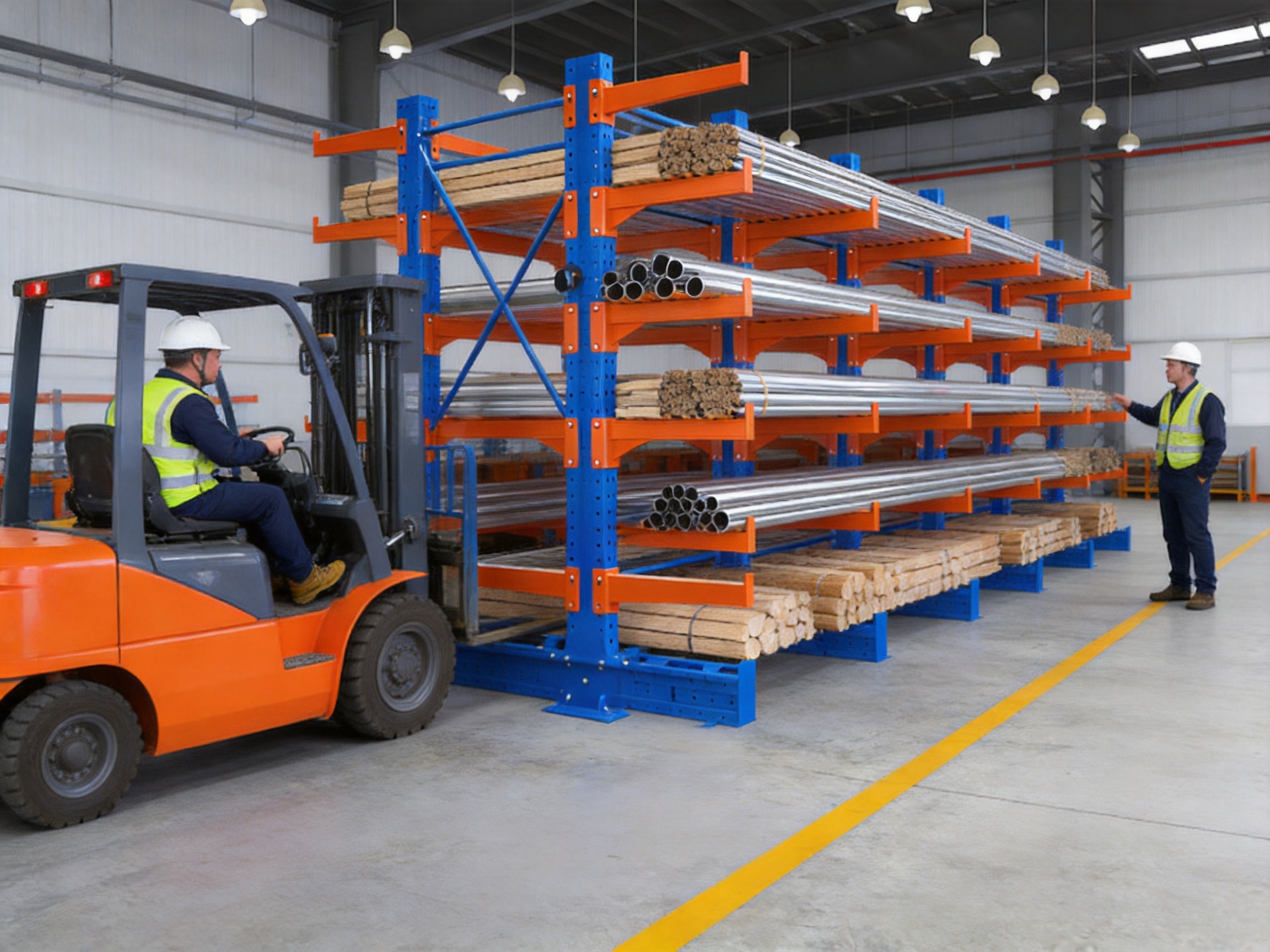
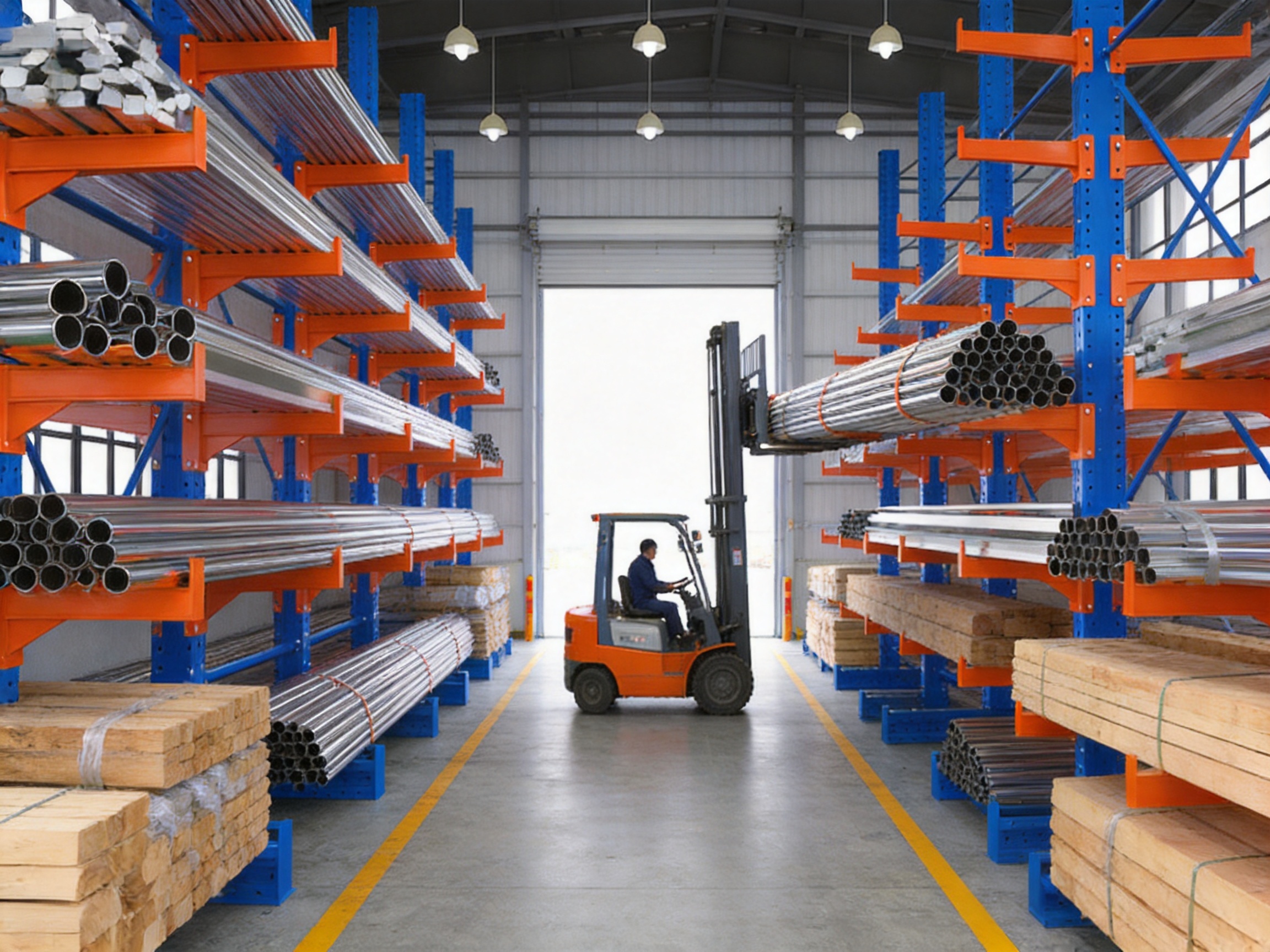
The open-front design gives operators a clear approach to the stored load. Forklifts, pallet jacks, cranes, or other suitable warehouse equipment can be used according to the material and operating environment. The absence of front posts at each storage position can reduce interference during the loading process.
Easy access is especially valuable when materials vary in length or when orders require frequent picking. Operators can remove individual bundles or sections without dismantling an entire floor stack. This can reduce handling time, minimize unnecessary movement, and support more efficient warehouse workflows.
Handling equipment must always be selected and operated according to the product weight, load shape, aisle width, and site safety procedures. The rack improves access, but safe operation still depends on trained personnel, appropriate equipment, controlled speeds, and proper load placement.
Improved Use of Vertical Space
Floor storage consumes valuable warehouse area and can create large zones of unused air space. Cantilever racking allows long goods to be stored on multiple levels, helping the facility use vertical capacity more effectively. The number of levels and their spacing can be planned around the product profile, lifting equipment, ceiling height, and required handling clearance.
Better vertical organization can increase storage capacity without requiring immediate building expansion. It can also make the warehouse easier to manage by assigning specific levels or rack sections to product categories, sizes, materials, or customer orders.
Vertical storage should never be treated as simply adding more levels. Each level must be compatible with the structural design, load distribution, access method, and operating clearance. A properly planned system balances capacity with accessibility and safety.
Flexible Configuration
Industrial storage requirements often change over time. A company may introduce new product lengths, increase inventory, change handling equipment, or reorganize its warehouse. Cantilever racking can be configured with adjustable arm positions and optional storage components to accommodate these changes.
The product information supplied for this system identifies light-duty, medium-duty, and heavy-duty options. This range allows users to consider the weight and dimensions of their goods instead of selecting one universal rack type. Optional shelves can also extend the system’s usefulness by supporting small, boxed, or low-height products alongside long materials.
Configuration should be determined by a professional review of the intended application. Important considerations include the number of storage levels, arm length, product weight, load distribution, column spacing, rack height, floor condition, anchoring, aisle width, and the type of handling equipment used at the site.
Strong Steel Construction
The cantilever rack uses a steel column and arm construction intended to provide a stable support structure for industrial materials. Reinforced steel components can help the rack resist the forces associated with loading, unloading, and stored goods when the system is correctly designed and operated.
Structural performance depends on more than material thickness alone. The geometry of the column, the connection between arms and columns, the base arrangement, the anchoring method, the quality of welding or forming, and the distribution of the load all influence the final result. A reliable manufacturer must therefore control the complete production process rather than focusing on only one component.
Better Product Organization
Floor-stacked materials can be difficult to identify, count, and retrieve. Different lengths or product categories may become mixed together, causing delays and increasing the likelihood of picking errors. Cantilever rack sections provide a clear physical structure for organizing products by type, length, material, customer, or order status.
Improved organization supports inventory visibility. Employees can see more of the stock, identify missing materials more quickly, and access the required product without moving unrelated items. This is particularly useful for distributors and manufacturers that handle a wide variety of long goods.
Protection from Damage
When long products are stored without adequate support, they may bend, slide, become scratched, or suffer damage from repeated handling. Bundles placed directly on the ground may also be exposed to warehouse traffic, moisture, dirt, and accidental impact.
A properly configured cantilever rack separates products from the floor and gives them defined support points. The result can be a cleaner and more controlled storage environment. Although the rack cannot eliminate every handling risk, it can reduce the disorder and uncontrolled contact associated with floor stacking.
Heavy-Duty Cantilever Racking for Industrial Warehouse Storage
Applications Across Industrial Sectors
Lumber and Wood Products
Lumber, wooden boards, mouldings, plywood sheets, and other timber products are often long, heavy, and difficult to stack in enclosed rack positions. Cantilever racking allows these items to be arranged by length, grade, thickness, or product category. The open design also makes it easier to inspect and retrieve individual bundles.
Lumber yards and building-material distributors can use single-sided racks along perimeter walls or double-sided systems in central warehouse zones. The correct solution depends on product bundles, outdoor or indoor conditions, handling equipment, and the need for weather protection.
Metal and Steel Products
Steel bars, metal tubes, structural profiles, rails, sheets, and other fabricated products require strong support and controlled handling. Their weight and length may make manual movement impractical, so the rack layout must work effectively with forklifts or other industrial equipment.
Cantilever storage can help separate materials by profile, size, or order. This organization reduces the need to search through mixed floor stacks and can help prevent unnecessary movement of heavy goods. Heavy-duty systems should be selected only after reviewing the actual weight and support requirements of the metal products.
Pipe and Plumbing Supply Warehouses
Pipes and conduits are commonly stored in bundles or long individual lengths. Their rounded surfaces can make uncontrolled stacking unstable. Cantilever arms provide defined horizontal supports and can be configured to keep the products arranged in levels.
Plumbing suppliers may also need to store fittings, valves, connectors, and boxed accessories. Optional shelves can be used for these smaller products, creating a combined storage solution for long pipes and related components.
Carpet and Fabric Rolls
Carpet rolls, textile rolls, plastic film, and similar materials often have significant length and may be vulnerable to crushing or deformation. Cantilever racking can keep rolls off the floor and organize them for easier identification.
The support method should be selected according to roll diameter, weight, surface characteristics, and the way the products are moved. Operators should avoid dragging rolls across the arms or placing loads in a manner that could cause them to roll unexpectedly.
Construction and Building Materials
Construction supply facilities may handle insulation materials, trim, channels, boards, profiles, scaffold components, and other products with non-standard dimensions. Cantilever racks can help create dedicated storage zones for these materials and reduce congestion in loading and dispatch areas.
Because construction products can vary widely in size and weight, the modular nature of the system is valuable. A facility can use different rack sections for different product groups while maintaining a consistent warehouse layout.
Manufacturing Facilities
Factories often need to store raw materials before production and finished components before dispatch. Long steel sections, aluminium profiles, timber parts, tubes, and fabricated assemblies may not be suitable for pallet positions.
Locating cantilever racks near receiving, cutting, fabrication, or dispatch areas can reduce internal travel distances. However, the layout must preserve safe walkways, equipment routes, emergency access, and adequate clearance around production machinery.
Manufacturing and Engineering Strengths
Integrated Product Development
Shanghai King Global Shelf Co., Ltd. operates as a professional shelving and storage manufacturer with activities covering product development, production, quality control, and market service. This integrated approach is important for cantilever systems because a successful solution must connect engineering decisions with manufacturing capabilities and real warehouse requirements.
Product development can include evaluating load types, storage methods, connection arrangements, arm configurations, optional shelves, and market-specific requirements. For OEM and ODM projects, the manufacturer can work from customer drawings, application information, or project specifications to develop a suitable storage solution.
Modern Production Facilities
The company reports a 60,000-square-meter production base supported by modern facilities and a professional technical team. A substantial production base can support organized manufacturing workflows, material handling, equipment allocation, assembly operations, inspection processes, and product dispatch.
For customers, manufacturing capability is important because the quality of a storage system depends on consistent production across multiple components. Columns, arms, bases, connectors, shelves, and accessories must work together as a coordinated system. A manufacturer with a structured production environment is better positioned to manage repeat orders and project-based requirements.
Quality Control Across the Production Cycle
Quality control should begin with incoming raw materials and continue through forming, welding, surface treatment, assembly, inspection, packing, and delivery. Each stage can affect the performance and appearance of the finished rack.
For cantilever racking, relevant quality-control activities may include checking component dimensions, connection fit, weld consistency, surface condition, coating coverage, straightness, hole positions, arm installation, and packaging protection. The precise inspection plan depends on the product design and customer requirements, but the principle remains the same: reliable quality is achieved through process control rather than final visual inspection alone.
Consistent production also helps ensure that replacement components and additional rack sections remain compatible with existing systems. This can be particularly valuable for companies that expand their storage facilities in stages.
Professional Technical Support
Storage projects require more than a product catalogue. Customers may need help identifying the most appropriate rack type, calculating the number of levels, planning aisle arrangements, selecting accessories, and considering the relationship between rack capacity and handling equipment.
A professional technical team can review the user’s product dimensions, weight ranges, storage volume, building conditions, and workflow. This makes it easier to avoid common mistakes such as excessive arm length, inadequate aisle space, unsuitable support spacing, or a mismatch between rack height and lifting equipment.
OEM and ODM Capability
Different markets may require different dimensions, finishes, labels, packaging methods, documentation, or component combinations. OEM and ODM capabilities allow the manufacturer to support customers that need more than a standard off-the-shelf configuration.
Customization may involve rack height, arm length, column spacing, storage levels, shelf additions, color, identification systems, packaging, or project-specific accessories. Any customization must remain consistent with structural requirements and applicable safety standards. Appearance changes should never compromise load performance or connection integrity.
International Market Experience
Shanghai King Global Shelf Co., Ltd. serves customers across North America, Southeast Asia, Japan, South Korea, the Middle East, Europe, and other regions. International supply experience can help a manufacturer understand differences in warehouse layouts, product preferences, communication requirements, packaging expectations, and project coordination.
The company also identifies service and operating locations in China, Thailand, Malaysia, and the United States. Regional communication and support resources can be useful for customers managing international procurement or multi-location warehouse projects.
How Cantilever Racking Compares with Alternative Storage Methods
Compared with Floor Stacking
Floor stacking has a low initial equipment requirement, but it often consumes large areas of floor space and makes products difficult to access. Lower bundles may be blocked by upper bundles, and mixed product sizes can create unstable or disorganized piles.
Cantilever racking requires planning and investment, but it creates a defined structure for storing products vertically. It can improve visibility, access, and separation between product categories. For facilities with regular long-goods handling, these operational benefits may outweigh the simplicity of floor storage.
Compared with Pallet Racking
Pallet racking is more appropriate for palletized goods with standardized footprints. Cantilever racking is more appropriate for long, irregular, and non-palletized products. The two systems are not necessarily competitors in every warehouse; many facilities benefit from using both.
A mixed storage plan may use pallet racks for cartons and pallet loads, cantilever racks for pipes and profiles, shelving for small parts, and floor staging areas for temporary receiving or dispatch activities. Matching the system to the product is generally more effective than attempting to use one rack type for every item.
Compared with Closed Cabinets or Enclosed Storage
Cabinets and enclosed storage protect small products from dust and unauthorized access, but they are usually not practical for long materials. Large doors, limited internal dimensions, and restricted access can increase handling time.
The open structure of cantilever racking is more suitable for long products that must be loaded with forklifts or similar equipment. If certain smaller accessories require enclosure, cabinets or bins can be placed in separate areas or supported by optional shelves where appropriate.
Planning a Cantilever Rack Installation
Evaluate the Product Range
Begin by recording the length, width, height, weight, shape, surface condition, and packaging method of the products. It is also important to identify whether products are stored individually or in bundles. The heaviest and longest loads usually influence the basic rack design.
Product variation should be considered rather than designing only for the current best-selling item. A rack that accommodates several product dimensions may provide greater long-term value, provided that its capacity and layout remain suitable.
Review the Available Space
Measure the usable floor area, ceiling height, structural obstructions, doors, columns, sprinkler systems, lighting, emergency exits, and traffic routes. Rack height should be compatible with the building and lifting equipment. The system should not interfere with fire protection, ventilation, maintenance access, or emergency response.
Aisle width must allow the selected forklift or handling equipment to approach, turn, load, and unload safely. Reducing aisle width may appear to increase storage density, but an aisle that is too narrow can slow operations and increase collision risk.
Choose Single-Sided or Double-Sided Configuration
Single-sided racks are useful along walls or at the perimeter of a warehouse. They can make effective use of otherwise unused wall-side space. Double-sided racks are suitable for central warehouse rows where both sides can be accessed.
The choice should be based on traffic patterns, available space, storage volume, and the direction from which materials are handled. A double-sided system may provide greater capacity per structural row, while a single-sided arrangement may be more appropriate for narrow or specialized zones.
Determine the Arm and Shelf Arrangement
Arm spacing should support the product without causing excessive deflection or unstable overhang. The number of arms and their position should reflect the weight, stiffness, and length of the goods. Optional shelves can be added for smaller items, but shelf loads should be included in the overall design review.
Adjustable levels provide flexibility, but frequent adjustment should be performed by trained personnel and checked after modification. Components must be securely installed and compatible with the rack system.
Consider Anchoring and Floor Conditions
The rack base and anchoring method must be compatible with the warehouse floor. Floor condition, concrete quality, levelness, and local building requirements can affect installation. A professional installation assessment is recommended, particularly for tall or heavily loaded systems.
Anchoring does not replace correct loading practice. The rack must still be loaded within its rated capacity, and products should be positioned to maintain a stable center of gravity.
Safe Operation and Maintenance
Safety begins with correct design and continues through installation, training, inspection, and daily operation. Employees should understand the intended use of the rack, the maximum permitted loads, the correct loading sequence, and the risks associated with falling, rolling, or projecting products.
Load Placement
Loads should be placed evenly and securely on the supporting arms. Operators should avoid concentrating excessive weight at the end of an arm unless the rack has been specifically designed for that condition. Products should not extend in a way that creates an unacceptable obstruction to aisles, walkways, doors, or equipment routes.
Round items such as pipes and rolls may require suitable restraints or carefully designed supports to prevent movement. Bundled products should remain stable during loading, storage, and retrieval.
Equipment Operation
Forklift operators and other equipment users should approach the rack at controlled speeds and maintain visibility. Forks or handling tools should be positioned to prevent impact with columns, arms, shelves, and stored materials.
Operators should not use the rack as a turning point, push loads into position with excessive force, or strike the structure with a forklift. Impact damage can reduce structural performance even when the damage appears minor.
Inspection and Maintenance
Regular visual inspections should check for bent arms, damaged columns, loose connections, missing components, anchor problems, corrosion, coating damage, and signs of overloading. Any damaged component should be isolated and assessed before the rack is returned to service.
Maintenance procedures should follow the manufacturer’s recommendations and local workplace requirements. Unauthorized drilling, cutting, welding, or modification can alter the structural behavior of the system and should not be performed without technical approval.
Warehouse Housekeeping
Clean, unobstructed aisles improve both efficiency and safety. Packaging materials, straps, damaged products, and loose debris should be removed promptly. Clear identification labels can help employees store products in the correct location and avoid unnecessary handling.
Operational Benefits for Warehouse Managers
For warehouse managers, the value of cantilever racking extends beyond the physical rack itself. A well-planned system can improve storage visibility, reduce floor congestion, simplify inventory organization, and support faster order preparation.
Because the system provides dedicated locations for long goods, receiving teams can place materials into defined storage zones instead of creating temporary floor stacks. Picking teams can locate products more efficiently, while dispatch personnel can prepare orders without moving unrelated inventory.
Improved organization may also support better stock rotation and counting. Products can be assigned to specific levels or sections, and storage labels can be integrated into the layout. This can reduce the time spent searching for material and help identify slow-moving or surplus inventory.
The rack can also support future expansion. Additional sections, shelves, or adjusted storage levels may be considered as the business grows, subject to technical review. This gives the warehouse a more adaptable foundation than a purely improvised floor-storage arrangement.
Environmental and Space-Efficiency Considerations
Using vertical space more effectively can help businesses increase storage capacity within an existing building. Avoiding unnecessary building expansion may reduce the need for additional land, construction, lighting, and climate-control resources. The precise environmental benefit depends on the facility, product type, operating schedule, and broader logistics plan.
A durable steel storage system may also have a long service life when it is correctly specified, protected, inspected, and maintained. Longer service life can reduce the frequency of replacement and help businesses plan storage investments over an extended period.
Space efficiency should not be measured only by the maximum number of products stored. A practical layout should also account for accessibility, safety, energy use, handling time, and future adaptability. A densely packed warehouse that is difficult to operate may not deliver the best overall result.
Why Select a Specialized Manufacturer
Choosing a specialized storage manufacturer can reduce the risk of treating a rack as a generic metal structure. Cantilever racking must be matched to the loads, handling equipment, warehouse building, and operating procedures. A manufacturer with experience in shelving and industrial storage can contribute to product selection, customization, production coordination, and project support.
Shanghai King Global Shelf Co., Ltd. has operated in the shelving and storage sector since 2010. Its product range includes warehouse racks, pallet racking, mezzanine racking, cantilever racks, supermarket shelves, office shelves, and home storage products. This broader product experience can support customers that need multiple storage systems within one project.
The company’s reported workforce of more than 300 employees, modern facilities, technical resources, and integrated quality-control system provide a foundation for serving both standard-product and customized orders. Its export experience across multiple international regions also supports global procurement and project communication.
For businesses comparing suppliers, important evaluation points include technical competence, production consistency, customization ability, documentation, communication, packaging, delivery coordination, and after-sales service. Price is relevant, but the lowest initial quotation may not represent the lowest total cost if the rack is difficult to install, unsuitable for the load, or unable to adapt to future requirements.
Frequently Asked Questions
What products are best suited to cantilever racking?
Cantilever racking is well suited to long, oversized, bulky, or irregularly shaped products. Typical examples include pipes, lumber, steel bars, metal profiles, carpet rolls, fabric rolls, construction materials, boards, and similar goods that do not fit efficiently on standard pallet racks.
Can cantilever racks store small products?
Yes. Optional shelves can be added for smaller or low-height goods, depending on the rack design. Small products may also be stored in boxes, bins, or containers placed on suitable shelf levels. The additional loads must be included in the rack design and capacity assessment.
Are cantilever racks available for different load requirements?
The product range includes light-duty, medium-duty, and heavy-duty options. The correct selection depends on the weight, dimensions, support spacing, storage levels, and handling method. Customers should provide accurate product data so the manufacturer can recommend a suitable configuration.
What is the difference between a single-sided and double-sided rack?
A single-sided rack has storage arms on one side and is commonly positioned against a wall or at the edge of a storage area. A double-sided rack has arms on both sides and is normally placed in a central warehouse row. The choice depends on layout, access, traffic flow, and capacity requirements.
Can the rack be customized?
Yes. Customization may include rack height, arm length, storage levels, column spacing, optional shelves, finish, labeling, packaging, and other project requirements. Custom designs should be reviewed by technical personnel to confirm that the configuration remains structurally suitable.
Can forklifts be used with cantilever racking?
Yes, forklifts are commonly used to load and unload long goods from cantilever racks. The forklift type, aisle width, load dimensions, lifting height, and operator training must be compatible with the installation. Equipment should be operated carefully to avoid impact with the rack.
How does cantilever racking improve warehouse space utilization?
It uses vertical space and stores long goods in organized levels rather than leaving them in large floor stacks. This can reduce wasted floor area, improve product visibility, and create clearer aisles and work zones.
Does the rack eliminate the need for safety procedures?
No. A rack is only one part of a safe storage system. Correct design, installation, anchoring, load placement, equipment operation, employee training, inspections, and maintenance are all necessary for safe performance.
What information should be provided when requesting a quotation?
Useful information includes product type, product length, width, height, weight, bundle dimensions, quantity, storage levels, warehouse dimensions, available floor space, handling equipment, indoor or outdoor location, and any regional standards or project requirements. Photographs, drawings, and layout plans may also help the manufacturer prepare a suitable proposal.
Can cantilever racking be combined with other storage systems?
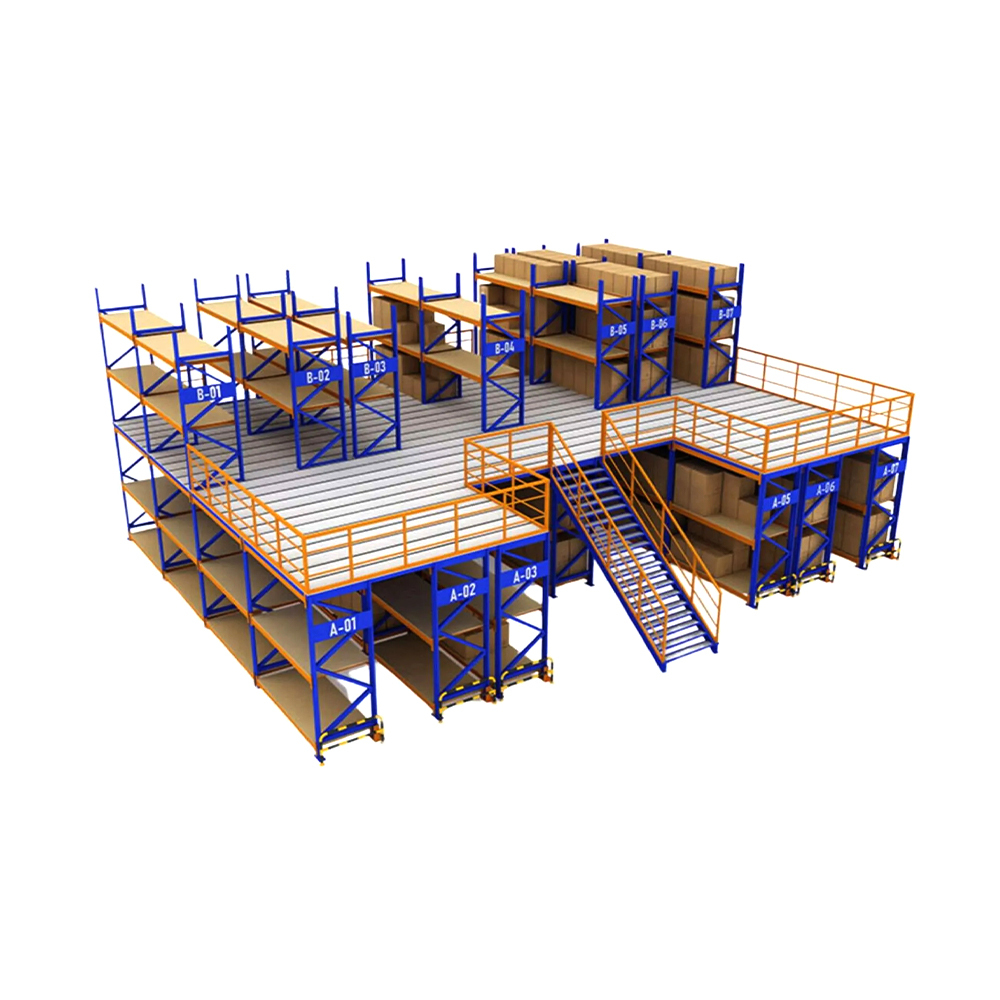
Yes. A warehouse may use cantilever racks for long goods, pallet racks for palletized products, shelving for cartons or small parts, and mezzanine systems for additional floor area. Combining systems according to product type often creates a more efficient overall storage plan.
Conclusion
Heavy-duty cantilever racking is a practical storage solution for industrial goods that are too long, oversized, heavy, or irregular for conventional pallet positions. Its open-front structure, steel column and arm construction, adjustable configuration, optional shelving, and compatibility with warehouse handling equipment make it suitable for a wide range of applications.
By using vertical space, organizing products into defined levels, improving access, and reducing dependence on floor stacking, cantilever racking can support more efficient and orderly warehouse operations. Its advantages are especially clear in lumber yards, steel distributors, pipe warehouses, textile facilities, construction-material suppliers, and manufacturing plants.
The best result depends on choosing the correct configuration for the actual products and operating environment. Load characteristics, rack height, arm spacing, aisle width, handling equipment, floor conditions, anchoring, and safety procedures must all be considered. A professional manufacturer can help connect these requirements with reliable production and customized design.
Shanghai King Global Shelf Co., Ltd. combines storage-product development, manufacturing, quality control, technical resources, international supply experience, and OEM/ODM capability. Its heavy-duty cantilever racking is positioned as a flexible solution for businesses seeking improved material handling, better space utilization, safer long-goods storage, and a more organized industrial warehouse.
References
1. Shanghai King Global Shelf Co., Ltd. Product Information: Heavy-Duty Cantilever Racking for Industrial Warehouse Storage.
2. Shanghai King Global Shelf Co., Ltd. Company Profile and Manufacturing Information.
3. General principles of industrial warehouse layout, material handling, and storage-system planning.
4. General workplace guidance for warehouse rack inspection, loading control, and forklift operation.
5. General engineering practices for the selection, installation, and maintenance of steel storage equipment.


 English
 Español
 русский
 Français
 한국어
 عربى
 ไทย
 Deutsch
 Bahasa Melayu
 Português
 Polskie